
* * *
Whether one celebrates the Holiday, we all have much to be thankful for.
The Chef de Cuisine and Her Sous Chef at
The Bartolini Kitchens
Wish You All
A Memorable Thanksgiving
and
Wonderful Weekend.
* * *

* * *
Whether one celebrates the Holiday, we all have much to be thankful for.
The Chef de Cuisine and Her Sous Chef at
The Bartolini Kitchens
Wish You All
A Memorable Thanksgiving
and
Wonderful Weekend.
* * *
Osso Buco della Mamma
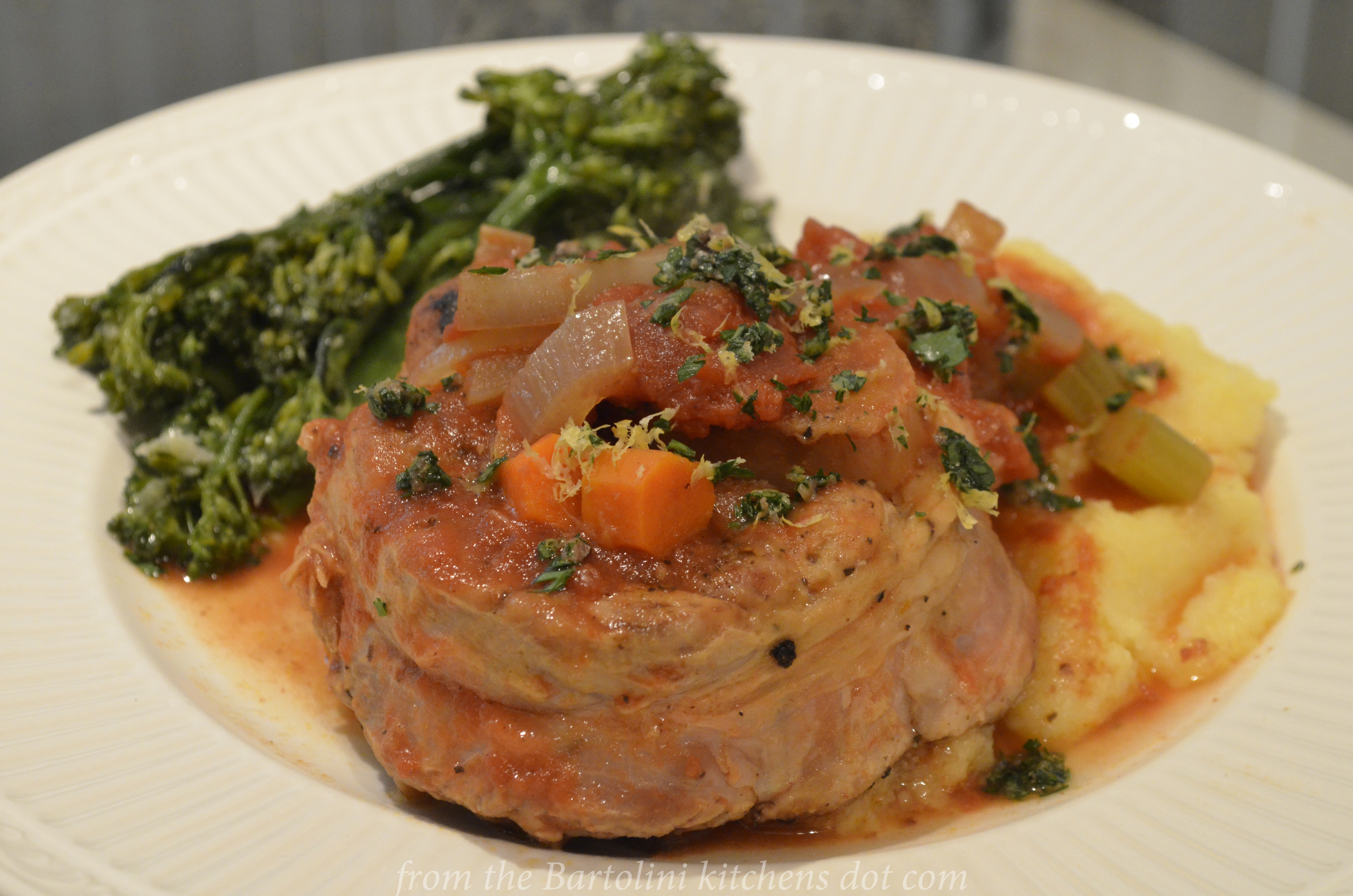
Finalmente! It was almost one year ago when I prepared osso buco for Zia and promised you that I would soon post the recipe. Well, that was the plan.
As I mentioned last week, Mom didn’t leave us a cookbook but we do have a couple of notebooks in which her recipes can be found, in varying states of completion. The osso buco I prepared for Zia was based on a recipe that I found which was little more than a few notes. We enjoyed the dinner and, when I got home, I set about writing the recipe. That’s when I found it, Mom’s full recipe. She had written notes in one book and the full recipe in another. I had taken one version with me to Michigan and referred to the other when I began writing the recipe. The post was put on hold until I could prepare Mom’s actual recipe. The Visitation would prove the perfect opportunity to both prepare Mom’s recipe and celebrate Zia’s return to Chicago.
I’m fully aware that some may object to eating veal, for a variety of reasons. I myself cringe when, while traveling through Michigan, I see the tiny enclosures used to raise calves for veal. Today there are alternatives. A quick check with Google will provide you with the names of local farms that raise veal humanely and the stores that carry their product. Be forewarned, however, that your peace of mind won’t come cheaply. A much less expensive alternative is to substitute beef shanks for the veal. In fact, that’s what I did when I tested both versions of Mom’s recipe, and, what I do when I’ve a taste for osso buco but don’t wish to take out a loan to satisfy it.
There are few differences between Mom’s original recipe and what I’ve prepared here, and those involve my use of a slow cooker. Braising shanks in an oven requires more liquid than doing so in a slow cooker. The recipe reflects this. Additionally, as you’ll soon see, Mom cooked 4 shanks at a time. I only cooked 2, though I kept most ingredient amounts the same. This meant that I had quite a bit of extra sauce left over. See below to learn how we used that sauce.
* * *

* * *
Osso Buco Recipe
Ingredients
for the Gremolata
Directions
* * *

Osso buco served with polenta and broccolini
* * *
Notes
I’ve slightly adjusted Mom’s recipe to reflect braising these shanks in a slow cooker and not the oven. If using the oven:
Although you can get shanks as thin as an inch, 2 inch thick shanks were used here. Cooking times may vary if you use shanks that vary in thickness.
Ask your butcher to tie the shanks to prevent them from falling apart during the braise. Be sure to remove the string before serving.
Attempting to turn the shanks over while braising is very problematic. They may, in fact, fall apart during the process. Best to leave them as-is and baste them periodically throughout the braise. If braising in the oven, baste the shanks every 30 minutes or so, If using a slow-cooker, baste every hour or so. Remember, the fewer times you uncover a slow cooker, the better.
* * *
It’s that time again
Winter is fast approaching and I’m going to sneak in one last visit with Zia before it gets here. The Kitchens will be closed while I’m gone.
* * *
About that extra sauce
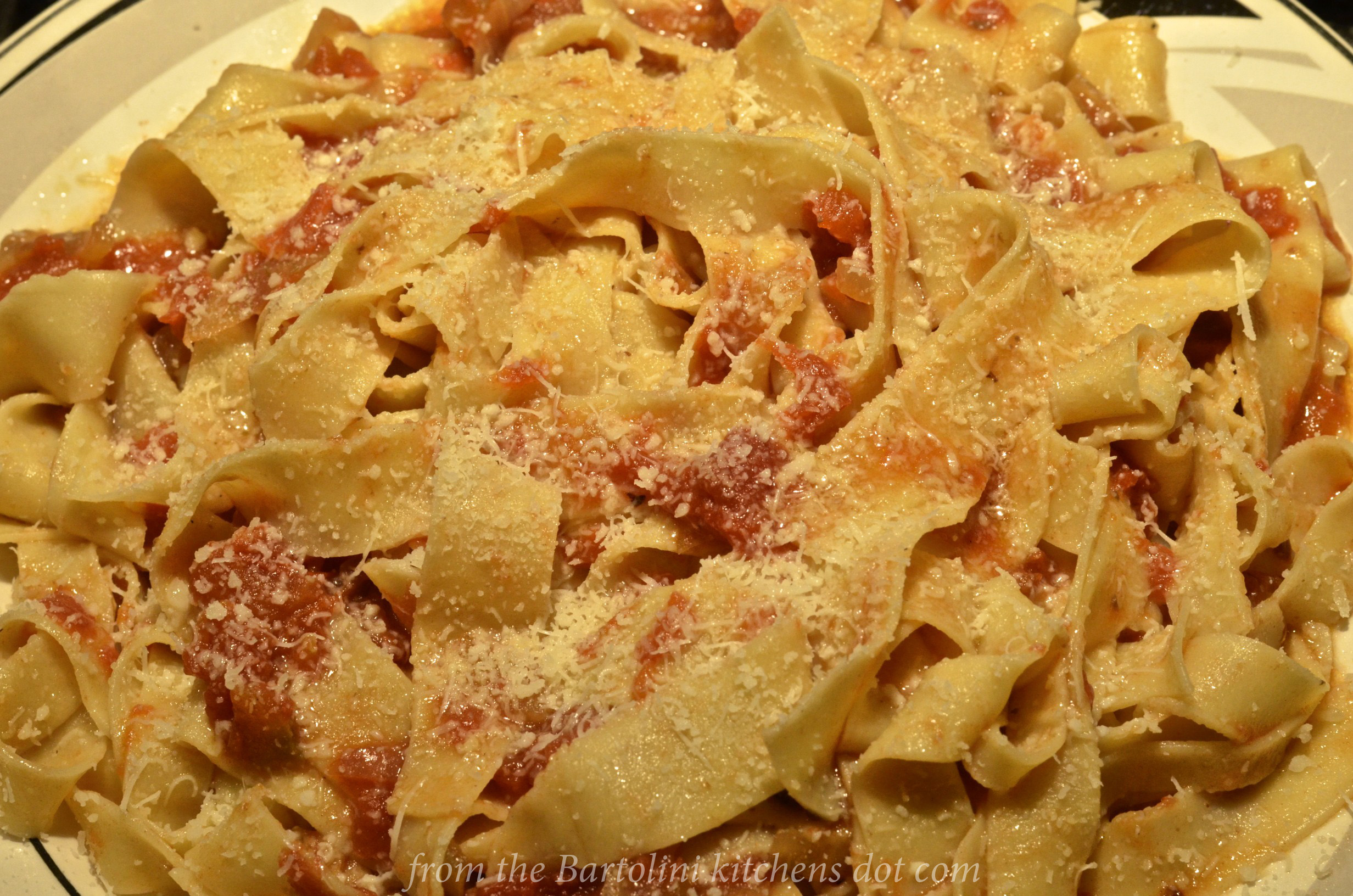
After our dinner, the leftover sauce was split in half. Zia’s portion went into the freezer and went home with her. My portion was later used to dress the homemade tagliatelle pictured above.
* * *
It’s déjà vu all over again …
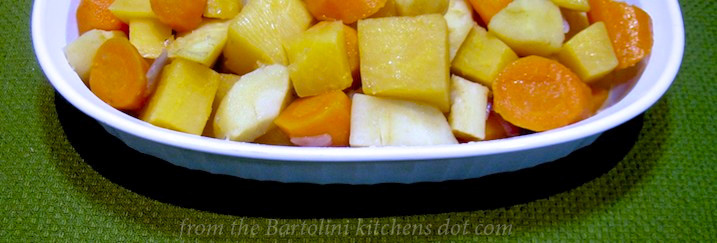
Last weekend saw this area’s farmers markets close for the year, reflecting the fact that very little, if anything, will be grown here for the next 6 months. This doesn’t mean, however, that all locally grown produce has disappeared and no longer available. Because of their relatively long shelf-life, our markets will still carry apples, squash and a variety of root vegetables for weeks, even months, to come. Today’s look back features a stove top method for braising root vegetables, a recipe that will make an attractive side dish for any of the feasts you may prepare this holiday season. You can learn all about it by clicking HERE.
* * *
Coming soon to a monitor near you …
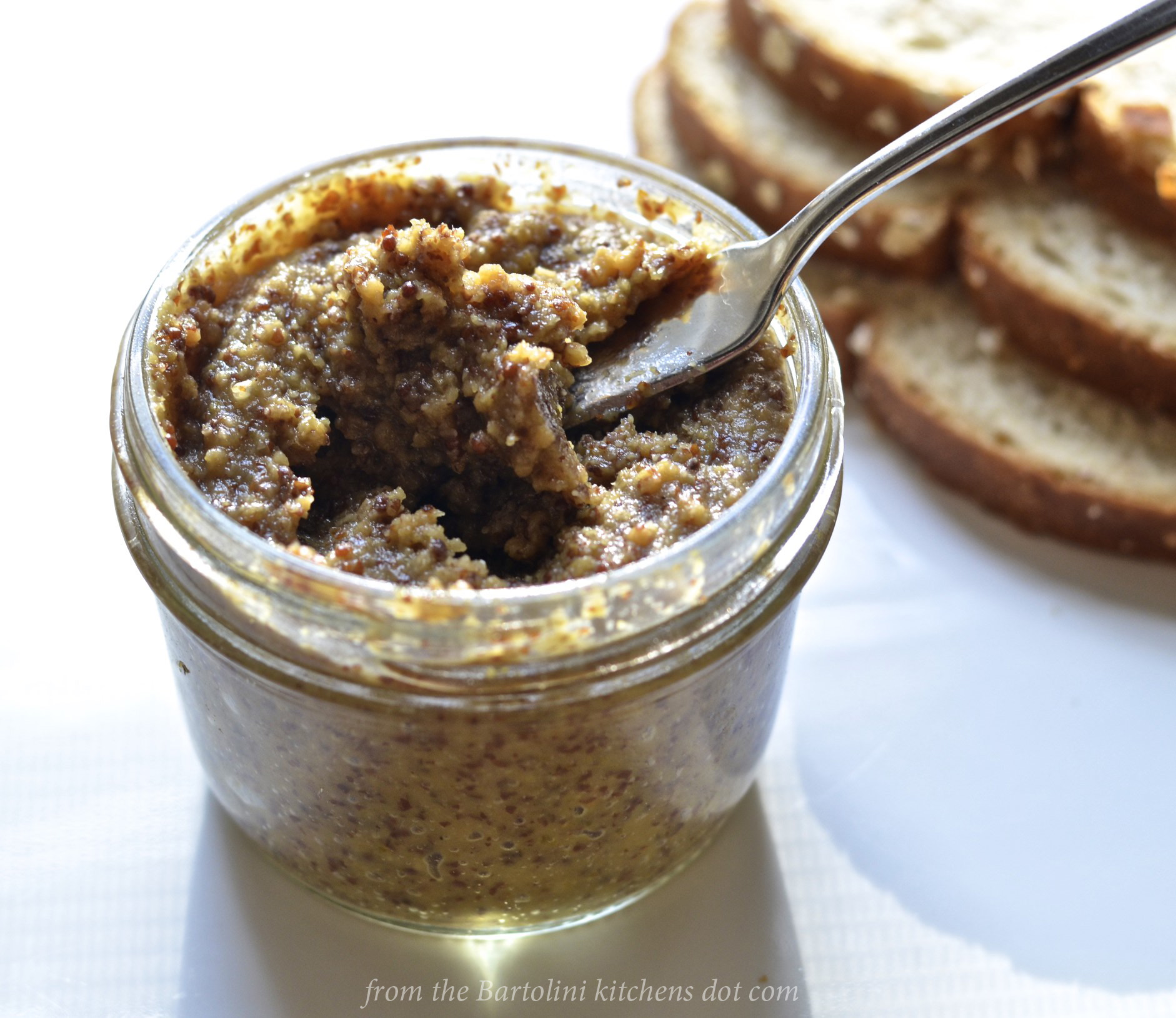
Honey Mustard
* * *
“What’s in a name? That which we call a rose
By any other name would smell as sweet.” (Shakespeare, “Romeo and Juliet”)
* * *
About 3 years ago, I shared a recipe for the Apple Thingamajig, the name resulting from the inability of Zia and myself to remember the dessert’s correct name. In the Comments, some suggested calling it a “galette”, still others called it a “crostata.”, and I’ve even heard it called an “open-faced” or “rustic” pie. We would never have called it a crostata, however, for reasons I had intended to reveal shortly thereafter. You see, I had planned to share today’s recipe that Christmas (2011). Having missed that opportunity, crostata was to be featured the following December (2012), and, having failed that, last December (2013) would most certainly see a crostata recipe published. And, so, here it is 2014 and the crostata recipe is finally making it to the big time. Even so, and to get back to my original point, say “crostata” to my family and we think of a jam-covered tart very much like the ones pictured throughout today’s post.
* * *

* * *
So why share the recipe now? Well, recently a good friend of the Bartolini Kitchens, Stefan of Stefan’s Gourmet Blog, shared his crostata recipe. (If you’ve not visited Stefan’s site, this is your chance. His is a fantastic blog filled with many wonderful recipes and you’ll find his Italian dishes as well-researched as they are delicious.) Seeing his crostata recipe lit a fire under me and I decided this would be the year to finally share the recipe for the benefit of the rest of the Clan. This time, though, I’d publish it ASAP, so, that there would be little chance of it being forgotten again in the rush towards Christmas.
We could always count on Mom preparing several treats for the Christmas holiday. Though she started making chocolate candies in her retirement, she always made sure that there were plenty of biscotti and a crostata for Christmas Day. For me, it wouldn’t have been Christmas without either being present, no matter what else she had prepared — the platter of ravioli notwithstanding.
* * *

* * *
Not having any tart pans, Mom prepared her crostata on a small baking sheet. (In professional kitchens, it would be called a “quarter baking sheet”.) She would use 2 types of jam, with half of her crostata being coated with either strawberry or, very rarely, cherry, and, the other half peach. Mom didn’t start making jam and preserves until her retirement, so, she used store-bought jams for her crostata. She served it in little pieces, like those I’ve shown, presumably because the last thing we kids needed was more sugar on Christmas Day. Using a three-tiered serving dish, she was able to control how much we kids ate. When it was empty, there’d be no re-filling it for hours. Of course, when company was expected, the contents of that serving dish were strictly off-limits. Don’t worry. We still had our fill — just not from that tray.
With regards to this post, I didn’t feel right calling it “Mom’s Crostata”, for it really isn’t. Mom didn’t leave us a true cookbook. Yes, she gave us kids our own cookbooks but none were a complete listing of all of her recipes. I do have a couple of her notebooks but the recipes listed are in varying stages of completion. Some are fully written, while others are nothing more than a few notes. Today’s recipe falls into the latter category, though I remember watching her spread the jam over the pastry crust, my mouth-watering the entire time. The only real question that remained was what recipe to use for the shortbread crust — and Mom’s notes did specify a “shortbread crust”. The answer came from a surprising source.
 During my last visit with Zia, she mentioned that she possessed a “Five Roses Flour” cookbook from 1938 that once belonged to her Mother-in-Law — the woman I’ve referred to as “Nonna” in earlier posts. While paging through it, I came across a shortbread recipe. Now, this is no ordinary shortbread. The recipe’s name is listed as “Prize Shortbread” and it’s noted that the recipe “has won many prizes at Fall Fairs and Exhibitions.” There was certainly no need to look any further for a shortbread recipe. Here, I’ve shared the recipe as it was originally written, although when I prepared the shortbread, I used my food processor and the resulting crust was quite good. (See below for a possible use for extra shortbread dough.)
Unlike Mom, I used my own jams for today’s crostate. In the first photo, strawberry jam with balsamic and black pepper, and, peach jam with white balsamic were used. The addition of balsamic vinegar is why both jams appear unusually dark in the photos. The 2nd crostata was made with tart cherry jam, to which a little bit of almond extract was added. Feel free to use whatever jam(s) you prefer.
* * *


* * *
Crostata Recipe
Ingredients
for the pastry
for the filling
Directions
Shortbread pastry dough recipe found in “A Guide to Good Cooking” by the Five Rose Flour Co. (1938)
* * *

* * *
Notes
The first time I prepared this crostata, I “blind baked” the tart shell for 8 minutes before filling it. This was a mistake, as you can see when looking at the first photo. The lattice is considerably lighter in color than the crust. After that attempt, I’ve no longer blind baked the crust and the finished tart’s shortbread appears more evenly baked.
* * *
So, you’ve made a crostata and still have a little extra dough to burn …
I just couldn’t bring myself to discard the excess shortbread dough, nor was there enough to make another crostata. I was going to make a few shortbread cookies, a personal  favorite, when I had an epiphany. Using a very small ice cream scoop, make equally sized balls of dough, placing them on a small baking sheet. Once the sheet was covered with evenly spaced dough balls, use the bottom of a glass to press each ball into a flat cookie. Bake in a pre-heated 350˚ F (175˚ C) oven until the edges just start to turn brown, about 15 minutes. Once cooled, use 2 cookies with a bit of Nutella in-between to make a single sandwich cookie. (You could just as easily use jam for the filling.) Like the crostate, these cookies were well-received by the taste testers that live above me. So well-received, in fact, that now I’m considering making a Nutella crostata.
* * *
It’s déjà vu all over again …

This past Saturday is known as All Soul’s Day and in Marche, the Bartolini ancestral home, snails, lumache, are traditionally served. I won’t say much more, for fear of stealing the post’s thunder, other than to mention that you can learn all about preparing this delicacy by clicking HERE.
* * *
Coming soon to a monitor near you …

Osso Buco
* * *
The Kitchens Wish You All
A
SAFE & HAPPY
HALLOWEEN!
* * *
(Click to enlarge any/all photos)


* * *
(Comments have been closed to allow you more time for Tricks ‘n Treats.)
* * *
Pennette alla Vodka
Note: This post was inadvertently posted earlier than I had planned. The”Crostata” recipe, which was scheduled for Wednesday, will be delayed until next week. Thanks for your understanding.
* * *
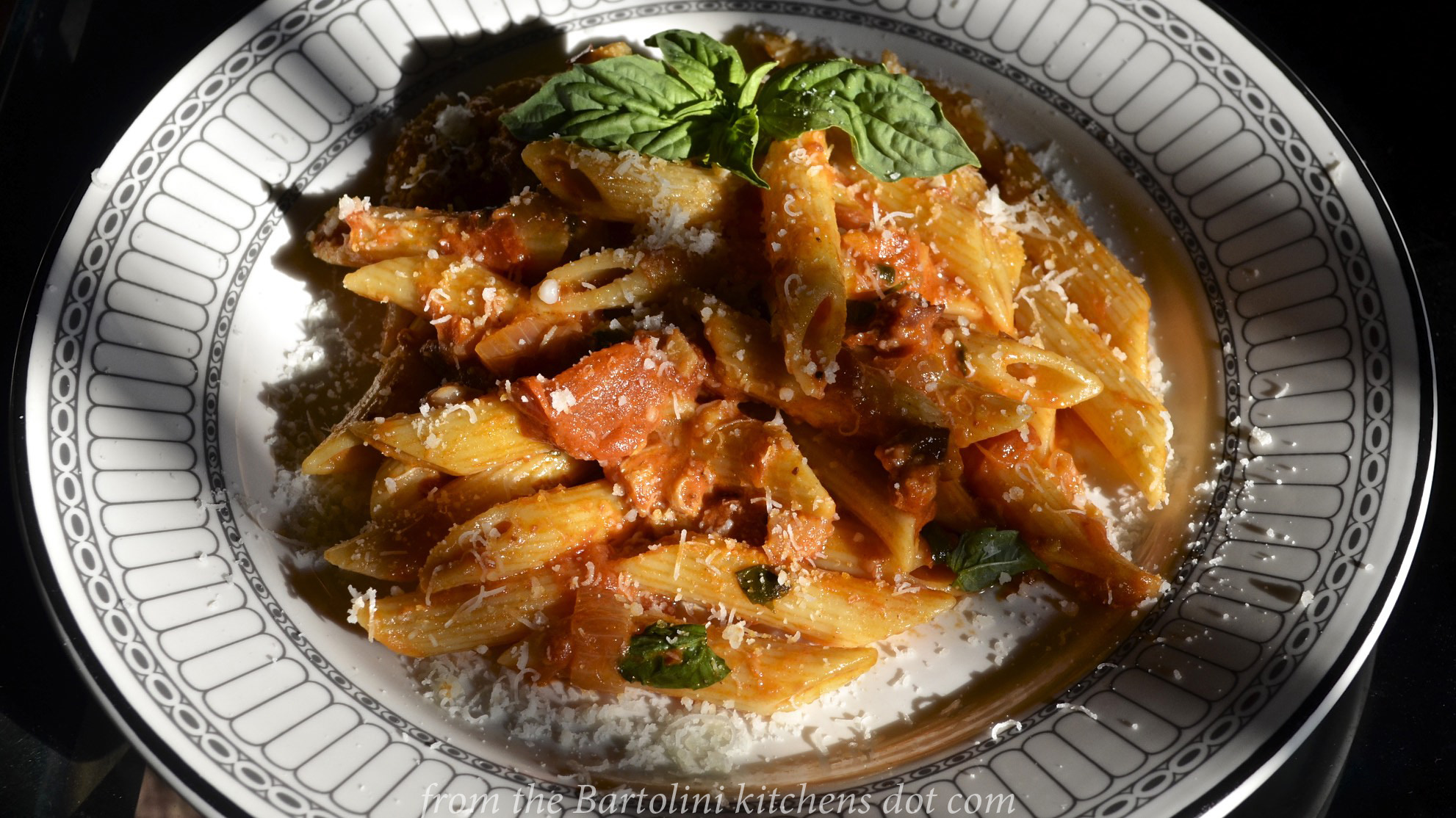
I really cannot recall just when I started making this dish. I do know it was around the time I moved here, to my current home, about 13 or 14 years ago. Being that I was tending bar at the time, in retrospect, finding another means of consuming alcohol of any kind doesn’t seem like the best of ideas. Still, regardless of when or why I started making this tomato sauce, it remains a favorite of mine, both for its simplicity and great taste.
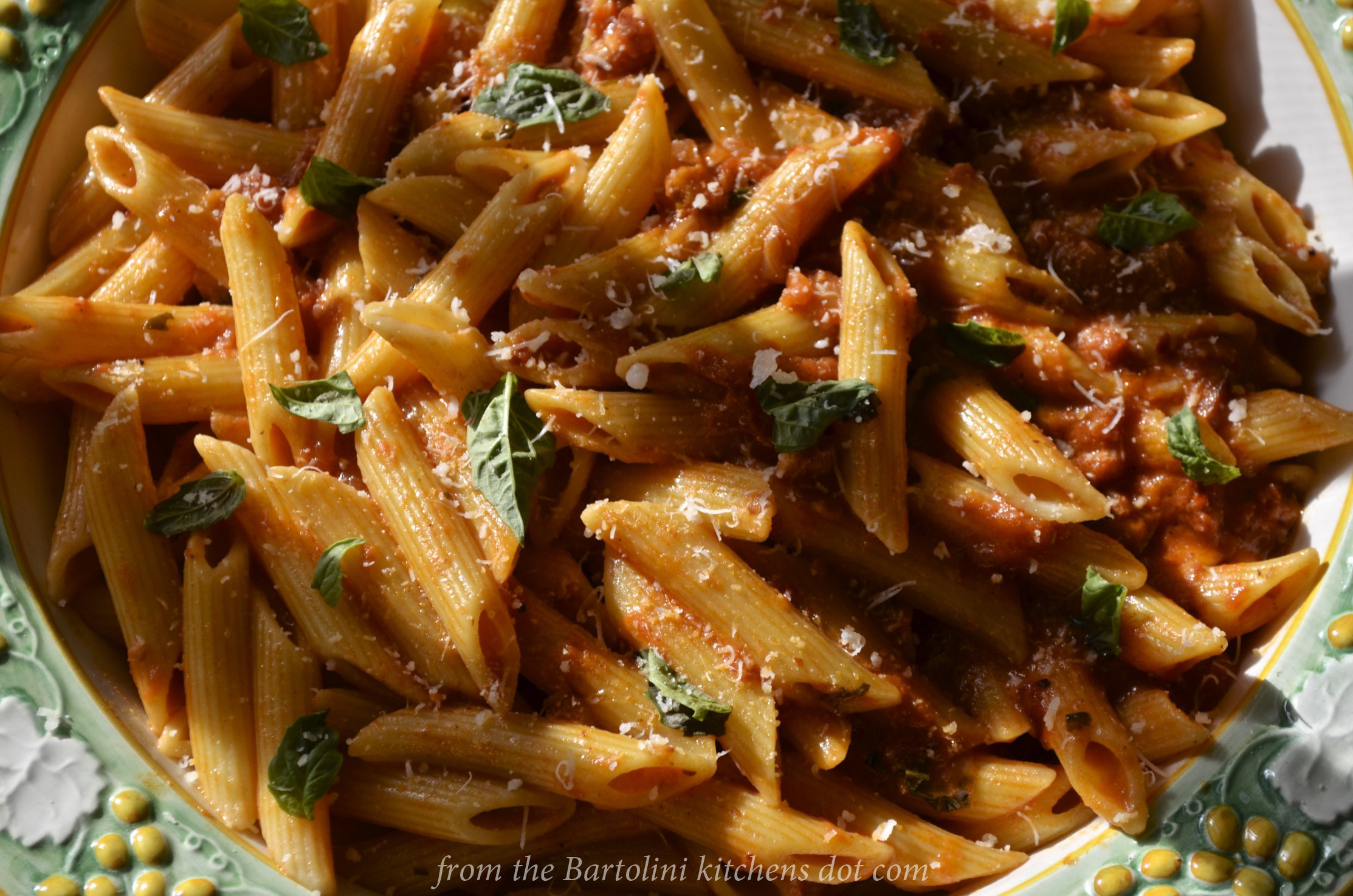
Basically, this is nothing more than a tomato sauce laced with cream and vodka. It really is that simple. Over the years, what began as a meatless dish has evolved and I now make it using prosciutto, although I have been known to serve it using ham, pancetta or even shrimp. You can pretty much use whatever protein you want and about the only thing you cannot skip is the vodka. Do that and all you’ve got is a marinara sauce with some cream added to it — not that there’s anything wrong with that. As for the brand of vodka to use, I opt for a higher quality brand, often “tasting” it first, in my kitchen, just to make sure that I’ve chosen wisely. Higher quality, however, doesn’t mean top shelf and I certainly will not be cooking with the highest quality vodka available. My basic rule of thumb is that if it’s good enough for my martini, it’s good enough for my pasta.
* * *

These are a few of my Favorite Things
* * *
Penne with Vodka-Cream Sauce Recipe
Ingredients
Directions
* * *
* * *
Variations
One needn’t use meat to make this dish and a pound of large shrimp, cut in half, is a worthy substitute. If you do use shrimp, however, add them to the sauce just before you add the pasta. The shrimp only need a couple of minutes to cook, during which the pasta should finish cooking. Remember: no cheese!
* * *
Coming soon to a monitor near you … Just not as soon as you thought it would

Crostata
* * *
Capra dell’Arrosto di Bartolini

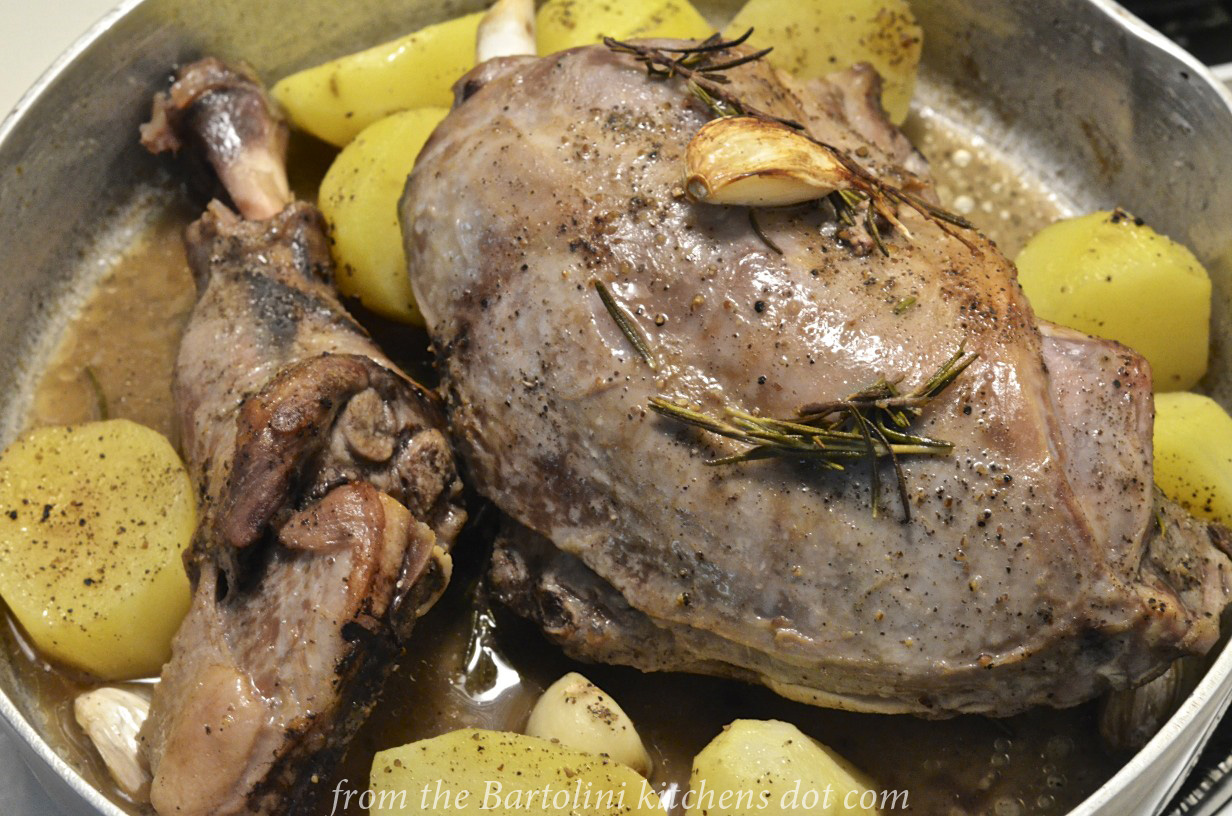
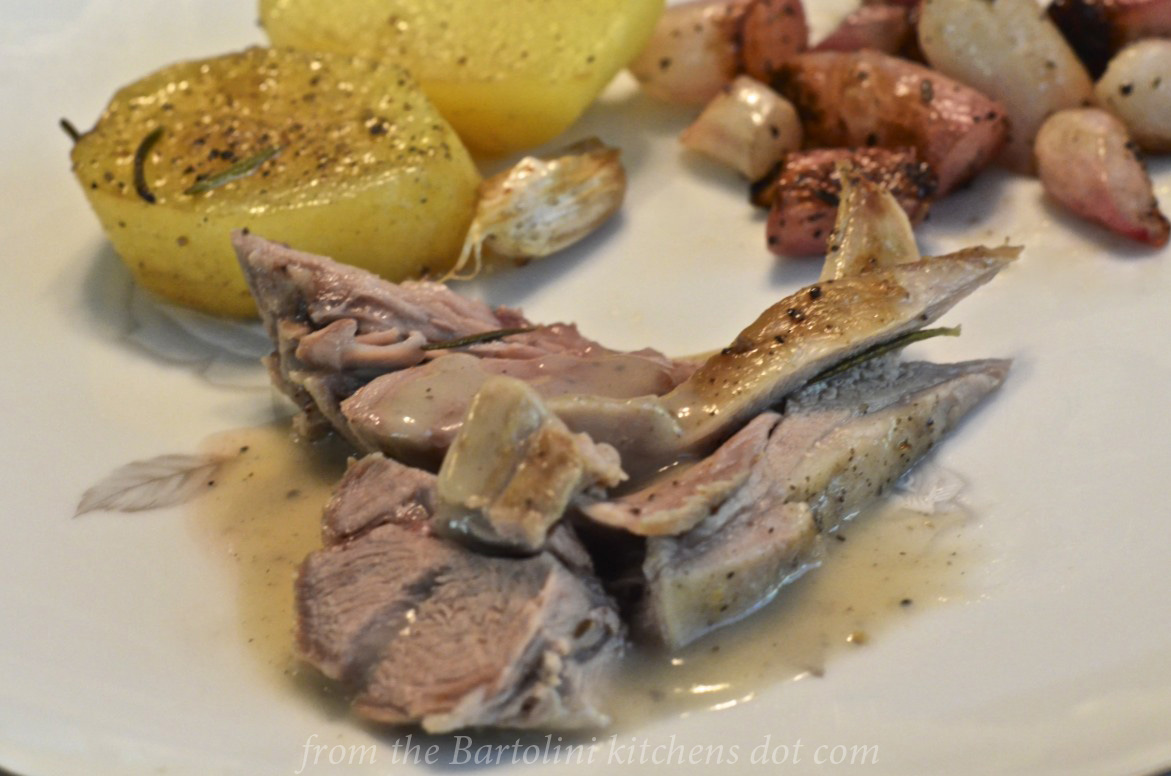
Today’s recipe is one that comes from mid-last century, maybe earlier, though the actual cut of meat used in this post differs. Here, we roasted a goat shoulder. Back in the day, an entire baby goat was roasted.
For many families, a roast of some sort marks an occasion as being special. Roast turkey or goose, baked ham, beef Wellington, or even Veal Prince Orloff, among others, may be the main course of the celebratory meal. Up until I was about 5 years of age, a baby goat was the Bartolini roast of choice for celebrations. As Zia recalls, a young goat was prepared for each of the 6 of our births — my 2 siblings and 3 cousins. I recall goat being served for Easter when I was very young. In fact, against Mom’s orders, I went down into the basement one year and found the kid. I barely had time to say “Awww” before I felt a tap on my shoulder and a well-placed hand on my behind as I was ushered back up the stairs. Even so, of the 2 of us kids in the basement that evening, I fared far better than the four-legged one. Long after we two-legged kids were in bed, Dad went into the basement and “prepared” the goat for the holiday meal. As I recall, that was the last year that roast goat was served and lamb replaced it as the meat of choice for Easter. That didn’t last long because my siblings weren’t at all fond of lamb. Mom switched to some other roast, I’m sure, but, as I’ve mentioned before, my attention was focused upon the platter of ravioli. Nothing else on that table mattered.
Although I posted a recipe for braised goat with harissa, we’ve not roasted goat in the “old way” in decades. My poor Zia. I cannot remember what I had for lunch yesterday — or to add flour to a cookie recipe — and I’m asking her to remember how we roasted goat more than 5 decades ago. She never fails to rise to the occasion, however, and today’s recipe is the latest proof.
As is the case with all of my family’s roast recipes, the method is simple, with relatively few herbs/spices being used, allowing the flavor of the meat to shine through. The only difference between this dish and the ones served years ago is that I made a sauce with the pan’s juices while the roast rested. Except for the Thanksgiving turkey, my family rarely made a sauce or gravy to accompany a roast.
* * *

Start of the braise
* * *
Bartolini Roast Goat Recipe
Ingredients
Directions
* * *
End of the braise
* * *
Notes
Depending upon how the meat was cut, you may have limited success browning all sides of the shoulder. Just do the best you can.
Zia loved the ravioli made from the roast duck leftovers so much that she made ravioli filling with the leftover goat. That filling is tucked safely away in her freezer waiting for my return to Michigan, when we’ll spend an afternoon making roast goat ravioli. I’ll post the recipe shortly thereafter.
* * *
It’s déjà vu all over again …
 With our farmers markets starting to close down for the year, about the only things left in any abundance are squash, apples, and pears. I love all 3 but this is the time of year when I make apple sauce. If you’ve not prepared it before, you will be amazed at how easy apple sauce is to make. Best of all, if you choose the right apples, there will be no need to add any kind of sweetener. You can see how it’s made by clicking HERE.
* * *
Coming soon to a monitor near you …
Crostata
* * *
 This is the second and last post using leftovers from the duck that Zia and I roasted and that I blogged about in early September. Last week was the first when I shared our recipe for duck ravioli. Today’s post resulted from a dinner I served Zia during The Visitation and, in doing so, we used the very last of that duck, save for the quack.
To start, make a stock by placing the roasted duck carcass in a large pot of cold water after removing and reserving any pieces of meat that may still cling to the bones. Into the same pot, add a large quartered onion, 2 roughly chopped celery stalks, 2 roughly chopped carrots, a few sprigs of parsley, and a quartered tomato. No need to season the stock for the carcass is already seasoned. Bring the pot to a boil before reducing to a simmer. After 2 hours, strain the stock and use it in today’s risotto.
Now, I’ve already shared 4 risotto recipes (Bartolini, Turkey, Strawberry, and Tricolor risotti) so there’s really no need to go into great detail here. There are, however, a few things to note with this particular recipe.
There are two kinds of Italian black rice, riso venere. Both are a medium grain rice, one of which is made by dyeing Arborio rice with squid ink. The other — the one that was used in today’s recipe — was developed by crossing the storied Asian Forbidden Rice with an Italian variety. This is a whole grain and, much like brown rice, takes a bit longer to cook than, say, Arborio, for example. In fact, it could easily take an hour to prepare today’s risotto. This means that you will need more stock to cook the rice. In the past, I’ve suggested using a 3 to 1 ratio — meaning 3 parts stock to every part rice — plus an additional cup of stock for good measure. Because of the increased cooking time required for this particular rice, you may need a much as double my original suggestion. Though that may seem excessive, remember that you can always use any leftover stock in any number of ways. (See Notes for a way to cut down on the cooking time and, therefore, the amount of stock required.)
In this recipe, I used dried porcini mushrooms. (I’ve yet to find fresh ones here but the search continues.) To hydrate them, place the dried mushrooms in a bowl and add very hot water. I tend to avoid using boiling water, as some might suggest, for fear that it may partially cook the mushrooms. After 20 to 30 minutes, carefully remove the now plump mushrooms and coarsely chop them for use in the recipe. Take the leftover water and add it to the heated duck stock, being careful to leave behind any of the grit that may remain in the bottom of the bowl. The stock will now be both duck and mushroom-flavored.
* * *
 * * *
* * *
To prepare the risotto, in a medium sauce pan, melt a couple tbsp of butter over med-high heat. Add some finely chopped shallots and sauté until soft. Add some minced/grated garlic and continue cooking for about a minute before adding the reserved duck meat and the chopped reconstituted porcini mushrooms. Sauté for a few more minutes and then add the rice. Cook the rice, stirring frequently, until the grains are toasted — about 5 minutes. Reduce the heat to medium, add about a half-cup of dry white wine, stir, and cook until almost all the liquid is absorbed. Repeat the process with the heated duck stock (See Notes), adding more liquid, stirring, and allowing it to be absorbed before adding another ladle or two more. Once the rice is cooked just about to your preference, add another ladle of stock, cover, turn off the heat, and allow to rest for 5 minutes. Next, remove the cover, add 2 tbsp of butter, if desired, and about 1/2 cup grated Pecorino Romano or Parmigiano Reggiano. Stir well and serve immediately, garnished with more grated cheese.
* * *
 * * *
* * *
Notes
Black rice should be rinsed before use to remove any inedible bits — pebbles, sticks, and the like. If you wish to lower the cooking time, the rice may be soaked before cooking. The longer it is soaked, the less time will be needed to cook it. Though I’ve never done this, I did see where some have soaked it as long as overnight.
Always use heated stock when making this or any risotto. Using cool or even warmed stock will greatly increase the cooking time. On the other hand, do not use stock that is boiling. Stock that is too hot will evaporate when it hits the rice-filled pan before it can be absorbed by the grains.
* * *
It’s déjà vu all over again …
 This isn’t so much a look back as it is a footnote to the 3 duck-related posts. In the past, I’ve suggested that you use leftover scraps of pasta dough to make quadretti. (Remember: waste not.) That’s what I did when I made last week’s duck ravioli and, with a cup of today’s duck stock, I enjoyed a delicious bowl of duck soup for that day’s lunch, all the while contemplating the challenges faced by the country of Fredonia.
* * *
Coming soon to a monitor near you …
 Bartolini Roast Goat
* * *

Christopher Columbus, Sebastiano del Piombo, 1519. (Source: Wikipedia)
* * *
Here in the States, today is a holiday set aside to commemorate the “discovery” of America by that navigator from Genoa, Christopher Columbus, or as we call him, Cristoforo Colombo.
Two years ago, to celebrate, I shared a musical number with you, while last year we cooked octopus. Today I’ve chosen to highlight how the Italian language is passed from generation to generation … kinda-sorta. Watch how Great Grandma teaches her Little One the intricacies of the Italian language. The only problem is that the video is far too short. I could watch these two “talk” for hours.
Have a great Columbus Day and to our good friends and neighbors to the North, have a wonderful Thanksgiving!
* * *
* * *
Ravioli dell’Anatra di Arrosto
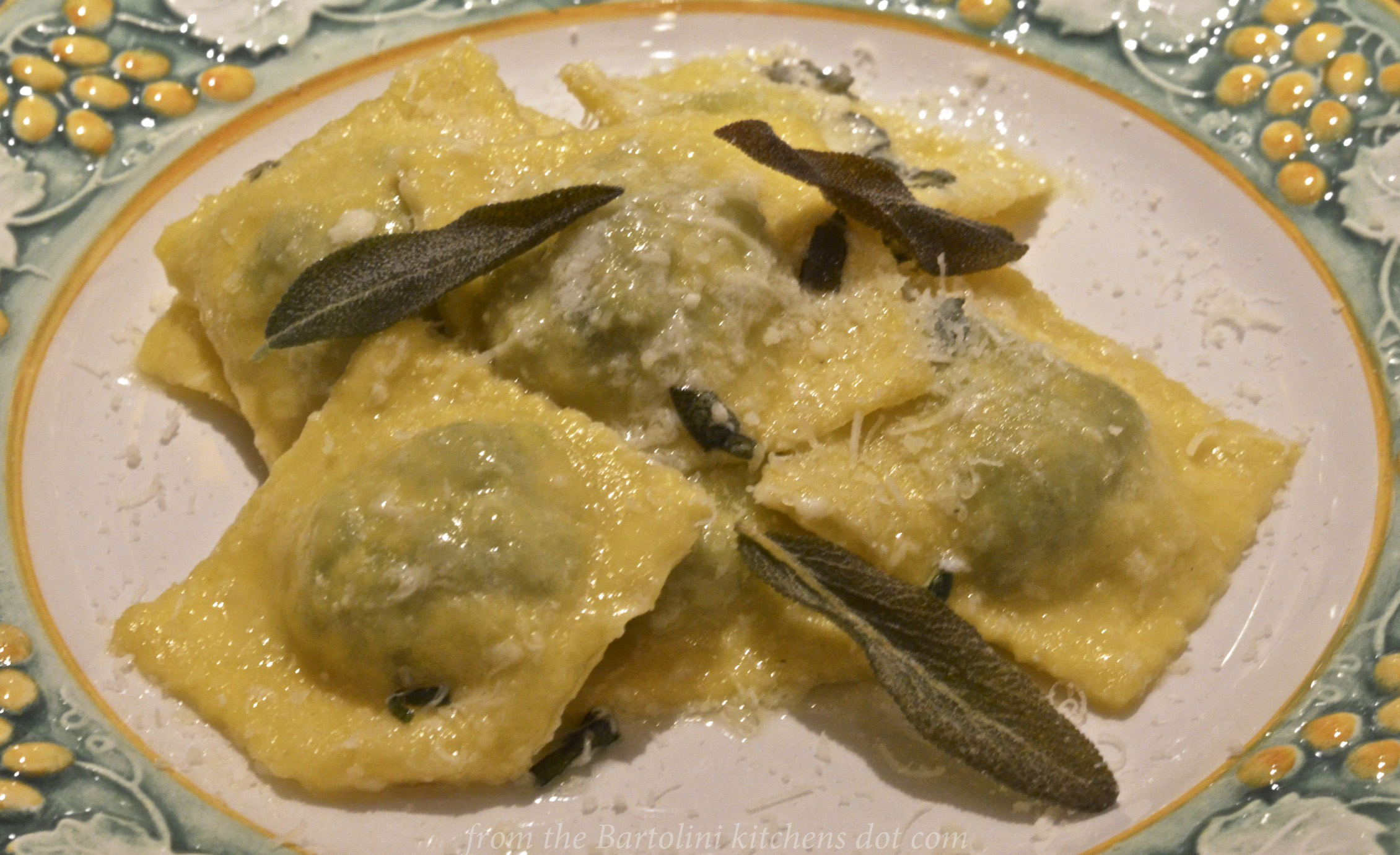 She came. She saw. She conquered.
The Visitation ended, far too quickly, and Zia is back in Michigan. While here, we met with family and friends, both near and far, new and old. We toured my favorite Italian and farmers markets and we dined out a couple of times, including our customary Friday night fish fry. This being Chicago, however, this fish fry took place at a sushi restaurant. Of course, I did cook and some of the recipes will make their way to this blog. All the while, incredibly, we were graced with some of the year’s best weather. All in all, it was a wonderful visit and I hope to import her again next year. Fingers crossed.
* * *
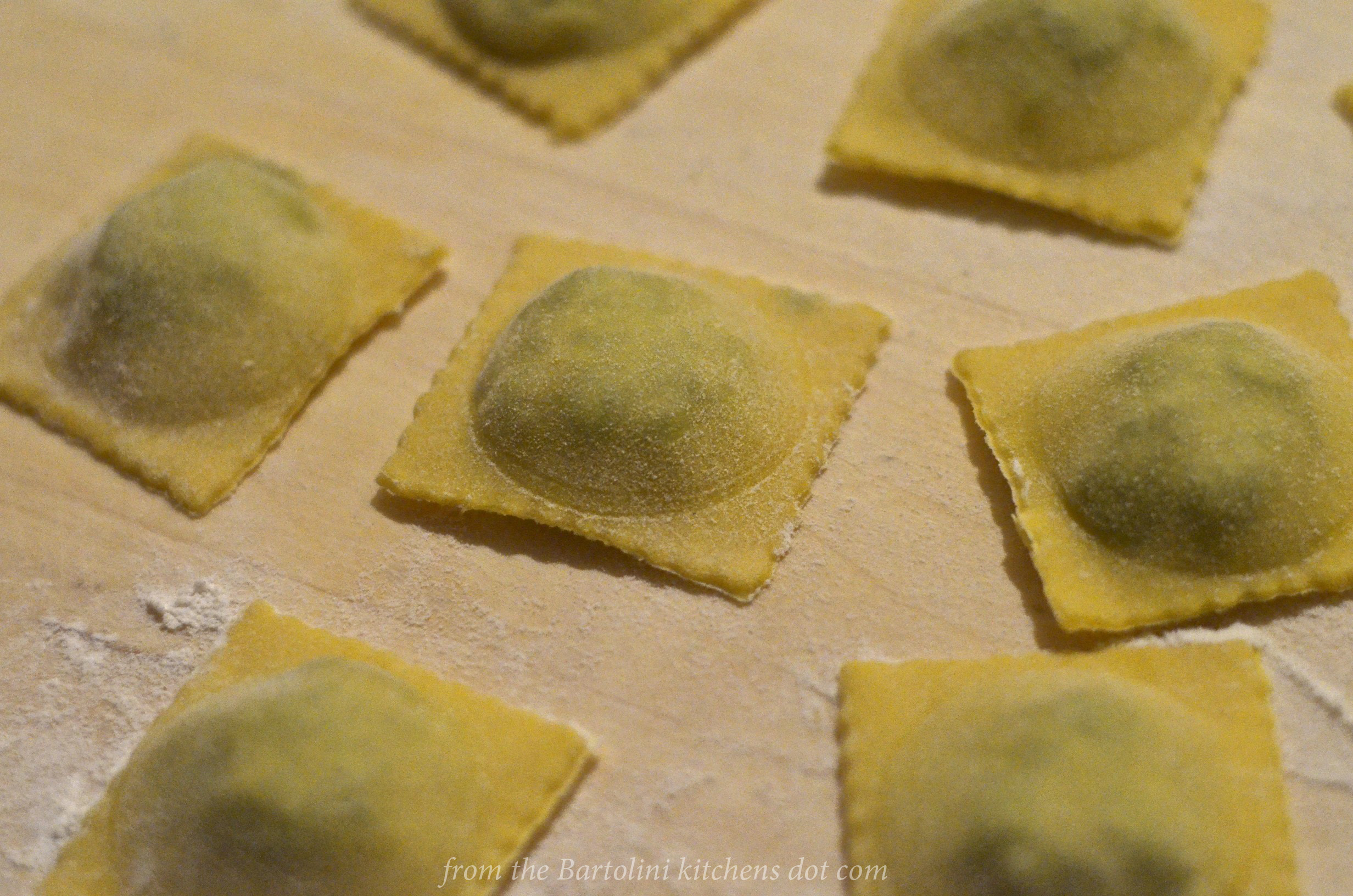
The making of ravioli has roots that go as far back as the 14th century in the North of the Italian peninsula and perhaps even earlier in Sicily. (Source: Wikipedia). Their creation involves a couple of axioms I’ve said many times before: nothing is wasted in a traditional Italian kitchen, and, meat was a dish reserved for holidays and special occasions. Well, when meat was served — and with no means of refrigeration — leftovers were a problem. Let’s face it: re-heating a piece of roast over a hearth isn’t necessarily the most appetizing means of dealing with leftovers. On the other hand, finely chopping the meat before adding it to, perhaps, a little cheese and some greens, and using the mixture to fill pasta “pockets” would make quite a tasty alternative. Not only that but a little bit of leftover meat would go a long way, far enough to feed the entire family.
This was certainly the case when Zia and I were left with some roasted duck after our meal. We discussed how to use the leftovers and decided that making ravioli was the best way to go. I think we were pretty successful, as does my Zia. In fact, when we roasted a goat shoulder during my next visit, Zia set about making ravioli filling with the leftovers, as well. Frozen, it awaits my return so that we can make “goat” ravioli. The recipes for both the roast goat and the subsequent ravioli filling will be published soon.
There is nothing complicated about our duck ravioli recipe, though the use of broccoli raab, rapini, requires a bit of blanching. How long depends upon your taste and whether you are fond of bitter greens. Blanching will remove some of the bitterness, as well as soften the vegetable’s “woody” stalks. Since we both do not mind rapini’s bitterness, we kept the blanching to a minimum. You, on the other hand, may wish to blanch the vegetable for a few minutes more and, therefore, boil away more of its bitter flavor.
* * *
 * * *
* * *
Roast Duck Ravioli Filling Recipe
Ingredients
Directions
* * *
 * * *
* * *
Notes
For step-by-step instructions for making ravioli using dies/molds, please check out my previous post for Ravioli dei Bartolini.
Here’s Mom’s Pasta Dough recipe, for those who need one. In this case, I substituted 3 duck eggs for the 4 large chicken eggs.
* * *
Serving suggestion
Dress ravioli with brown butter-sage sauce to which grated Pecorino Romano cheese has been added. Garnish with sage leaves that have been shallow-fried until crisp in olive oil. (See opening photo.)
* * *
It’s déjà vu all over again …

With today’s post dealing with a new edition to the Bartolini ravioli recipe collection, I thought a look back to the granddaddy of them all, the original Bartolini ravioli filling recipe, was in order. It’s still our favorite and the mere mention of it will cause any Bartolini clan member’s mouth to water, as his/her mind fills with memories of holidays past. You can learn all about it simply by clicking HERE.
* * *
Coming soon to a monitor near you …
 Black Rice Risotto with Roast Duck and Porcini Mushrooms
* * *
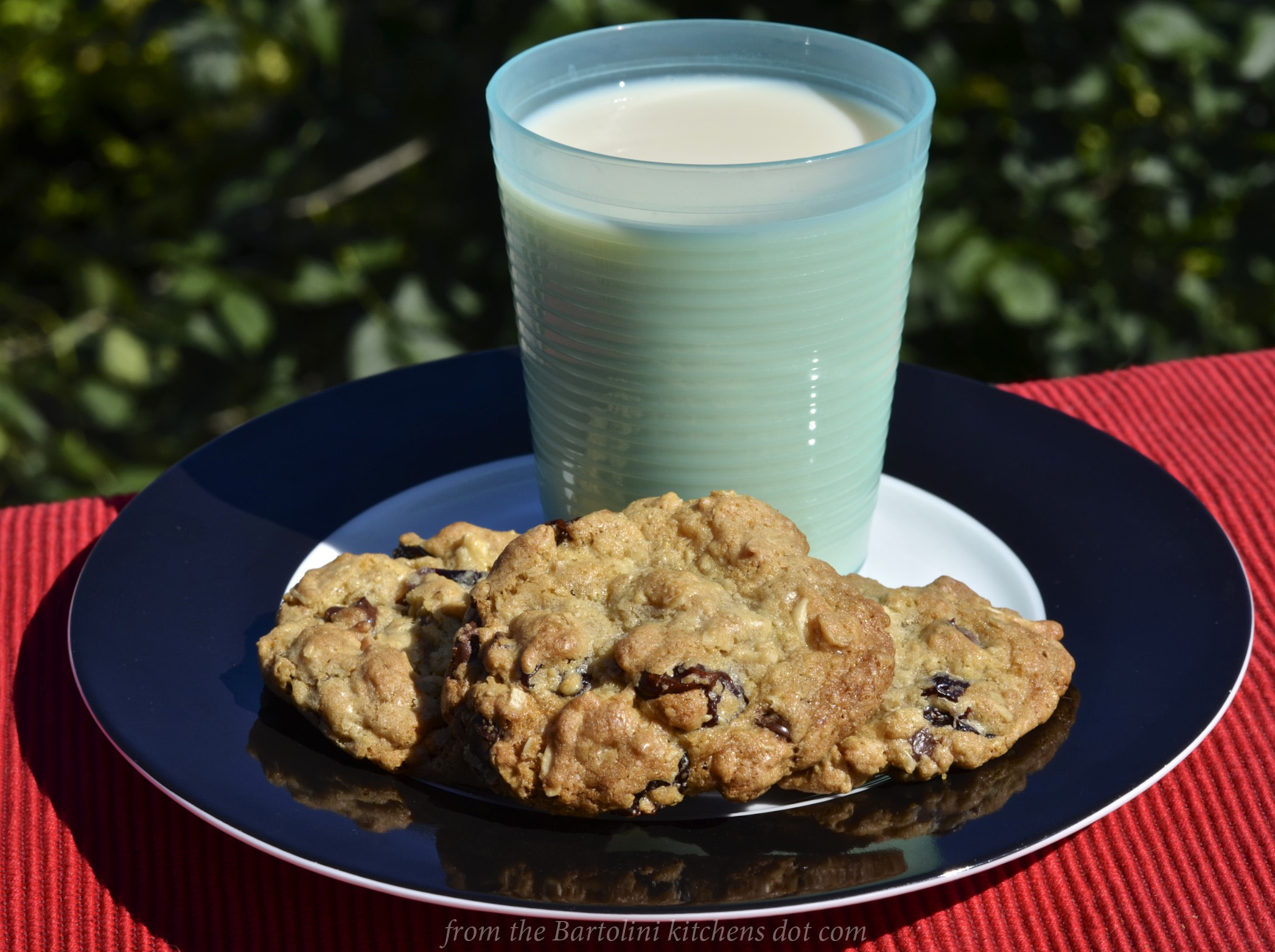
Despite today’s post and a few more on the schedule, I am no baker. I do not bake. It is a classic catch-22. I don’t bake because I make mistakes and I make mistakes because I don’t bake. My experience with today’s recipe is a perfect example.
Although I’ve prepared these cookies a number of times, I’ve made more than my fair share of mistakes. Some weren’t so bad, like grabbing dark brown sugar instead of light or forgetting to add the salt. I wasn’t always so lucky, however, like the time I forgot the baking soda. Those little nuggets were tasty but hardly the cookies I had envisioned. Perhaps the worst, though, was the time I forgot to add the flour. Who forgets flour? You wouldn’t but I sure did. You can rest assured, knowing that I’ll never do that again. Even so, there has to be a better way to learn something without nearly ruining 2 baking sheets.
My lack of baking prowess — a.k.a common sense — aside, these are great cookies that freeze well. That’s important for me because if I don’t stash cookies in my basement freezer as soon as they’ve cooled, they’ll be gone within a day. I’ve absolutely no will power when it comes to freshly baked anything. (Yet another reason I so rarely bake.)
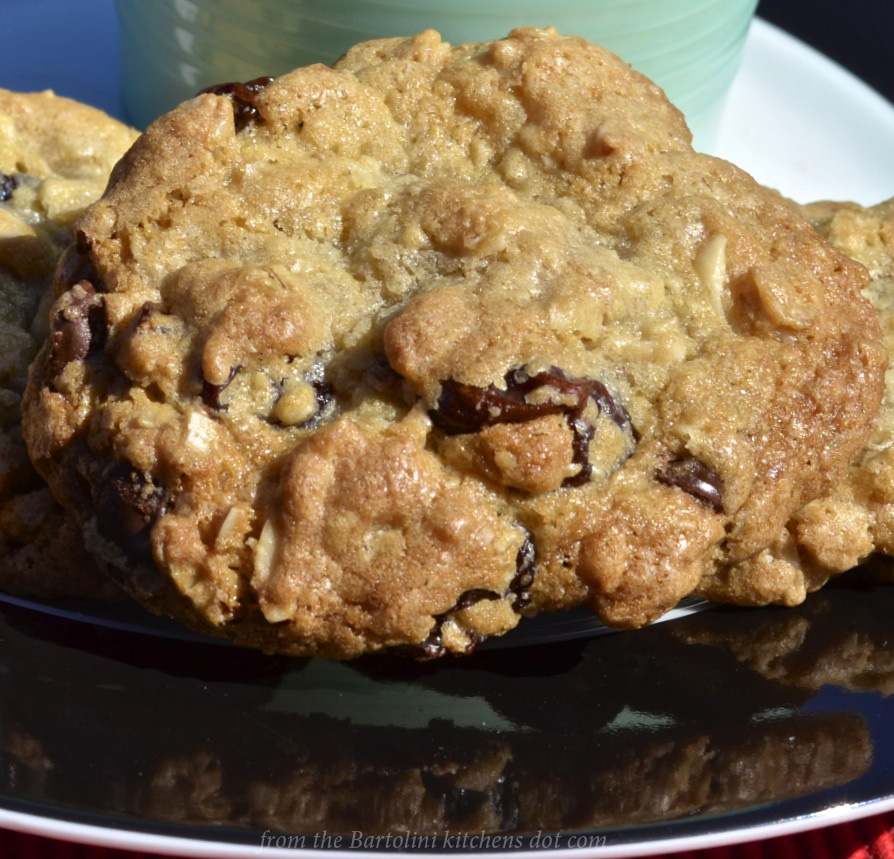
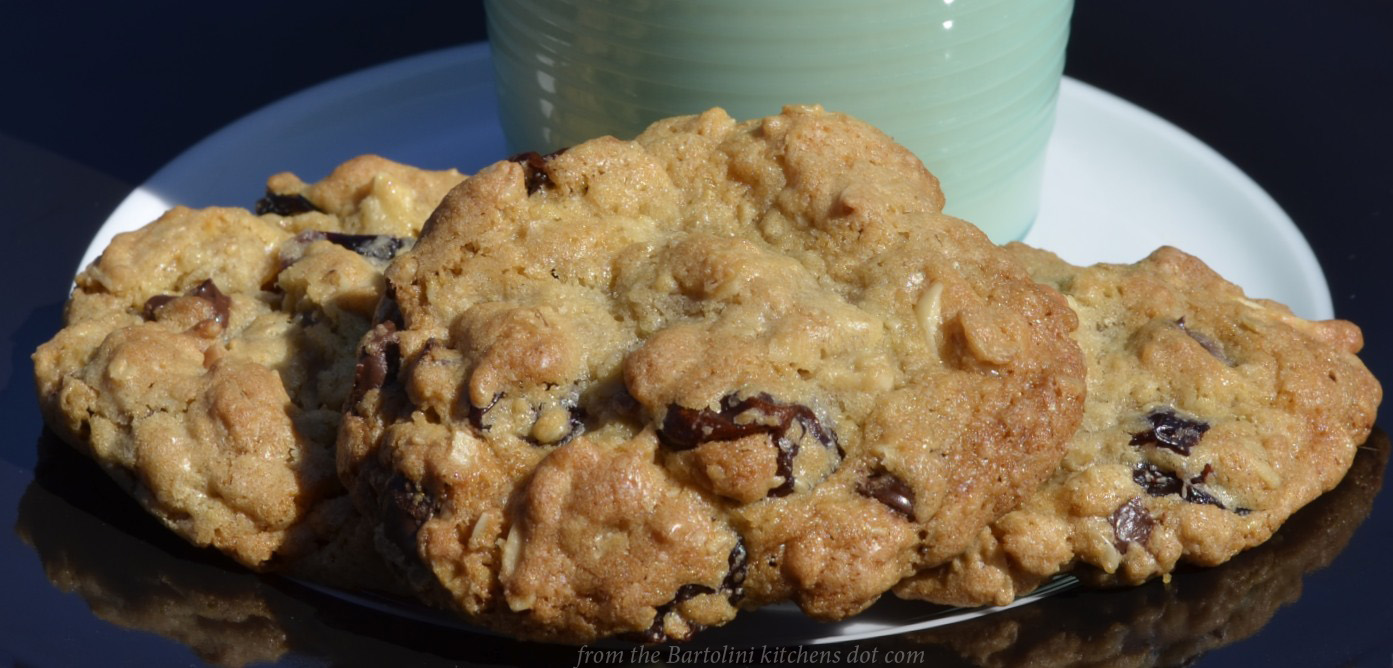
This recipe can easily be modified to suit your own kitchen and preferences. I’ve made these cookies using my food processor, as the original recipe directs, but I’ve also prepared them with my stand mixer. I’ve used dried cranberries instead of the cherries, and omitted the white chocolate altogether, doubling the amount of dark chocolate in its place. And if you like almond flavoring, try using almond extract instead of vanilla. In short, feel free to make whatever substitutions you like, just don’t forget the flour!
* * *
Announcing …
It’s time once again for the Honey Man to open shop in Michigan’s Thumb. This means I’ll be closing the Kitchens so that I can make the yearly honey run. Normally, I’d reopen the Kitchens in 2 weeks but not this year. You see, honey won’t be the only precious cargo that I’ll be bringing back to Chicago. I’m very happy to say that I’ll be playing host to a most special Guest and the Kitchens will be closed for the entire visit, known affectionately in these parts as “The Visitation.” Rest assured, the Kitchens will reopen once I’ve returned my Guest to her Michigan home.
* * *
 * * *
* * *
Oatmeal Cookies with Two Chocolates and Dried Cherries Recipe
Ingredients
Directions
Adapted from a recipe on Epicurious
* * *
 * * *
* * *
Notes
Like the fried chicken of 2 weeks ago, these cookies are good for long car rides. Very good.
* * *
The Colosseum and Forum of Rome
Just down the street from our flat was the Colosseum, one of the World’s few arena’s older than Wrigley Field. It is usually one of the first and last sights I see when I’m in Rome. As I’ve told my friends — ad nauseam, I’m sure — I’m a tactile person and only when I touch the Colosseum do I truly feel that I am in Rome.
(Click to enlarge any/all photos)
* * *


* * *
Right outside of the stadium lie the ruins of Ludus Magnus, the best of the gladiator schools. Tunnels once connected it to the “basement” of the Colosseum, which housed everything from wild animals and gladiators to their unfortunate victims. The amphitheater itself is huge with seating estimates that surpass 45,000 people. Yet, it could be vacated in as few as 5 minutes in an emergency. Located around the arena are thick cement posts, of a sort. These were used to support a retractable roof that provided shade from the hot Roman sun, while the arena floor could be flooded to permit mock naval battles to be performed. When not flooded, the stadium floor featured numerous trap doors, allowing for the “introduction” of fierce animals into the arena. Like so much of Rome, history comes alive as you walk around the Colosseum.
* * *
 * * *
* * *
The heart of the ancient city, the Forum, was where Romans came to conduct business, shop, talk politics, and worship. On one side lay the Colosseum, easily the largest amphitheater of its time. On another, atop Palatine Hill, is where the emperors lived, as well as the Republic’s wealthiest citizens. Being slightly elevated, it was believed to be a bit cooler than the surrounding area and it gave the inhabitants the opportunity to literally look down upon the masses milling about the Forum. Following the main path through the Forum, the Via Sacra, you’ll pass the ruins of numerous temples, basilicas, and the Curia, where the Roman Senate met and where Julius Cæsar was assassinated. Speaking of which, you’ll also come across the altar used for Cæsar’s cremation. (The first time I visited the Forum was on March 17th quite a few years ago and red roses were strewn about the altar.)
* * *


* * *
If you are at all interested in the Roman Empire and find yourself in Rome, you really must see the Colosseum and Forum. Words and photos cannot describe the sensation of walking along the Via Sacra, tracing the steps of people like Julius Cæsar, Tiberius, Augustus, and every Emperor that was to follow them, not to mention countless notables of the ancient civilization. It was, for me, the perfect way to end my holiday and this series.
* * *
It’s déjà vu all over again …
 Today’s blast form the past isn’t at all a seasonal dish, at its core, but you could make it one, if you wanted. Aglio e Olio is so simple to prepare that it is a “late home from work” dish; a “we spent the night out with friends and need something quick to eat” dish; and/or a “my cupboard is bare and I’m hungry” dish. Aglio e Oilo can be all these things and so much more. You can learn all about it by clicking HERE.
* * *
Coming soon to a monitor near you …
 Roast Duck Ravioli
* * *
 from the Bartolini kitchens