
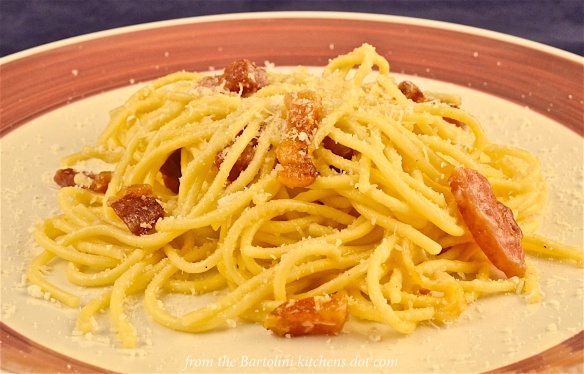
I first enjoyed Spaghetti alla Gricia 2 years ago. It was my last night and supper in Rome after what had been, by any measurement, a very filling vacation. I wanted some lighter fare and the simplicity and flavors of this dish appealed to me. I’m currently in the planning stages of another trip to San Marino and Rome and that dinner and pasta came to mind.
* * *
* * *
Spaghetti alla Gricia is an old recipe that originated in Lazio, the district in which Rome is located. It is from the time before tomatoes were brought to Europe in the sixteenth century. There are 2 legends surrounding tomatoes’ arrival in Europe and Italy. The first, and most probable, is that they crossed the Atlantic when one of the conquistadors (Pizarro?) returned to Spain. The other says that 2 Italian priests brought tomatoes with them when they returned from Mexico. Regardless of how they got to the continent, the first mention of tomatoes in Italy appeared in a Tuscan document in 1548. Pre-dating that document means that Spaghetti alla Gricia is one, old dish!
You can trace 2 delicious pasta dishes to Spaghetti alla Gricia, Spaghetti alla Carbonara and Spaghetti all’Amatriciana. Much like the alla Gricia pasta, a carbonara is tomato-free, though it does include eggs, something its predecessor lacks. Amatriciana dishes don’t include eggs but they do include tomatoes. Frankly, you cannot go wrong if you decide to make any one of the three dishes.
I had originally intended to share a recipe for butternut squash noodles cooked alla Gricia. While writing that post, I searched this blog for my Spaghetti alla Gricia recipe and was surprised that it was never shared. So, I’ll share the spaghetti version now and the butternut squash version in a few minutes.
With only 4 ingredients, this is about as simple a pasta dish as you can prepare. The longest part of the process is the time it takes to boil the water. As is the case with all easy pasta dishes, timing is critical. The spaghetti should be cooked just shy of al dente so that it finishes cooking in the pan with the pork. The only other issue that may arise is the type of pork product to use. The dish is normally made with guanciale, a non-smoked bacon made from the jowls of a hog. Here I substituted pancetta. You could also use ham or bacon, although I would caution against using a smoked product. WIth so few ingredients, the smoke would become the predominant flavor and this dish is all about balance. You’ll want to taste the pork and cheese equally and not smoke.
* * *
* * *
Spaghetti alla Gricia Recipe
Ingredients
- 1 lb (450 g) spaghetti
- 2 tbsp olive oil
- 4 to 6 oz (112 to 168 g) guanciale cut into strips (lardons) or ⅓ inch dice – pancetta, ham, or non-smoked bacon may be substituted
- ¼ cup Pecorino Romano cheese, grated
- reserved pasta water
- additional grated Pecorino Romano for serving
Directions
- Bring a large pot of heavily salted water to the boil. Add the spaghetti and cook following package directions until about 2 minutes short of al dente. Reserve some of the pasta water for possible use later. (Step 5)
- Meanwhile, place olive oil in a hot frying pan over medium heat. Add pancetta and sauté to render the fat.
- Once the fat has been rendered and the pancetta browned, not burnt, add the cooked spaghetti and toss to evenly coat the pasta.
- Sauté until the pasta is cooked to your preference.
- Remove from heat, add the Pecorino Romano cheese, and toss to combine. If too dry, add some of the reserved pasta water.
- Serve immediately, garnished with additional Pecorino Romano.
* * *
* * *
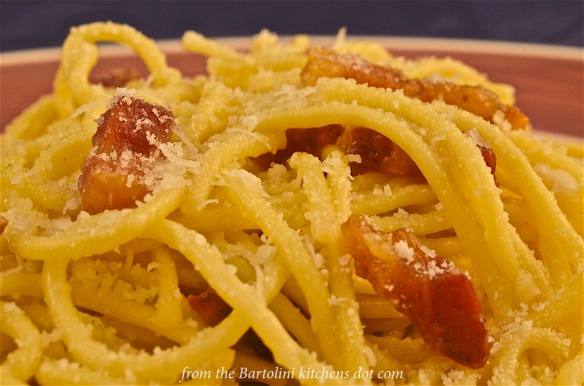
What did I tell you? This really is an easy recipe to prepare and a very flavorful one, at that. I think you’ll find butternut squash alla Gricia to be no more complicated.
* * *
The Spiralizer Chronicles, Chapter 2: Butternut Squash alla Gricia
* * *
* * *
Although quite simple to prepare, working with spiralized vegetables does create a few issues. Some spiralized vegetables, like zucchini, will sweat water over time. If boiled, you may need to drain and, unlike pasta, pat them dry before proceeding with the recipe. Roasting may help to lessen the problem but, whether boiled or roasted, these “noodles” will not absorb sauce like pasta does. Remember that when dressing these dishes. If there’s a pool of sauce/dressing at the bottom of the serving bowl, you’ve likely used too much.
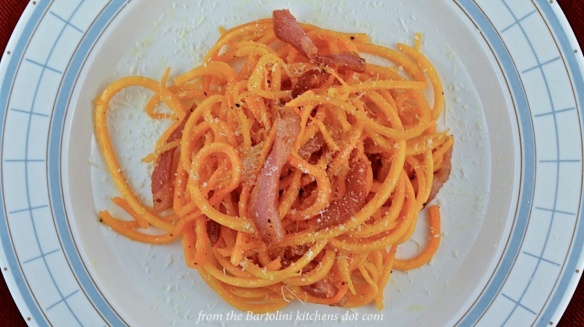
With those issues in mind, and knowing that butternut squash doesn’t sweat nearly as much as other vegetables, choosing to prepare it alla Gricia was a no-brainer, especially for an inexperienced spiralizer user like myself. I mean, there are only 4 ingredients and one of those are the noodles! You don’t need much experience to get this recipe right.
As simple as this dish is to prepare, if you choose to cook the noodles as I have, there are 2 ways to go about it. I chose to roast the butternut noodles prior dressing them with the sauce. If you prefer, you can cook the noodles in the same pan as was used to prepare the sauce (see Notes). There is, in fact, a third option. Depending upon the vegetable you use to make your noodles, you may choose not to cook them at all. Once spiralized, place the noodles in a serving bowl, dress them with the browned guanciale and rendered fat. Add the cheese, toss to combine, and serve.
* * *
* * *
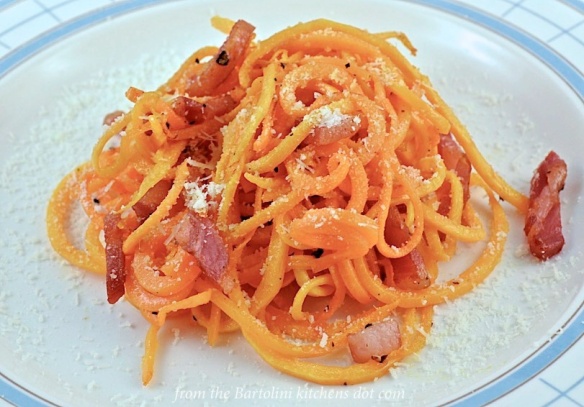
Butternut Squash “Noodles” alla Gricia Recipe
Ingredients
- the neck of ! small butternut squash (9 oz; 270 g – trimmed) (See Notes)
- 2 tbsp olive oil
- 4 oz guanciale cut into 1 inch strips or ⅓ inch dice – pancetta, ham, or non-smoked bacon may be substituted
- ¼ cup Pecorino Romano cheese, grated
- hot water or chicken stock
- additional Pecorino Romano for serving
Directions
- Preheat oven to 400˚ F (205˚ C)
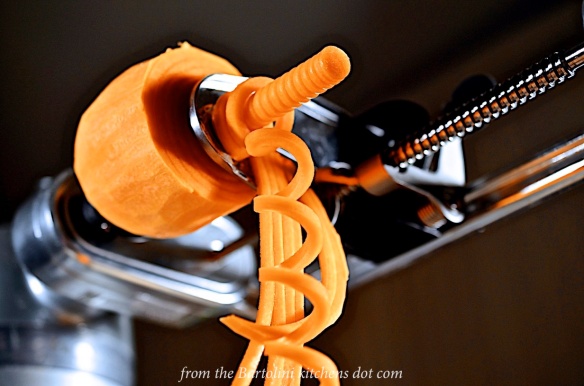
- Use a spiralizer to create the thinnest possible noodles
- Place noodles evenly on a baking sheet. Season with salt and pepper and sprinkle LIGHTLY with olive oil. Mix to evenly coat the squash.
- Place the squash into the preheated oven and roast for 10 to 15 minutes or until cooked to your preference.
- While the squash roasts, Place the oil in a large hot frying pan. Once heated, add the guanciale and cook over a medium heat. This will render the fat without burning the guanciale,
- Cook until the guanciale is browned, not burnt, and the fat has rendered.
- Add the now-cooked noodles to the pan and toss to coat.
- Remove from the heat, add the cheese, and toss until the noodles are well-coated.
- If too dry, add a little hot water or chicken stock. Mix well.
- Serve immediately garnished with additional grated Pecorino Romano.
* * *
* * *
Notes
As is the case with all vegetables to be spiralized, choose butternut squash that are as straight as possible. Spiralizers do not work as well with curved vegetables.
Butternut squash have a long neck connected to a bulb-like section which contains the seeds. This bulb cannot be spiralized. Cut the squash where the 2 sections meet and reserve the bulb for another use.
Unlike many other vegetables, butternut squash must be peeled before being spiralized.
If you choose not to bake your noodles beforehand, spiralize the squash and set the noodles aside. Heat the oil and guanciale in a large frying pan. Once the guanciale has browned — not burned! — and the fat rendered, remove the guanciale to a paper towel. You may need to drain some of the fat in the pan depending upon the amount of noodles you’ll be using. Add the noodles to the pan and toss until evenly coated with the fat. Cook the noodles until they reach the right amount of doneness to suit your taste. Once cooked to your liking, add the guanciale back into the pan, toss. When heated through, take off the heat, add the cheese, and toss to combine. If too dry, add some hot water or chicken stock, toss, and serve garnished with grated cheese.
No matter how you cook the noodles, the longer you cook them, the softer they will become. The noodles should retain a bit of crispness straight from the oven. Taste the noodles as they sauté until they reach your desired doneness. Once there, immediately take them off the heat before continuing with the recipe.
For either alla Gricia recipes, be careful not to add so much olive oil when rendering the pork fat that you will need to pour some of it off before adding the spaghetti or squash noodles. That fat is loaded with flavor. Better that you add just a little olive oil in the beginning and more, as needed, later on.
* * *
It’s déjà vu all over again …
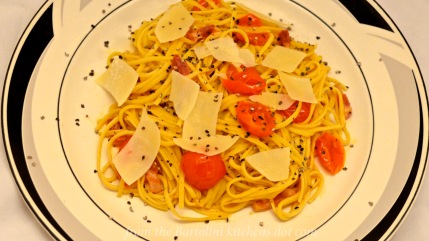
Since it was mentioned earlier as a “descendent” of today’s recipe, I though I’d send you back to take a look at the Spaghetti all’Amatriciana recipe. Not only will you see the dish prepared but you’ll learn how to use a chitarra to make the pasta. Interested? Just click HERE.
* * *
Coming soon to a monitor near you …
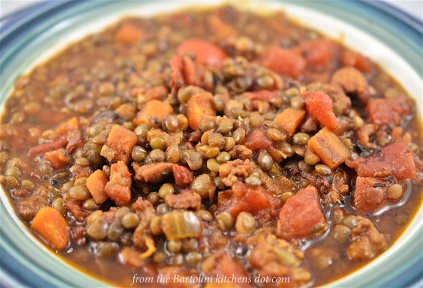
Stormy Lentils
* * *






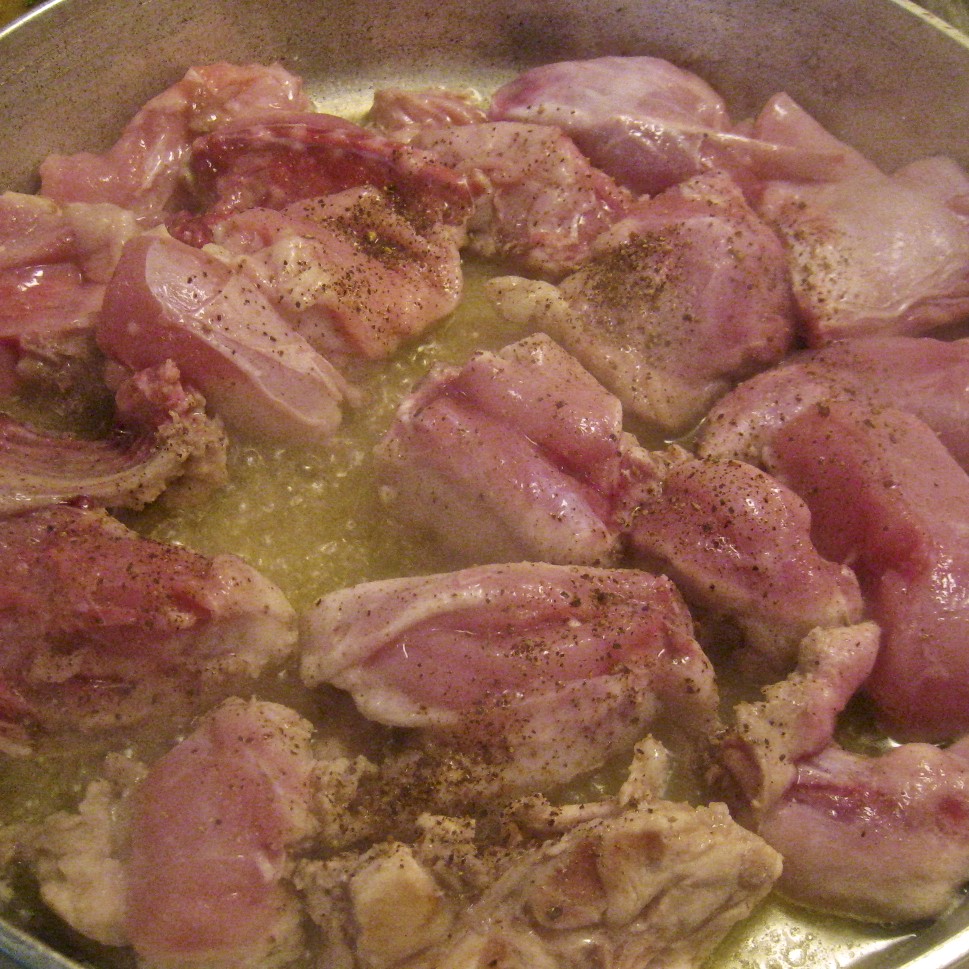




 Stovetop Braised Rabbit








 from the Bartolini kitchens