Trenette with Mussels and Clams

Trenette con Cozze e Vongole
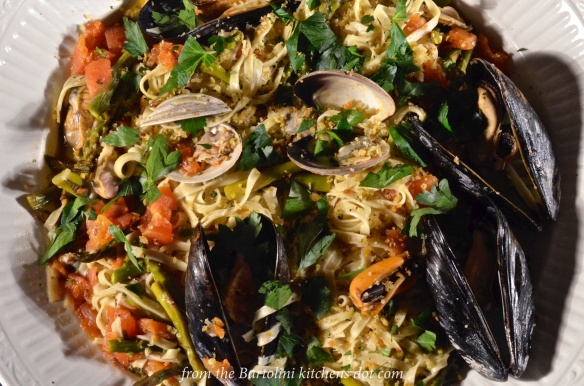
Trenette with Clams and Mussels 3

Just when you think you’ve got all bases covered, The Fates take note and decide to have a little fun. I have been busily at work getting recipes and posts together for the next several weeks. With my trip fast approaching, I don’t want any loose ends to complicate matters. Having posts written and scheduled means that my attention, such as it is,  can be diverted elsewhere with minimal affect to the blog. That was the plan and, with everything in place, I went to the fishmonger.

How was I to know that there would be a sale on clams and mussels? More to the point, how was I supposed to ignore the sale on clams and mussels? The truth is, I couldn’t. I left the shop with a bag full of mollusks and a head full of pasta ideas. On the way home, I stopped at a grocery and bought everything I needed to make today’s dish. Afterwards, I wrote this post and inserted it here, shifting the other posts to accommodate it.

So why the schedule change? Asparagus. It’s coming into season and the green stalks are every bit the star of today’s dish as are its shelled companions. You may not find clams or mussels on sale but you’re sure to see plenty of asparagus. It makes a wonderful addition to just about any pasta that you might prepare in the weeks ahead.

At this point, you would think that all’s well with my schedule and I can rest easy. Oh, how little you know of The Fates. Having finished adjusting the posts to accommodate the new entry, I searched for my soft shell crab pasta recipe to use as the déjà vu photo for today’s post. It was nowhere to be found. I soon discovered that although it had been included in the cookbook, the recipe never made it to the blog. Curses! With soft shell crabs currently in season, that recipe needs to be posted and the recipe has been inserted into the schedule for next time. Once again, all subsequent posts have been shifted to make room for the new guy. One step forward, two steps back.

*     *     *
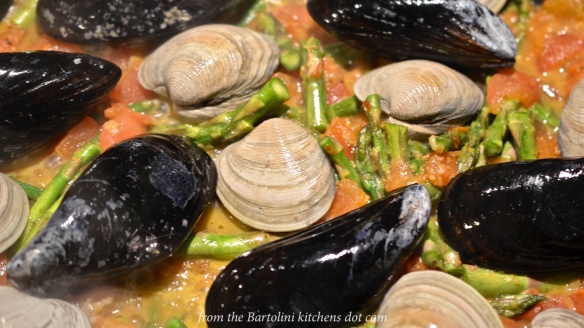
Trenette with Clams and Mussels 1

*     *     *

Trenette with Mussels and Clams Recipe

Ingredients

  • 1 lb (450 g) trenette pasta – spaghetti or linguine may be substituted
  • 3 tbs olive oil
  • 1 clove garlic, minced or diced
  • red pepper flakes, to taste
  • 3 plum tomatoes, peeled, seeded, and chopped
  • about 1/2 cup dry white wine
  • 1 lb littleneck clams, soaked to remove grit and scrubbed (See Notes)
  • 1 lb mussels, scrubbed with beards removed
  • 1/2 lb of fresh asparagus, chopped into 2 inch (5 cm) pieces
  • 2 tbs fresh basil chopped
  • salt and pepper to taste
  • roasted bread crumbs for garnish – optional  (See Notes)
  • fresh parsley for garnish

*     *     *

Trenette with Clams and Mussels 4

*     *     *

Directions

  1. Begin heating a large pot of salted water to be used to cook the pasta.
  2. Heat the olive oil in a large frying pan with a lid over medium heat.
  3. Add garlic and red pepper flakes. Cook for 2 minutes.
  4. Add tomatoes and wine. Stir well to combine.
  5. Continue cooking until most of the wine has reduced and the tomatoes have broken down — about 20 to 25 minutes.
  6. Add the asparagus and basil, stir, and then add the clams. Cover the frying pan.
  7. Add the pasta to the boiling water. (See Notes).
  8. About 2 minutes later, add the mussels to the frying pan and cover again.
  9. The mussels and clams should be opening at just about the time the pasta is nearing al dente – about 4 to 5 minutes.
  10. Drain the pasta and add it to the frying pan. Toss to combine. Continue cooking until the pasta is cooked to your satisfaction.
  11. Place the frying pan’s contents into the serving bowl. Be sure to remove and discard any unopened clams and mussels. When in doubt, toss it out!
  12. Garnish the dish with toasted bread crumbs and parsley before serving. Please, no cheese for this seafood dish.

*     *     *
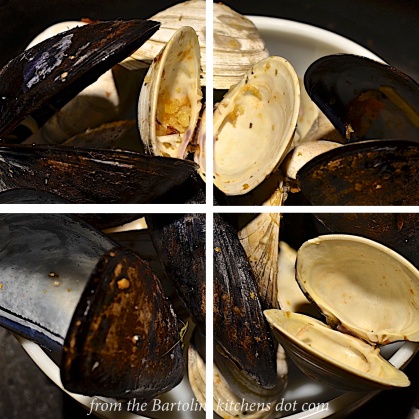
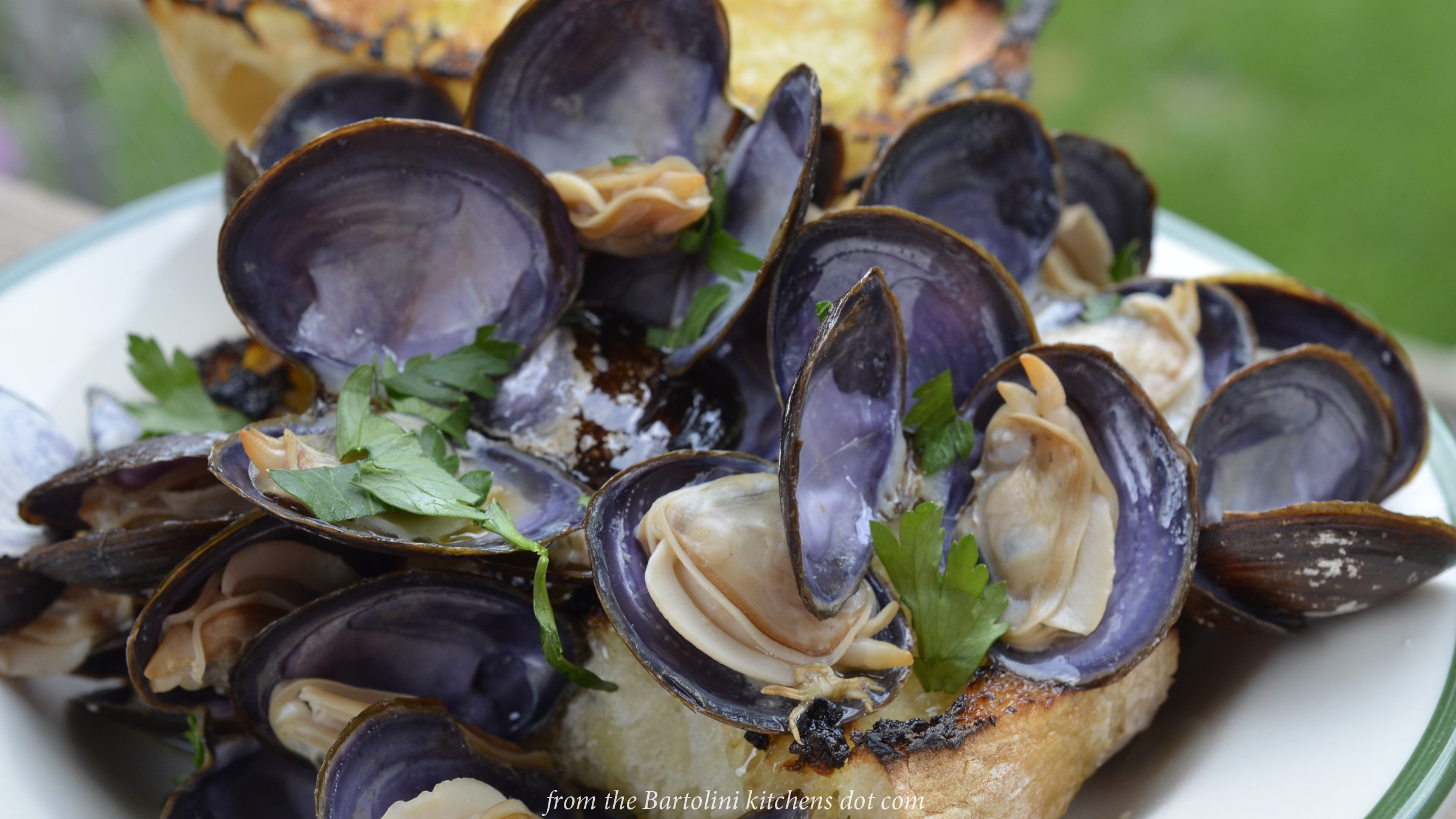
Empty Molluscs

*     *     *

Notes

Unlike years ago, most clams bought today from retail outlets have already been purged of sand, or so I’ve heard. That’s not the case, however, if you harvest your own or buy them along the shore. Even so, I still soak my clams to give them a chance to eliminate any sand. To do this, place the clams in a bowl of cold, fresh water and allow them to soak for a half hour or more, changing the water mid-way through. This is not the only way, however, and some advise that salt water is better at getting clams to discharge their sand. In both camps, there are some who believe that a bit of cornmeal will speed the process.

Do you remember last week’s baked calamari post? At the time, I advised making extra breading and reserving all of it left in the roasting pan once the calamari were removed and served. Well, this is one of the reasons why I suggested saving it. Rather than toast some breadcrumbs to garnish your pasta, grab some of these reserved breadcrumbs instead. They’re already cooked so either let them come to room temperature or nuke ’em for about 30 seconds before using. They are a great source of seafood flavor for your pasta.

This recipe is based on cooking dried pasta with an al dente cooking time of about 6 minutes. When I made the dish pictured, I used fresh trenette pasta that I had made just about an hour before cooking. Freshly made pasta cooks in 2 to 3 minutes. As a result, I waited an additional 2 minutes before adding it to the boiling water.

*     *     *

It’s déjà vu all over again …
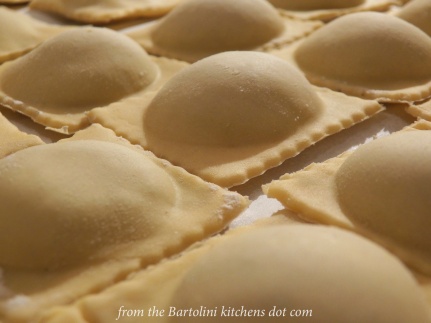
Asparagus Ravioli Deja vu

WIth this post’s mention of asparagus, it would be a missed opportunity should I not point you to another asparagus-related post. Made with asparagus, crimini mushrooms, and freshly made ricotta, these ravioli are a great springtime dish, whether served as a starter or main course. You can learn how to make the ravioli HERE.

*     *     *

Coming soon to a monitor near you …
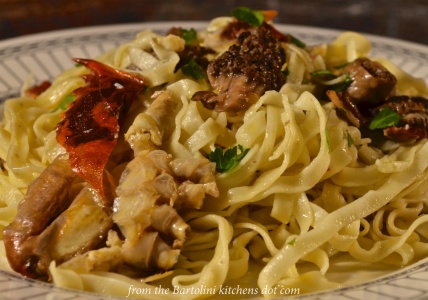
Trenette with Soft Shell Crabs and Morels Preview

Trenette with Soft Shell Crabs and Morel Mushrooms

*     *     *
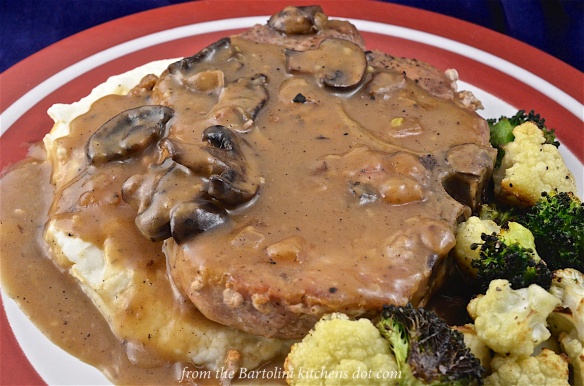
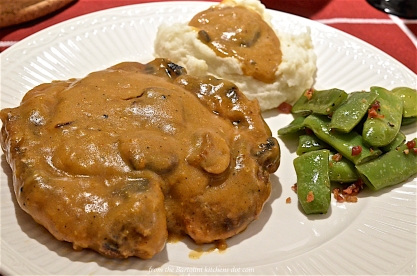
Smothered Pork Chops

Smothered Pork Chops 2

Those of you who have been with me for the past few weeks are aware that my eating habits are in a state of flux. Once it entered my life, the spiralizer set about changing me, as new loves often attempt. It was successful to an extent. Though I’ve not increased the number of my meatless days, I have enjoyed a greater number of meatless suppers. Even so, there are limits to my meat-free ways. When the temperature gets and stays well below freezing, I crave comfort food which, for this carnivore, means a meat dish of some sort. Enter today’s recipe, smothered pork chops.

I’ve watched countless chefs prepare this dish, each adding their own special touch. I shied away from preparing it because I have a history of being gravy-challenged, unless you prefer a gloppy, lump-filled mess. Lucky for me, and anyone seated around my table, that’s no longer the case. Who says you can’t reach an old dog new tricks? So, with my new-found gravy-making skills, it was time to smother some pork chops — and I haven’t looked back.

The recipe itself is surprisingly simple and there are plenty of opportunities to make it your own. For this recipe, I make a gravy using mushrooms, onions, and garlic with chicken stock and a little milk. You may wish to add jalapeños or perhaps make more of a milk gravy. Buttermilk is a good substitution, as well. Don’t have milk? Don’t worry about it. Replace it with some white wine and you’ll still have a tasty gravy. In short, so long as you’ve got the chops, you can make this for dinner tonight.

One word of caution. Although the chops will be pulled off the heat when not quite finished cooking, the time needed to get to that point will vary greatly depending on the thickness of the chops. Steer clear of really thick chops. They’ll require a longer cooking time, at lower heat, or they’ll brown but remain raw on the inside. That could be a problem later in the process, when you return the chops to the pan with the gravy.  Rather than cook them together for 10 minutes or so, they’ll need to stay in the pan for quite a bit longer. For me, that causes the gravy to thicken far too much. (Gravy-challenged, remember?)

*     *     *

Smothered Pork Chops 3

*     *     *

Smothered Pork Chops Recipe 

Ingredients

  • 2 tbsp olive oil to start, possibly more later in the process
  • pork chops, medium thickness, 1 per serving
  • 1 small to medium onion, sliced
  • 6 mushrooms sliced
  • 2 garlic cloves, finely diced or grated
  • ¼ cup flour
  • 1½ cups chicken stock – vegetable or pork stock may be substituted
  • ¼ cup milk – buttermilk or cream may be substituted
  • salt and pepper, to taste

Directions

  1. Heat olive oil in a large fry pan over medium heat.
  2. Once oil is hot, place pork chop(s) into the pan and cook until browned on each side — about 5 minutes per side. Remove to a plate.
  3. Place onion into the pan and sauté for a couple of minutes before adding the mushrooms. Continue to sauté until onions are translucent and mushroom cooked to your liking.
  4. Add garlic and continue to sauté for about a minute.
  5. Remove all but 4 tbsp of oil from the pan. If need be, add enough oil to the pan so that the amount of fat/oil in the pan equals the amount of flour added in the next step.
  6. Add the flour to the pan, stir, and make a roux. No need to make a dark roux but it should be cooked for a couple of minutes.
  7. Add the chicken stock to the pan in thirds, mixing well between additions to eliminate lumps.
  8. Reduce heat to med-low, add the milk, and stir to combine.
  9. Season with salt and pepper to taste.
  10. Return the pork chops to the pan, spoon gravy over them, and heat until cooked to your satisfaction, usually 5 to 10 minutes, Turn the chops mid-way through.
  11. Serve immediately with plenty of gravy for smothering.

*     *     *

Smothered Pork Chops 1

*     *     *

Notes

You may need to adjust the gravy ingredient amounts to suit the number of chops to be served. In the photos, that is one big chop and there’s more than enough gravy to smother it.

Milk gravy is a southern tradition. If that’s your preference, you can easily make it here. Just reverse the quantities of the chicken stock and the milk. Be sure to test for seasoning before serving.

*     *     *

It’s déjà vu all over again …

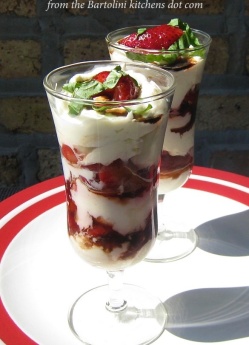
Strawberry-Balsamic-Mascarpone Parfait

I recently prepared a pasta with mascarpone  for dinner and thought it was about time we revisited making the creamy cheese. (Hard to believe it’s been 4 years since I first shared that recipe.) Mascarpone is far easier to make than you might think and certainly cheaper than any that you can buy. Once made, why not use some in a strawberry-balsamic parfait just like the one pictured? You can learn all about it when you click HERE.

*     *     *

Coming soon to a monitor near you …

Baked Calamari Preview

Zia’s Baked Calamari

*     *     *

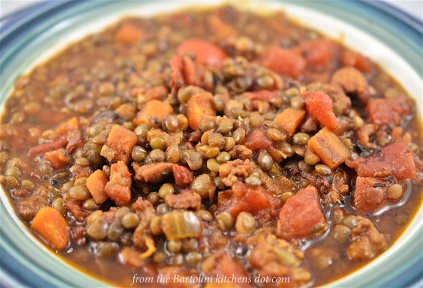
There’s a storm-a-comin’! Grab the … lentils?

Lenticchie

A couple of weeks ago, those of us living in this area were treated to a number of weather forecasts warning of an impending snowstorm. Depending on the day and the forecaster, the predicted snowfall ranged from as little as an inch or two to as much as ten inches of the white stuff. When the results vary this greatly, I rarely go out and stock up on supplies to carry me through a blizzard. So long as I’ve got eggs, flour, and cheese, I can make enough pasta to last days — and that doesn’t take into account the food in my freezers. To quote a great American philosopher, “What, me worry?”

*     *     *Stormy Lentils 1

*     *     *

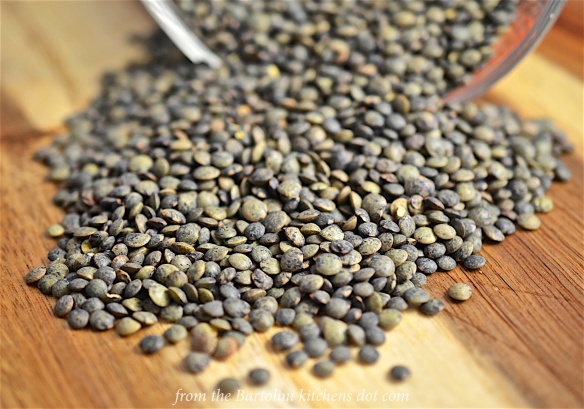
This time around, I found myself in a grocery on Thursday, two days before the first great snow of the year was to hit. I bought my regular items without giving the forecasts a second thought. At one point, I was in the bulk food area looking for seeds for Lucy, my parrot, when I stumbled upon French green lentils. (These aren’t Puy lentils but I’ll take what I can get.) I bought some thinking that one day I’d use them to prepare and blog about my family’s method of cooking lentils. That was the plan.

Come Saturday morning, the storm was hitting the southern part of Illinois and headed for Chicago. Forecasts were now saying we’d get 5 or 6 inches before the storm passed on. This usually means that I would be spending an hour or so clearing snow from my walk, as well as those of my neighbors. (They’re all retirees and I hate to see them out there, shovel in hand, clearing their walks.) I remembered how nice it is to come into my kitchen, having just finished my snow removal duties, and smelling a pot of soup on the stove. That’s it. I’d make a pot of soup.

Well, apparently, I had used the last of the chicken stock the week before when I made risotto. Worse, I’d used the last of the chicken bones, along with my vegetable clippings, to make that stock. I was just about to give up the idea of making soup when I saw the lentils on my countertop. This will work. The ingredients for today’s recipe were all in supply in my kitchen, except for the thyme. I thought of that when I went into the yard to make sure everything was stored before the big storm arrived.

As luck would have it, the vegetable stock was ready and although there was rain, there was no snow. I waited a couple of hours and still no snow. I went ahead and cooked the lentils — still no snow. I ate my dinner and eventually about an inch of snow fell, none of which “stuck” to the walks.

All told, it was a pretty good day: my home carried the aroma of stock simmering on the stove; I enjoyed a comforting lentil dinner; and, I didn’t need to go out and deal with any snow whatsoever. May our weather men’s predictions for snow always fall short, just as they did that Saturday afternoon.

*     *     *

Stormy Lentils 2

*     *     *

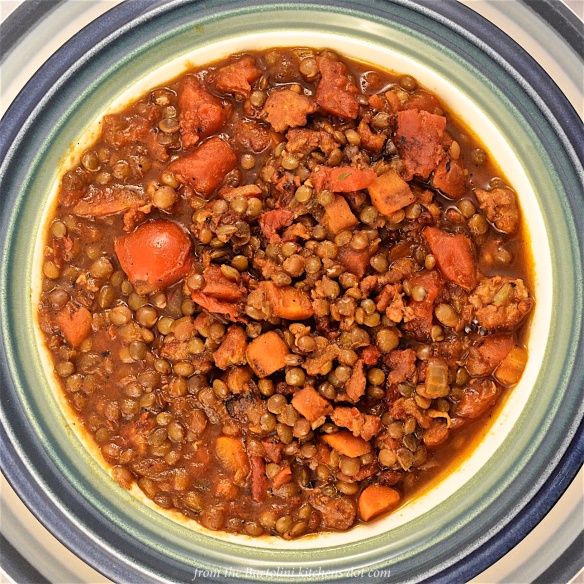
Stormy Lentils Recipe

Ingredients

  • 1 cup (190 g) French green lentils
  • 6 cups (1420 ml) vegetable stock, separated, more or less to taste (see Notes)
  • 2 tbsp olive oil plus more if needed
  • 2 Bartolini sausage patties (about 8 oz; 225 g) — link sausages may be substituted, skin removed
  • 1 celery stalk, chopped small
  • 1 small onion, chopped small
  • 1 carrot, chopped small
  • 2 garlic cloves, minced or grated
  • red pepper flakes, to taste – optional
  • 1 small can (14.5 oz; 411 g) diced tomatoes
  • thyme to taste
  • salt and pepper to taste

Directions

  1. Pick through the lentils removing any small pebbles or grit that you may find. Rinse them under cold running water. Drain.
  2. Place the lentils in a medium sauce pan and cover with 1 quart (950 ml) of vegetable stock. Bring to a boil over med-high heat before lowing to a soft simmer.
  3. Meanwhile, place the sausage meat into a frying pan over med-high heat. As it cooks, use a wooden spoon to break up the meat into small pieces.
  4. After about 5 minutes, add the onion, carrot, and celery. You may need to add a bit more oil to moisten the pan. Continue to sauté until the vegetables are cooked but still al dente – about 7 to 10 minutes.
  5. Add the garlic and optional red pepper flakes. Continue cooking for another minute.
  6. Add the tomatoes, 1 cup of vegetable stock, and the thyme, if using. Stir to combine. Bring to a boil and then reduce to a simmer.
  7. As the lentils cook, use a large spoon to remove any foam that may surface in the liquid.
  8. After simmering for 30 minutes, clear the remaining foam from the surface and pour the lentils and liquid into the pot with the tomato sauce. Bring to a boil before covering and reducing to a simmer.
  9. After 15 minutes, check the lentils. If too dry, add more vegetable stock. If too soupy, keep uncovered and allow some of the excess liquid to boil off. The dish is ready when the lentils are cooked and the consistency you prefer.
  10. Serve immediately and if I’m seated at the table, have some grated Pecorino Romano nearby.

*     *     *

Stormy Lentils 3

*     *     *

Notes

No need to run to a store to buy vegetable stock. Into a medium size sauce pan, place one quartered onion, 2 roughly chopped celery stalks, 2 roughly chopped carrots, a few parsley stems, 2 smashed garlic cloves, and a quartered tomato or 1 – 2 tbsp tomato paste. Fill with water, bring to a boil, and then lower to a soft simmer. Continue to cook for 90 minutes to 2 hours. Season lightly with salt and pepper before straining the vegetables. You will easily have enough stock for this recipe. Refrigerate whatever stock is left over.

Before bringing to the table, add as much stock as you prefer. This can be served relatively dry or with enough stock to resemble a soup.

You may notice that leftover lentils will absorb whatever stock is left in the bowl. Use the refrigerated stock to moisten the lentils when you reheat them.

*     *     *

What’s this? More bad weather on the way?

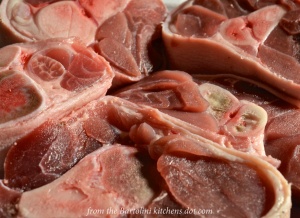
While this recipe sat innocently in the queue waiting to be posted, an arctic blast Ham Hocks 1descended upon sweet home Chicago. As luck would have it, I had just bought ham hocks at the grocery the day before. So, as the temperatures dropped, there was a pot of vegetable stock simmering on the stove, to be replaced by a pot of lentils later in the day. This time, however, with its use of ham hocks, the recipe is the same as the one prepared by my family years ago. Comfort and nostalgia served in one bowl.

*     *     *

It’s déjà vu all over again …

Brodo flashback

As was implied above, our current weather means it’s time for soup. With that in mind, I’m sending you back to Mom’s broth recipe, her brodo. That one pot of stock would be used to make noodle soup, risotto, gravies, and, of course, to soothe our upset tummies. You can learn all about this wonder broth by clicking HERE.

*     *     *

Coming soon to a monitor near you …

Smothered Pork Chops

Smothered Pork Chops

*     *     *

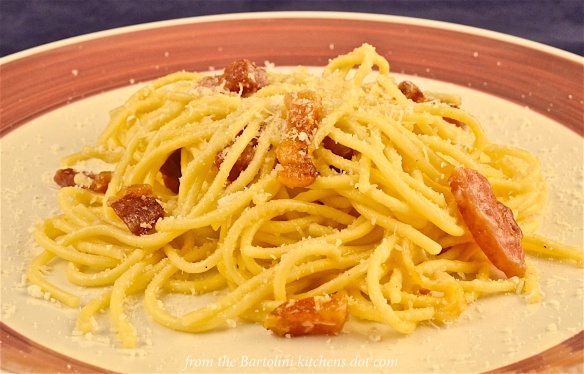
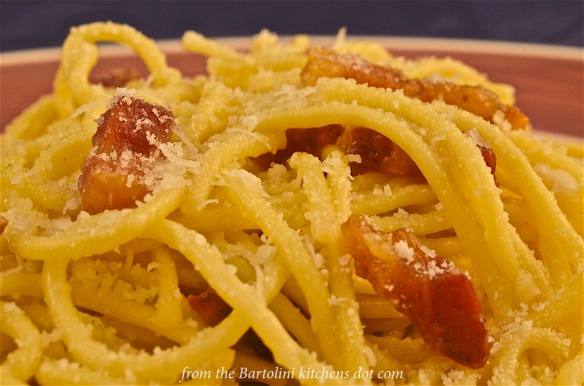
Two Dishes Cooked alla Gricia

I first enjoyed Spaghetti alla Gricia 2 years ago. It was my last night and supper in Rome after what had been, by any measurement, a very filling vacation. I wanted some lighter fare and the simplicity and flavors of this dish appealed to me. I’m currently in the planning stages of another trip to San Marino and Rome and that dinner and pasta came to mind.

*     *     *

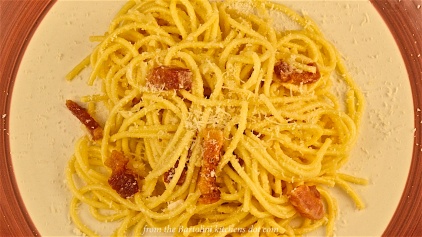
Spaghetti alla Gricia 1

*     *     *

Spaghetti alla Gricia is an old recipe that originated in Lazio, the district in which Rome is located. It is from the time before tomatoes were brought to Europe in the sixteenth century. There are 2 legends surrounding tomatoes’ arrival in Europe and Italy. The first, and most probable, is that they crossed the Atlantic when one of the conquistadors (Pizarro?) returned to Spain. The other says that 2 Italian priests brought tomatoes with them when they returned from Mexico. Regardless of how they got to the continent, the first mention of tomatoes in Italy appeared in a Tuscan document in 1548. Pre-dating that document means that Spaghetti alla Gricia is one, old dish!

You can trace 2 delicious pasta dishes to Spaghetti alla Gricia, Spaghetti alla Carbonara and Spaghetti all’Amatriciana. Much like the alla Gricia pasta, a carbonara is tomato-free, though it does include eggs, something its predecessor lacks. Amatriciana dishes don’t include eggs but they do include tomatoes. Frankly, you cannot go wrong if you decide to make any one of the three dishes.

I had originally intended to share a recipe for butternut squash noodles cooked alla Gricia. While writing that post, I searched this blog for my Spaghetti alla Gricia recipe and was surprised that it was never shared. So, I’ll share the spaghetti version now and the butternut squash version in a few minutes.

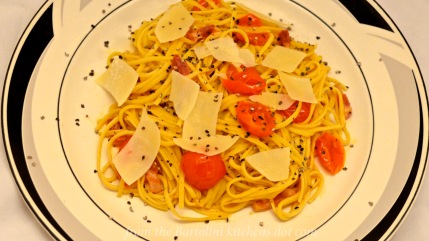
With only 4 ingredients, this is about as simple a pasta dish as you can prepare. The longest part of the process is the time it takes to boil the water. As is the case with all easy pasta dishes, timing is critical. The spaghetti should be cooked just shy of al dente so that it finishes cooking in the pan with the pork. The only other issue that may arise is the type of pork product to use. The dish is normally made with guanciale, a non-smoked bacon made from the jowls of a hog. Here I substituted pancetta. You could also use ham or bacon, although I would caution against using a smoked product. WIth so few ingredients, the smoke would become the predominant flavor and this dish is all about balance. You’ll want to taste the pork and cheese equally and not smoke.

*     *     *

Spaghetti alla Gricia 2

*     *     *

Spaghetti alla Gricia Recipe

Ingredients

  • 1 lb (450 g) spaghetti
  • 2 tbsp olive oil
  • 4 to 6 oz (112 to 168 g) guanciale cut into strips (lardons) or ⅓ inch dice – pancetta, ham, or non-smoked bacon may be substituted
  • ¼ cup Pecorino Romano cheese, grated
  • reserved pasta water
  • additional grated Pecorino Romano for serving

Directions

  1. Bring a large pot of heavily salted water to the boil. Add the spaghetti and cook following package directions until about 2 minutes short of al dente. Reserve some of the pasta water for possible use later. (Step 5)
  2. Meanwhile, place olive oil in a hot frying pan over medium heat. Add pancetta and sauté to render the fat.
  3. Once the fat has been rendered and the pancetta browned, not burnt, add the cooked spaghetti and toss to evenly coat the pasta.
  4. Sauté until the pasta is cooked to your preference.
  5. Remove from heat, add the Pecorino Romano cheese, and toss to combine. If too dry, add some of the reserved pasta water.
  6. Serve immediately, garnished with additional Pecorino Romano.

*     *     *

Spaghetti alla Gricia 3

*     *     *

What did I tell you? This really is an easy recipe to prepare and a very flavorful one, at that. I think you’ll find butternut squash alla Gricia to be no more complicated.

*     *     *

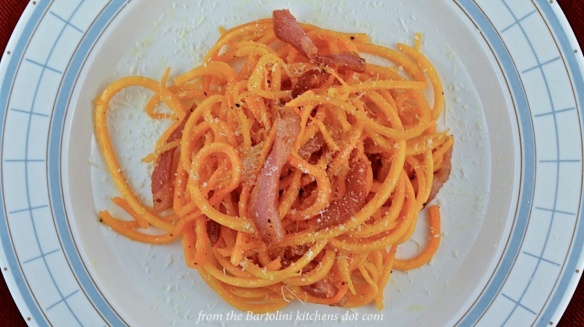
The Spiralizer Chronicles, Chapter 2: Butternut Squash alla Gricia

*     *     *

Butternut alla Gricia 3

*     *     *

Although quite simple to prepare, working with spiralized vegetables does create a few issues. Some spiralized vegetables, like zucchini, will sweat water over time. If boiled, you may need to drain and, unlike pasta, pat them dry before proceeding with the recipe. Roasting may help to lessen the problem but, whether boiled or roasted, these “noodles” will not absorb sauce like pasta does. Remember that when dressing these dishes. If there’s a pool of sauce/dressing at the bottom of the serving bowl, you’ve likely used too much.

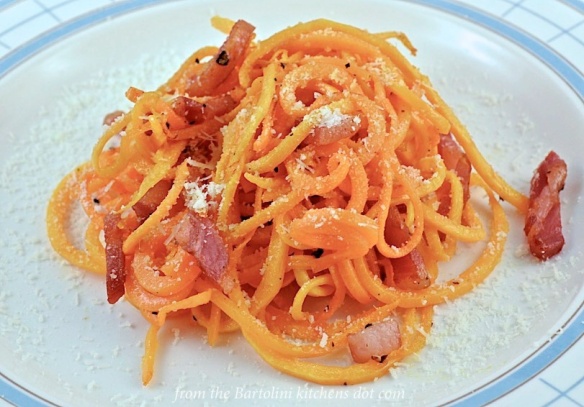
With those issues in mind, and knowing that butternut squash doesn’t sweat nearly as much as other vegetables, choosing to prepare it alla Gricia was a no-brainer, especially for an inexperienced spiralizer user like myself. I mean, there are only 4 ingredients and one of those are the noodles! You don’t need much experience to get this recipe right.

As simple as this dish is to prepare, if you choose to cook the noodles as I have, there are 2 ways to go about it. I chose to roast the butternut noodles prior dressing them with the sauce. If you prefer, you can cook the noodles in the same pan as was used to prepare the sauce (see Notes). There is, in fact, a third option. Depending upon the vegetable you use to make your noodles, you may choose not to cook them at all. Once spiralized, place the noodles in a serving bowl, dress them with the browned guanciale and rendered fat. Add the cheese, toss to combine, and serve.

*     *     *

Butternut alla Gricia 2

*     *     *

Butternut Squash “Noodles” alla Gricia Recipe

Ingredients

  • the neck of ! small butternut squash (9 oz; 270 g – trimmed) (See Notes)
  • 2 tbsp olive oil
  • 4 oz guanciale cut into 1 inch strips or ⅓ inch dice – pancetta, ham, or non-smoked bacon may be substituted
  • ¼ cup Pecorino Romano cheese, grated
  • hot water or chicken stock
  • additional Pecorino Romano for serving

Directions

  1. Preheat oven to 400˚ F (205˚ C)
  2. Use a spiralizer to create the thinnest possible noodles
  3. Place noodles evenly on a baking sheet. Season with salt and pepper and sprinkle LIGHTLY with olive oil. Mix to evenly coat the squash.
  4. Place the squash into the preheated oven and roast for 10 to 15 minutes or until cooked to your preference.
  5. While the squash roasts, Place the oil in a large hot frying pan. Once heated, add the guanciale and cook over a medium heat. This will render the fat without burning the guanciale,
  6. Cook until the guanciale is browned, not burnt, and the fat has rendered.
  7. Add the now-cooked noodles to the pan and toss to coat.
  8. Remove from the heat, add the cheese, and toss until the noodles are well-coated.
  9. If too dry, add a little hot water or chicken stock. Mix well.
  10. Serve immediately garnished with additional grated Pecorino Romano.

*     *     *

Butternut alla Gricia 1

*     *     *

Notes

As is the case with all vegetables to be spiralized, choose butternut squash that are as straight as possible. Spiralizers do not work as well with curved vegetables.

Butternut squash have a long neck connected to a bulb-like section which contains the seeds. This bulb cannot be spiralized. Cut the squash where the 2 sections meet and reserve the bulb for another use.

Unlike many other vegetables, butternut squash must be peeled before being spiralized.

If you choose not to bake your noodles beforehand, spiralize the squash and set the noodles aside. Heat the oil and guanciale in a large frying pan. Once the guanciale has browned — not burned! — and the fat rendered, remove the guanciale to a paper towel. You may need to drain some of the fat in the pan depending upon the amount of noodles you’ll be using. Add the noodles to the pan and toss until evenly coated with the fat. Cook the noodles until they reach the right amount of doneness to suit your taste. Once cooked to your liking, add the guanciale back into the pan, toss. When heated through, take off the heat, add the cheese, and toss to combine. If too dry, add some hot water or chicken stock, toss, and serve garnished with grated cheese.

No matter how you cook the noodles, the longer you cook them, the softer they will become. The noodles should retain a bit of crispness straight from the oven. Taste the noodles as they sauté until they reach your desired doneness. Once there, immediately take them off the heat before continuing with the recipe.

For either alla Gricia recipes, be careful not to add so much olive oil when rendering the pork fat that you will need to pour some of it off before adding the spaghetti or squash noodles. That fat is loaded with flavor. Better that you add just a little olive oil in the beginning and more, as needed, later on.

*     *     *

It’s déjà vu all over again …

Pasta alla Chitarra 1

Since it was mentioned earlier as a “descendent” of today’s recipe, I though I’d send you back to take a look at the Spaghetti all’Amatriciana recipe. Not only will you see the dish prepared but you’ll learn how to use a chitarra to make the pasta. Interested? Just click HERE.

*     *     *

Coming soon to a monitor near you …

Stormy Lentils Preview

Stormy Lentils

*     *     *

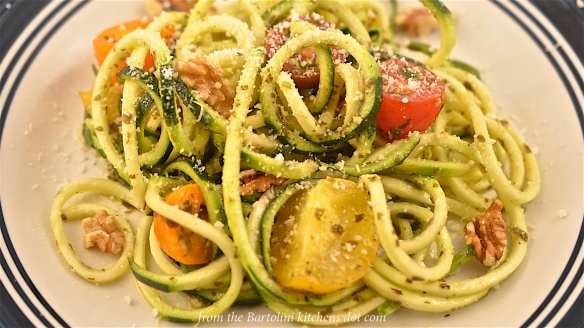
The Spiralizer Chronicles, Chapter 1: Zucchini “Noodles” with Walnut Pesto

Like many, several weeks before the holidays each year I make a list and budget for the gifts I intend to buy for family and friends. (Sorry, but there’s something seriously wrong with people who proudly declare that their shopping is done on September 1st.) At the very top of my list is the same name each and every year. That name is mine. Most years, I buy myself a gift before buying anyone anything. You want to get into the Christmas spirit? Buy yourself a gift first thing. Works like a charm.

*     *     *

Zucchini Pesto Pasta 6

*     *     *

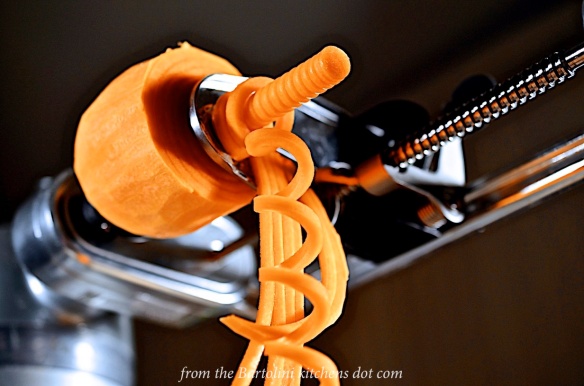
This year I really didn’t know what to buy myself. I had just survived a rather expensive period and didn’t want to splurge on anything major. I had seen a spiralizer attachment for my stand mixer but it seemed a little expensive and I wondered if I’d really use it. The internal debate ended when the piece of equipment was on sale for 25% off with free shipping. It wasn’t long thereafter that it arrived and, well, it was love at first sight. We’ve   been happily at work together ever since.

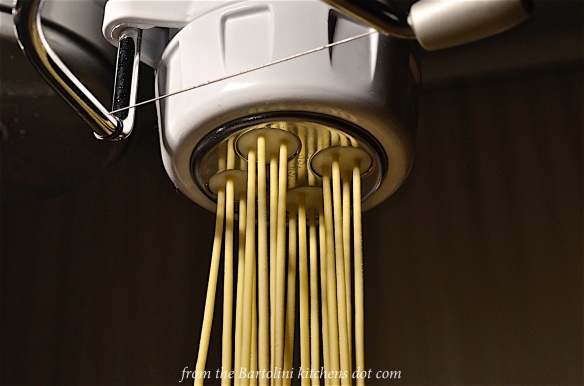
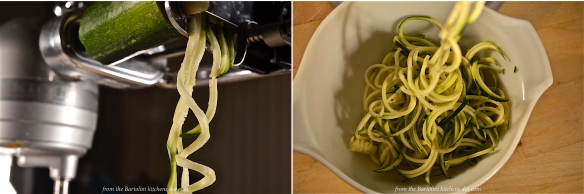
Before getting into today’s dish, understand that hand-cranked spiralizers are available and can easily be found on the internet. I’ve no experience with any of them but I do enjoy using my stand mixer’s attachment. In less than 10 minutes I have a large bowl of vegetable noodles and the removable parts can safely be washed in the dishwasher. All of its parts fit into a form-fitting box that can be easily stored on a shelf or in a cupboard. In short, I like it far more than I thought I would.

Though I’ve tried several recipes, we’ll start with the simplest of dishes, Zucchini Noodles  with Pesto.

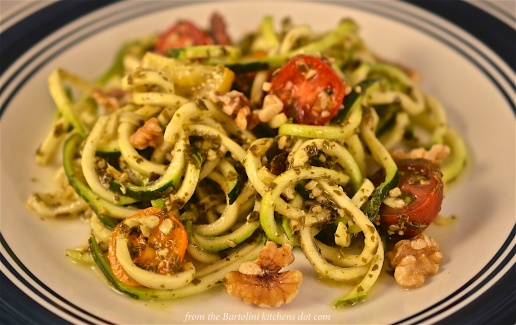
To begin, make your pesto. If you haven’t a recipe, you can check out my recipe for Pesto Genovese. In today’s recipe, not wishing to pay the exorbitant prices for imported Italian pine nuts, I used an equal amount of roasted walnuts instead. I saved a few more for garnish, as well. I also use less oil than most recommend and that will affect things later in the recipe.

*     *     *

Zucchini Pasta Combo

*     *     *

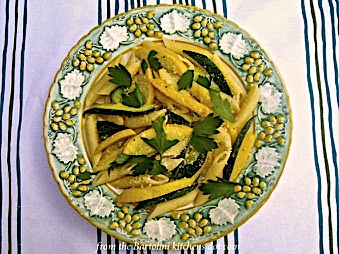
With the pesto made, now turn your attention to the zucchini. I’ve found that it’s best to buy squash that are as straight as possible and medium-sized. The instructions for my spiralizer recommend using pieces of vegetable that are about 4 inches (10 cm) in length, although I’ve used lengths a little more than that. There’s no need to peel the squash so you should pick vegetables with relatively unblemished skins. I’ve used both yellow squash and green zucchini but, to tell you the truth, it’s not easy to tell which is which in the finished dish, especially when dressed with pesto.

All that’s left to do now is to assemble your dish. First, take a handful of halved cherry/grape tomatoes and toss them into the bowl of noodles. Since my pesto is thicker than most, I sprinkle a little olive oil – about 1 tablespoon – over the bowl’s contents and gently toss until evenly coated. Now all that’s needed is the pesto. Add as much as you would to any pasta dish but, initially, it’s better to add less pesto than you think necessary. More can always be added but there’s nothing to be done once too much pesto has been added to a dish.

Prior to bringing the bowl to the table, garnish with the reserved toasted walnuts and some grated Pecorino Romano cheese (Parmigiano Reggiano may be substituted, as can grated vegan cheese, depending upon what was used to prepare the pesto).

*     *     *

Zucchini Pesto Pasta 3

*     *     *

This dish could not be easier to prepare and if you’ve pesto on-hand, it can be prepared and served from the same bowl. As one who lives alone, I cannot tell you how very appealing that latter statement is. From kitchen to sofa in 15 minutes, with a clean kitchen in 5 minutes more. Hard to beat that!

Cooking some spiralizer noodles can result in quite a bit of excess water in the pan. I avoided the problem here by using raw zucchini noodles. In some instances, baking the noodles will help to rid the noodles of the excess water, as will sautéing so long as the pan remains uncovered. To be sure, this issue will resurface in future recipes.

Oh! One last thing to consider. 1 ounce (28 g) of raw zucchini with the skin has about 5 calories and 1 gram of carbs. Compare that to 1 oz of dry spaghetti which has about 126 calories and 24.5 grams of carbs. And that, my friends, is about as close to a negative comment about pasta that you’ll ever get from me — unless it’s over-cooked.

*     *     *

We’ve only just begun …

In the weeks and months ahead, be sure to come back to see how this love affair continues. Beets, squash, (sweet) potatoes, zucchini, and apples are but a few of the ingredients to be transformed into salads, “noodles”, and casseroles.

*     *     *

It’s déjà vu all over again …

Zucchini Penne

Admittedly, vegetarian main courses aren’t everyday occurrences on this blog. Since one such recipe was shared today, why not send you back for another, Jamie Oliver’s Zucchini and Penne? Unlike today’s gluten-free noodles, however, Jamie’s dish combines real penne and a close facsimile, smartly cut zucchini. It’s another great dish and one that you can find simply by clicking HERE.

*     *     *

Coming soon to a monitor near you …

Spaghetti alla Gricia Preview

Spaghetti alla Gricia

*     *     *

Mom’s Strawberry-Banana Pie

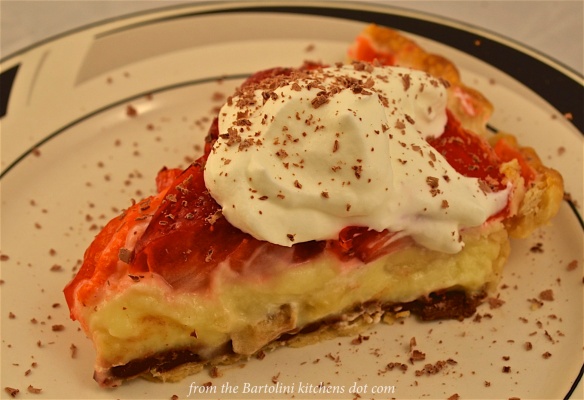
Strawberry Pie 1

I really cannot explain why this recipe was overlooked for so long. Granted, it wasn’t one that Mom prepared frequently — we were a strawberry shortcake family — but she did make this pie at least once a year. And how I loved it! I was walking around the farmers market, looking at all the fresh strawberries, when I remembered this treat. After buying a quart of strawberries, I rushed home, stopping along the way at a grocery to buy the rest of the ingredients. It wasn’t very much later that I had a strawberry-banana pie chilling in my fridge. A few weeks more and I prepared another while visiting Zia. Now, several months later and with my birthday looming in the near future (it’s Sunday, you know), I thought this the perfect time to share the recipe for Mom’s strawberry banana pie — and my personal favorite. Happy birthday to me!

The recipe I’m sharing is memory-based, for there is nothing written to follow. As you’ll soon see, however, the recipe is easy enough to reconstruct, although I did make a couple of changes. In the first place, I believe Mom used a pudding mix — sometimes vanilla, other times banana — and I do not recall her make pudding from scratch for this pie. The recipe I initially followed was printed in the recipe book that came with my first microwave, bought after I moved to Chicago in 1980. Never throw away a cookbook.

Then again, there are times when maybe you should toss a cookbook. When I prepared its vanilla pudding recipe, it was far too thick and not nearly as creamy as remembered and, therefore, not worthy of Mom’s pie. So, I made a couple of adjustments. I cut the amount of cornstarch, used 3 egg yolks instead of 2 whole eggs, and used less vanilla. The result was a pudding fit for Mom’s pie, just thick enough not to be runny yet creamy enough to wash over your palate. I, like the pudding, was all set.

I could not recall what, if any, glaze Mom used with the strawberry topping. I chose strawberry flavored gelatin, thinking it would both set the berries in place and prolong their shelf life. I did consider making the pie without the strawberry topping, using fresh berries to garnish each piece when served. If you prefer to do that, you should cover the pie with plastic wrap to prevent a film forming on the pudding.

It’s my idea to add a thin coating of chocolate to the pie crust. Living alone, my pie will not “disappear” as quickly as Mom’s did. The chocolate coating will prevent the pie crust from getting soggy as the pie sits. (I can say, with some certainty, that from my earliest days I have never liked a soggy bottom.)

*     *     *

Strawberrhy Banana Pie

Dessert at Zia’s

*     *     *

Strawberry-Banana Pie Recipe

Ingredients

for the pie

  • 1 pastry crust large enough to cover a deep, 9″ (23 cm) pie dish – store-bought may be substituted
  • ⅓ cup semi-sweet chocolate chips
  • 2 tbsp whole milk
  • 1 banana, sliced
  • vanilla pudding, recipe follows
  • 12 oz (340 g) fresh strawberries, cleaned, hulled, and halved or sliced
  • strawberry flavored gelatin, instructions follow
  • whipping cream for serving
  • shaved chocolate for garnish (optional)

for the vanilla pudding

  • ⅔ cup sugar
  • 3 tbsp cornstarch
  • ¼ tsp salt
  • 2 cups whole milk
  • 3 egg yolks, slightly beaten
  • 2 tbsp butter
  • 1 tsp vanilla

*     *     *

This slideshow requires JavaScript.

*     *     *

Directions

to prepare the vanilla pudding

  1. Whisk together the sugar, cornstarch, and salt before adding ½ cup of milk. Continue whisking until fully combined.
  2. Add remaining milk and microwave on high for 5 or 6 minutes, stirring occasionally. Pudding should be smooth and thick.
  3. Temper the eggs by adding a few ounces of the hot liquid to the eggs, stirring all the while. Begin stirring the hot liquid as you add the egg mixture to it.
  4. Microwave on high until the pudding just begins to boil, about 1 minute.
  5. Add the butter and vanilla to the pudding, stir well, cover with plastic wrap (see Notes), and set aside to cool.

to prepare the pie crust

  1. Pre-heat oven to 450˚ F (230˚ C).
  2. Use whatever type of pasty crust that you prefer — homemade or store-bought — and use it to cover a deep, 9 inch (23 cm) pie plate/pan.
  3. Use a fork to puncture the pie crust before baking for 10 to 12 minutes in the pre-heated oven. Crust should be golden brown. Remove to cool.
  4. Once the crust has cooled somewhat, melt the chocolate chips and warm the milk.
  5. Add the milk to the melted chocolate and whisk to create a ganache (see Notes.)
  6. Use a pastry brush to lightly coat the bottom of the pie crust with the melted chocolate.

to prepare the gelatin

  1. Follow the package directions to quickly prepare the gelatin using both boiling water and ice cubes.
  2. Once the gelatin is dissolved and the ice cubes have melted, add the halved/sliced strawberries and gently stir.
  3. Refrigerate for 30 minutes.

to assemble the pie

  1. Once the pie crust has set and the chocolate coating hardened, coat the chocolate with a bit of pudding.
  2. Evenly space the sliced bananas across the pie’s bottom.
  3. Use as much pudding as is necessary to coat the sliced bananas. Be sure to leave room on top of the pudding for the strawberries. Use an offset spatula to even the top of the pudding.
  4. Use a slotted spoon to place the strawberries atop the pudding. Carefully pour the gelatin to cover the pudding and coat the strawberries.
    • Place excess gelatin and strawberries into serving bowls. Once set they may be served to those poor unfortunates who do not like pie.
  5. Refrigerate at least 2 hours to let the pie fully set. The longer the better.
  6. Serve garnished with freshly whipped cream and shaved chocolate (optional).

*     *     *

Strawberry Banana Pie 6

*     *     *

Notes

You can make this pie any number of ways, from the very simple — use store-bought pastry and instant pudding mix — to the more involved — make your own pastry, pudding, and strawberry glaze. No matter how you choose to prepare it, you’ll find this pie makes a fine dessert.

I bet that a few of you gasped and clutched your pearls when you read that I had prepared the pudding in the microwave. Release the pearls! Martha Stewart’s vanilla pudding recipe is a good one and is prepared in a more traditional way.

Whatever type of pudding you prepare, be sure it is on the firm side so that the pie doesn’t collapse as the runny pudding fills the empty place left when you serve a piece of the pie.

Although I like the chocolate coating for the pie’s crust, you’ll create new problems if the chocolate is rock-hard when solid. Remember you’ll have to cut through it to serve the pie. Use enough milk to make a ganache that will stiffen without getting too hard. Either that or make the chocolate coating as thin as possible.

*     *     *

It’s déjà vu all over again …

Blueberry-Lemon Slice copy

Since today’s recipe was a dessert, why not end this post with another? This Blueberry-Lemon Slice is the perfect combination of tart and sweet and not at all difficult to prepare. It’s also a tasty way to use some of those blueberries if, like me, you freeze a couple quarts every summer. You will see the recipe when you click HERE.

*     *     *

Coming soon to a monitor near you …

Zucchini Pesto Pasta Preview

Zucchini “Noodles” with Walnut Pesto

*     *     *

Stovetop Braised Rabbit

Rabbit ServedI’ve mentioned in the past that Dad was a hunter. When I was very young, he and a few friends would spend a weekend deer hunting in autumn. I don’t recall him ever being successful, though we sometimes received venison from one his friends. Whether the friend was a member of the hunting party or just generous, I do not recall.

Dad was far more successful hunting pheasants. He’d leave early in the morning and return that night, usually with at least one ring-necked pheasant. Very often, he and I dressed the birds. Because the seasons overlapped, he sometimes brought home a rabbit, as well. He skinned the animal and I remember cleaning them but not very often. I think Mom objected far more to my participation than I did. I couldn’t/wouldn’t do it today.

Rabbit Sous Chef

Flat Ruthie comes out of retirement

We enjoyed rabbit many more times than Dad’s rifle ever supplied. Grandpa sometimes brought them home from the farmers market already dressed. Dad also brought them home but I do not recall his source. Though not a regular part of our diet, it wasn’t a surprise to see rabbit served when Dad was home for dinner.

Today, I’ve a number of groceries that sell rabbit. With the exception of one butcher shop, all are frozen. If I’m going to buy a frozen rabbit, I’ll buy one that carries the date on the label and from a store I trust. As I’ve said in the past, developing relationships with your butchers and grocers can prove beneficial in a number of ways.

I rarely buy rabbit to cook for myself. I will buy one, however, and bring it to Zia. Served relatively rarely, these days rabbit is more of a treat than it ever was. With only two of us seated at the table, one rabbit is more than enough to satisfy us both. No matter which of us is cook that night, we always cook our rabbit the same way and that’s the recipe I’ll be sharing. Do take a look at the Notes section, however, for an alternative way to prepare it.

One thing to keep in mind when preparing rabbit is that it is a very lean meat. With so little fat, the meat can be tough and dry if not prepared correctly. I know because I once served my Traveling Companion probably the worst rabbit dinner ever prepared. WIth lean meats, low and slow is the way to go. Keep the heat low and take your time braising it. You’ll be rewarded with a moist, tender rabbit to serve your guests.

*     *     *

Rabbit Braise Start*     *     *

Stovetop Braised Rabbit Recipe

Ingredients

  • 1 dressed rabbit, about 3 lbs 
  • olive oil
  • 2 cloves garlic, chopped
  • 1 tomato, chopped – 2 TBS tomato paste may be substituted – (optional)
  • 2 sprigs of fresh rosemary
  • white wine
  • salt and pepper

Directions

  1. Cut the rabbit into manageable pieces. This can be from 8 to 12 pieces, depending upon your preference and plans for serving.
  2. Season the rabbit with salt and pepper. 
  3. Heat a few TBS of olive oil over med-high in a deep frypan with a lid. 
  4. Place the garlic and rabbit pieces into the pan and brown the rabbit before flipping them over to brown the other side — about 5 – 8 minutes per side.
  5. Add the tomato (optional), rosemary, and about ¾ cups of white wine to start, and bring the pan to the boil. 
  6. Reduce the heat to a soft simmer, cover, and braise the rabbit for well over an hour — more like an hour-and-a-half. 
  7. During the braise, turn the pieces over occasionally and add more wine, as needed, should the pan begin too dry. You may substitute water or chicken stock for some of the wine. 
  8. When fully cooked, remove and discard the rosemary sprigs, place the rabbit on a platter, and serve.

*     *     *

Rabbit Braising

*     *     *

Notes

This recipe is the Bartolini method of braising rabbit. (Actually, it was Mom’s idea to add a little tomato, “Just for color.”) If, like me, you have a difficult time getting the braise right, you may want to try cooking the rabbit in the hunter’s style, alla cacciatore. Mom’s cacciatore is also a stove top braise but it includes bell peppers, onions, and mushrooms. They’ll keep the rabbit moist, just as they do chicken. There’s no need to go looking for the recipe. Mom’s Chicken Cacciatore is today’s “Deja Vu” dish.

*     *     *

It’s déjà vu all over again …

Cacciatore with Polenta

Whether you decide to cook rabbit in this style, you really should give Mom’s cacciatore a try. The peppers, onions, mushrooms, and rosemary combine with the wine to make a very appetizing main course. Best of all, the aroma will fill your kitchen like only the best comfort foods can. You can see how it’s prepared by clicking HERE.

 *     *     *

Coming soon to a monitor near you …

Strawberry Pie Preview

Mom’s Strawberry-Banana Pie

 *     *     *

Grilled Clams

I do enjoy going to the fishmonger. I may go in with something in mind but I always leave with something else entirely. One of my last visits is a case in point.

This particular Tuesday I went shopping for chicken. My fishmonger is the only place in town that I know of where you can buy fresh, never frozen, organic chicken. I left with a chicken — and a little more than a pound of “Vancouver blue clams”. I just couldn’t resist them.

*     *     *

Preview Clams

*     *     *
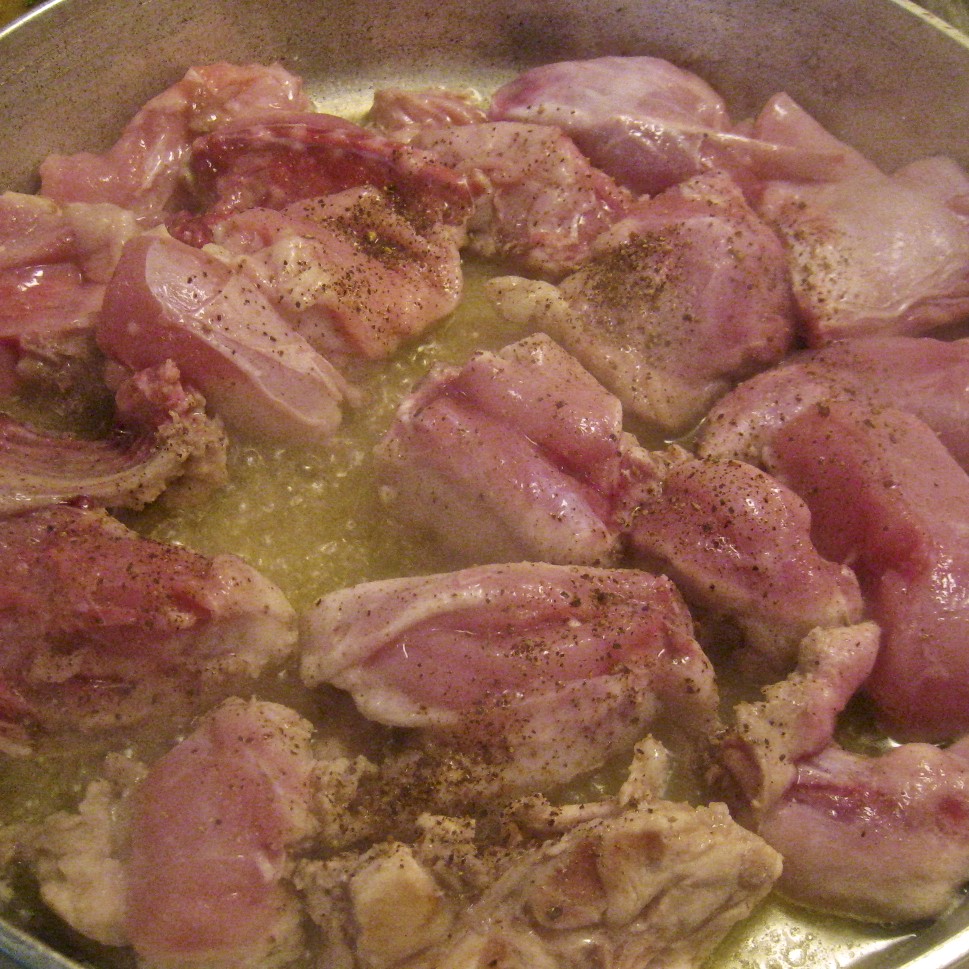
These clams were small — about the size of manila clams — and there were 36 of the beauties in my purchase. Best of all, they’re mighty tasty. In fact, I’m already thinking of going back for more.

Once home, I decided to try something different. Believe me. Deciding not to cook them with linguine was one of the toughest culinary decisions I’ve made in a very long time. Even so, having watched a number of chefs grill clams, I thought I’d give it a try myself. The chefs placed the clams directly upon the grill grates, let them open, and then carefully removed them to a serving platter. That wouldn’t work for me.

Being so small, I envisioned watching them open and spilling their delicious juices on to the flames. They’re simply not large enough to comfortably ride the grates. Worse, any liquids to have survived the opening would surely be dumped as I clumsily tried to move the clams to a platter. A cast iron skillet was the answer. First, though, the clams had to be cleaned.

Using my food brush, the clams’ shells were scrubbed clean. After that, they were placed in a bowl of cold, fresh water and left to soak for almost an hour. Midway through, the water was dumped and the bowl refilled. That gave the clams plenty of time to expel any sand. Clams that refused to close were discarded.

*     *     *

Blue Clams 1

*     *     *

The grill was lit and the flames set to high. Meanwhile, a lemon-butter sauce was prepared using 4 tbsp butter, the juice of 1/2 lemon, and 1 clove of garlic, smashed. The butter and garlic were gently heated in a small saucepan. When the butter just started to simmer, the lemon juice was added and the heat was shut off. The garlic was allowed to steep in the lemon-butter for a few minutes.

Next, a 10 inch cast iron skillet was placed on the grill directly over the flames. While it heated, some fresh parsley was chopped and a chunk of ciabatta bread was sliced in half. The cut side of both pieces was lightly coated with olive oil and the bread was set aside.

The clams were drained and returned to the bowl, along with a couple of ounces of both white wine and water. By now, the pan was screaming hot. The clams with the wine mixture were poured into the pan and the bread was placed on the grill to toast a bit. The grill lid was then closed.

Back in the kitchen, the garlic was removed from the lemon-butter sauce and the pan was returned to a low heat.

It took barely 2 minutes for the bread to toast, I removed both pieces and the clams were already opening. Within 5 minutes, all the clams were open and were quickly removed to a serving bowl. The pan liquids were added, as well. (Note: be sure to discard any clams that remain unopened after cooking.)

*     *     *

Grilled Clams 1

*     *     *

To serve, the bottom piece of bread was placed in a bowl and topped with some clams and a bit of the pan juices. The lemon-butter sauce was poured over the dish and fresh parsley was used to garnish. The top side of the toasted ciabatta bread was served on the side.

Yeah. I’m going back for more clams, but it’s anyone’s guess what else I’ll bring home.

*     *     *

It’s déjà vu all over again …

LingClams_Lrg300

Nothing but a Pasta with Clams recipe would be appropriate here. It is one of my favorite dishes and one I’m sure you’ll enjoy. You can see how the dish is prepared simply by clicking HERE.

*     *     *

Coming soon to a monitor near you …

Sepia e Calamari in Umido Preview

Stewed Cuttlefish and Squid

*     *     *

A Quick Pickle

Pickle 1

 *     *     *

Several weeks ago, while walking around the farmers market, a bin of pickling cucumbers caught my eye. I bought some and on the way back to my car bought the rest of this recipe’s ingredients — well, almost. The three cherry bomb peppers came from my garden. They turned out to be the only cherry peppers that I’d harvest until well into autumn. My tomato plants, taking full advantage of their new flower bed and soil, grew to monstrous proportions, overcrowding everything else in the process.

I have served this pickle atop every kind of sandwich imaginable, not to mention burgers, dogs, and wursts, too. I’ve also served it alongside a variety of grilled meats. For my tastes, a little something acidic on the plate is often a welcome accompaniment.

If you prepare this recipe, the ingredients aren’t nearly as important as the pickling liquid. You can change the spices to suit your own tastes but If you’re going to make a smaller batch, just keep the amounts of vinegar, sugar, and water proportional to what I’ve listed. It couldn’t be easier and, since this isn’t being canned, you needn’t worry about whether the solution is acidic enough. So long as you use sterile jars & lids and clean utensils, it should last several weeks in your fridge.

 *     *     *

pickle with BLTC

 *     *     *

A Fresh Pickle Recipe

Ingredients

Pickling liquid

  • 2 cups water
  • 2 cups apple cider vinegar
  • 2 cups white vinegar
  • 1 cup sugar
  • ¼ cup pickling salt – If substituting kosher salt, add an additional tbsp
  • ½ tbsp coriander seed
  • ½ tbsp yellow mustard seed
  • ½ tsp turmeric
  • ½ tsp celery seed

Vegetables

  • pickling cucumbers – about 3 lbs
  • 1 small red onion
  • 4 hot green peppers
  • 4 sweet Melrose peppers
  • 3 cherry bomb peppers
  • 1 bunch of radishes
  • garlic

*     *     *

Pickle Ingredients

*     *     *

Directions

  1. Place all of the pickling ingredients into a sauce pan and heat over a medium heat.
  2. Continue to simmer for 5 minutes after the salt and sugar have dissolved.
  3. Set aside.
  4. Meanwhile, slice the remaining ingredients.
  5. Once cooled, combine the pickling liquid with the sliced vegetables, stir, fill jars, and cover.
  6. Refrigerate for a few hours or overnight before serving.
  7. Will keep in your fridge for several weeks, at least. Just be sure to use fresh, clean utensils when serving.

*     *     *

Notes

For my tastes, this recipe is a little heavy on the cucumber. Next time I’ll cut the amount of cucumber and increase the other ingredients, especially the radishes. I’ll probably cut the turmeric, as well. As the pickle sat in the fridge, the turmeric gave everything the same hue, eliminating any color variation among all the ingredients save the cherry bomb peppers. The first photo was taken a few hours after I made the pickle. The second was taken one week later.

*     *     *
It’s déjà vu all over again …

Mt. Burger

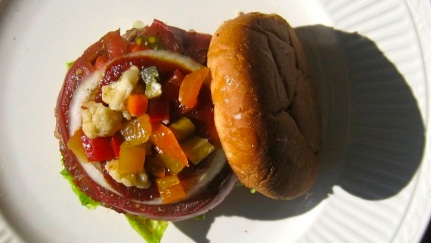
I know, I know, Every year I bring you back to this recipe for giardiniera — and with good reason. Next to the blueberry cheesecake ice cream recipe, this condiment is the most requested and savored by my taste testers. It really is that good. Best of all, it can made anytime because its ingredients are readily available year-round. You can learn all about it by clicking here HERE.  

*     *     *
Coming soon to a monitor near you …

Ground Cherry Jam Preview

Ground Cherry Jam

 *     *     *

Ground Cherry Salsa

If you’re fortunate enough to have a rather large farmers market nearby, you’re likely to come across some relatively rare fruits and vegetables not found in your corner grocery. For me, ground cherries would fall into that category. Also called husk tomatoes, these little fruit will remind you of small sungold cherry tomatoes, except that they wear a thin paper husk, much like their distant cousins, tomatillos. It is their flavor, however, that sets them apart. Oddly enough, they taste like a combination of pineapple and tomato. It is an even mix with neither flavor so strong as to be dominant.

*     *     *

Ground Cherries 1

*     *     *

I had seen these beauties for years at my farmers market and even asked the vendors about them. Why it took me so long to purchase them is anyone’s guess. I’m just glad that I finally did.

Once husked and rinsed, they can be used to make a salsa, like today’s recipe, or cooked to make jam (that recipe is forthcoming). They can also be placed in a single layer on baking sheets and placed in a freezer. Once frozen, they can be packed and kept in the freezer until ready for use. (See Notes) I’ve seen recipes for pies but most combine the fruit with berries and I fear that the additions would overpower these cherries. The fact is that I’m fascinated by the mix of pineapple and tomato flavors and don’t care to do anything to them that might eliminate that contrast.

Like any salsa, the ingredients can vary depending upon your personal preference. For today’s recipe, the cherry tomatoes came from my garden and I shopped for the rest of the ingredients in my fridge’s vegetable crisper. I had planned to use a bit of cucumber but, failing to find one, I used celery instead. Where most would use cilantro, I used parsley. I “borrowed” one of Lucy’s green jalapeños and used red onion simply for its color. As you can see, this salsa is a very colorful one.

*     *     *

Ground Cherry Salsa

*     *     *

Ground Cherry Salsa Recipe

Ingredients

  • about 2 doz ground cherries, hulled & rinsed with some halved
  • about 1 doz cherry tomatoes, halved
  • 1 jalapeños, diced
  • 2 tbs red onion, diced
  • 2 tbs celery, diced
  • 2 tbs fresh parsley, chopped — cilantro may be substituted
  • juice of 1/2 fresh lime, more to taste
  • salt and pepper to taste

Directions

  1. Place the ground cherries, cherry tomatoes, jalapeño, onion, and parsley into a bowl. Gently stir to combine.
  2. Add the lime juice and season lightly with salt and pepper.
  3. Taste to see if additional lime juice, salt, or pepper are needed.
  4. Serve.

*     *     *

Salsa Served

Served with grilled monkfish

*     *     *

Notes

Hulk cherries are an American fruit that are available from mid-July to the first frost. When fully ripe, they range in color from yellow to orange. Green husk cherries should be avoided because they may cause stomach upset.

From experience, I’ve noticed that ground cherries, once frozen and thawed, are more soft than when fresh. They are fine when used to make jam but you may not want to use them in today’s salsa recipe. I think they would be fine, however, in a salsa used for dipping chips.

The ingredient amounts can be adjusted depending upon how the salsa is served. Since I used this to accompany a fish entrée, I made a relatively small amount.

*     *     *

A scheduling change …

I will be leaving early next week to ferry a very important visitor from her manse in Michigan to my humble Chicago home. As a result, the kitchens will be closed for the next 2 weeks so that I may tend to her every whim whilst she’s here.

*     *     *

It’s déjà vu all over again …

Borlotti/Cranberry Beans

With temperatures falling, it’s time to start cooking comfort foods. One of our favorites and one that I make for Zia every year is Pasta and Beans Soup, Pasta e Fagioli. Easy to make, this soup is the very definition of comfort. Best of all, if you’re as lucky as I was just last weekend, you can still find fresh Borlotti/cranberry beans at your local farmers market. The recipe for this traditional Italian dish can be found by clicking HERE.

*     *     *

Coming soon to a monitor near you …

Pickle Preview

A Summer Pickle (Served with Grilled Pork Chops)

*     *     *