Roasted Mackerel with Potatoes and Tomatoes

Scombro Arrostito con Patate e Pomodori

Mackerel ServedI’m back and the Kitchens are open! Thank you all for the birthday and well-wishes. I had a wonderful birthday and, though there’s more to come, I’ll leave that reveal for a later date. As for my much neglected projects, though not all are done, I’ve made good progress and am very pleased.

Some of you may be interested to learn that I’ve added a “Translation” page to the blog. You can find it listed above, between the “Home” and “Welcome” pages, or, if you’re on my blog’s homepage, there’s a translate button on the right. Click on either link and you’ll go to a page that will offer you a translation of my blog in your choice of 52 languages. Note that less than perfect results my be returned, especially when colloquialisms and slang are encountered, as is the case with most universal-type translators. Considering that I am barely fluent in English, I’ve no way of knowing whether an individual translator is working properly. Should you find that a particular language isn’t translated clearly, please let me know and, if need be, I’ll remove that translator from the list.

*     *     *

Today’s recipe is another that resulted from a walk around the Italian market. My walk started at the fish counter, as it always does, where the monger pointed out his “very fresh” mackerel. That’s code for “buy it” and I did without a second thought. While he cleaned my fish, I walked over to the produce area and bought some potatoes and tomatoes. A few minutes later, having grabbed some olive salad and herbs, my dinner for that night was all set. Unfortunately, I still had a full shopping list to buy but a fresh mackerel is one impulse buy that I don’t mind purchasing.

This dish couldn’t be easier to prepare. Stick some potatoes on a baking sheet, roast them for a spell, add some vegetables, put the fish on top, and bake until done. In the meantime, prepare a salad, slice some bread, and open a bottle of wine — if you haven’t already. Not many dinners are easier to prepare than this one.

*     *     *

Raw Mackerel*     *     *

Roasted Mackerel with Potatoes and Tomatoes Recipe

Ingredients

  • 1.5 lbs (680 g) mackerel, cleaned and scaled
  • 1.5 lbs (680 g) new potatoes, halved or quartered for uniform size
  • olive oil
  • 1 red onion, cut into eighths
  • 1 lb (455 g) cherry tomatoes
  • 6 oz (170 g) olive salad (misc olives, carrots, celery, peperoncini), roughly chopped
  • 1 sprig of fresh rosemary
  • 2 to 3 sprigs of fresh thyme
  • salt & pepper, to taste

*     *     *

M - Veggies 2*     *     *

Directions

  1. Pre-heat oven to 450˚ F (230˚ C).
  2. Place potatoes and onions in a large bowl, sprinkle with olive oil, and gently mix till evenly coated.
  3. Place on baking sheet, season with salt & pepper, and roast on center rack in pre-heated oven for 20 minutes.
  4. Meanwhile place tomatoes and olive salad into same bowl used for potatoes and onions. Drizzle with a little more olive oil and season with salt & pepper.
  5. Place rosemary and thyme into the fish’s cavity.
  6. After 20 minutes, reduce oven to 375˚ F (190˚ C). Remove potatoes from oven, stir, and add tomatoes & olive salad to the tray. Place mackerel on top of vegetables, drizzle with olive oil, season with salt & pepper, and place in oven.
  7. Roast until fish is cooked, 20 to 30 minutes depending upon the thickness of the fish. When done, fish flesh should flake and be opaque when cut.

*     *     *

Baked Mackerel *     *     *

Notes

I had originally intended to use lain olives in this recipe but that marinated olive salad looked too good to pass up. You may prefer to use just the olives or, for that matter, neither option.

I like my tomatoes to be a little firm when served. If you like them cooked more fully, add them to the roasting pan earlier.

I’ve prepared this dish using one, two, or three dressed mackerel. Although the preparation is the same, cooking times may vary and will usually be a few minutes less for the smaller fish.

*     *     *

It’s déjà vu all over again …

Nonna2

Mine wasn’t the only birthday celebrated at the end of last month. My Cousin shared her birthday, the 26th, with our dear Nonna. Although we all have wonderful memories of her, one of my most favorite involves her in the kitchen — imagine that! — preparing me something very special. The dish was tripe, trippa, and you can learn how to prepare and serve it, as well as a little bit about this dear woman, by clicking HERE.

*     *     *

Coming soon to a monitor near you …

Quail PreviewStewed Quail

Two Cellos and a Cherry to Toast the New Year

Arancello, Liquore della Ciliegia, e Limoncello

Arancello, Liquore della Ciliegia, e Limoncello

Almost everyone lucky enough to visit Italy will, at some point, sample Limoncello. This lemon-flavored liqueur is often served after dinner as an aid to digestion, un digestivo, and, when properly made, Limoncello will have a strong lemony flavor without being bitter or sour like freshly squeezed lemon juice. Though many believe that the lemons that grow in and around Sorrento produce the best Limoncello, these lemons are not available here in the States. So, with no other options available, I’ve aways used “regular” organic lemons to make my Limoncello. This all changed, however, last year.

For the first time ever, Meyer lemons were available in virtually every grocery store I entered. I’d never seen so many. Having read that Meyers were as close to the famed Sorrento lemons as one can get here, I decided to use them to make my Limoncello. Remarkably, at the very same time that I was collecting the Meyer lemons, the grocer was putting out blood oranges. Suddenly, I was buying blood oranges, too, having decided that very moment to make orange-flavored liqueur, Arancello, as well. With an eye towards this Christmas, I thought I’d,also, make lime-flavored liqueur and give all three as gifts. Since I only had 2 jumbo jars and both were already filled with zest and grain alcohol, I put off buying the limes until I’d emptied one of them.

Once I got home, I checked my recipe for Limoncello, calculated how much Everclear (grain alcohol) I’d need for all 3 “celli”, and headed to my neighborhood liquor store. Want to have some fun? Go into a liquor store and buy about 1.5 gallons (5.25L) of grain alcohol. No need to answer when the clerk asks, “Will there be anything else?” A look will suffice.

My “celli” recipes are similar to those that are available on the internet. One thing that I do differently from most is that I use a micro-plane to remove the zest from the citrus. Though most recipes say to use a peeler to remove the peel, being careful not to collect any pith (the white stuff), I find it quite difficult to do. The problem is that the more pith you collect, the more bitter the liqueur. By using a micro-plane, I keep the amount of pith — and bitterness — to a minimum and I’m done in half the time it would take me to “peel” the zest. Once you get passed the zest collection step, you’ll find the rest of the recipes to be straight-forward and you should have no trouble following them.

*     *     *

On behalf of Zia and the rest of the Bartolini Clan, I’d like to wish you all a New Year filled with Peace and Joy.

Happy New Year!

*     *     *

Due Limoncelli

Due Limoncelli

*     *     *

“Celli” Liqueur Recipes

Limoncello IngredientsLimoncello Start

  • zest of 25 Meyer lemons, scrubbed clean
  • 1800 ml Everclear (See Notes)
  • 7 c (1660 ml) spring water
  • 5.5 c sugar

*     *     *

Arancello IngredientsArancello Start

  • zest of 14 blood oranges, scrubbed clean
  • 5.5 c (1300 ml) Everclear (See Notes)
  • 5 c (950 ml) spring water
  • 4 c sugar

*     *     *

Directions

  1. Place all ingredients in a large jar, cover tightly, and place in a cool, dark place. Shake contents occasionally — i.e., once per week.
  2. After 45 days, pour contents through a sieve to remove the zest. Cover tightly and return to a cool, dark place.
  3. After 2 weeks, filter the liqueur one more time through cheesecloth, or, for a very clear liqueur, through a hand strainer containing 2 coffee filters.
  4. Liqueur may be stored in a serving container, gift bottles, or back in the same jar, once rinsed. (See Notes)

*     *     *

With 2 jugs of citrus zest flavoring the Everclear, I was looking forward to making lime-cello in the near future — and then I saw Siobhan’s post describing how to make cherry liqueur on her wonderful blog Garden Correspondent. (Do pay her a visit for a charming look at family life and gardening in Turkey.) Not long after, while returning from a visit with Zia, I stopped at a cherry orchard to buy tart cherries, some of which were destined for this liqueur. Lime-cello would have to wait.

*     *     *

Cherry Liqueur Served

Liquore della Ciliegia

*     *     *

Tart Cherry Liqueur Recipe

Ingredients

  • 1670 g (59 oz) tart cherries
  • 835 g (29 oz) sugar
  • 417 ml (14 oz) Everclear (See Notes)
  • 417 ml (14 oz) spring water
  • 18 whole cloves
  • 7 cinnamon sticks

Directions

  1. In a large jug with a lid, begin with a layer of sugar and then cherries, repeating both layers until the cherries are used up. Top off the jug’s contents with the remaining sugar.
  2. Seal the container and leave in a sunny location for 1 month.
  3. After one month, give the cherry mixture a good stir and add the spices wrapped and tied in cheese cloth. Re-seal the container and set it aside for another month.
  4. After a month, strain and reserve both liquid and cherries. Use a spoon to press as much liquid out of cherries as possible. Save cherries for another use. (See Notes)
  5. Add the liquor to the reserved cherry juice. Set aside in cool, dark place for 2 weeks.
  6. After 2 weeks, strain the liquid through cheese cloth or, for a very clear liqueur, through a hand strainer containing 2 coffee filters.
  7. Like Limoncello, your tart cherry liqueur will continue to mellow as it sits.

With thanks to Siobhan, Garden Correspondent, for the recipe.

*     *     *

*     *     *

Variations

Although I used blood oranges and Meyer lemons to create my “celli”, you can use regular oranges and lemons just as easily. Do try to use organic fruit when available.

As was mentioned, I had intended to make a 3rd “cello”, lime-flavored, but decided to make the cherry liqueur instead. Now that the gifts have been given and the large jars emptied, I may yet give lime-cello a try. Besides, I have to do something with that half-bottle of Everclear.

So, you’ve made a batch of Arancello and are wondering what else can be done with it other than drinking it straight from the bottle. Coincidentally, earlier today a cocktail recipe using Arancello was posted on a fantastic blog, Feeding My 3 Sons. Not only does this blog feature great recipes, each is reviewed by 3 of the toughest critics in all of WordPress.

*     *     *

2 Cellos and a Cherry

Arancello, Liquore della Ciliegia, e Limoncello

*     *     *

Notes

Most of our citrus fruit is “protected” after picking with a light coat of wax. Be sure to use a brush under running water to remove this coating before attempting to zest the fruit.

Everclear is grain alcohol and is very potent. (75.5% alcohol, 151 proof) It is dangerous to drink it “straight” out of the bottle. In the recipes above, it is diluted using spring water, bringing the alcoholic content into more acceptable levels. If you feel it is still too strong, simply add more water.

If you cannot find Everclear or do not wish to use it, vodka can easily be substituted. When you do, there’s no need to add any spring water at all, though you can if you wish to dilute the liqueur.

It is advisable that the liqueurs be filtered a second time before being chilled for serving. This will remove the tiniest of particles thus ensuring your liqueurs will be clear when served.

You will find that all 3 liqueurs will mellow as time passes. For best results, they should, also, be stored in your freezer for at least 1 week before being served. Patience is a virtue and you’ll be well-rewarded the longer you wait.

Though you should discard the citrus zest once it is strained out of the liqueurs, you may wish to save the cherries. Though not suited for children, you may think of a few desserts in which to use them. Personally, I place them in jars that I then fill with vodka and store in the fridge. A couple of weeks later I enjoy them as-is or as a garnish in vodka martinis. Just be sure to warn your guests if there are pits in the cherries. Of course, after a few of them, no one will care.

*     *     *

An announcement

In January, I am going to celebrate a milestone birthday, the big SIX OH! Though I’ve nothing special planned as yet, there are a couple of projects, here at home, that I have neglected, using this blog as an excuse for procrastinating. Well, I’ve no intention of starting the next decade with these tasks still waiting to be completed and, as a result, the Kitchens will be closed for the month of January, reopening on February 5th. Thank you all for your ongoing support and encouragement. See you in February!

*     *     *

It’s déjà vu all over again …

To complete my review of Bartolini holiday dishes, today’s look back will feature our cappelletti Cappelletti in Brodorecipe. Served for lunch on New Year’s Day, these stuffed pasta are traditionally shaped like the brimmed hats once worn by priests. Unable to produce enough hat-shaped pasta to serve our family, Mom’s cappelletti were shaped like small ravioli, raviolini. No matter their shape, cappelletti are usually served in broth, brodo, and are a delicious dish to serve on the First Day of the Year. You can check out my family’s recipe for cappelletti simply by clicking HERE.

*     *     *

Turkey Risotto

Risotto con Tacchino

This is not a true holiday dish but it does grace my dinner table at least once over the holidays. Guaranteed. You see, I have a “thing” for turkey sandwiches and you might be surprised at the lengths I’ll go to make sure that I have turkey sandwiches every Thanksgiving.

*     *     *Turkey Risotto

*     *     *

As an adult, the highlight of my Thanksgiving Day Feast has always been the midnight turkey sandwich. Built with slices of turkey (white & dark meat, of course), a healthy portion of stuffing, and cemented together with cranberry sauce, this is the “sammich” of which my dreams are made. No matter what I’m eating throughout that day, I never lose sight of that night’s prize.

Now, when I host the dinner, having enough turkey to make a sammich is no problem. In fact, I buy a bird twice as large as needed so that every guest goes home with a platter of leftovers. Each then can either relive the dinner — sans my buoyant personality, of course — or make at least 2 healthy sammiches. And I will have at least enough turkey for a few sammiches, as well as a good-sized portion destined for the freezer for sammiches to be built at a later date. That’s if I host the dinner. Things can go quite differently, however, if I’m enjoying Thanksgiving dinner away from home.

Over the years, I’ve been invited to some lovely Thanksgiving feasts where the company was warm, the dinner fantastic, and the wine flowed freely.  I could say the very same thing about those occasions where friends and I gathered at a restaurant for dinner. Both situations allow me to relax and enjoy my friends and the meal without the stress of having to juggle 6 side dishes on a 5 burner stove top; remember that there are bruschette under the broiler; and keep an eye on Max who’s been keeping his eyes on the tented bird on the counter. Both options  sound wonderful except for one little detail. There are no leftovers and without them there can be no sammich. Oh, the pain!

After going sammich-less for a couple of years, I’d had enough. (Well, actually, I’d had nothing.) I decided to roast my own turkey, no matter what, sometime during Thanksgiving week. Granted, when the bird is meant for me alone, I look for the smallest, fresh turkey available, usually 9 to 10 lbs. That’s less than half the size of the behemoth that I prepare when I’m hosting. Even so, I get all the sammiches I want, half of the bird gets wrapped and frozen for another time, and I still have the carcass to play with.

Ah, the carcass! When I remove the meat from its bones, I make sure to leave some behind. Then, when it’s time to prepare the stock, I find and retrieve those bits. As you’ll soon see, they, along with the stock, will be used in my risotto. It really is a nice arrangement. I have a turkey dinner — maybe two! — I enjoy plenty of sammiches, and I have turkey stock to make my “holiday” risotto.

When you read today’s recipe, it may be that I prepare risotto differently than you do — and that’s ok. If you’ve a proven method for making risotto, don’t change for this recipe. The important thing about this risotto is not how it’s made but what is used to make it. In this recipe, turkey stock is used in place of chicken, and, chopped turkey is used instead of any other type of protein or even mushrooms. I don’t want anything to mask the flavors of roast turkey and, if the bird was stuffed, the hint of stuffing.

*     *     *

Risotto Cooking

*     *     *

Turkey Risotto Recipe

Ingredients

  • 6 cups turkey stock, recipe to follow
  • 2 tbsp butter
  • 1 small onion, finely chopped
  • 7 oz (200 g) roast turkey, chopped
  • 1 3/4 c Arborio rice
  • 4 oz (60 ml) dry white wine
  • Pecorino Romano cheese, grated

Directions

  1. Keep the turkey stock hot, though not boiling. (See Notes)
  2. Add butter to a large pan over med-high heat. Add onion and sauté until translucent.
  3. Add turkey to the pan and continue to sauté until heated through.
  4. Lower the heat to medium, add the rice to the pan, and toast the grains, about 5 minutes.
  5. Add the wine and stir. Continue to cook until the wine is all but evaporated.
  6. Ladle by ladle, add the turkey stock, stirring with each addition and allowing the stock to be fully absorbed before adding another ladle of stock.
  7. Taste the rice for doneness after about 20 minutes. It should be nearing completion.
  8. When the rice is al dente and just shy of being done, add another ladle of stock, cover, and turn off the heat.
  9. Allow to rest for 5 minutes before adding 2 handfuls of Pecorino Romano cheese.
  10. If rice is too dry, add a bit more stock before serving. (See Notes)
  11. Garnish with more Pecorino Romano cheese and serve.

*     *     *

To make the turkey stock

In a large stock pot over med-high heat, add the roast turkey carcass, a large onion (quartered), 2 celery stalks with leaves (roughly chopped), 2 carrots (roughly chopped), a few parsley sprigs, and enough water to cover – about 5 or 6 quarts. Bring to a boil before reducing the heat to maintain a soft simmer. I let the stock simmer for at least 3 hours, adding water if too much evaporates. The object is to have at least 2 quarts (2 L) of stock when all is said and done. When finished, strain stock through a fine strainer. Refrigerate stock overnight and then remove any fat that may have risen to the surface. Stock is now ready to use in your favorite recipe or to drink, warm, by the cupful.

*     *     *

Turkey Risotto 2

*     *     *

Notes

When making risotto, I use a ratio of 3:1. That’s 3 parts stock to every 1 part of rice. I usually have an extra cup of stock ready but, if I run out, I’ll add some hot water. Bear in mind, that I’m only using a little water, certainly not even a cupful.

You may think it odd that I used 1 3/4 cups of rice but that’s because it was the end of the package’s contents. I didn’t see the point of reserving a quarter cup of rice. So, use as much rice as you like but keep the above ratio in mind.

Do keep the stock hot, but not boiling, when adding it to the pan of cooking rice. Boiling stock will hit the hot pan and evaporate before it can be absorbed by the rice. On the other hand, if it is too cool, it will delay the cooking process.

We prefer our risotto to be on the moist side. You’ll find that the rice will continue to absorb the stock even as it sits in the serving platter.

It’s déjà vu all over again …

Just as surely as you’d find a platter of ravioli on our Christmas dinner table, you could count on there being a platter of biscotti on that very same table, served after dessert while Biscotti with Pecansthe castagne, chestnuts, were being roasted. Both recipes that I shared came to my family about 50 years ago. Mom’s Biscotti with Pecans, was a family recipe of a friend who was 90 years young at the time. We know that recipe is at least 100 years old. Zia found her recipe for Anisette Biscotti in a local newspaper. Both are simple recipes and are as traditional to our holidays as is that Christmas tree in the corner waiting for the Feast of the Epiphany (Little Christmas). You can find both recipes by clicking HERE.

*     *     *

Coming Christmas Eve to a monitor near you …

Linquine ai Frutti di Mare al Cartocci - Preview

Linguine with Seafood in Parchment

*     *     *

See Quince? Make Jam First Then Jelly

OK. I’ll admit it. I didn’t know a thing about quince. I certainly didn’t hear about them while growing up, let alone see any of them. When I finally did see one, not all that long ago, I thought it to be a very odd-looking apple — and expensive, at that.

Things began to change, however, once I started blogging. Every Fall, quince jelly recipes began to circulate. Then, last August, my friend Celia posted her recipe for making quince jelly on her wonderful blog Fig Jam And Lime Cordial. (If you’re not familiar with her posts, this is your chance. Celia’s blog is one that has a little something for everyone and all of it good.) At the time, I told her that I wanted to make some and would let her know when I did. So, “Hey, Celia! I made quince jam & jelly!”

*     *     *

Quince 1

*     *     *

Once I purchased the quince, I searched for a recipe. Since quince has a high level of pectin within it, I decided to go without adding any more. This, unfortunately, ruled out Celia’s recipe. (Sorry, Celia.) I soon learned that the web is full of quince recipes, all pretty much the same. Quince, sugar, lemon juice, and water combine to eventually produce jelly. Well, I like jelly but I prefer jam. Looking a little further, I came upon a recipe that suited my needs. I settled on a Greek recipe for quince jam called Marmalatha Kythoni. Unlike all others, this one had 2 things going for it.

In the first place, the recipe gave a ratio of quince to sugar (2:1). This is so much more convenient than stating that 1 quart of quince is required. Just how many quince does it take to make a quart? With this ratio, you just buy the quince, peel, core, chop, and then weigh them. Whatever the weight, you’ll need half that amount in sugar. (You’ll note that in the recipe, I stated the quince amount in ounces (grams) to make the math easier.)

Secondly, water used to boil the quince in this recipe may be used to make quince jelly. Granted, you won’t be making a lot but you will get a little over a cup for your efforts. The same ratio (2:1) applies when making jelly, too. The difference being in this case, you use measures and not weight. So, I had 4 cups of quince liquid and used 2 cups of sugar to make a pint of jelly. It could not be easier.

The amount of lemon juice to be used is up to you. I like things a little tart, so, I added both lemon juice and zest when making the jam. For the jelly, I used lemon juice only. It’s my “control” and I’ll taste the jelly to determine whether I overdid the lemon when making the jam.

*     *     *

Quince Jam 3

*     *     *

Quince Jam Recipe

Ingredients

  • 52 oz (1474 g) quince, peeled, cored, and chopped (see Notes)
  • 26 oz (737 g) sugar
  • 1.25 cups (300 ml) water, divided
  • zest of 1 lemon
  • juice of 1/2 lemon

*     *     *

Quince Jam 2

*     *     *

Directions

  1. Place chopped quince in a large pot with a lid and add enough water to cover (see Notes). Place the lid on the pot and bring to a hard boil over high heat. Reduce to medium heat and continue to simmer for 30 minutes. Keep covered, shut off the heat, and let sit for another 30 minutes.
  2. Strain, reserving the liquid for the Quince Jelly Recipe, and place the chunks in a food processor, along with 1/4 cup (60 ml) of water.  Process until the quince is the consistency you prefer.
  3. Place the now-processed quince in a thick bottomed sauce pan along with the sugar, lemon juice, and lemon zest. Bring to a boil over med-high heat before reducing to medium and simmer, stirring almost constantly to prevent scorching.
  4. Continue to simmer and stir until the jam is the consistency you prefer, from 30 to 60 minutes, maybe longer.
  5. Place jam in still hot, sterilized jars, place lids and seal — though not quite as tight as you can.
  6. Place jars on a rack in a boiling water bath deep enough so that there’s at least 1 inch of water over the top of the tallest jar. When the boil returns, process for 10 minutes.
  7. Remove jars from the pot and place on a baking sheet or counter, out of drafts. Be sure to cover the surface with a cloth to prevent the hot jars from shattering when they touch a cold surface. Do not move for at least 12 hours, though 24 is best, to give the jars a chance to seal and the jam to fully set.
  8. Preserved quince jam will keep for one year, though some degradation of taste and color may begin to occur after 6 months.  Best to enjoy your jam before that. (Source: Pick Your Own)

*     *     *

Quince Jelly 3

*     *     *

Quince Jelly Recipe

Ingredients

  • 4 cups (1000 ml) quince water reserved when making quince jam, recipe above.
  • 2 cups sugar
  • 1 tbsp lemon juice

*     *     *

Quince Jelly 1

*     *     *

Directions

  1. Place the reserved liquid, sugar, and lemon juice in a medium saucepan over high heat.
  2. Stir constantly until the liquid reduces by about 2/3, developing a syrupy consistency. (it took mine about 40 minutes.)
  3. Use a large spoon to quickly remove any foam before filling the still-hot, sterile jars to 1/4 inch from the top. Follow canning instructions listed in the Quince Jam Recipe above, processing this jelly for 5 minutes in the hot water bath.
  4. Store jelly on a cool, dark shelf.

*     *     *

Quince & Queso Manchego

Crostini with Quince Jam & Queso Manchego

*     *     *

Notes

It took 8 quince that, after peeling, coring, and chopping, rendered the 26 oz used in the Jam recipe.

It is best to use ripe quince for this recipe. To check for ripeness, sniff either end of the fruit. Ripe quince will have a floral scent.

When cut, quince will brown. To prevent this, place the pieces in a large bowl of water. When ready to start cooking the quince, I used this water to cover the pieces in the pot, as indicated in step 1 of the Jam recipe.

If you plan to make jelly using the cooking liquid, you will need to strain it through a few layers of cheesecloth or, if none is available, muslin or coffee filters will work, too.

As you can see in the pictures, my jam is lighter than most. Granted, it darkened a bit as it cooked but never reached the deep color that I associate with quince jam. I was a bit concerned until I compared mine to the photos accompanying the original recipe. In that light, mine is quite similar to the original. Whew! My guess is that this jam recipe doesn’t cook the quince as long as the others, and that deep pink color needs a long cooking time to develop. As it was, my jam was thick enough that I had no choice but to pull it off the heat.

*     *     *

It’s déjà vu all over again …

Baccalà

With Christmas approaching fast, for the next few weeks I’ll devote this section to some of our favorite holiday recipes. To kick things off, I thought we’d take a look back to our traditional Christmas Eve dish, Baccalà alla Marchigianna. In this preparation baccalà, once rinsed and rehydrated, is cooked in a tomato sauce with potatoes. Serve it with a chunk of bread and you’ll forget all about Santa’s coming in a few hours — well, at least until you’ve cleaned your plate. You can learn how to make this flavorful dish just by clicking  HERE

*     *     *

Coming soon to a monitor near you …

Uova da Raviolo - Preview

Uova da Raviolo

*     *     *

Green Tomato Relish

Thanks to all who sent their condolences during the past week. My family reads this blog and I know that they were as touched by your thoughtfulness as was I.

*     *     *Green Tomato Relish 2

*     *     *

This has been quite a month and I hope you’ll understand if I’ve not been as frequent a visitor or commenter on your blogs as I have been in the past.

*     *     *

This was the first year that I tried my hand at making green tomato relish. The sad fact is that, for the last few years, my tomato harvest has been anything but bountiful. From blight, to cracked containers, to damaging winds, it seemed The Fates had conspired against me. Add the daily, early morning raid by my nemesis, Squirrel, and I was lucky to get one pot of sauce in all of August, though I did manage to prepare a few BLTs. Things got so bad last year that I tossed both plants and containers into the trash in mid-August. (Take that, Squirrel!)

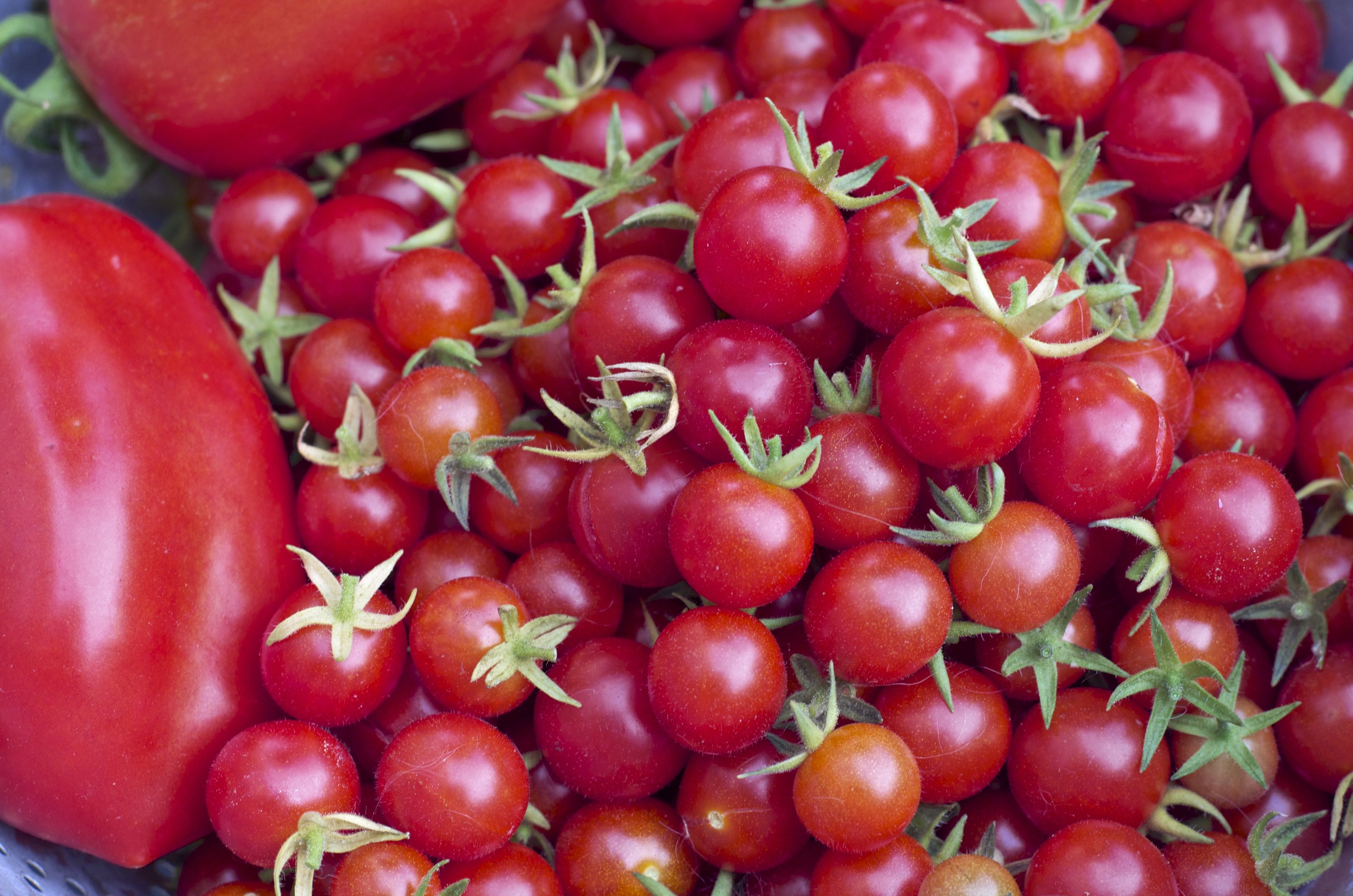
Determined to return to the good old days, when I was rewarded with quarts of tomato sauce, last Winter I bought new planters. When, in the Spring, my seedlings looked pathetic, I bought heirloom plants from the farmers market, some of which were the same as my under-achieving seedlings. And then I waited patiently. Lo and behold, I was richly rewarded. My Brandywine supplied me the “T” for all Summer’s BLTs. My cherry tomato, Mexican Midget, insured my salads never went tomato-less and still yielded enough for me to make tomato jam. Finally, my plum tomatoes, San Marzano, kept me awash in tomato sauce. Grandpa would have been proud.

As October drew to a close, I went out and picked the San Marzano plants clean of green tomatoes. The other vines had all but given out at that point. Setting aside some to ripen on a window sill, I chopped the rest, rendering about 1 of the 2 quarts needed for the relish. I then bought 4 large green tomatoes at the farmers market. 3 were needed for the relish and the 4th, destined for BLTs, joined the others on the window sill.

Searching the web for a recipe wasn’t as easy as I had thought. Most that I ran across required a number of large tomatoes without giving an associated weight or volume. As you can see in the photo, my tomatoes were varied in size and I had no idea how many would equal, say, “24 large green tomatoes”.  The recipe I finally chose gave the ingredients in quarts required —  equivalent metric units were, also, provided — and could be adjusted to suit the volume of tomatoes on-hand. It wasn’t long before my relish was underway.

Not having much experience with green tomato relish, I cannot say how this compares with other recipes. I do know that the night following “relish day”, my kitchen smelled like a condiment station at Wrigley Field. Needless to say, this relish is the perfect accompaniment for a hot dog or even the “best of your wurst.”  

*     *     *

Today, Wednesday, the Jewish Faith celebrates the start of Hanukkah, while tomorrow we in the States celebrate Thanksgiving. Whether you celebrate the holidays, I hope your day is a good one. Have a Wonderful Hanukkah & Happy Thanksgiving!

*     *     *

Green Tomatoes 1

Relish, we are your father.

*     *     *

Green Tomato Relish Recipe

yield: 5 to 6 pints

Ingredients

  • 2 quarts chopped green tomatoes (see Notes)
  • 2 large onions, chopped (next time I’ll use one)
  • 1 green pepper, chopped
  • 1 red pepper, chopped (I used red for color; green may be substituted)
  • 2 jalapeños, chopped
  • 4 tbsp canning/pickling salt
  • 2 cups sugar
  • 2 tbsp prepared mustard (yellow mustard seed may be substituted)
  • 2 tsp celery seed (if celery salt is used, do not add additional kosher salt)
  • 1/2 tsp kosher salt
  • 8 whole cloves wrapped in cheesecloth
  • 2 cups white vinegar (5% acidity)

*     *     *

Green Tomato Relish 1

NOOOOOOOOO!

*     *     *

Directions

  1. Place tomatoes, onions, peppers, and jalapeños a large bowl and sprinkle with salt. Stir to mix and set aside for 1 hour. After the hour has passed, drain the liquid before placing the mixture into a large, heavy-bottomed pot.
  2. Add the sugar, mustard, celery seed, cloves, and vinegar to the pot and stir to combine. Heat the mixture over med-high heat until it boils. Reduce heat and simmer for 20 minutes.
  3. Place relish into sterile jars and fill to 1/4 inch of top and cover. Once cool, store in the fridge where it will keep for 2 weeks.
  4. For canning instructions, see Notes.

Inspired by a recipe on Food.com

*     *     *

Relish & Dog

A destiny fulfilled.

*     *     *

Notes

It took about 6 large tomatoes to make 2 quarts chopped. Sizes vary and you may need more or less tomato to fill 2 quarts.

Even though you can store this relish in the fridge, 5 or 6 pints is an awful lot of relish to use within 2 weeks. I prefer to can the relish, giving me a supply that will keep for up to one year. To can:

  1. This should be done while relish and jars are still hot.
  2. Bring a large kettle of water to the boil over high heat. Place a rack or towel in the bottom of the pot so that no jar will come in contact with the bottom of the pot.
  3. Seal each jar a little less than fully tightened.
  4. Place jars in the boiling water. Do not allow them to touch each other and the water should cover the tallest jar by at least 1 inch (2.5 cm).
  5. When the water returns to the boil, process the jars for 10 minutes.
  6. Remove the jars to a cloth-covered counter or baking sheet, away from any drafts. (The cloth will prevent the jars from shattering should they come in contact with a cold surface.) Do not move for at least 12 hours, though 24 hours is best.
  7. Relish stored in a cool, dark place should keep for about a year.

*     *     *

Forget Moose. Must get Squirrel!

One day last Summer, after listening to me yet again bemoan Squirrel’s daily raids on my tomato plants, my friend Cynthia mentioned that she’d heard that squirrels steal tomatoes for the moisture they provide. The squirrels will take a bite and a drink from each one that they pilfer. If you want to reduce the thievery, the theory goes, leave a dish of water for them to drink. I didn’t experiment with this because I had stumbled upon my own way of dealing with Squirrel — and a shot-gun wasn’t even involved. Every day or so, I walk around my plants’ containers, picking up tomatoes that have fallen due to the wind, Squirrel, or a passing Max. (He has a yard to patrol yet insists on circling each container.) One afternoon, while on my way out, I gathered up the tomatoes on the ground, placing them on a table on the deck — and promptly forgot all about them. The next morning, much to my surprise, a couple of the tabled tomatoes were stolen by Squirrel but those on the vine were left alone. From that day on, like my Roman ancestors of long ago, I paid a tribute of fallen tomatoes to my enemy, a four-legged barbarian, and my wealth, my tomato harvest, was spared. Only time will tell whether this arrangement will work next season.

*     *     *

It’s déjà vu all over again …

Fall is typically when a Bartolini’s thoughts turn to sausage making. The cooler temperatures make it far less likely to run into the spoilage problems that you might Bartolini Sausageencounter in Summer’s heat. Not only that but years ago my family hung the freshly made sausage in their screened, back porches to dry/cure in the chilled air. Once cured, the sausages were sliced and eaten like salami. Well, despite all that — and the photo, for that matter — I no longer make sausages, preferring to make patties instead. No matter your preference, you can learn how to make sausage like a Bartolini by clicking HERE.

*     *     *

Coming soon to a monitor near you …

Quince Preview 2

Quince: The end of the year’s canning

*     *     *

Roasted Arctic Char with Fennel, Onions, and Potatoes

Salmerino Alpino Arrostito con Finocchio, Cipolle, e Patate

Arctic Char 1

I think the fishmongers have learned my shopping habits and display their “wares” accordingly. Oh, I enter the store with a list in-hand but, unlike for most, my list is merely the starting point. I need to walk around the store before the real buying begins — and that’s where my fishmongers enter the picture. Knowing that I will come their way, they never fail to have something on display that is sure to catch my eye, and then they simply reel me in. One week it might be a collection of the smallest and sweetest of clams. Another time, it could be merluzzo so fresh I expect them to flap around in the display case. Not so surprisingly, last week, after writing that I was on a mission to find a 1 lb. octopus, I saw the octopus of my dreams perched atop its smaller, inferior brethren and I swear one of its arms motioned for me to come over and have a look. Coincidence? I think not.

It should come as no surprise, therefore, that when I walked up to the counter recently, there, in the center of the display, where only the week before rested snow-white fillets of cod, was today’s arctic char. With flesh more red than salmon (see Notes), these fillets were farm-raised, most likely in tanks on land. (Thank you, Seafood Watch.) Of course, I bought a nice fillet, just like the fishmonger knew I would.

Stepping away from the counter, I realized I didn’t know what to do with my purchase. My only experience with the fish, if you can call it that, was to watch it prepared on “Iron Chef.” The one thing I did know for certain was that I should cook it that night. What’s the point of buying fresh fish if it’s going to sit in the fridge or, worse yet, the freezer, waiting to be called into duty? Moments later with phone in-hand, I googled “arctic char recipes” and, lo and behold, one of the search results was a recipe from Seafood Watch. That is the dish I’m sharing today, with a couple of modifications to suit my tastes.

*     *     *

Ingredients

*     *     *

Roasted Arctic Char with Fennel, Onions, and Potatoes Recipe

Ingredients

  • 12 oz (340 g) arctic char fillet
  • 1 large bulb of fennel, sliced thick
  • 1 medium red onion, sliced thick
  • 12 new/fingerling potatoes, halved and quartered to make them equally sized
  • 1 orange, juice and zest, divided
  • 1/4 cup balsamic vinegar
  • 1/4 cup orange juice
  • 2 tsp brown sugar
  • 1/4 cup olive oil, divided
  • salt & pepper
  • fennel fronds, chopped
  • orange slices, garnish

*     *     *

Veg Cooked

*     *     *

Directions

  1. Pre-heat oven to 450˚ F (235˚ C). Place 1 oven rack in the upper third of the oven, and, another rack in the lower third.
  2. Place potatoes in a baking dish, season with salt, pepper, and 2 tbsp olive oil. Stir to evenly coat. Place on upper rack in the pre-heated oven and roast for 20 minutes.
  3. Place fennel and onion into a bowl. Add half of the orange zest, the rest of the olive oil, and season with salt and pepper. Gently mix to evenly coat the ingredients.
  4. Lightly oil and season both sides of the arctic char. Place on a lightly oiled baking sheet.
  5. After 20 minutes, add the fennel and onion to the potatoes and stir to combine. Return to oven for 15 minutes.
  6. After 15 minutes, place the baking sheet with the arctic char on the lower rack of the oven. Stir the roasting vegetables and return to the oven’s top shelf. Continue to roast for another 10 to 12 minutes, depending upon the thickness of the fish fillet. The fillet is cooked when the flesh flakes easily and is opaque in the center, not translucent.
  7. Meanwhile, place remaining orange zest, balsamic vinegar, orange juice and brown sugar into a small sauce pan over med-high heat. Bring to a boil, lower the heat, and reduce sauce to the consistency you desire.
  8. When fish is cooked, remove to a plate and serve with the roasted vegetables. Drizzle sauce over both fish and vegetables and garnish with a sprinkling of fennel fronds. Place orange slices on the plate, the juice of which may be squeezed on the fillet.

Inspired by a recipe found on the Monterey Bay Aquarium: Seafood Watch site.

*     *     *

Roasted Arctic Char 2

*     *     *

Notes

As mentioned, the flesh of arctic char can be more red than salmon — usually indicating the fish has been farm-raised — but it can be a lighter hue, as well. It is said to taste like a cross between salmon and trout, and not quite as strong as salmon. For this reason, some may feel it tastes a bit more like trout. As a general rule, prepare arctic char as you would salmon and you will not be disappointed.

The Monterey Bay Aquarium created and maintains the Seafood Watch site and App. The App is free and can be loaded into your Apple or Android smart phone and tablet. It is meant to encourage us, the consumers, to purchase seafood that is “fished or farmed in ways that don’t harm the environment.” The App rates seafood as “Best Choice” and “Good Alternatives”, as well those which we should “Avoid.”  Whether at the market or in a restaurant, I use the App to guide my seafood purchases. Unfortunately, Seafood Watch only covers the United States and Hawaii, though there may be a similar App for your corner of the World.

*     *     *

It’s déjà vu all over again …

Homemade dog jerky

Recently, “hits” on my dog jerky post have soared and it has become this blog’s most popular post for each day since dog treats came back into the news. Once again, something in store-bought jerky treats is causing dogs to become ill and far too many have died. (TIME: The FDA has No Idea Why Jerky Treats Are Killing Hundreds of Dogs.) Every dog that I have owned has loved these treats but they are hardly worth the risk, especially when it is so easy to make jerky at home. Before you buy another bag of jerky for your dog, please click HERE to see how easy — and inexpensive — it is to make your own beef & chicken jerky for your pupster.

*     *     *

Coming soon to a monitor near you …

Apple Cake Preview

Aunt Mary’s Apple Cake

*     *     *

Today’s Jam is a Real Plum, Damson Plum with Cardamom

My poor Damson plums. Way back in September, I bought 2 overflowing quarts of the diminutive beauties, planning to make and freeze cobblers. Yum, right? Well, this was the Saturday before I was to leave for Michigan and, as luck would have it, there was no time for making cobbler before I left. No problem. I’d bring them to Michigan with me and make cobblers for Zia. The night before I was to leave, I placed the bag of plums on my dining table, along with some of the parts to my ice cream machine. A few hours later, I finished loading the car and left for Michigan. Once there, I realized I had left everything on the table. Poor Zia. She got neither cobbler nor ice cream during my last visit.

*     *     *

Damson Plum Jam 2

*     *     *

Upon my return home, as I unpacked the car I passed by that bag of plums a few times. I really wasn’t in any hurry to look inside, figuring it would be an unsightly mess, at best. So, once everything was unpacked, and with my laundry going, I decided to brave the bag and have a peek. Unbelievably, they were pretty much as I had left them. I dumped them into a colander and, though a few were smashed, none were spoilt. I discarded those that were smashed and rinsed the rest. Now, what to do with them?

Sadly, the cobbler idea had lost its appeal. Having brought home plenty of apples, there were pies and apple cake (recipe forthcoming) in my future and I just wasn’t interested in making cobbler anymore. (A decision I’m sure to regret this Winter.) That meant my long-neglected plums would be used to make jam.

Damson plums are smaller than others and their peel ranges from dark blue to black, some with a hint of deep purple. (Sorry, I forgot to photograph them fresh. See? Neglected.) The flesh is greenish-yellow and the pits adhere to that flesh, something you’ll need to consider when using them in a recipe. When it comes to taste, the flesh is somewhat sweet while the skin is a bit tart. For me, this makes Damson plums perfect for jam. Use a little sugar for a tart jam, more for a sweeter taste.

Today’s recipe is a basic jam and no pectin is required. The only questionable part is the addition of the cardamom pods. If you want, you can just toss them into the pot and fish them out of the plums when you remove the pits. Personally, I don’t like that method. It’s far too likely for one to slip past me and, guaranteed, it will be in a jar that I give to a friend or family member. I much prefer to tie the pods in cheesecloth before placing them in the pot. Depending upon how much cardamom flavor you like, the pod package can be put back into the pot after the plum pits have been removed, an option not available if your use the pods alone. Other than the use of the cardamom pods, you’ll find the recipe to be straight-forward.

*     *     *

Damson Plum Jam - 1

*     *     *

Damson Plum with Cardamom Jam Recipe

Ingredients

  • 36 oz. (1 kg) damson plums
  • 3 c sugar
  • 1 c water
  • 5 cardamom pods (refer to above commentary and Notes)
  • pinch of salt

Directions

  1. Rinse the plums, removing any stems in the process.
  2. Place the plums, cardamom pods, and water in a thick-bottomed pot over medium-high heat and bring to a boil. Reduce heat to low and simmer for about an hour. Remove from heat and allow to cool to touch.
  3. Using your hands, squeeze each plum to remove the pit. Discard the pits as well as all the cardamom pods. Reserve everything else.
    1. Alternately, a food mill may be used to remove the pits and pods.
  4. Place the broken down plums back into the thick-bottomed pot. Add sugar, salt, and cook over medium to med-high heat until a temperature of 320˚ F (160˚ C) is reached.
  5. Test to see if jam is ready (See Notes).
  6. If your plums are jamming, place in sterile jars and seal.
    1. They may be refrigerated and will keep for about a month.
    2. They may be frozen and will keep up to a year. Once thawed, use within 3 weeks.
    3. If preserved/canned (see Notes), jam will keep up to a year if stored in a cool, dark place. Once opened, use within a month.
    4. Source: Home Center For Home Food Preservation
  7. Serve as you would your favorite jam and may be used to flavor roasts, particularly pork.

*     *     *

Damson Plum Jam 4

*     *     *

Notes

According to a number of sites, 5 cardamom pods would equal about 3/4 tsp of ground cardamom. I have not prepared this jam using ground cardamom, so, I’ve no idea whether it will have a stronger taste.

Though there are a few methods of testing to see if your fruit is jammin’, I prefer to use the plate test. While the fruit/berries are boiling on the stove top, place a dish in your freezer. When you think the jam is ready, take about a half-teaspoon of jam and place it on the now chilled plate. Allow the jam to rest a few minutes before using another spoon or your fingertip to see if the jam has set or is still too runny. If the latter, continue to simmer the jam while returning the plate to the freezer to await the next test.

Canning this jam is simple and not unlike other jams & jellies. Once the jam is ready, fill the sterilized jars, leaving 1/2 inch head space. Place lids on top of each jar, tightening until not quite as tight as possible. (I tighten mine fully and then unscrew the lid slightly.) Place each jar on a rack in a large pot of boiling water. Jars must not sit directly on the kettle bottom. Once the pot returns to the boil, begin timing. This jam will need to be processed (boiled) for 10 minutes, if using half-pint or smaller jars (235 ml or smaller). After 10 minutes, remove jars to a cloth-covered counter or baking sheet, away from any drafts. Do not move for at least 12 hours — 24 hours is best — so that the jars fully seal and the jam sets.

*     *     *

It’s déjà vu all over again …

Roast Loin of Pork

Roast Loin of Pork

When our temperatures start to drop, I begin to think of preparing roasts for dinner. The oven brings welcome warmth to the kitchen and my house soon fills with the heavenly aroma of a roast in that oven. About a year ago, I posted a recipe for roast loin of pork that was butterflied, slathered with fig preserves and wrapped in pancetta before roasting. The result was a dinner fit for a holiday. You can see the recipe, along with step-by-step instructions, by clicking HERE.

*     *     *

Coming soon to a monitor near you …

Roasted Arctic Char 3

 Roasted Arctic Char

*     *     *

Braised Goat in the Moorish Style

Capra Basata nello Stile di Moresco

Braised Goat with Harissa

I’m back and the Kitchens are once again open. Zia and I thank you all for your kind words and well wishes. She sends her warm regards. She, also, sent me home with a few new recipes — octopus and quail are at the top of that list — and I’ll be sharing them in the weeks to come.

Of course, we did buy our share of honey, over 4 gallons between the two of us. Although I brought home 2.25 gallons (8.5 l), almost all went to my neighbors for distribution among their family members. The “Honey Man”, Mr. Falkenberg, has about 100 hives and they produce enough honey for him to sell it in some of that area’s markets, as well as during not one but two weekends this year. He also sold apples, grapes, and black walnuts.  I bought a 5 pound bucket of grapes for $2.00 and used them to make grape jelly yesterday. The apples were used to make apple sauce and my Zia Mariolla’s apple cake. That recipe will be shared in the near future.

*     *     *

(Click to enlarge any photo)

*     *     *

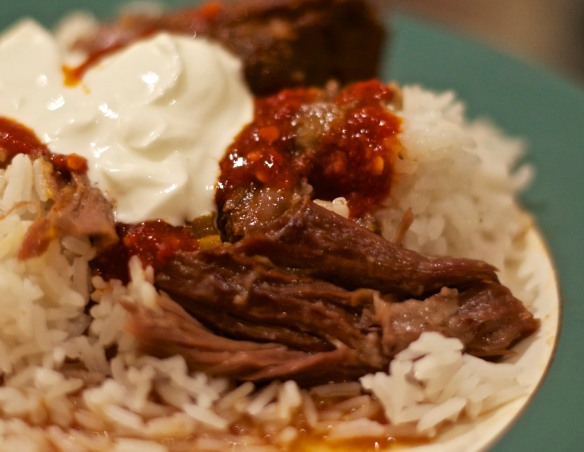
I’ve mentioned in the past that my family prepared goat, very often at Easter. As the years past, we relied more upon lamb for that holiday meal and I cannot tell you the last time I enjoyed goat in any form. Worse yet, I had no idea where I might purchase some. Well, that all changed a few weeks ago. I didn’t realize it but the vendor at the farmers market from whom I buy organic chicken also sells a variety of meats, goat being among them. Although I couldn’t buy any at the time, I knew I’d be back to purchase some. And that’s the last I’ve seen of that vendor. For whatever reason, they are no longer at the farmers market. Not only did I lose my long sought-after source for fresh goat meat but I lost my organic chicken vendor, too.

Well, returning home after the third week of the vendor’s absence, I decided to take matters into my own hands. I pulled the car to the curb and googled, “Where to buy goat in Chicago?” Lo and behold! Just about a half-mile from my home, there’s a Middle Eastern grocery and butcher. It’s one block West of the Indian market where I buy spices and I’ve walked past it any number of times. Within minutes, I was on my way with a goat shoulder wrapped in brown paper.

Once home and after a quick web search, I settled upon a great recipe. Unfortunately, it required harissa and I didn’t have a recipe for the sauce nor did I feel like experimenting. So, I did what I often do. I went to the Middle East Bakery & Grocery, a little gem of a store located in my old neighborhood. As luck would have it, they make their own harissa on-site and it’s good enough to be used in a number of the restaurants in town.

So, with a goat shouder on the counter, harissa in-hand, and a jar of preserved lemons hiding out in the back of my fridge, I set about making braised goat — but with one major difference. The original recipe uses a dutch oven to braise the roast, slowly, in the oven. When I finally bought the meat, Summer had returned to this area with a vengeance, I wasn’t about to turn on my oven for anything, let alone a long and slow braise. Instead, I pulled out the slow cooker and my kitchen kept its cool. This is the version described in the recipe below.

Oh! One more thing. I will be bringing some goat with me to Michigan next time so that I can learn and share my family’s recipe for roasting it. Get ready, Zia!

*     *     *

Raw Goat Shoulder

*     *     *

Goat in the Moorish Style Recipe

Ingredients

  • 1 cup harissa for marinade
  • 2 – 3 tbsp extra virgin olive oil
  • 2 carrots, chopped
  • 1 large onion, sliced
  • 6 cloves garlic, smashed
  • 2 bay leaves
  • 1 cinnamon stick
  • 3 cilantro stems – that’s right, I’m using cilantro
  • 2 cups low/no sodium chicken stock
  • 1/2 cup dry white wine
  • 1 tbsp honey
  • the rind from half of a preserved lemon, finely chopped
  • salt and pepper
  • harissa for serving
  • Greek yogurt for serving

*     *     *

Goat ready to be cooked

*     *     *

Directions

  1. With a very sharp knife, remove gray skin from the meat. Season with salt & pepper.
  2. Place meat in a large, seal-able plastic bag, add the harissa and completely coat the meat. Place the bag and contents in the fridge overnight. Turn bag over every couple of hours. Remove from fridge 1 hour before cooking is to begin.
  3. Heat oil over med-high heat in a medium sauté pan. Add onions, carrot, garlic, bay leaves, and cinnamon stick, sautéing until soft and fragrant. Season with salt and pepper.
  4. Meanwhile, place stock, white wine, and honey in a small sauce pan, bring to a boil, and then keep warm over a very low flame.
  5. Once the vegetables have been sautéed, dump that pan’s contents into the slow cooker. Add the cilantro and stir.
  6. Place the goat meat atop the vegetables, Be sure to include any remaining harissa left in the bag.
  7. Pour the wine mixture around the roast in the slow cooker. Cover and set to “Low”.
  8. Turn the roast after 1 hour, and then again every 2 hours after. Roast will be cooked in 8 hours.
  9. After 8 hours, remove roast to a dish and cover. Strain the pan juices, discarding the braising vegetables. Set aside to allow the fat to separate and then remove.
  10. See Serving Suggestions below

Inspired by a recipe in the NY Times.

*     *     *

Goat Plated

*     *     *

Serving Suggestions

1) Once cooked, the roast can be carved and served as-is. Sprinkle with the preserved lemon. Suggested accompaniments would be rice, yogurt, and a bit of harissa on the side. The sauce can be reduced to the thickness of your choice. Check for seasoning before serving on the side.

2) Debone the cooked roast and treat it as you would pulled pork. Return in to the slow cooker. Add the preserved lemon and mix thoroughly. Reduce the sauce to the desired thickness and either add it to the pulled goat or serve on the side.

*     *     *

Goat Sandwich on Baby Arugula with Greek Yogurt and Harissa

Pulled Goat Sandwich on Baby Arugula with Greek Yogurt and Harissa

*     *     *

It’s déjà vu all over again …

About a year ago, I posted a recipe for plum cobbler that I jokingly called “magical.” What I didn’t know, but learned while I was visiting Zia, was that the recipe contained a typo. Instead of listing “1 TBSP baking powder”, I had written “1 TSP baking powder.” Big difference, no? I’ve since corrected the recipe  and please make sure you do the same if you’ve made a copy for yourself.

*     *     *

Coming soon to a monitor near you …

_DSC0001 2

Blueberry-Lemon Slice

*     *     *

My Tomatoes Are In A Jam

With today’s post another short one, I thought I’d share a bit more about my Grandpa. When we last left him, he had just finished painting the trim on the two-flat’s peak and had invited the neighbors to come into the backyard to “see my tomatoes” …

(Those interested can read the painting story by clicking HERE.)

*     *     *
Tomato Jam 2

*     *     *

Grandpa was well-known throughout our neighborhood and he could often be seen strolling about, his hands behind his back, with his right hand holding the index and middle fingers of his left hand. The little boy across the street took note and would often mimic Grandpa as they walked together or on opposite sides of the street. For Grandpa, this was the highest form of flattery.

He did more than just stroll about, however. If he heard the rumble of heavy equipment or the whir of power tools, he would be at the job site or backyard within minutes. Having once owned a contracting company, Grandpa knew and understood quite a bit about building and repair work. It wouldn’t be long before he’d be advising the worker(s) and oftentimes he’d pitch in, showing them how whatever it was should be done. His opinion was respected and very often sought out by our neighbors and the parish.

For example, the front of our church was a massive, floor-to-ceiling mosaic depicting a number of Grandpa & Cookiesaints and religious symbols. As the church settled, a large crack began to appear in the center of the mosaic at its base, stretching upward like some leafless tree. Grandpa was called in to repair the crack and to replace the tiny colored tiles. Not long after that, following a lightning strike, Grandpa’s knowledge of masonry was required to help with the repairs to the school. As I said, Grandpa was well-known and respected.
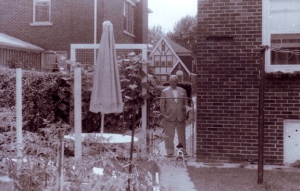
Well, once the heavier garden work — the tilling, fertilizing, and planting — was done for the season and with no repair projects to tackle, Grandpa had time to relax. You could often find him sipping a beer while resting in his hammock under the grape arbor, listening to George Kell announce the play-by-play for the games of his beloved baseball team, the Detroit Tigers. Sometimes he watered the garden from the hammock, using a sprinkler to get those places beyond his reach. Eventually the game would end and that was cause for concern for some of the wives in the neighborhood, for Grandpa would go for a walk.

It didn’t matter who you were — neighbor, passer-by, parish priest, mail carrier, etc. — if Grandpa saw you, he would strike up a conversation and, at just the right moment, invite you to “see my tomatoes.” Within minutes, there you were, looking at his 2 dozen tomato plants, tied to their hockey sticks in neat little rows. He’d show you the brick barbecue, his very much prized Chinese pheasants, the lettuce patch, the grape vines, the potted lemon tree, and his latest attempt at growing a fig tree. Within minutes you’d be invited into the patio and he’d have a cold one in front of you before your rear end settled into your chair. What’s this? You don’t like beer? Not to worry. There was a jug of red wine under the table. Oh? You prefer white wine? There just so happened to be a jug of white wine next to the red. Well, that first beer or glass of wine led to another and another and then another. Somewhere along the line, shot glasses would appear and whiskey was introduced into the conversation. Although the length of these backyard tours varied, they usually ended in the same way, with his guest leaving the yard, though quite a bit more wobbly than when the tour first began. In fact, there were a few times when one of us kids was asked to walk his guest home.

These visits did not go unnoticed by the wives in the neighborhood and a few men refused Grandpa’s subsequent invitations. Others would accept but leave abruptly after Come Into My Parlor ...the first beer. Of course, there were a couple who, for whatever reason, accepted the invitation with no apparent qualms at all. It was after one such visit that a neighbor approached Mom, angry because her husband had ignored her wishes and had returned home moments before, more wobbly than usual. I don’t recall whether she wanted Mom to control Grandpa, her husband, or both but Mom, recognizing a no win situation, did nothing of the kind, The husband, perhaps wisely, kept his distance and I don’t recall ever seeing him in the backyard again.

That’s too bad because he missed one of the greatest parties held in our yard. It was Grandpa’s birthday, though neither Zia nor I can remember the exact one. As was the case for each of his birthdays, all 13 of us ate dinner together in the patio, with a couple of family friends seated at the table as well.  Once the dinner was finished, neighbors and friends joined the party just in time for cake and liquid refreshments. As I said, Grandpa was well-known and you never really knew who’d show up. This year, even the parish Pastor stopped by. The poor man didn’t stand a chance, for the wine, beer, and whiskey flowed freely. I’ve no idea how much time had transpired but I do know that my Dad was seated on our front porch as Grandpa walked the priest back to the rectory. (You may recall the rectory was located at the opposite end of our block.) Dad was still on the porch when the two returned a while later. Apparently, when they finally reached the rectory, the priest kindly offered to walk Grandpa home, he accepted, and so they returned. Realizing that this could go on for hours, Dad offered to walk the good priest home and sent Grandpa to bed. Oddly enough, although he was invited, our Pastor was a no-show at Grandpa’s next birthday party. That was OK, however, for another priest, a recent transfer from Wisconsin, unknowingly took his place …

*     *     *

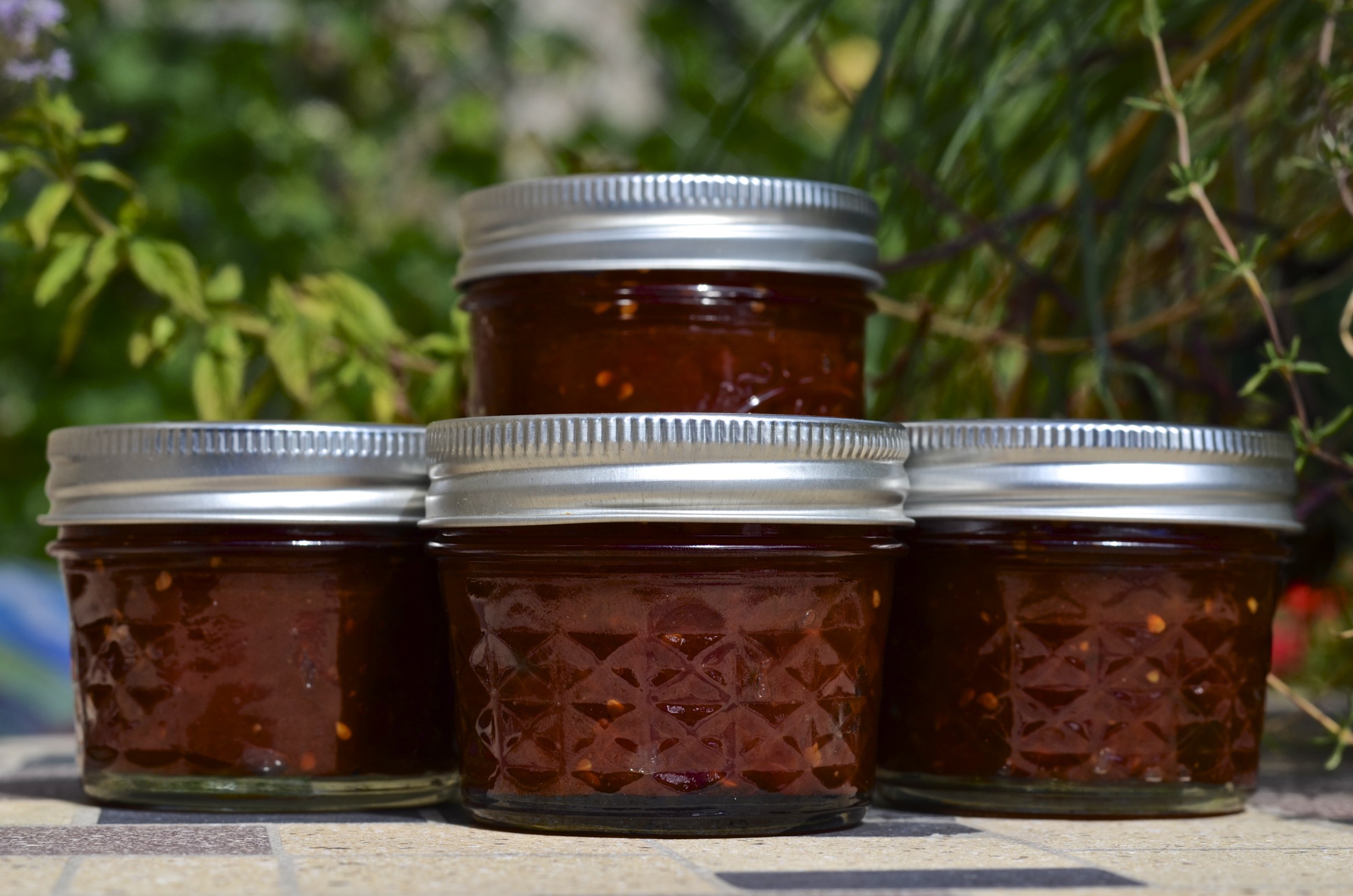
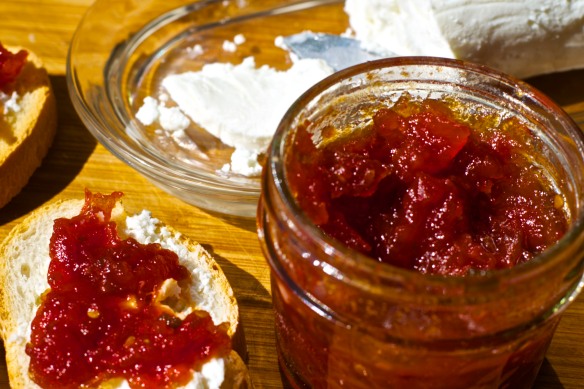
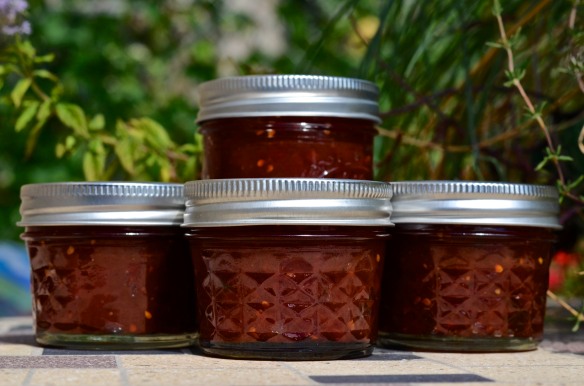
I first became aware of tomato jam last year through my blogging friend, Marie, when she posted a link to a recipe for tomato jam that used Sungold cherry tomatoes. When I mentioned it to Zia, she remembered that Grandma had made tomato jam when both she and Mom were little girls. The way I saw it, I had little choice but to make a batch, which I enjoyed very much.

This year, my tomato plants did much better than they have in recent years but the weather was far from cooperative. Though Summer started quite warmly, the sun and high temperatures soon departed, not to return until late August. Up until that time, my tomatoes grew but never got the sun and heat needed to ripen. Then, as September started, so did the ripening and soon I had more tomatoes than I could handle. That’s when I decided to revisit tomato jam, making two batches within days of each other.

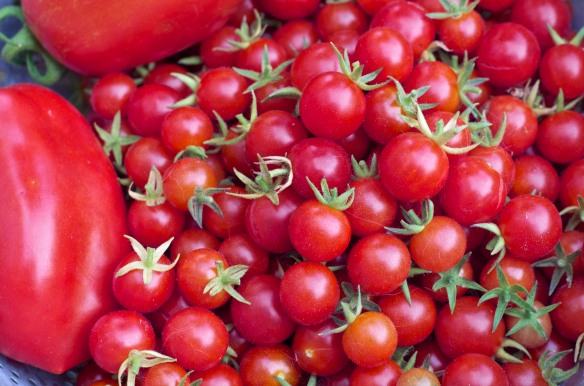
Unlike last year, however, my tomatoes weren’t Sungolds. In the first batch, I used only heirloom plum tomatoes. In the second, I used an even mix of tiny cherry tomatoes and more heirloom plum tomatoes. Since my tomatoes weren’t as sweet as Sungolds, I referenced Mark Bittman’s recipe for tomato jam, as well as the one suggested by Marie.

*     *     *
_DSC0006 3

*     *     *

Tomato Jam Recipe

Ingredients

  • 3.5 lbs (1590 g) tomatoes, cored, and roughly chopped (peeling optional)
  • 2 1/3 cups sugar
  • 3 green Thai chiles chopped, seeds and veins removed (see Notes)
  • juice and zest of 2 limes
  • 2 tbsp fresh ginger, grated
  • 2 tsp cumin, ground
  • 1 cinnamon stick
  • 1/4 tsp cloves, ground
  • 2 tsp salt

Directions

  1. Place sugar, chiles, and tomatoes in a thick bottomed, non-reactive pot. Stir and allow to sit for 1/2 hour.
  2. Using medium heat, add the remaining ingredients, and bring to a boil, before reducing to a simmer. Stir often to prevent scorching.
  3. Continue to simmer until the mixture resembles jam. This could take as little as 90 minutes or as long as 3 hours, maybe longer. If unsure whether your jam is ready, perform a plate test. (See Notes.)
  4. Once your tomatoes are jammin’, fill sterilized jars to 1/4 inch of the rim. Place the lid on each jar and process in a boiling water bath for 15 minutes. Remove from the boiling water, place on a towel lined baking sheet, and place them all in a draft-free area where they will remain undisturbed for at least 12 to 24 hours.
  5. Check to make sure each jar is properly sealed and store them in a cool, dark place. Those not sealed should be refrigerated and eaten within two weeks.

*     *     *

*     *     *

Notes

When researching the amount of time required to process these jars in a hot water bath, I came across 3 different time requirements; 5, 10, and 15 minutes. Preferring to err on the side of caution, I processed my jam for 15 minutes in a boiling water bath.

Although I peeled the tomatoes in the first batch, it was virtually impossible to peel the dozens of cherry tomatoes, so, I didn’t. I was surprised to find there was no detectable difference in texture between the two batches and I won’t be peeling tomatoes for jam in the future.

After cooking for an hour or so, I used a potato masher to crush any of the cherry tomatoes that remained whole. This released their liquid into the pot and, I believe, shortened the cooking process.

In the first batch, I used 3 green Thai chiles, removing both seeds and veins, thinking they would be too hot if used whole. Well, I could not detect them at all. In the second batch, I used one green Thai chile, leaving seeds and veins intact as I chopped it. It’s heat was barely detectable. I’ve yet to figure out what I’ll do next time but I’ve a feeling there’s one batch of very spicy tomato jam in my future.

There are a few ways to test whether your jam will set. I use the plate test. While your jam is boiling on your stove top, place a dish in your freezer. When you think your jam is ready, take about a half-teaspoon of jam and place it on the now chilled plate. Allow the jam to rest a few minutes before using another spoon or your fingertip to see if the jam has set or is still too runny. If the latter, continue to simmer the jam while returning the plate to the freezer to await the next test.

The cherry tomatoes that I used are an heirloom variety called “Mexican Midget”. One plant will produce a great deal of fruit, though smaller than “normal” cherry or grape tomatoes. The largest of these tomatoes are no bigger than my thumbnail, with many as small as the nail of my little finger. Up until I used them to make jam, I tossed a handful of them into each of my dinner salads — and still dozens remained on the plant.

*     *     *
Tomato Jam 3

*     *     *

It’s déjà vu all over again …

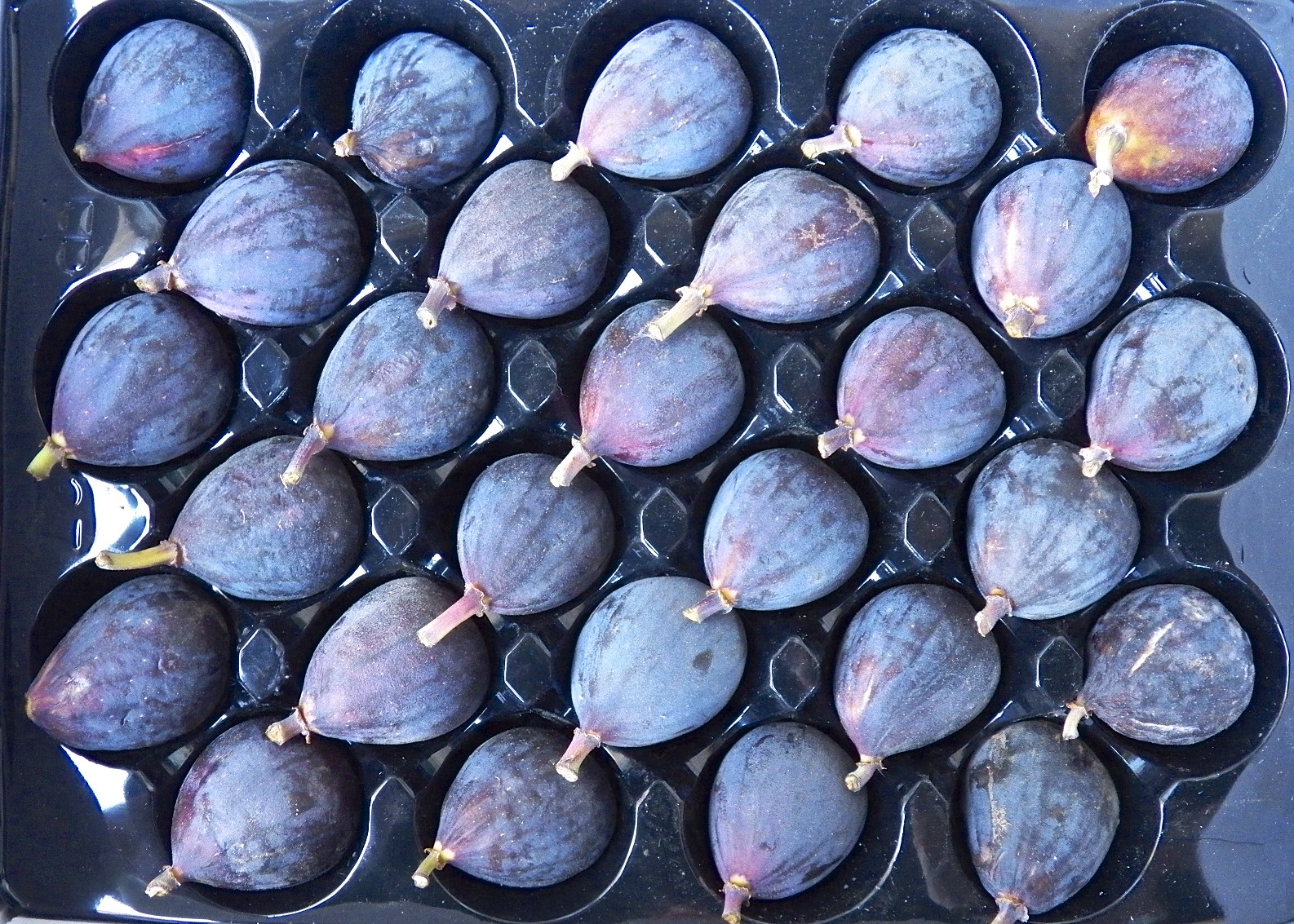
Black FigsSince this is a jammin’ post, we might as well be consistent. Today’s blast from the past is a recipe that I shared last year, Fig Preserves with Balsamic Vinegar and Black Pepper. Not only is this jam great when served with toast and, say, goat cheese, but it works beautifully when used to stuff a pork roast. WIth figs now filling our markets, this is one jam you won’t want to miss. Just click HERE for the details.

*     *     *

Coming soon to a monitor near you …
Braised Goat over RIce

Goat in the Moorish Style

*     *     *

Peanut Butter for Your Pupster

Peanut Butter for Dogs

*     *     *

Today’s recipe is a simple one and the post brief, so, I though I’d take the opportunity to share another Grandpa story. If you’re not interested, just scroll down until you reach the peanut photo. That’s where the recipe begins.

*     *     *

Grandpa was, by all accounts, a Jack of all Trades. Having owned a contracting business, few maintenance and repair jobs around the old two-flat fell outside of his skill set. At any given time, especially in the Summer, he could usually be found performing any one of a number of jobs around the building: cement work, carpentry, tile setting, painting, roof repair, and the occasional electrical project.

As children, we were often enlisted to help him with these projects. When very little, our main duty was to stay out-of-the-way. We soon graduated to beer fetchers and water bearers. “Go-fer” was the next position and, depending on the project and number of men involved, we could be kept running. Soon we were allowed to water the The Old Wheelbarrowdry ingredients to make cement, under supervision of course. Not long thereafter, we were permitted to use the hoe with 2 holes to mix the cement, as well as a variety of small jobs. You might, for example, fill buckets with cement, haul them, maybe cut a board or two, hammer a few nails, etc. And then, one day, you were deemed old enough and big enough to push a loaded wheelbarrow. That was the pinnacle of success for us laborers, for it meant that you big enough and strong enough to do man’s work. Make no mistake, pushing a wheelbarrow full of cement was certainly man’s work. especially under the watchful eyes of the adults present. You did not want it to tip over and there were plenty of opportunities, for every Summer there was at least one job that involved cement. To be sure, though, not all jobs required cement or even a work crew. For those jobs, Grandpa flew solo, like the time he painted the trim of the house.

Unlike bungalows and ranch-style homes, painting a two-flat’s trim was no easy task. As you can see in the photo below, much of the trim is about 25 feet above the ground, with the peak another 8 or so feet higher. To further complicate matters, there were 2 aluminum awnings attached to the front of the house, a small one over Zia’s living room, while a much larger awning shielded our windows and the entire porch minus the entryway. (The photo is current, the awnings having been removed sometime after we left in 1985.) When Grandpa decided the trim needed painting, he was about 71 years of age. This was long before “70 is the new 50”; 70 was 70. I was about 15.

One Summer afternoon, Grandpa called for me to give him a hand. By the time I got to the front of the house, Grandpa had already started up the ladder and was waiting for me. The ladder, however, was not long enough to reach the top, or even near the top, of the peak. Not only that but the awnings prevented it from resting against the building. Instead, it was on a bit of an incline as it laid across both awnings, its top-end suspended a little more than a foot from the wall.

When he saw me, I was instructed to stand on the bottom of the ladder. Grandpa then began to climb higher. In his hand was a hockey stick with a paint brush lashed to the end. I started pleading with him to stop. He ignored me and further up he went. I The Old Two Flatdidn’t know it but he had already placed a bucket of paint on top of the second awning. When he reached the end of the ladder, and with his left arm acting as a brace against the side of the building, he started painting the building’s peak, dipping his hockey stick brush into the paint can below him and then swinging it over his head. Whether because he heard my voice or just by luck, a neighbor came out and, horrified, ran to help me steady the ladder, all the while yelling, “Bart, get down!” Grandpa, of course, ignored him, as well. There was a job to be done, after all. Within minutes, more neighbors came, all pleading with him to stop. All for naught.

As I’ve mentioned in other posts, the parish school was across the street and at the end of the block. At the time, Mom worked there as the school’s secretary. That day, being it was Summer, Mom left her office at 4:00 pm. She didn’t walk far before she noticed a crowd gathering on our lawn and quickened her pace. When she got close enough, she noticed Grandpa on the ladder, swinging a hockey stick. Now running, and a few doors away, Mom was yelling, “Pa! Get Down!” Unperturbed, Grandpa kept painting.

When he had finished, the entire episode having lasted about 30 minutes, Grandpa calmly came down the ladder, handed his hockey stick to someone, went back up for the paint can, and came back down again for the last time. Mom and the neighbors demanded that he stop painting and he complied. In reality, his compliance was by no means submission. The peak was the last of the trim to be painted. His work was done.

The men helped Grandpa put away the ladder and paint supplies. For that, he invited them back to “see my tomatoes.” The invitation had little to do with tomatoes but that’s better left for another post. For now, there’s peanut butter to make.

*     *     *

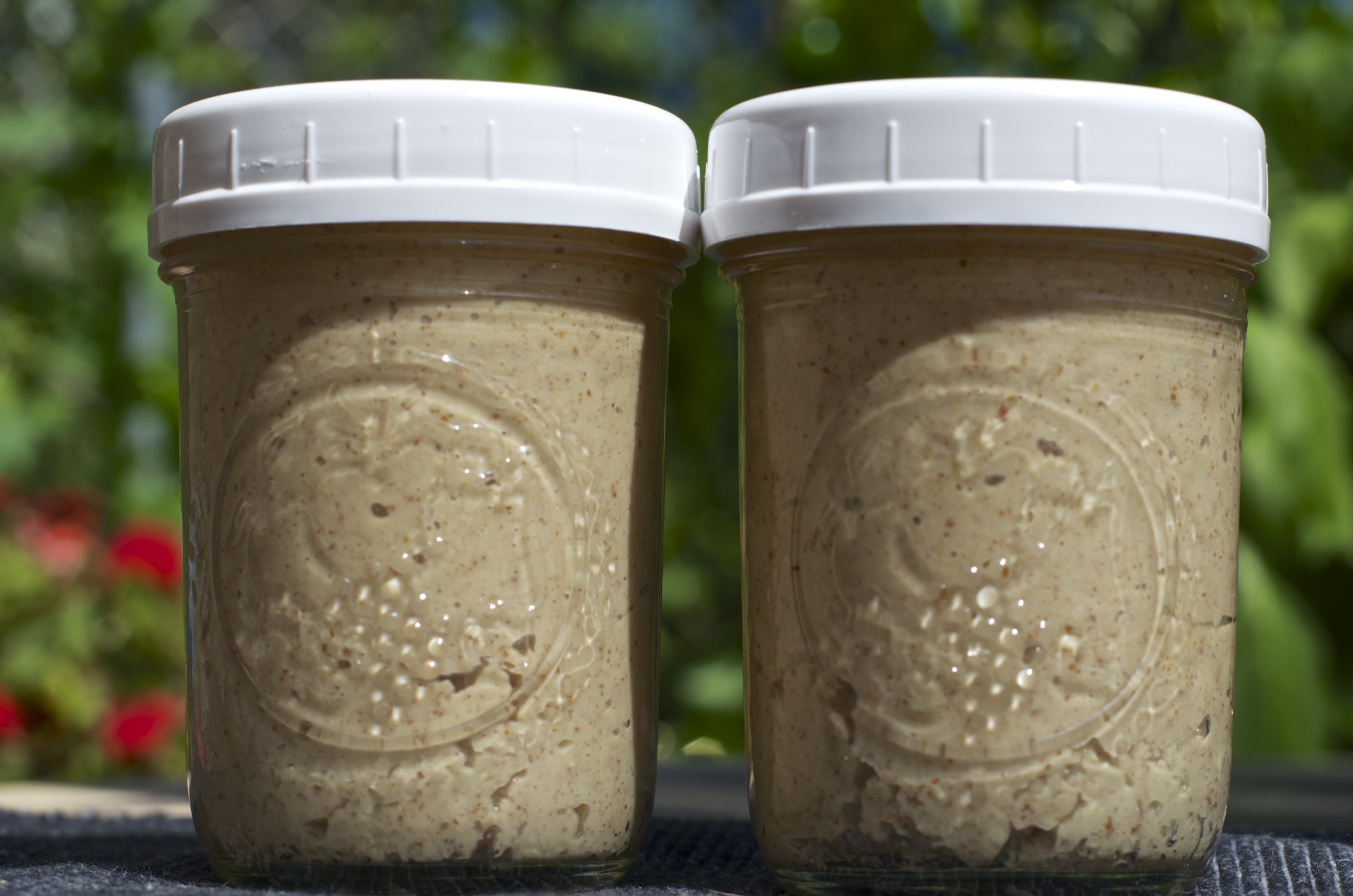
When I first decided to make peanut butter for Max, he was still a puppy. Then, like now, he loved peanut butter over all other treats. Well, when I read the label of a jar of peanut butter, I decided to make my own. It’s easy enough, as you’ll soon see.

I’ve chosen to remove the shells, roast the peanuts, and then remove most of the “paper skins” before making the butter. You must remove the shells but whether you roast and/or remove the skins is up to you, although I did read that roasting peanuts increases their anti-oxidant effects. That’s about all there is to the recipe. Yes, it really is that simple and your pooch can enjoy a treat without any additives whatsoever.

*     *     *

100_4769

*     *     *
Roasted Peanut Butter Recipe

Ingredients

yield: 1 pint

  • 3 cups unsalted, raw peanuts, shelled (use organic if you can find them)

Directions

  1. Pre-heat oven to 350˚ F (175˚ C)
  2. Place peanuts, single layer, on a baking sheet and roast for 20 minutes. Stir midway through for even roasting.
  3. Remove from oven and set aside until cool enough to handle.
  4. Once cooled, take the baking sheet & peanuts outdoors. Rub a handful of peanuts between your palms. The clean nuts will drop and their “paper skins” will float away on the breeze. (See Notes)
  5. Once cleaned to your liking, place the nuts in a food processor and run.
  6. The peanuts will go through stages:
    1. The nuts will go from coarse to finely chopped in a couple of minutes.
    2. Soon a “dough ball” will form.
    3. A couple of minutes more and a creamy peanut butter will develop. The longer you process it, the more fluid it will be.
  7. Place in an airtight container and store in the refrigerator.

*     *     *

*     *     *

Variations

If using peanuts in the shell, roast for 25 minutes. Once cooled, remove shells and as much of the “paper skins” as you prefer.

If your pooch prefers chunky-style peanut butter — very helpful if this is to be used to hide pills — remove up to 1/2 cup of the nuts after they’ve been coarsely chopped. Add them back to the peanut butter once it has reached the preferred consistency. Stir by hand to combine.

To make peanut butter for the two-legged members of your household, follow the same method as dictated above. When the peanuts are first added to the food processor, you may wish to add salt, and/or a sweetener like honey or sugar, to taste. If you prefer your peanut butter to be more smooth, add a teaspoon or two of a neutral-tasting oil.

Notes

I’ve seen no documentation that states the “paper skins” are harmful or should be removed from the peanuts, whether the peanut butter is intended for use by humans or dogs. Nonetheless, I remove the majority of them, though I’m nowhere near having them 100% cleaned.

As I’ve mentioned, Max loves peanut butter. He has 2 hollow bones that I bought him years ago from a pet store. I put a couple of tablespoons of peanut butter in each and put them in the freezer. If I have to crate him, I give him one of these bones and it keeps him occupied.

Dogs do not sweat as we do. They cool themselves by panting, sending cooler air over the tongue. Giving your dog a frozen treat on the hottest of Summer’s days will help him to keep his cool. With that in mind, I reward my puppy with ice cubes. When fully grown and Summer’s heat is at its worst, I give my dog an ice cube “treat”. He loves it and it will cool him off.

*     *     *

It’s déjà vu all over again …

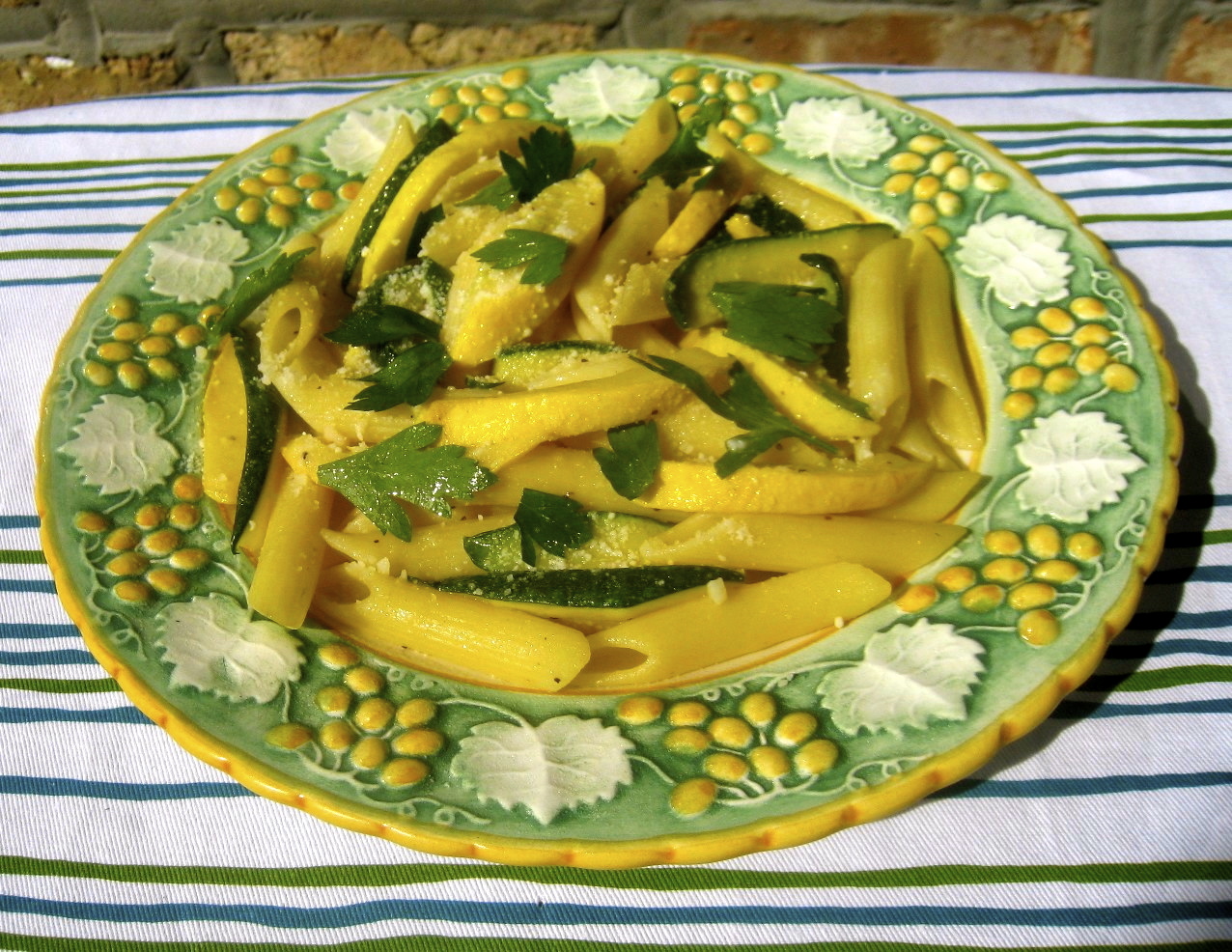
In my part of the country, the farmers markets are at their peak. Sure, some fruits and A Penne for your Zucchiniberries are gone for the year but the vendor stalls are bursting with many other fruits and vegetables. Judging by what I’ve seen, my use of zucchini blossoms earlier this season didn’t affect their harvest in the slightest. There’s enough zucchini and Summer squash left to go around — and then some. If you’re looking to use some of these squash, while cutting back on carbs, you might wish to check out this recipe for penne with zucchini and Summer squash.

*     *     *

Coming soon to a monitor near you …

Preview Tomato Jam

Tomato Jam

*     *     *