Zia’s Corn Relish

Zia's Relish

Growing up, this would have been the time of year when Mom and Zia canned tomatoes. I vaguely remember the canning process itself but I do remember, vividly, being sent down to the cantina, “cellar”, to retrieve a quart or 2 of tomatoes when Mom was making sauce. Being arachnophobic, it took me forever to select jars with the least chance of having a spider lurking behind them. I never did come across a spider but, if I had, Mom surely would have heard the crash of jars smashing on the basement floor. Anyway, as their nests emptied — Mom & Zia’s nests, not the spiders’ — the need for tomatoes shrunk accordingly and eventually they stopped canning them altogether. But they didn’t stop canning. One of the things Zia canned was corn relish. Another condiment, this relish may be used to top any sandwich, sausage, or hamburger. Although not really a side dish, its acidity makes a spoonful or two a good accompaniment for meat or fish and, as was the case with the giardiniera recipe, I’m sure others will be offering serving suggestions as time goes by.

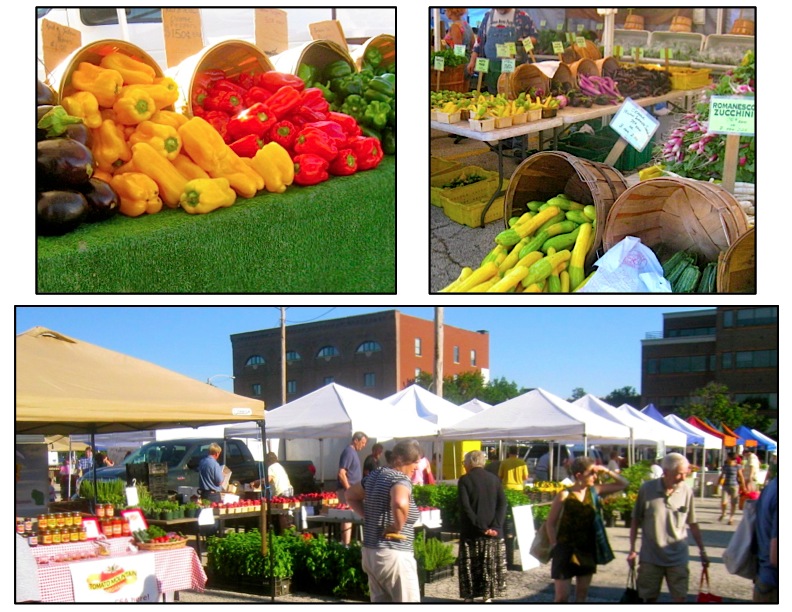
I didn’t set out to make corn relish this Summer and certainly didn’t plan on canning it. Speaking with Zia, I was surprised to learn that she hadn’t made the relish since 2006! Here I thought it had been about 2 years. After our call ended, I searched the web for recipes and none looked all that complicated. I spoke with her again late Friday, knowing that I would be going to the farmers’ market early Saturday morning. After a discussion, I decided to try my hand at it, she gave me the recipe, and I bought all the fresh ingredients at the market the following morning. By noon Saturday, I was canning corn relish and soon there were 4 pints cooling on towels.

*     *     *

*     *     *

The recipe I’m sharing is Zia’s recipe, with the exception of the optional jalapeño. It makes about 7 pints of corn relish and that is too much for me. So, I halved the recipe, using a little more than 5 cups of corn instead of the 10 cups required for her relish. Zia’s recipe calls for 2 cups of white vinegar. I found that most recipes on the web used at least twice that amount and used either white or apple cider vinegar. I happen to love vinegar’s acidity so I used 2 cups of vinegar in my relish, 1 cup of which was white and the other cup cider. Lastly, I prefer a little spice so I added a whole jalapeño, diced, to the mix. The resulting heat was just enough for my palate without being the least bit unbearable.

*     *     *

Zia’s Corn Relish Recipe

Ingredients

  • 10 cups corn kernels (about 16 – 20 ears)
  • 4 cups celery
  • 2 cups green bell pepper, diced
  • 2 cups red bell pepper, diced
  • 1 cup onion, diced
  • 1 whole jalapeño, diced (optional)
  • 1 3/4 cups sugar
  • 2 cups vinegar
  • 2 1/2 tbsp canning or pickling salt
  • 2 tsp celery seed
  • 1/4 cup AP flour mixed with a couple tbsp water
  • 2 tbsp dry mustard
  • 1 tsp turmeric

Directions

  • To prepare the relish
    1. This recipe requires that fresh corn be blanched for 5 minutes before being removed from the cob. Simply place the ears in boiling water for 5 minutes and remove to an ice bath. Once cooled, use a sharp knife to remove the kernels.
    2. In a large, heavy bottomed pot over med-high heat, combine the celery, bell peppers, onion, sugar, vinegar, salt, celery seed, and jalapeño, if using. Bring to a boil, stir occasionally, reduce and simmer for 5 minutes.
    3. Add the turmeric, mustard, corn, and the flour with water to the relish. Simmer for an additional 5 minutes and begin canning process.
  • To can the relish
    • The only canning instructions I received from Zia was to process the jars for 15 minutes in a boiling water bath. Now, that would have meant absolutely nothing to me but a few short weeks ago. Instead, today, I knew exactly what she meant. Nevertheless, I wanted — OK, needed — some sort of official validation that I was going to can this relish correctly, Once again, I turned to the Pick Your Own website where, lo and behold, there was a section about making and canning homemade corn relish. Their recipe is very similar to Zia’s and their canning instructions are laid out, step-by-step.

*     *     *

And so ends — and, believe me, I do mean “ends” — my brief and thoroughly unexpected visit to Cannery Row for 2011.

*     *     *

Italian Lemonade and Godmothers

If you’ve come to this blog entry hoping to find quaint stories about my Italian Godmother sipping lemonade, you’re going to be disappointed. You see, today’s entry will introduce 2 cocktails, a godmother and Italian lemonade, and although Zia, my Godmother, might enjoy them, she really has little to do with either.  No, these cocktails came to me by way of my Trusty Traveling Companion, a man who at one time was a rather celebrated bartender in these parts. And with this being an Italian recipe blog, you couldn’t find a better place to present 2 amaretto cocktails. Not only that, since it was he who introduced me to these cocktails, I asked that he supply the images that accompany this post, thereby introducing them to you.

He introduced me to the first cocktail, a godmother, during our first trip together, in Italy. Even if a bit “potent,” it quickly became a favorite and we spent many a cocktail hour sipping godmothers as we penned postcards to friends and family back home. Heaven knows how many actually made it to their destinations but we sure did have a good time writing them. He introduced me to the second cocktail, Italian lemonade, earlier this Summer. Think of it as a godmother-light and, being a bit diluted by the lemonade, it will make a great drink for a Labor Day barbecue or picnic.

Oh! For those of you who googled “Italian godmother lemonade” and, disappointed, found yourselves at this blog but continued to read to this point anyway, I’ve a treat for you. “Justin Bieber,” “Lady Gaga,”  “Casey Anthony,” and “nude pictures of   “.  See? Now you have plenty of misdirected company, each of whom probably far more disappointed than you.

*     *     *

Godmother Recipe

Ingredients

  • Amaretto di Saronno
  • Stolichnaya Vanilla Vodka
  • lemon slices and/or mint sprigs for garnish (optional)

Directions

  1. Combine equal amounts of amaretto and vodka into a cocktail shaker, mix well, and pour into ice-filled “rock” glasses. Add garnish, if desired.

*     *     *

Italian Lemonade Recipe

Ingredients

  • Amaretto di Saronno
  • Premium Vodka
  • Lemonade (pink optional)
  • Fresh berries, lemon slice, or mint for garnish (optional)

Directions

  1. These are best made by the pitcher, or a similarly large amount, following a 7:2:1 ratio. That’s 7 parts lemonade and 2 parts vodka for every 1 part amaretto. Mix thoroughly, pour over ice into tall glasses, and add the garnish of your choice.

*     *     *

Notes

Pictured, the Italian Lemonades have been served in tall glasses, the rims of which have been dipped in colored sugar. This sugar can be found among the cake decorating supplies of your local grocery or made at home. Just combine 1/3 cup of granulated sugar with a few drops of food coloring. Once you have the sugar, place it in a bowl just wide enough to fit the top of the glass. Start with a clean, dry cocktail glass. Use a lemon slice to moisten its rim and then invert and dip the glass momentarily into the sugar. Remove the glass from the sugar, set upright, and fill with ice and the cocktail, being careful not to over-pour or in any way disturb the sugar-coating.

*     *     *

Maraschino Cherry Ice Cream

This is the third ice cream recipe in the series celebrating the birthdays of Mom, Grandma, Uncle, my Friend the kitchens’ Taste Tester, and my Friend the Entertainer, not to mention those of my Grand-Nephew and the Oldest of the Boys Upstairs. Just like its chocolate predecessor, today’s recipe uses the same cream base as was found in Mom’s pistachio nut ice cream recipe. Simple to make, I like its creamy texture and saw no reason to look elsewhere when developing this recipe. So, although today’s recipe was not in the recipe book she gave me, I still consider it to be her recipe and I think you’ll find that it’s pretty good.

When you look over today’s recipe, you’ll note that I strain the chopped cherries, press out as much of the liquid as possible, and then soak them in half & half. That’s an attempt to replace as much of the watery syrup with the thicker half & half, in the hope that the fruit pieces will not form ice shards when frozen. You see, probably my least favorite “features” of home-made ice cream are the ice shards that can result from using fruit in a recipe. I believe the water in the fruit is the culprit and if I can eliminate the water, the problem is solved.  My method may not be 100% effective but there are far fewer shards when the fruit is handled this way. If you are aware of a better way, by all means let me know. And, again, although the recipe calls for a raw egg, I always use eggs with pasteurized shells to eliminate any risk of contamination.

*     *     *

*     *     *

Maraschino Cherry Ice Cream Recipe

yield: 1.5 quarts

Ingredients

  • 2 doz Maraschino cherries, drained, coarsely chopped
  • 1/3 cup Maraschino cherry syrup
  • 1 egg
  • 1 cup half & half
  • 3/4 cups sugar
  • 2 cups whipping cream
  • 1 tsp vanilla extract
  • 1/8 tsp Kirsch liqueur (optional)
  • whipping cream, for garnish (optional)
  • 1 cherry per serving, for garnish

Directions

  1. Coarsely chop cherries, place in sieve, and use a spoon to press as much liquid out of the cherries as possible. Save liquid for later use.
  2. Soak cherries in half & half for at least an hour before proceeding.
  3. Once again strain the cherries and place the strained half & half into the blender along with the egg. “Stir” for a few seconds. Moisten the cherries with a tbsp or so of cream and refrigerate until later use.
  4. Add the reserved cherry juice, sugar, whipping cream, vanilla extract, and Kirsch, if using, to the blender and “Stir” until fully blended.
  5. Refrigerate for at least a few hours or overnight.
  6. Pour both the cream mixture and the chopped cherries in cream into the ice cream maker and process according to manufacturer’s instructions.
  7. When completed, remove the ice cream from the canister to be either served or transferred to a sealable container to be frozen to your liking.
*     *     *

Variations

Although there are many ice creams recipes made with cherries, I chose to make one with Maraschino cherries because it’s about as far removed from tart cherries as possible. Besides, as pink as it is, it’s sure to be a big hit among some members of the Barbie Set.

Notes

This being the last of August’s Fridays, one would think that it would mean an end to the ice cream recipes. Well, it’s not a “birthday 3 and a half weeks” but it is a “birthday month.” So, with this month ending on Wednesday the 31st, I’ve little choice but to offer one last recipe for an ice cream confection. See you next Wednesday.

*     *     *

Giardiniera – the Chicago Way

With farmers’ markets fully stocked and bustling, this is the time to start preserving fruits and vegetables. One such method is canning and that’s about all I have to say about it. There’s freezing and, within the next few weeks, my basement freezer will be packed with quarts of diced, peeled plum tomatoes. And then there’s pickling, a common preservation method that I’m using more and more. In Italy, pickling is sometimes called sotto acetti, under vinegar, and pickled vegetables often take the form of giardiniera. Mild by Chicago standards, theirs usually gets its heat, if at all, from the peppers and pepper flakes for which CalabriaBasilicata are well-known. The Italians will often serve giardiniera as one of many antipasti or among the insalati. The recipe is pretty much the same in the States, except we tend to use “local” chilis to bring heat to the mix. A few jalapeños or serranos will often do the trick. Here in Chicago, we up the ante, adding more chilis and skipping a few of the ingredients. The result is more condiment than antipasto and it’s a staple of most “reputable” sandwich shops. In fact, in some circles, it’s almost sacrilege to order an Italian beef sandwich without a healthy scoop of giardiniera to top it off — but that’s not all. Good giardiniera makes a great topping for any sandwich, as well as for burgers, hot dogs, and brats, while a healthy sprinkling of it can elevate even the most lackluster of pizzas.

Today’s recipe is based upon one that I found in an area newspaper some years ago. Unfortunately, I destroyed the clipping, along with many others, when I transferred my recipes to a Mac-based recipe file three years ago. (Writing a blog wasn’t even a remote possibility at the time.) Nevertheless, it’s a great recipe that anyone, Chicagoan or not, will enjoy. There’s a freshness about it that you just won’t find bottled on a supermarket shelf. The recipe itself is pretty straight-forward and, if you’ve ever pickled anything, you probably already have all of the spices required and, this time of the year, you can get the rest of the ingredients with one trip to a farmers’ market. I’ve seen versions that include mushrooms, broccoli, olives, etc., but they are more salad-like than condiment, in this Chicagoan’s opinion.  Many recipes, too, rely solely upon olive oil and white vinegar for the pickling. I prefer to lighten the solution by replacing half of the olive oil with vegetable oil and to sweeten it by replacing half of the white vinegar with apple cider vinegar. As always, the choice is yours.

*     *     *

*     *     *

In reality, the hardest part of this recipe is to determine an acceptable level of heat. After all, one person’s idea of mildly spicy is another’s 5 alarm fire. The original recipe, like I’ve posted below, calls for 8 whole jalapeños. That’s the Chicago Way and it’s too hot for me. I’ve learned through experimentation that 4 whole jalapeños, along with 4 that have been seeded and “de-ribbed,” deliver just the right amount of heat for my palate. You, however, may prefer it hotter, so, follow the recipe and use 8 whole jalapeños. If that still doesn’t do it for you, switch out some or all of the jalapeños for serranos. On the other side of the coin, some may want their giardiniera mild, with very little heat, if any. By removing the jalapeños’ ribs and seeds, you’ll get a mild giardiniera that includes the flavor of jalapeños but none of the heat. And if that’s not mild enough, drop the red pepper flakes. The point is, you can make the giardiniera as hot, or mild, as you like. With a little experimentation, I’m sure you’ll find the right combination of chilis and pepper flakes to create the perfect giardiniera.

*     *     *

Chicago Giardiniera Recipe

Ingredients

  • 8 jalapeños, chopped (for more heat, serranos may be substituted)
  • 1/2 large cauliflower, cut into florets
  • 2 carrots, diced
  • 2 celery stalks, diced
  • 1 green bell pepper, diced
  • 1 red bell pepper, diced
  • 2 sweet banana peppers, diced
  • 1 sweet onion, diced
  • 1/2 cup kosher salt
  • 3 cloves garlic, minced
  • 2 1/2 tsp dried oregano
  • 1 tsp red pepper flakes
  • 1/2 tsp celery seeds
  • black pepper, to taste
  • 1/2 cup cider vinegar
  • 1/2 cup white vinegar
  • 1/2 cup extra virgin olive oil
  • 1/2 cup vegetable/canola oil

Directions

  1. Combine vegetables and salt. Add enough water to cover, stir, cover, and refrigerate for at least 12 hours.
  2. Strain vegetables from brine, rinse well, and set aside.
  3. In a large glass bowl, add garlic and remaining seasonings.
  4. To that bowl, add the vinegars and stir until well-mixed. Whisk the solution while adding the oils.
  5. Add the reserved, brined vegetables into the bowl and gently mix until well-coated.
  6. At this point, the giardiniera may be left, covered, in the bowl or transferred to clean jars. Either way, it must be refrigerated for 48 hours before serving.
  7. Because this giardiniera isn’t canned, it must be stored in the refrigerator, where it will keep for a few weeks.

*     *     *

Giardiniera-topped Mount Burger

*     *     *

Variations

I’ve already listed a number of variations and I’m sure you can dream up more. I’ve found that some vegetables, however, do not respond particularly well to the brining and pickling processes. Broccoli is one such under-performer, in my opinion.

Notes

Be aware that there is a range of heat for each kind of chili. A very hot jalapeño, for example, can equal a weak serrano. There is no way to insure that the heat of the batch of giardiniera you make today will equal the one you made 3 weeks ago. You can limit your risk, however, by always purchasing your peppers from the same grocer, vegetable stand, or farmers’ market vendor. Hopefully, that will offer some consistency. Still, as I learned this morning, peppers can be mislabeled. Those “sweet banana peppers” may turn out to be hot Hungarian yellow wax peppers. Two completely different peppers – and I’ve a burning eye to prove it.

Not everyone lives here in Chicago nor can they buy airfare every time they want an Italian beef sandwich. Well, you shouldn’t have to go without just because of distance. Thanks to a great food & sports blog, sports-glutton.com, you can make your own Italian beef to go along with this giardiniera. It’s a little bit o’ Chi-town wherever you happen to be.

Speaking of pickling, be sure to check out my recipe for Refrigerator Bread and Butter Pickles.

*     *     *

Grape? Nuts!

I know, I know. I know what I said but what was I supposed to do? There they were, sitting incognito among the berries, containers of blue Concord grapes. How could I pass them by? It’s been a year, after all, since I saw some in a “high-end” grocery and first wondered about making jelly. Then, I saw their price. I could have bought a decent bottle of wine and a few jars of Smuckers for the cost of a few pounds of the blue beauties. Alas, I never saw them elsewhere and, when I returned the following week, even that store’s supply was gone. I resolved then and there to do better in 2011.

Before even one grape had been picked in 2011, the cherries came. Beautiful, red, tart cherries. Michigan’s sour rubies. Unable to resist, I bought some and made muffins. I soon bought more and made more muffins. I then bought even more and made even more muffins. My freezer now stuffed with muffins, I bought more and baked a pie. Then I bought more and froze them. And still the pushers vendors at the farmers’ markets had more for me to buy. Little did I know that the path to canning is laden with tart cherries.

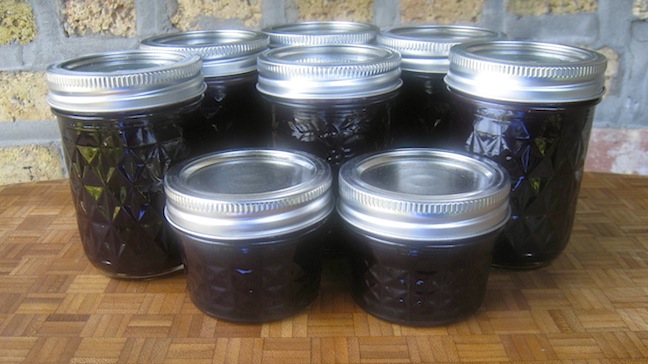
At first, it wasn’t really canning. There was no hot water bath. You have to have a hot water bath for canning. Everyone knows that. This was just filling jars with cooked cherries; a means of occupying that dead space in the back of the fridge. Then came the Michigan strawberries. Smaller than the Gulliver-sized berries found at most groceries, these little babies are a third the size and three times as sweet. I just had to buy some, especially after I found Mom’s recipe for making strawberry jam. Mom was telling me to make jam. And so I did. Mom said to use a hot water bath. And so I did. This, as I told a few of you, still wasn’t canning. I was merely dabbling. Yes, that’s right. Dabbling. Well, the fruit of my dabbles hadn’t even set yet when I saw them, the Concords, at less than half the price of last year’s sighting. I ask you, how could I pass them by? Don’t even bother answering that question.  I bought ’em.

On the way home from the fruit marked, I stopped by a grocery and bought Certo brand’s low-sugar pectin. Next stop was a hardware store, the only place I know that carries little jars and lids. When I got home, I searched the recipe book Mom had given me but, unfortunately, there was no recipe for grape jelly. Turning to the internet, I found the Pick Your Own website and it has all the information one might need to can preserve just about anything. Now, armed with the pectin’s package instructions and the ever-so-helpful guidelines at Pick Your Own, I set out to make grape jelly. Lo and behold! About 2 hours and 1 ruined t-shirt later, I was the proud owner of 7 cups of Concord grape jelly. Moments before beginning this entry, I checked and all had set properly, their lids fully sealed. There remains but 1 thing to do.

Hello. My name is ChgoJohn and I’m a canner.

*     *     *

*     *     *

Concord Grape Jelly Recipe        

Ingredients

  • 4 – 5 pounds fresh Concord grapes, washed & sorted with stems removed
  • 3 1/2 cups sugar, divided
  • 1 box Certo low-sugar pectin
  • water

Directions

  1. In a heavy bottomed saucepan, add the grapes and 2 cups of water. Bring to a boil over med-high heat, reduce heat, and simmer for 10 minutes.
  2. If you own a food mill or Roma strainer:
    1. Run the semi-cooked grapes and liquid through the food mill or food strainer, extracting as much juice as possible.
    2. Pass the liquid through a jelly bag or a sieve lined with 3 layers of cheese cloth. Gently squeeze the bag or cheese cloth to fully extract more juice. If you squeeze too hard, you may force some solids through the cloth. Proceed to step 4.
  3. If you do not own a food mill or Roma strainer:
    1. Pour the semi-cooked grapes and liquid through a jelly bag or sieve lined with 3 layers of cheese cloth. This will take some time as the grape seeds and skins will clog the cloth’s “pores.”
    2. When able, gather the corners of the cheese cloth or the top of the jelly bag, secure them, and hang over a pot in the fridge or a cool place overnight.
    3. Next morning, gently squeeze the bag/cheese cloth to extract more juice. If you squeeze too hard, you may force some solids through the cloth.
    4. Pour the grape juice though a sieve that has been lined with 2 layers of cheese cloth. Gently squeeze the cloth to fully extract the juice.
  4. Precisely measure the grape juice. You will need 5 1/2 cups of juice for this recipe and you may add up to 1/2 cup of water to reach that amount.
  5. In a large bowl or container, measure exactly 3 1/4 cups of sugar.
  6. In a small bowl, combine the pectin and precisely 1/4 cup of sugar.
  7. In a large saucepan, over med-high heat, add the grape juice and the sugar-pectin mixture. Bring to a rolling boil. It should take about 10 minutes.
  8. At this point, your jars, lids, and bands should be fully cleaned and sanitized. The jars should still be hot.
  9. Add the 3 1/4 cups of sugar, mix well, and bring back to a rolling boil, stirring frequently.
  10. Once a rolling boil has been achieved, continue cooking for exactly 1 minute. Remove from heat and begin filling the jars. Once filled, wipe clean the mouth of each jar, seal with a lid & band, and place in a boiling water bath for 5 minutes — or as indicated for your elevation.
  11. Remove from the hot water bath and place on a towel-lined baking sheet. Do not disturb for 12 – 24 hours to insure a proper seal has been achieved.
  12. Store in cool, dark place for up to 1 year.
  13. If the jam is going to be eaten right away, don’t bother with processing and just refrigerate.

*     *     *

*     *     *

Notes

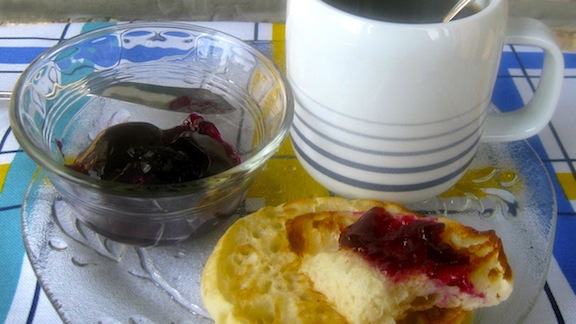
There you have it. I’ve admitted crossing over the Great Divide and into the Realm of Canning. I guess I should be at least a little upset over this turn of events but, frankly, how can I be upset when I’ve got a year’s worth of jams and jelly at my disposal? This canning thing ain’t so bad after all.

For everyone’s convenience, please form the “I told you so!” queue to your left.

*     *     *

Chocolate-Chocolate Chip Hazelnut Ice Cream

This is the 2nd in my series of ice creams commemorating the birthday month of my Mom and a number of people in my life. Last week’s recipe, pistachio nut ice cream, was almost exactly the same as the one she gave me years ago. Today’s recipe may not be found in the recipe book that Mom gave me but I still consider it to be her own. To create this ice cream, I used the base of the pistachio and replaced the nuts with other ingredients. The result is a chocolate-chocolate chip ice cream with hazelnuts. Mom would be proud.

Not to bore anyone, but I feel I must reiterate my warning about the use of raw egg in this recipe. When a recipe calls for raw egg, I use eggs with pasteurized shells, which may be found in the egg case at your grocery. Beyond that, I used milk chocolate chips but you can use whichever kind you prefer. As for the hazelnuts, I toasted them lightly before freezing them, like I did with the pistachios. This is to prevent them from becoming soggy during processing in the ice cream freezer. Lastly, you’ll note that the recipe calls for “a heaping 1/3 cup of unsweetened cocoa.” That’s because on my first attempt at creating this recipe, I accidentally dropped a heaping measure of cocoa into the cream before I could level it off. (Thanks, Max.) The ice cream was delicious and I’ve been repeating the accident ever since. (No, really. Thanks, Max.)

*     *     *

*     *     *

Chocolate-Chocolate Chip Hazelnut Ice Cream Recipe

yield: 1.5 quarts

Ingredients
  • 1/3 cup hazelnuts, roasted & roughly chopped
  • 1/3 cup chocolate chips, roughly chopped  (milk chocolate, semi or bittersweet may be used)
  • 1 egg
  • 1 cup half & half
  • a heaping 1/3 cup unsweetened cocoa
  • 3/4 cups sugar
  • 2 cups whipping cream
  • 1 tsp vanilla extract
  • 1/8 tsp Frangelico liqueur (optional)
  • chopped hazelnuts, for garnish

Directions

My Baby

  1. Place the hazelnuts in your freezer before starting.
  2. Place all the ingredients, except the nuts and chocolate chips, into a blender and “Stir” until well-blended.
  3. Refrigerate for at least a few hours or overnight.
  4. Pour cream mixture into an ice cream maker and process according to manufacturer’s instructions.
  5. About 5 minutes before completion, pour the hazelnuts and chocolate chips into the machine and finish processing.   (See Notes)
  6. When completed, remove the ice cream from the canister to be either served or transferred to a sealable container until frozen to your liking.
*     *     *

Variations

As was the case with pistachio ice cream, there are plenty of recipes for chocolate ice cream on the internet, or, if books are more your style, “A Perfect Scoop” by David Lebovitz is a good place to start. No matter where your recipe comes from, you’ll soon discover that no store-bought brand can rival the taste of good, home-made chocolate ice cream.

Notes

Your machine may not recommend adding nuts and/or chocolate chips to the cream while the machine is running. If that’s the case, process the ice cream per the manufacturer’s instructions. When finished, add the nuts and chips to the semi-frozen cream, stir to fully combine, and either garnish & serve it or transfer it to a sealable container and place in the freezer.

*     *     *

Grandma’s Stuffed Vegetables

August was a good month for the Bartolini Clan at the old two-flat. Grandpa’s garden was in high-gear, easily producing enough tomatoes for all of both families’ needs. (Be sure to check out Mom’s Tomato Antipasti.) As the years passed, the garden grew and so did the selection of produce. Lettuce, swiss chard, eggplants, peppers, and, of course, grapes, all made their way onto our dinner tables in August, if not before. To augment his own “crops,” Grandpa and I made a weekly trip to Detroit’s Eastern Market every Saturday morning, where he would walk the aisles, haggling each farmer/vendor over the price of whatever it was that he wanted to buy. By the end of our “tour,” we’d return to the car with everything from fruits & vegetables to chickens (dead or alive) and, one memorable Saturday each year, a hog’s head to be made into head cheese. (You’ve not lived until you’ve walked around a crowded farmers’ market, carrying a hog’s head on your shoulder, stopping occasionally while your Grandfather haggled with some farmer over what amounted to 50 cents, if that.) Sunday was my Dad’s turn. Starting when we were very young, Sis & I accompanied him and our favorite stop was the bread bakery. While Dad chatted with his baker friend, we munched on bread straight from the oven. Along the way we might visit with friends or family, stop at an Italian market or 2, and then head to the grocery for whatever he hadn’t found at the previous stops. We’d return home, laden with all kinds of goodies, just in time for Sunday brunch.  That night, both families often dined together in a large, screen-enclosed room, “the patio,” which Grandpa had built adjacent to the garage. It easily accommodated the 12 of us and very often a few guests more.

*     *     *

Grandmas stuffed veggies 1

*     *     *

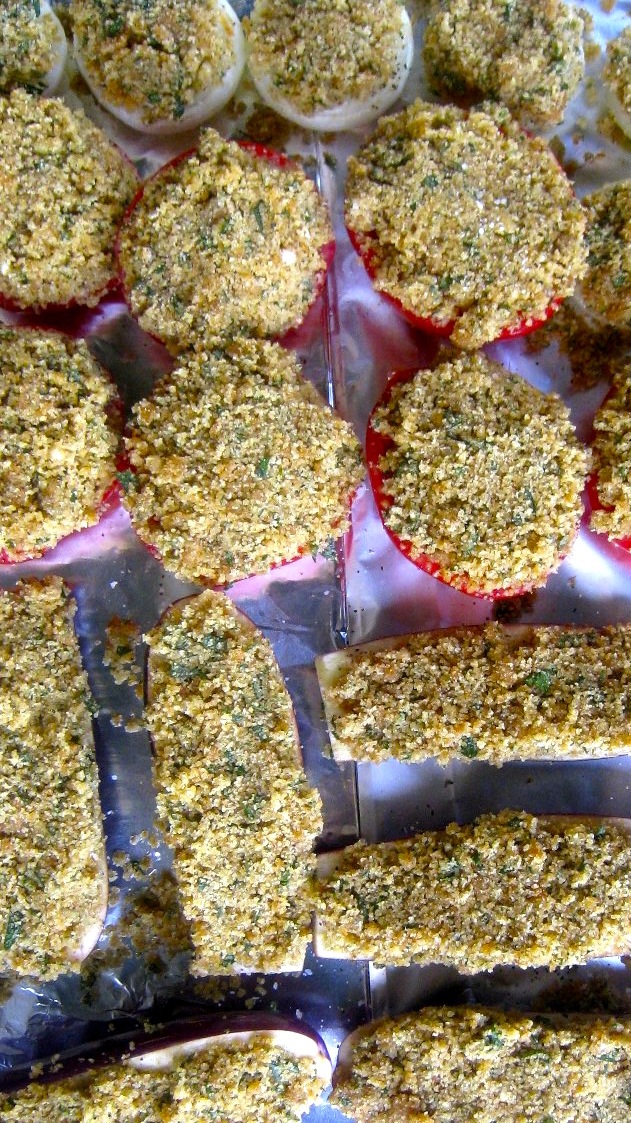
In retrospect, these dinners went off like a well-oiled machine. While Dad, Uncle, and Grandpa worked the grill and their beverages, Mom and Zia handled the rest, from setting the table to making sure that the “trouble-makers” among us 6 kids sat at separate ends of the long table. (One memorable response, walkie talkies, though well-played was extremely short-lived.) Aside from the grilled entrées, the meal itself featured side dishes made from the garden’s vegetables, as well as those that Dad and Grandpa had just purchased. Family favorites, that both women were quite capable of preparing, were tomatoes, eggplant, and onions that were halved, topped with a bread crumb mixture, and baked. Both Mom and Zia spoke of Grandma preparing vegetables in this way, which is similar to recipes for tomatoes Provençal. With Mom & Grandma’s birthday having been on the 15th, and Uncle’s birthday the 12th, I thought this would be the perfect time to share this family recipe.

Now comes the hard part. I have seen these vegetables prepared countless times, most recently a few weeks ago while visiting Zia. I have prepared them myself dozens of times, the most recent being last night. Never have I measured any of the ingredients nor have I seen them measured. Mom would get so exasperated with me as I asked her, repeatedly, what the measurements were for some dish, often this one. Now, far too late, I understand. More important than how much of this or that is the look and feel of the finished mixture. She and Zia use this breading mixture in a number of dishes. It’s consistency varies depending upon the dish and how it is cooked. When used with Grandpa’s  barbecued shrimp, it is very moist, almost dripping. Here, the vegetables are cooked at a much lower temperature than on a grill and, so, the breading isn’t as moist. Even so, you may prefer your topping to be more/less firm when served and the amount of oil used will determine that. Because of all this, I’m only posting guidelines and not a recipe. Use them as a base, adjusting where necessary to suit your own tastes.

*     *     *

Grandma’s Stuffed Vegetables

Select fully ripened tomatoes, small to medium-sized onions, and baby or small eggplants. If you use large, thick eggplants, they will require pre-roasting, as do the onions. Better to seek out relatively thin eggplants of about 4 – 6 inches in length.

For the stuffing, you will need about 2 – 3 tbsp of bread crumbs per vegetable half; about 1 tsp of freshly chopped parsley per vegetable; 1 – 2  garlic cloves, minced, depending upon the number of vegetables used; salt & pepper, to taste; and enough extra virgin olive oil to fully moisten the mixture. It should not be sopping or dripping wet.

Pre-heat oven to 400*. Remove a thin slice off of the top & bottom of each onion. This will allow them to “sit” without rolling while roasting. Halve each onion, score the cut side with a sharp knife, and brush lightly with olive oil. Season with salt & pepper and roast in the oven for 20 minutes.

Meanwhile, create the bread topping. Combine bread crumbs, parsley, garlic, salt & pepper, and olive oil. Halve the tomatoes and gently squeeze each half to remove some liquid and the seeds.  Add the liquid and “tomato caviar” to the bread crumb mixture. Halve the eggplants, lengthwise, and use a knife to score the cut side a few times. Use a pastry brush to coat the cut sides of the eggplants & tomatoes with olive oil and then season with salt & pepper. By now the onions should be about ready to be removed from the oven. Place all the halved vegetables on a lightly oiled baking sheet or dish and season with salt & pepper. Reset the oven temperature to 350*

Cover the top of each vegetable half with the bread crumb mixture. When finished, drizzle lightly with olive oil and bake in a 350* oven for 40 – 45 minutes. Serve immediately.

Variations

These are the 3 vegetable that Grandma, and later Mom and Zia, used. I’ve, also, prepared zucchini and summer squash this way, treating them as I would eggplant.

*     *     *

Grandmas stuffed veggies 2

*     *     *

Notes

Left-overs can be easily re-heated in the microwave. Better still, with 2 slices of Italian bread, one of the tomato or eggplant halves makes a great sandwich. Grandma served these sandwiches to her girls for lunch and they, in turn, served them to us.

*     *     *

The Kitchens’ Strawberries be Jammin!

I know, I know. I do not can. The threat of giving my friends & loved ones the gift of botulism has pretty much kept me away from this age-old method of food preservation. Not only that, I’ve no room for the canning gear nor for the canned goods.  So, why then am I suddenly canning?

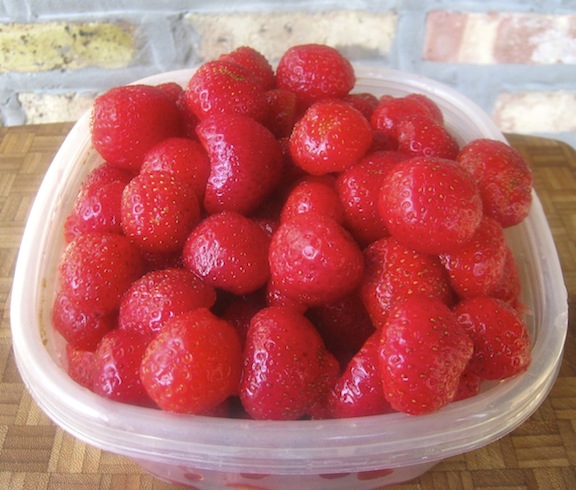
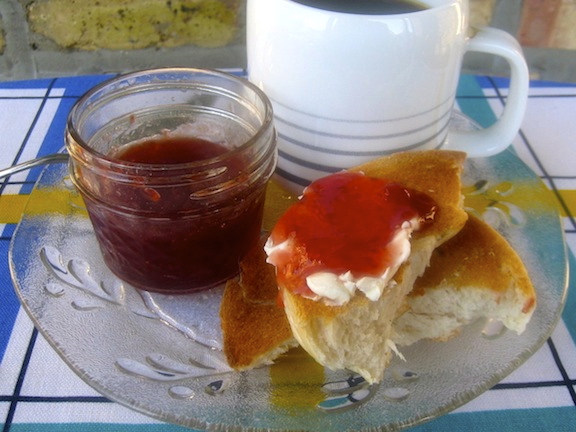
To begin with, last week’s canning experiment with cherry jam went very well. It jelled properly and the jars all sealed without using a water bath. Those who have tasted it liked it, and, most importantly, survived. Family, friends, and a few fellow bloggers were all quite positive, some even encouraging me to continue canning. One friend was particularly enthusiastic, although methinks the promise of freshly made grape jelly may have been the cause. You see, I had confided to him that I wanted to make grape jelly but that Concord grapes weren’t easy to come by. This isn’t exactly Napa Valley. I told him I would be going to the farmers’ market this morning to find grapes and, if all else failed, I might try canning some Michigan strawberries, if they were still available. What he didn’t know was that I had found Mom’s strawberry jam recipe in the recipe book she had given me years ago. All thus time I had ignored it because, as we all know, I do not can. Well, with no grapes to be found anywhere at the market, I bought 3 containers (pints?) of strawberries. I followed Mom’s recipe, with 1 exception. Remembering David Lebovitz’s recommendation of using lemon rind as well as lemon juice, I added the zest of 1 lemon to the fruit and sugar. Beyond that and as Mom had suggested, I used a potato masher to crush the hulled berries, which yielded a little more than 4 cups of smashed fruit. The fact that there was no need for store-bought pectin was a big plus; I didn’t have any. From there, the rest of the recipe is easy enough that I had no problems following it. An experienced canner and jammer should be able to do this in her/his sleep.

*     *     *

*     *     *

Mom’s Strawberry Jam Recipe        

Ingredients

  • 2 pounds fresh strawberries, hulled (4 cups smashed)
  • 4 cups sugar
  • 1/4 cup lemon juice
  • zest of 1 lemon

Directions

  1. In a heavy bottomed saucepan, mix together the strawberries, sugar, lemon and lemon juice & zest. Stir over low heat until the sugar is dissolved. Increase heat to high, and bring the mixture to a full rolling boil.
  2. Boil, stirring often, until the mixture reaches 220 degrees F (105 degrees C).
  3. Transfer to hot sterile jars, leaving 1/4 to 1/2 inch head space, and seal.
  4. Process in a water bath, allow to sit in boiling water for 10 minutes.
  5. After 10 minutes, carefully remove jars from boiling water and place on rack covered with a towel to prevent jars from shattering due to quick temperature change.
  6. Leave, untouched, for 12 to 24 hours to insure proper sealing.
  7. Store in cool, dark place for up to 1 year.
  8. If the jam is going to be eaten right away, don’t bother with processing and just refrigerate.

*     *     *


*     *     *

Notes

If unsure whether the jam will jell properly, you can test it. Just before you start preparing the strawberries, place a plate in your freezer. After your jam has reached 220*, take about 1/4 tsp of the hot jam, place it on the chilled dish, and return both to the freezer. After a couple of minutes, use your finger to “push” through the jam on the plate. If the jam wrinkles before your finger and does not flow to refill the path your finger took, the jam is ready to be placed in jars.

Oh! All evidence to the contrary notwithstanding, I do not can.

*     *     *

Pistachio Nut Ice Cream

Mom was a great lover of ice cream. In the Summer, it was she, far more often than the 3 of us kids, who suggested going out for ice cream after dinner. Dad rarely, if ever, refused her and, so, we’d pile into the car and off we went. Many years later, she and I would be in the car, returning to her home, when she would mention ice cream. The next thing I knew, we’d be standing at some counter waiting for our single scoop cones. Well, Mom’s birthday — as well as that of her Mother — was August 15th; Uncle’s birthday, Zia’s husband, was August 11th; the birthday of my Friend the kitchens’ Taste Tester was on the 7th; and my Friend the Entertainer’s birthday is August 20th — but wait, there’s more. In the Children’s Division, my Grand-Nephew’s birthday is the 1st and the Oldest of the Boys Upstairs has a birthday on the 18th. Well, with so many birthdays to honor, I’m going to post ice cream recipes for the next 3 Fridays of this, their “birthday month.” (My Friend the Entertainer believes that one’s birthday should be celebrated the entire month.) And whether you choose to make any of these 3 ice creams, make sure that on at least one of August’s warm nights, you get yourself a single scoop cone. You’ll soon discover what Mom knew all along: it’s a great way to end a day.

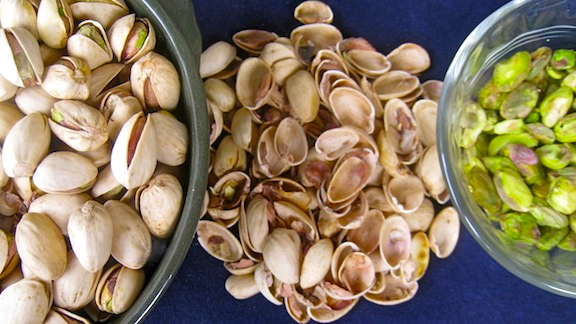
Today’s recipe, pistachio ice cream, is pretty much the same one that Mom gave to me in a recipe book years ago. It’s not a complicated recipe and there’s no custard to make. Still, there are a couple of things to consider. First, and most importantly, the recipe calls for 1 raw egg. Now, I am certainly not advocating the use of plain, raw eggs in this, or any, recipe. When a recipe calls for raw egg, I use eggs with pasteurized shells. You can find them in the egg case at your grocery and using them will eliminate any worry you might have when serving raw egg. Yes, they may cost more but the peace of mind is well worth it. With the “egg question” out-of-the-way, all that’s left is how to deal with the pistachio nuts. First off, I use roasted, unsalted nuts that I shell myself. It is much easier to remove the “paper” off of the nuts if you shell them yourself, and the less paper, the greener your ice cream. Still, even with every bit of paper removed, your pistachio ice cream will not be as green as store-bought. For that, you’ll need to add a few drops of food coloring. Whether to use food coloring is a decision for you to make. Secondly, while half of the pistachio nuts are ground in the blender, I freeze the other half in my freezer, based upon a comment by my Trusty Traveling Companion. Although he likes chopped pistachio nuts in his ice cream, he doesn’t like that they’re often a touch on the soggy side. By adding them to the ice cream already frozen, the problem is avoided.

*     *     *

*     *     *

Pistachio Nut Ice Cream Recipe

yield: 1.5 quarts

Ingredients
  • 2/3 cup pistachio nuts, shelled & roughly chopped – divided in half
  • 1 egg
  • 1 cup half & half
  • 3/4 cups sugar
  • 2 cups whipping cream
  • 1 tsp vanilla extract
  • 1/8  – 1/4 tsp almond extract
  • pistachio nuts, for garnish when serving

Directions

My Baby

  1. Place half of the pistachio nuts, the egg, and half & half into a blender and “Chop” until nuts are fully ground.
  2. Add everything but the reserved pistachio nuts to the blender and “Stir” until well-blended.
  3. Refrigerate for at least a few hours or overnight.
  4. Pour cream mixture into an ice cream maker and process according to manufacturer’s instructions.
  5. About 5 minutes before completion, pour the remaining pistachio nuts into the canister. (See Notes)
  6. When completed, remove the ice cream from the canister for serving or  transfer to a sealable container and placed in the freezer.
*     *     *

Variations

There are plenty of pistachio ice cream recipes on the internet offering far too many variations to list here. One particularly interesting method can be found on the Brown Eyed Baker’s website. In addition to adding chopped nuts to the cream mixture, he begins by steeping some of the pistachios in milk, extracting as much flavor as possible from the nuts. If you’re googling pistachio ice cream recipes, be sure to check his out.

Notes

Your machine may not recommend adding nuts to the cream while the machine is running. If that’s the case, process the ice cream per the manufacturer’s instructions. When finished, add the nuts to the semi-frozen cream, stir to fully combine, and either garnish & serve it or transfer it to a sealable container and place in the freezer.

*     *     *

Pasta with Shrimp

Having just returned from a visit with Zia, I decided I had better jot down this recipe while it was still fresh in my mind. This is one of those dishes that I never really think about while I’m preparing it. It just kinda happens. Besides, this wasn’t even the dinner I had planned.

I had intended all along to make  Trenette al Salmone for Zia during my visit. I should have brought smoked salmon with me but I was sure that I could get some in her area’s stores. Well, guess again. I went to her local groceries — “local” meaning 15 and 25 miles away, respectively, in opposite directions — and neither had smoked salmon. One of the stores happened to be running a special on large shrimp (25 – 30-ct), so I bought some and, under her watchful eye, I prepared dinner for us that night.

Like the smoked salmon dish, this is an easy meal to prepare. I prefer to use large, raw shrimp that are peeled, cleaned, and with tails removed. I cut them in half because they are otherwise too large to be eaten with pasta in a single bite, not to mention the larger the shrimp, the fewer to clean and prep. Where this dish differs from that of the smoked salmon, however, is that shrimp have a strong enough flavor that they won’t be overpowered by diced onion and garlic in the sauce. But for the onion and garlic, the same basic cream sauce is used in both dishes and neither uses cheese, as well. Remember, Italian recipes rarely, if ever, use cheese when seafood is a primary ingredient.

*     *     *

Pasta with Shrimp Recipe

Ingredients

  • 1/4 cup (1/2 stick) butter
  • 1 medium onion, chopped fine
  • 2 cloves garlic, minced
  • 1 cup heavy cream
  • 1 lb large (25 – 30 ct) shrimp, cleaned, peeled, tails removed, cut in half
  • 1 lb cooked thin spaghetti
  • 3 tbsp fresh parsley, chopped, separated
  • salt & ground white pepper, to taste
  • reserved pasta water

*     *     *

*     *     *

Directions

  1. Melt butter in a large, deep frying pan over med-high heat.
  2. Add onion and sauté until soft, about 3 minutes.
  3. Add garlic and continue sautéing for another minute.
  4. Add shrimp and sautéing for about 2 minutes. Shrimp should not be thoroughly cooked at this point.
  5. Add the cream and allow shrimp to finish cooking as the cream reduces slightly, about 2 – 3 minutes.
  6. Season with 2 tbsp of the parsley before adding the cooked spaghetti to the pan. Mix until the pasta is well-coated. If necessary, add a little of the reserved pasta water. Taste the dish and season with salt & pepper.
  7. Garnish with remaining tbsp of parsley and serve immediately.

Variations

You will find that different pastas, be they fresh or dried, absorb sauces at different rates. Reserving some of the starchy pasta water will help you deal with a “thirsty” batch of noodles or a sauce that was simmered too strongly and is a little dry. Not only that but the water, being starchy, can be used as somewhat of a thickening agent. Just bear in mind that the water is heavily salted, so, go easy on the salt until after you’ve added the pasta water.

*     *     *