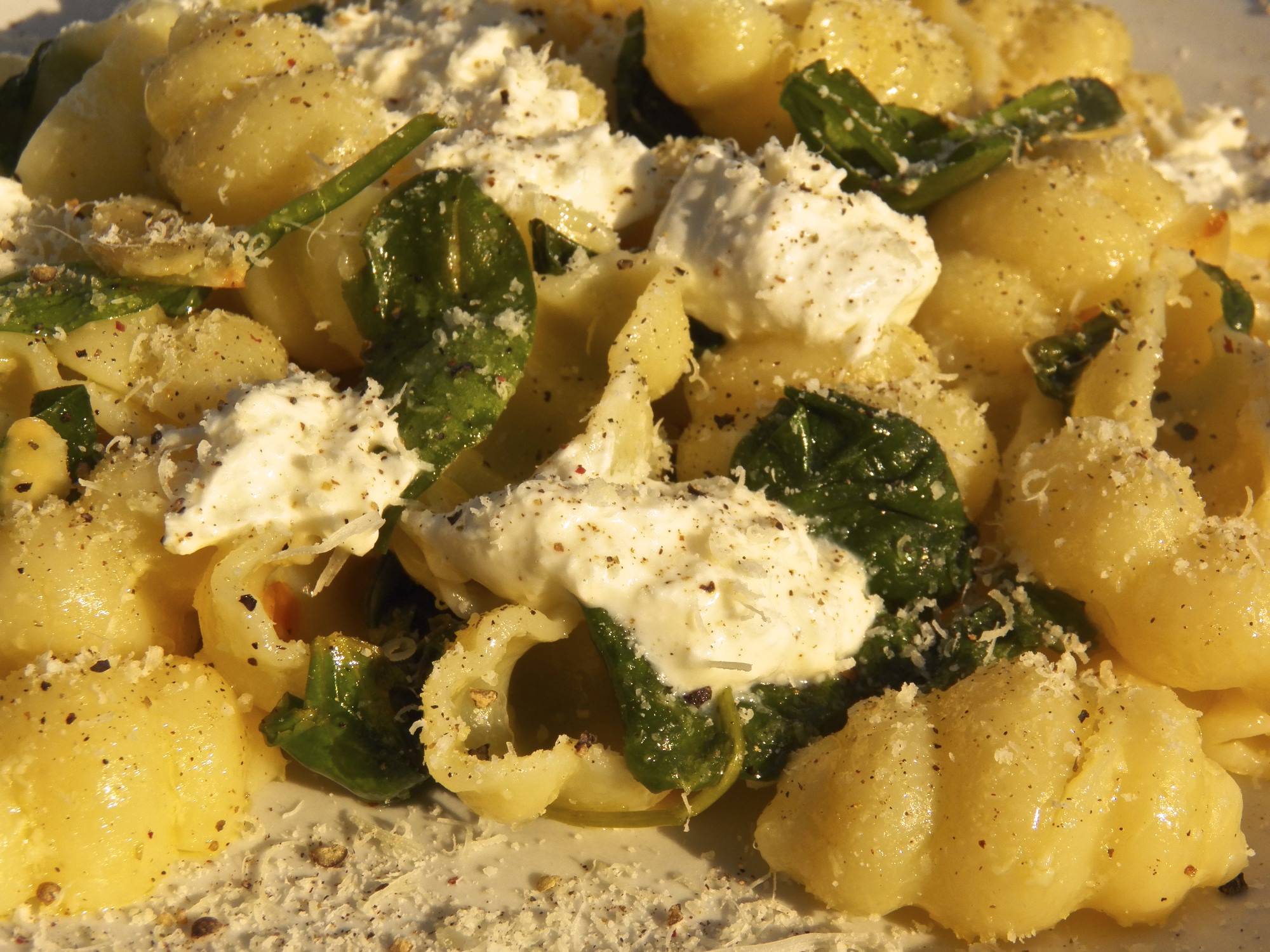
Gnocchi with Lemon, Spinach, and Burrata

If you came here expecting to find a recipe for those tasty little Italian potato dumplings, well, SURPRISE!  The gnocchi of today’s post are a type of pasta and have nothing to do with their namesake other than a similar shape. Now, I wish I could say that my family has prepared these for years but, the fact is, I stumbled upon these gnocchi during one of my voyages of discovery down the pasta aisle of the Italian market. Since I had already planned to share this recipe, I merely substituted one pasta for another.

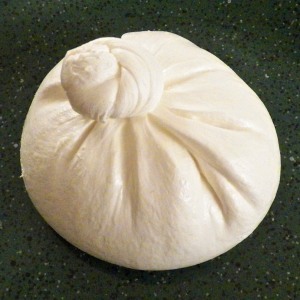
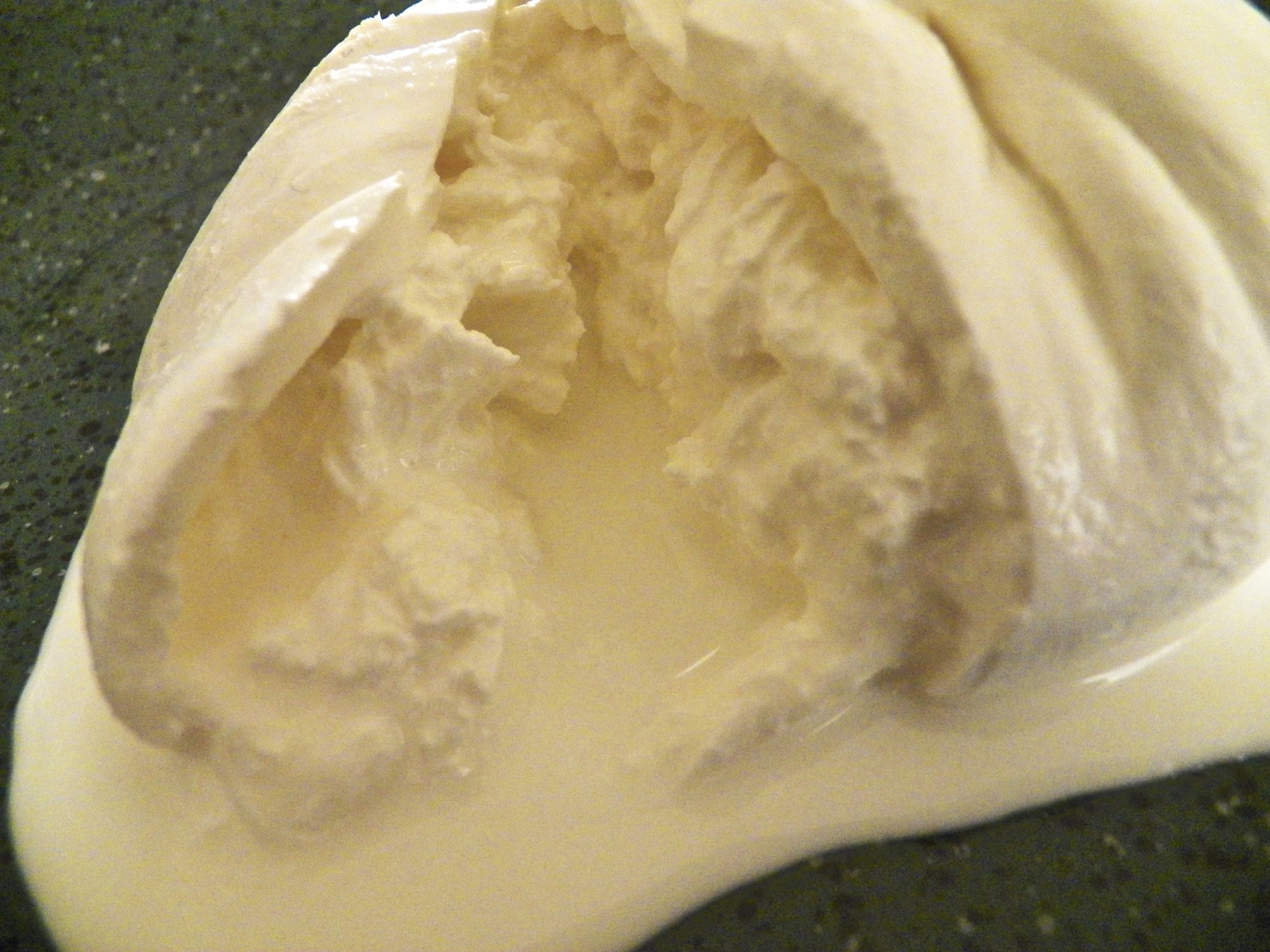
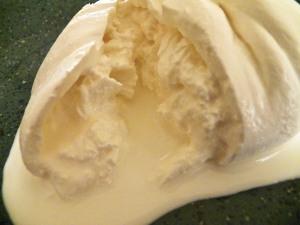
The pasta aside, the reason I wanted to share today’s recipe was to introduce burrata. If you’ve never tried nor heard of burrata, you’re in for a treat. Originating in Puglia, burrata is a fresh cheese that is closely related to mozzarella. To make it, a piece of newly formed mozzarella is stretched into a flat sheet and used to form a pouch. It is then filled with fresh cheese curds, “topped off” with heavy cream, and sealed.  (See photo below.) The result is about as rich a cheese as one could ever expect.

*     *     *
*     *     *

There are many recipes that feature burrata but the use of lemon is what drew me to this one. None of its flavors are so bold as to hide or overpower burrata’s creamy taste while the pasta shape lends itself to providing spots to capture bits of cheese and drops of cream.  Add some toasted slivered almonds for texture and you’ve a great dish of pasta, whether you serve it as a primo piatto or secondo.

Today’s recipe is straight-forward with little need for clarification. Just be sure to slice burrata on a rimmed dish or cutting board. You do not want to let any of the cream go anywhere but into your pasta. Beyond that, you’ll need to work fast. The pasta and olive oil mixture must be hot enough to wilt the spinach and, soon thereafter, melt the burrata.  A little reserved hot pasta water will help, as will bringing the burrata out of the refrigerator an hour earlier than needed to remove its chill. See? Nothing at all difficult and an incredible pasta is your reward.

*     *     *

*     *     *

Gnocchi Pasta with Lemon, Spinach, and Burrata Recipe

Ingredients

yield: 6 servings

  • 1 lb gnocchi pasta
  • ⅓ cup extra virgin olive oil
  • 2 tbsp butter
  • 2 cloves garlic, minced or grated
  • juice and zest of 1 Meyer lemon
  • 1 pkg (6 oz) fresh baby spinach
  • ¾ cup slivered almonds
  • grated nutmeg, to taste
  • 1 lb. burrata cheese, sliced and cut into 1 inch cubes
  • grated Pecorino Romano cheese
  • freshly cracked black pepper

Directions

  1. Place almonds in a small skillet over med-high heat and toast until lightly browned.  Remove from heat and set aside.
  2. Bring a large pot of salted water to boil and cook gnocchi per package directions or to taste.
  3. When pasta is approximately 4 minutes before being al dente, heat a large skillet over medium heat. Add butter and olive oil.
  4. Add the garlic to the hot oil/butter mixture and sauté until soft, about 1 minute. Do not allow to brown.
  5. Add the lemon juice and zest to the skillet and stir to combine. Keep hot until pasta is ready. If it reduces too much, replenish with pasta water.
  6. Drain the pasta and put it into a large bowl.
  7. Add the spinach, in thirds, to the gnocchi and mix well. Continue until all the spinach has been added to the bowl of gnocchi. (Adding it in batches will help to prevent clumping.)
  8. Add the almonds and a dash of nutmeg. Mix well.
  9. Add the hot butter/oil/lemon mixture to the pasta and toss, wilting the spinach as you do.
  10. Work quickly and once the spinach is lightly wilted, apportion 6 servings.
  11. Place an equal amount of burrata on top of each serving.
  12. Finish each serving with a sprinkle of Pecorino Romano cheese and freshly cracked black pepper, to taste.
  13. Serve immediately.

Inspired by Bon Appetit, December 2004

*     *     *

Variations

Not all of us have ready access to Meyer lemons, and, gnocchi pasta probably won’t be found in your neighborhood grocery. Don’t let a lack of either stop you from making this delicious pasta. If missing Meyer lemons, use the juice and zest of 1/2 “normal” lemon. If unable to find gnocchi pasta, try using campanelle (little bells), gigli (lilies), or, as pictured on the right, conchiglie (shells).

*     *     *

Notes

It cannot be stressed enough, the key to this dish is to work fast to insure that the spinach wilts and the burrata melts. Success means a great pasta for dinner.

Burrata’s creaminess makes it a natural for crostini and you may wish to reserve a bit just for that purpose. Use it in place of mozzarella to make the crostini described HERE and pictured on the left.

*     *     *

It’s déjà vu all over again …

Kale-filled Pieda

Kale-filled Pieda

Flatbread are common to many cuisines and Italian is no different. Originating in Emilia-Romagna, this flatbread is called piedina but in my Dad’s area within Italy, the Republic of San Marino, it’s called pieda. Easy to prepare, Mom served pieda with sautéed Swiss chard but you can serve it with cheeses, lunch meats, salad greens, or any combination of those. You can find the recipe by clicking HERE.

*     *     *

Coming soon to a monitor near you …

Last week I shared the recipe for Bartolini Lasagna. At the time, I called it “one of the jewels in the Bartolini Crown of Recipes.” Well, next week I’ll present another of our Crown’s jewels: Mom’s recipe for Cappelletti. Although not made in the traditional shape, these raviolini will turn an ordinary bowl of brodo into something really quite special.

*     *     *
The Lasagna of My People — Lasagna dei Bartolini

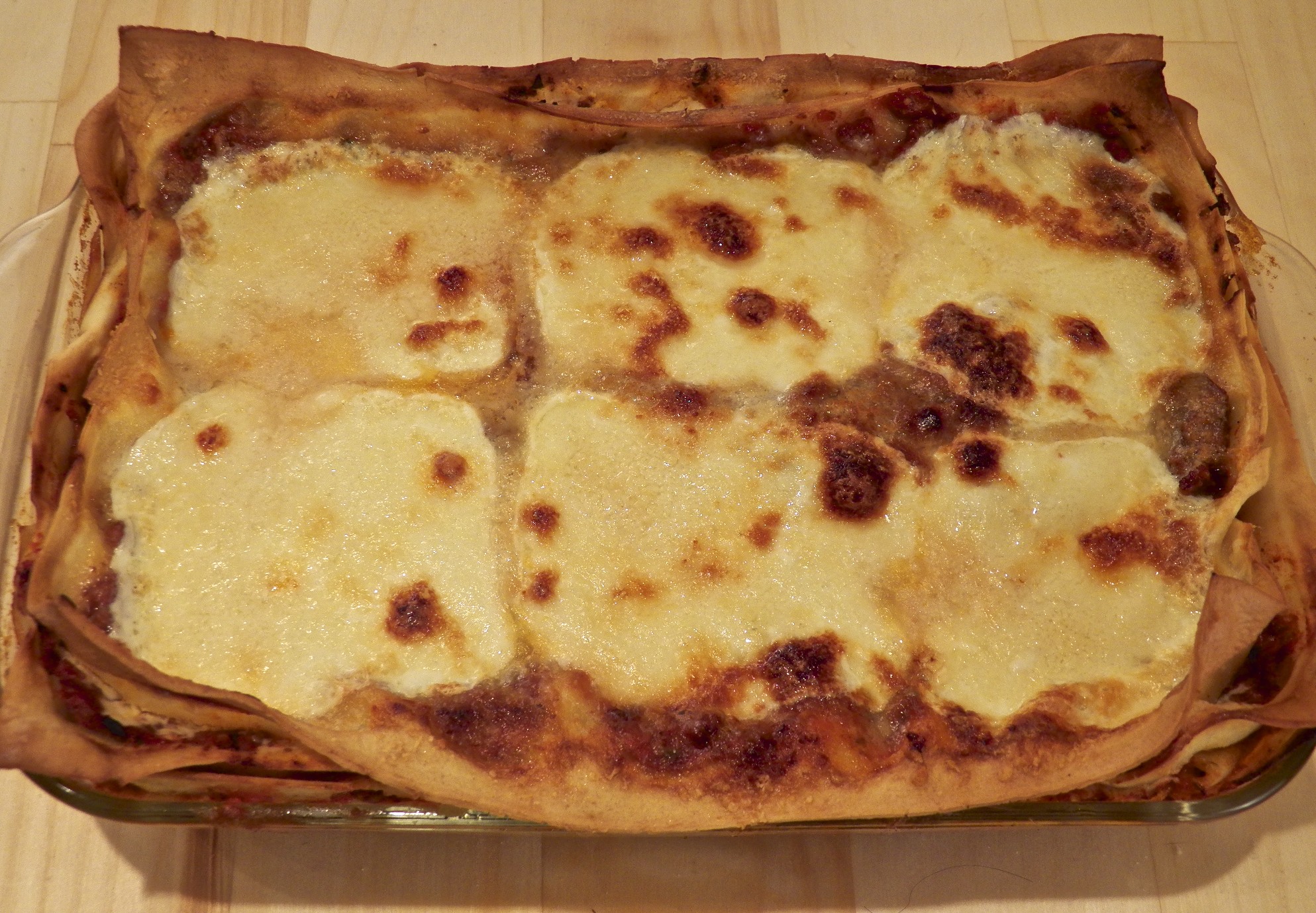
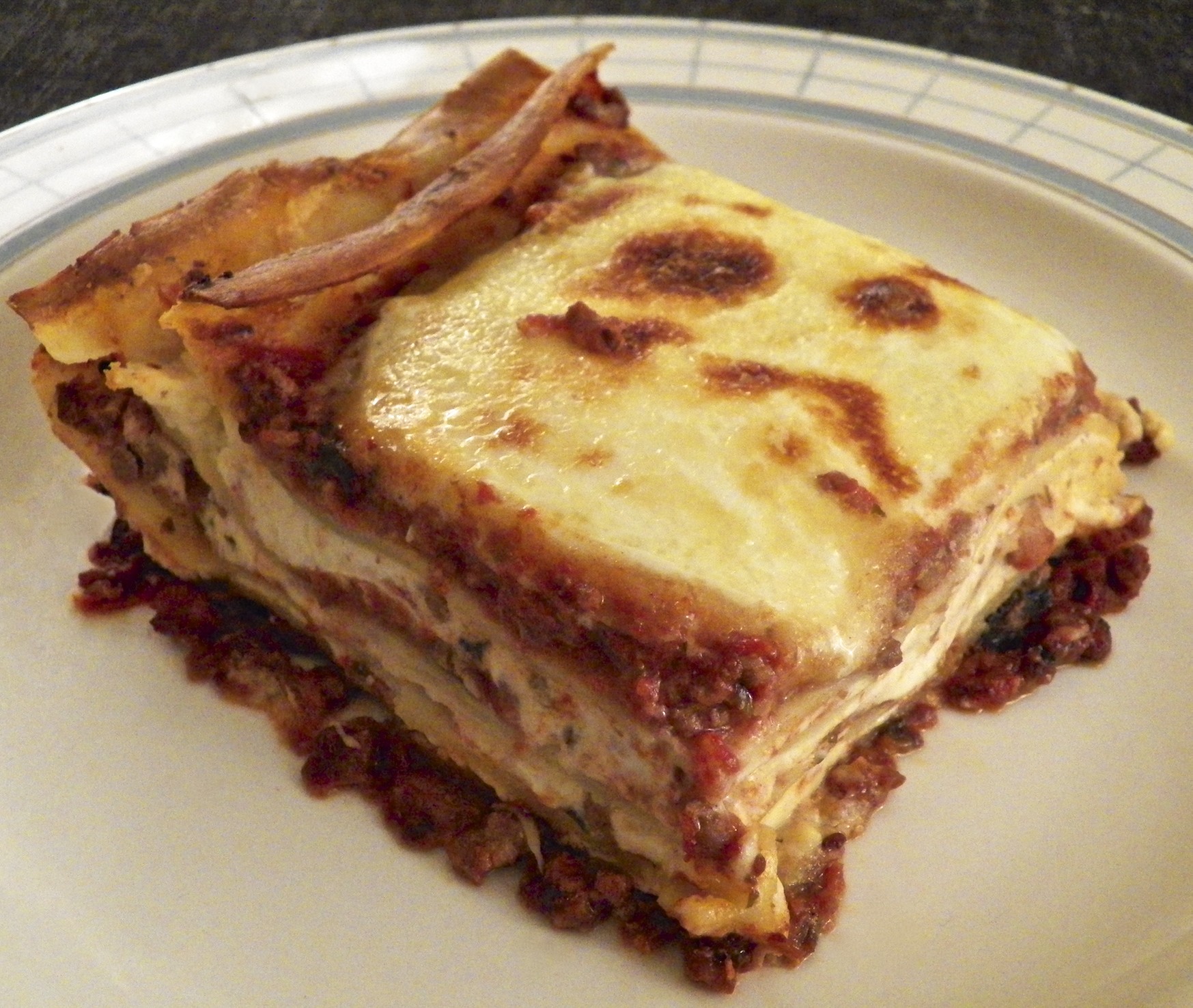
The third week of January is another birthday week for the Bartolini Clan. Nonna’s birthday was January 26th, a date my Cousin shares with her. Not to be outdone, tomorrow, the 24th, is my birthday. It’s not a significant one but, boy, am I getting close! In the past, I’ve tried to pick a dish as a means of celebrating the person and birthday. Well, with that in mind, today I’m going to share what I consider to be one of the jewels in the Bartolini Crown of Recipes: Bartolini Lasagna.

*     *     *

*     *     *
As I’ve mentioned in prior posts, ours is not a ricotta-filled lasagna. In fact, ricotta isn’t even among the three cheeses used. (I’ve a recipe for a ricotta lasagna and I’ll share it sometime in the future.) This lasagna’s cheese filling is entirely a Bartolini invention, although not the way I had always believed. For years, I assumed that this was one of the recipes that my Grandma had taught her girls. I told my friends that, as well. You can imagine my surprise when, a short while ago, Zia corrected me and explained how this recipe came about.  Years ago — certainly before my memories begin — she & Mom had grown tired of ricotta-filled lasagne and were dissatisfied with those that called for a besciamella sauce. They decided to try something different and, Ecco! Bartolini Lasagna was born. This is a lasagna that is unlike most others and one that family and friends alike thoroughly enjoy.

Speaking of friends, did I mention that this lasagna has therapeutic qualities? Yes, there is that. You see, one of the unfortunate consequences of maturing is that the good health one took for granted before reaching the age of 40 may not be as apparent beyond that age. Things happen and, when they do, oftentimes friends and family will respond with a variety of foods and baked goods to assist in the recuperation. Well, when illness strikes a friend, I hit back with lasagna. That’s right. Bartolini Lasagna. I know that when I’ve been in a similar situation, there were times when eating was, shall we say, problematic. On those occasions when my appetite did return, it often vanished — or worse — by the time I got my meal on the stove. A casserole, however, solves that problem. A serving can be placed in the microwave and served within a few minutes, ensuring the patient receives much-needed calories to fuel the recovery. And what better casserole-type dish is there than lasagna? It certainly has the calories and, by any standard of measurement, Bartolini Lasagna has proved beneficial to each friend’s convalescence. OK, to be fair, our lasagna isn’t comparable to the waters of Lourdes and you certainly won’t find any crutches hanging from my kitchen’s ceiling. Follow our recipe, though, and you’ll have one tasty lasagna. Even Lourdes can’t do that.

*     *     *
*     *     *

This is normally where I would mention points of concern for the day’s recipe. I really have none for our lasagna recipe other than to mention the noodles used. Today, you can purchase noodles that need to be cooked before use, “boil”, or those that need no prior cooking, “no boil.” Of course, if you prefer, you can make you own — which I would highly recommend.  No matter whose lasagna recipe you follow, using homemade noodles will transform your dish. (A friend once compared my lasagna noodles to pastry.) If you do make your own (see Notes), remember that they only need to be boiled for a few minutes and they’ll be ready for use in your lasagna. If you use “boil” noodles, follow the package directions. Once boiled, you can lay them flat on a baking tray, coating each with a little olive oil, or, lay them flat in a baking dish filled with cold water. Work quickly or they may stick to each other. If using “no boil” noodles, I’ve found that they work better if each is given a quick rinse in hot tap water before being placed in the lasagna dish/pan. Don’t fret if your noodles are a little larger that your baking dish or pan. The exposed edges will crisp during baking and many find that very enjoyable.

*     *     *

The Bartolini Lasagna Recipe

Ingredients

Tomato Sauce (click on sauce name for recipe)

Cheese Sauce (see Notes)

  • 6 tbsp (85 g) butter
  • 12 oz (1½ pkg) (339 g) cream cheese
  • 2 – 3 tbsp (29 – 44 ml) milk
  • Pecorino Romano cheese, grated

Lasagna

  • Enough cooked lasagna noodles (or “No Boil”) to make 3 or 4 pasta layers (see Notes).
  • mozzarella (sliced or grated)
  • Pecorino Romano cheese, grated

*     *     *

*     *     *

Directions

Prepare the Cheese Sauce

  1. Place butter, cream cheese, and milk in a microwave proof bowl. Place in microwave and cook, on High, for 3 to 4 minutes, depending upon the microwave’s power.
  2. Remove and whisk until smooth.
  3. Set aside

Assemble the Lasagna

  1. Pre-heat oven to 350* F (177˚ C).
  2. Generously butter a baking dish or non-reactive pan.

*     *     *

3. Coat the bottom of the dish with tomato sauce.

*     *     *

 4. Add 1 layer of noodles.

*     *     *

5. Coat the noodles with tomato sauce.

*     *     *

6. Add ½ or ⅓ of the cheese sauce, depending upon the number of layers,  and spread evenly. Sprinkle with Pecorino Romano.

Repeat Steps 4, 5, and 6 once or twice depending upon noodles used and dish/pan’s depth. (See Notes)

*     *     *

7. Add a final layer of noodles.

*     *     *

8. Cover with the rest of the tomato sauce.

*     *     *

9. Place the mozzarella on top and sprinkle with Pecorino Romano cheese.

*     *     *

10. Place in pre-heated oven and bake until heated through, 40 – 45 minutes or until top layer of cheese is cooked to your liking. If using sliced mozzarella, once the lasagna has baked for 45 minutes, raise the oven temperature to 400˚ F (205˚ C) and continue until top layer of cheese is done.

*     *     *

Let rest 15 minutes before serving.

*     *     *

Notes

I use Mom’s Pasta Dough recipe for making lasagna noodles. This will result in approximately 1½ pounds (680 g) of dough. I used about 14 oz (500 g) of dough to make my noodles for an 11 X 7″ (28 X 18 cm) pan. Now, you can cut Mom’s recipe to make less dough, or, you can do as I do. Roll out the extra dough and use it to make linguine, fettuccine, pappardelle, fazzoletti,  or quadretti.

*     *     *

Fold, Cut, & Unfurl Pappardelle

*     *     *

When making homemade lasagna noodles, I roll them by machine until they are a little thicker than what I use for making linguine or pappardelle. If your rollers are at their widest at a setting of 1, then roll your dough up to and including setting 5. If your rollers are at their widest at 10, then roll your dough up to and including setting 6.

Much depends upon the type of noodles you use and the size of the baking dish or pan. If using store-bought noodles, “boil” or “no boil,” you’ll probably only be able to have 3 layers of noodles. If using homemade noodles, you can create another layer, if you wish. This is because store-bought noodles are thicker than those you’ll make by hand.

The amount of cheese sauce prepared in the recipe is intended for use in a 9 X 13″ (23  X 33 cm) baking dish. For that size dish, I estimate about 4 oz (113 g) of cream cheese and 2 tbsp (28.3 g) of butter for every layer of cheese sauce needed. Since I used homemade lasagna noodles, there were 4 layers of noodles and 3 layers of cheese sauce.

For a smaller dish/pan of 11 X 7″ (28 X 18 cm), no matter what kind of pasta or how many layers are created, I use 8 oz of cream cheese (226 g) and 4 tbsp (56.6 g) of butter with a little milk. If you prefer, you can scale back the ingredients, following my example with the larger pan. For me, frankly, scaling back the cream cheese would result in an ounce or 2 of cream cheese left in my fridge, where it will probably spoil before I think of it again. As they say, “In for a penny, in for a pound.” Might as well use all 8 oz and be done with it.

*     *     *

Variations

While discussing this recipe with Zia this past weekend, I learned that she prepares the cheese sauce differently than Mom did. Where Mom prepared her cheese sauce using butter, cream cheese, and a little milk, Zia only uses cream cheese and milk. She does, however, use enough milk to make up for the amount of butter Mom used. In short, Zia has never used butter in her lasagna while Mom and I’ve never made lasagna without it. Who knew?

As is the case with any lasagna or homemade pasta, you can go green, verde, if you like. When making your dough, add a few tablespoons of cooked, finely chopped spinach. The effect will be to die your pasta dough green. Use as you would any regular pasta dough.

*     *     *

It’s déjà vu all over again …

Not My Mom’s Lasagna

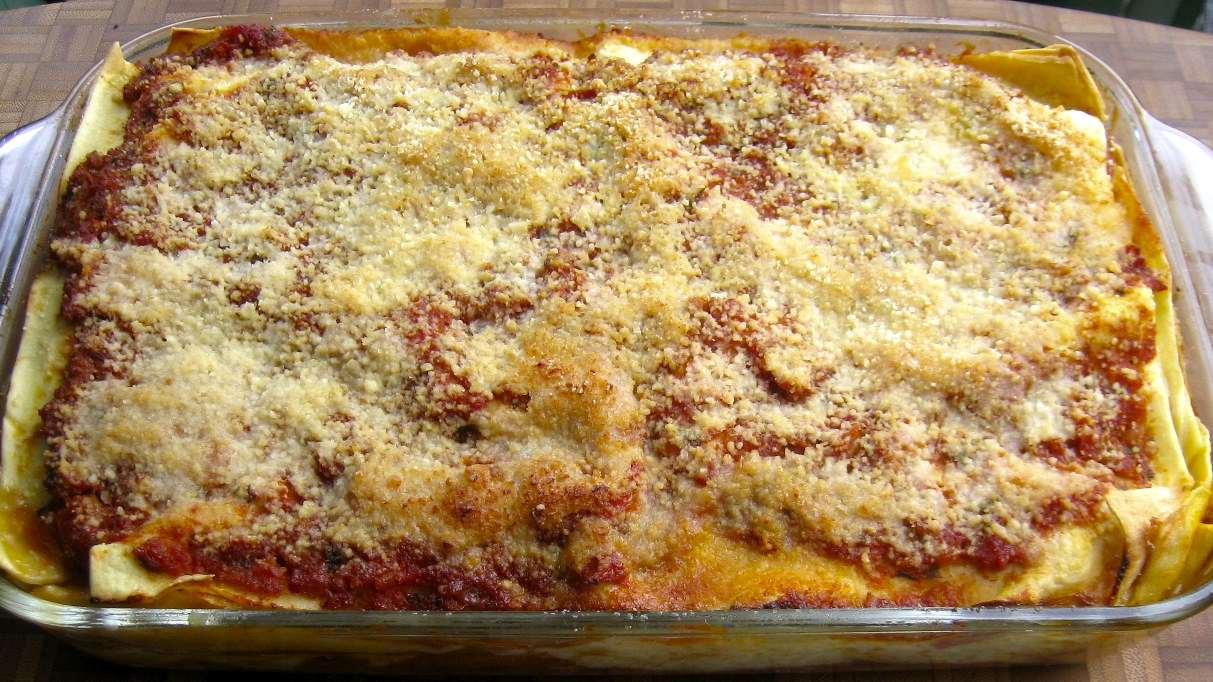
Since today’s post shared a lasagna recipe, I thought I would end with another. Using last week’s Blast from the Past Marinara Sauce, this lasagna features a parmesan besciamella with a layer of mushrooms and another with prosciutto.  Surprisingly light, the flavors within this lasagna are equally delicate. You can check out the recipe by clicking HERE.

*     *     *

Bartolini Sausage Ravioli

Ravioli della Salsiccia dei Bartolini

Christmas Day, New Year’s Day, Easter Sunday, and Thanksgiving all featured one dish, each and every year, and that was a platter of ravioli. Oh, to be sure, there was the obligatory roast of beef, or pork, or lamb, or turkey cooked to perfection on the table, too, along with all the customary fixin’s. None of it made any difference to me, for my eyes were fixated on the platter of pasta pillows. Everything else was a distraction to which “The Others”, my ravioli-eating competition, would, hopefully, fall prey. “Have some more turkey.” “Want some potatoes with that?” “Save room for dessert.” All music to my ears. As they sampled — and re-sampled — each and every one of Mom’s lovingly prepared dishes, only I remained true to the cause. It was ravioli all the way!

Back then we only had two filling recipes for our ravioli. The meat filling recipe I shared HERE and another, not yet shared, that’s used in soup ravioli (cappelletti) which is traditionally served for lunch on Christmas Day, as well as on other special occasions throughout the year. Well, that was until a few years ago. I had finally mastered the family sausage recipe when a friend asked if I’d ever made his favorite, sausage ravioli. I hadn’t and a subsequent phone call to Zia confirmed that no other Bartolini had either. Well, that just wouldn’t do.

*     *     *

*     *     *

It wasn’t long before I had made a half-recipe of ricotta and followed that with a couple of pounds of sausage, setting aside a pound of the seasoned meat. After cooking some chopped spinach and gathering some grated Pecorino Romano cheese, I was ready to go. I didn’t pay too much attention to amounts. This was just a test to see if these flavors would blend successfully — and they did. My next trip home, Zia and I made a batch of the filling, paying close attention to the ingredients’ amounts. The ravioli not only passed her taste tests, we devoted an entire Ravioli Day to the making of the new Bartolini Sausage Ravioli. If that isn’t acceptance, I don’t know what is. Today’s recipe is the result our collaboration.

Please note. When making sausage ravioli, there is but one commandment to follow: Know Thy Sausage. Compared to most store-bought or strongly seasoned homemade sausage, Bartolini sausage is rather mild — no fennel seed, for example — so I use a little less ricotta than specified in the recipe. That allows the sausage’s flavors to be more predominant. Most sausage meat tends to run on the salty side, as does Pecorino Romano cheese. Because of this, no salt is added to the ravioli filling. Before making your filling, be sure to fry a little of the sausage meat for a taste, adjusting the filling’s seasoning and, if necessary, ingredient amounts, accordingly.

*     *     *

Bartolini Sausage Ravioli Filling Recipe

Yield: See Notes below. 

Ingredients

  • pasta dough — recipe found HERE.
  • 1 lb. sausage meat, cooked and well-drained — recipe found HERE.
  • 1 pkg (10 oz) frozen chopped spinach, cooked and well-drained
  • 1 cup ricotta — recipe found HERE.
  • 1 cup grated Pecorino Romano cheese
  • 1 egg, slightly beaten

Directions

  1. Sauté meat over med-high heat until browned.
  2. Use meat grinder to finely process the meat. (See Notes.) Add all the ingredients into a mixing bowl and mix until well-combined.
  3. Cover the filling and refrigerate for a few hours or overnight.
  4. Once the filling has rested, you can begin making your ravioli.

*     *     *

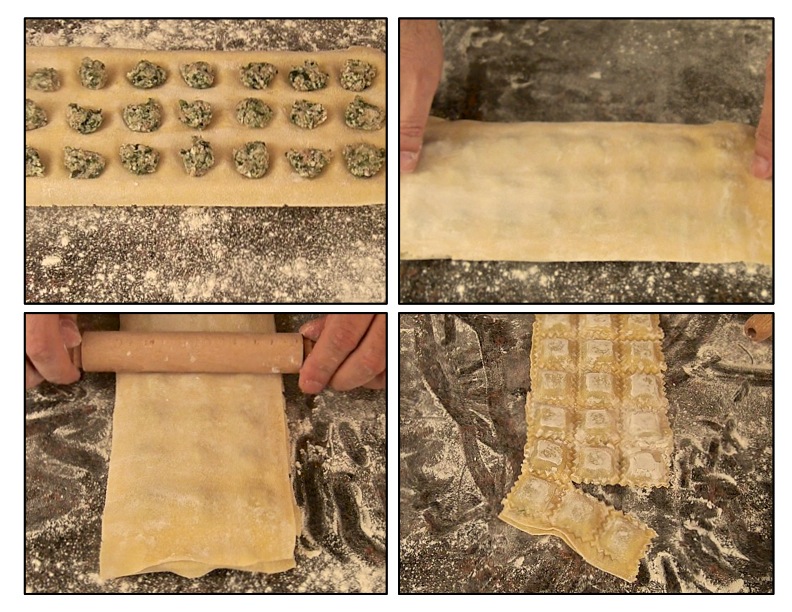
Ravioli Recap

To see a more complete set of instructions for making ravioli with dies, click HERE.

*     *     *

Notes

When I recently made these ravioli, I made 1 batch of this filling and 2 batches (8 eggs) of Mom’s pasta dough. I came away with 22 doz ravioli and 10 oz (284 g) of excess pasta dough, with which I made hand-cut linguine.  Now, I probably could have gotten away with using 6 eggs to make the pasta but that would have cut it close. I’d rather have too much pasta dough than find out I’ve not enough and have to make more. Besides, the linguine were delicious!

You do not need a meat grinder to make sausage; a food processor may be used instead. Place some meat into the bowl and pulse the blades until a coarse grind is achieved. Do not just turn it on and let it process. You’re not making pâté. When using sausage meat for ravioli, after it’s cooked, place it in the bowl and pulse it a few times until a smaller grind is achieved.

*     *     *

Pasta Equipment

I’ve been asked by a few people to talk about the pasta making equipment that I own. Since this is a ravioli post, I’ll start there.

I’ve two ravioli making attachments. One is for my stand mixer and the other attaches to my hand-cranked pasta machine. I’m not all that impressed with either of them. Both have a hopper, situated in the center, for the filling. Dough sheets are fed on either sides of the hopper, passing over a die as the filling drops. The ravioli are formed by the pressure exerted by rollers. My problem with both is that the dough sheets are thicker than what I am accustomed to using. The resultant ravioli have more dough than those of my youth. (Yes, I’m spoilt, but in the best possible way.) You, however, may very well find these ravioli to be acceptable — and that’s just fine. Be forewarned, though, that if the dough sheets are not thick enough, the filling will “run” between the ravioli, making one big mess.

Here is an instructional video to show you how the stand mixer attachment works. The hand-cranked pasta machine attachment works in very much the same way.

*     *     *

*     *     *

Anyone who has seen my ravioli posts will know that I prefer to use ravioli dies to make my filled pastas. Each will result in a ravioli of a unique size. Starting top-left in the photo below, this die will create 12 ravioli that are 2 inches (5 cm) square. (Bear in mind that, no matter the die used, each raviolo will expand a bit when cooked.) It’s interesting to note that this was the original size of the ravioli that Mom and Zia made by hand until we bambini came into the picture. These were too large for us to handle on our own and our parents had to cut them for us to eat. To help our ravioli dinners go more smoothly, Mom and Zia began making ravioli that were small enough for us little ones to handle on our own.

Which brings us to the die top-right of the picture. This will create 24 ravioli that are 1.25 inches (3.2 cm) square and this most closely resembles the size Mom & Zia made, and Zia continues to make, to this day.

Moving to the bottom-left of the photo, this die will create 40 raviolini that are 3/4 inch (2 cm) square.  Mom used these raviolini, calling them cappelletti, in soup. Try as I might, I’ve never gotten the hang of this die. The filling bowl is mighty small, the dough must be mighty pliable, and I end up mighty frustrated, which brings us to …

… the die located bottom-right of the photo. I use this die to make my cappelletti. Each cappelletti is 1 inch (2.5 cm) square and the die will make 48 of the pasta pillows. They may not be as petite as Mom’s but I can make these.

In the center of the photo is a round cappelletti stamp. This is the traditional shape for cappelletti. There was just no way Mom would ever have found the time to individually stamp enough cappelletti for a family of five. Frankly, I don’t know how she did it with the smallest of these dies but she did, repeatedly.

*     *     *

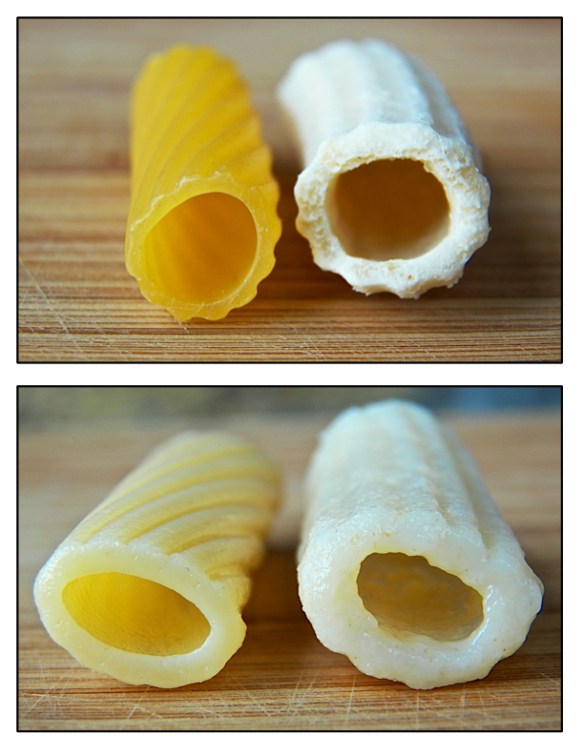
Lastly, in a recent post, I mentioned that Santa gave me a stand mixer attachment that makes a number of pastas — spaghetti, macaroni of 2 sizes, bucatini, fusilli, and rigatoni. I mentioned that the spaghetti was perfectly made but that some of the other pastas were thicker than what one would purchase at a grocery. This is not a problem for me for the superior taste of homemade pasta far outweighs any concerns about its thickness. Thinking that the eggs in my pasta dough may have been the cause for the difference, I said I’m make some dough using water and semolina flour to see if thinner pasta would result. Well, last week I made the dough and the pasta was no different from that which was made with the “egg dough.” Although I’ve no photos of rigatoni made with a pasta dough made with eggs, I did take pictures of rigatoni made with “eggless” pasta dough and compared it to a manufactured brand.

*     *     *

*     *     *

In the photo on the top, the raw, store-bought rigatoni is on the left and a freshly made specimen is on the right. Beneath that photo is another, similarly arranged picture, and both pastas are cooked. You can see that the homemade rigatoni are thicker than store-bought. The same holds true for the homemade bucatini, both macaroni, and fusilli. It is yours to decide whether that difference in thickness is a deal breaker.

*     *     *

It’s déjà vu all over again …

I know. It’s still Christmas in your home and the last thing you want to consider right now is dinner on New Year’s Day. Well, if you want to make that dinner truly special, you’ll need plenty of time so that you can find a picnic ham, skin-on, to make a Bartolini family favorite on the first day of the New Year. Pork Roast with Fennel, Porchetta con Finnocchio, is a spectacular dish, one sure to impress you dinner guests as you start 2013 off on the right foot. You can find the recipe by clicking HERE.

*     *     *

The Bartolini Clan hopes that Yours was a Wonderful Christmas

and

May Peace Reign in 2013.

Happy New Year!

*     *     *

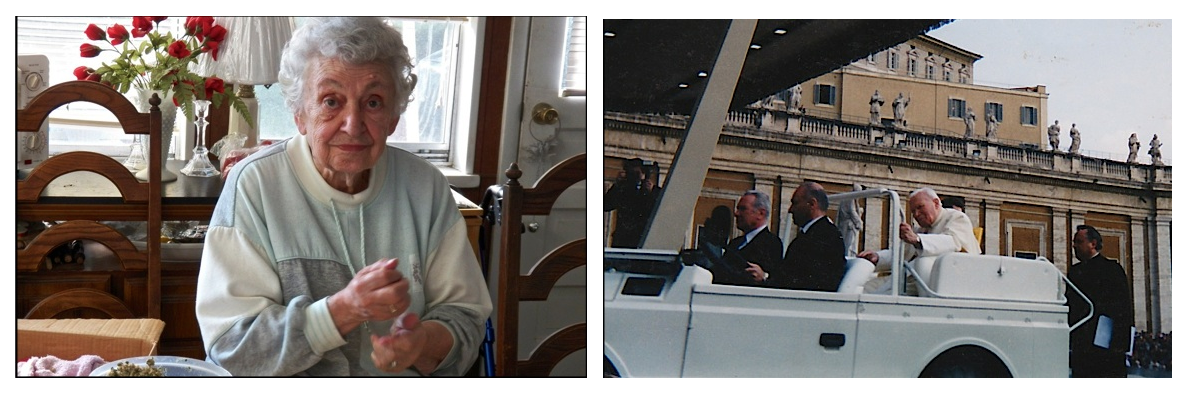
What do a Zia, a Pope, and an Elf have to do with Today’s Pasta? (Part 2)

*     *     *

Ché bella Zia!

*     *     *

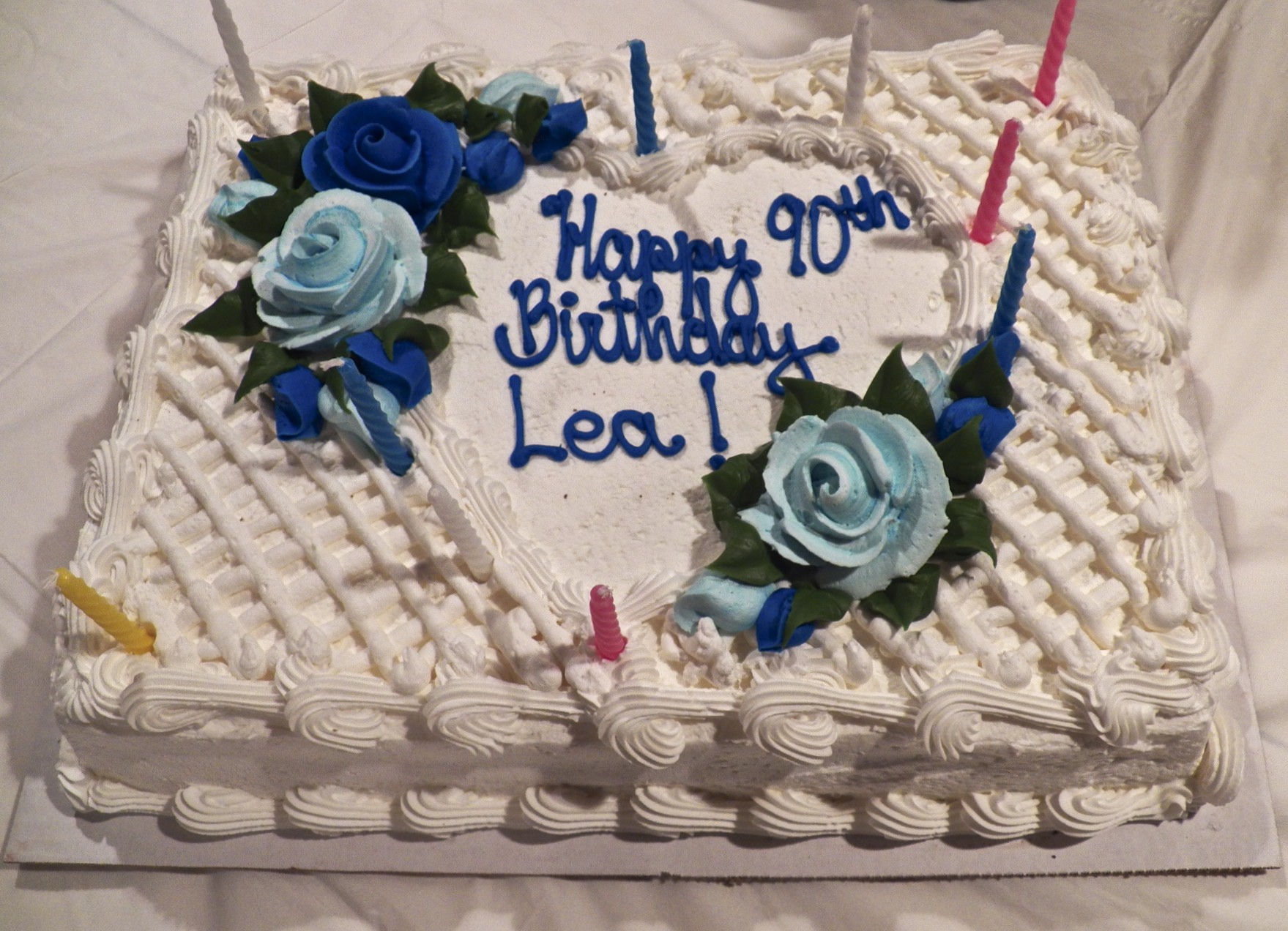
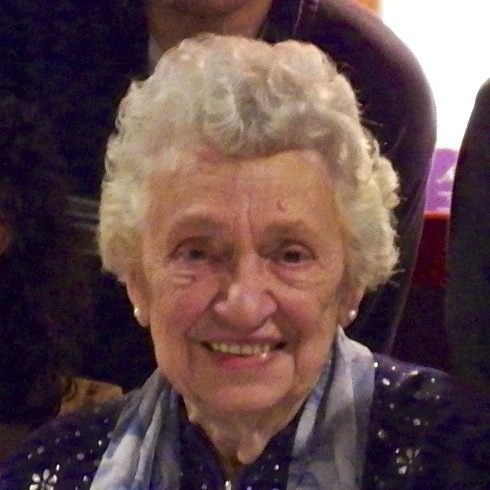
As was mentioned yesterday, today is the 90th anniversary of my Zia’s birth! Last Saturday, some 2 dozen Bartolini gathered at the home of one of her Grandsons for a surprise party in her honor. (Very heavy emphasis on the “surprise.”) The food was delish; the champagne chilled and plentiful (just how I like it); and the highlight of the evening was her Son’s slide show of family photographs. It was a wonderful night for this very special Lady and Matriarch of the Bartolini Clan. She deserves no less!

Now, back to our story …

*     *     *

2 Pieces of the Puzzle

*     *     *

Yesterday, I recounted my favorite story involving my Zia as a means of celebrating her birthday. What’s this? You missed it? Well, click HERE to view yesterday’s post. Once there, you’ll see how Zia and Pope John Paul II are connected. Don’t worry, we’ll wait for your return.

For the rest of you, I don’t expect you to sit idly by while the others catch up. Heavens no! Here’s a musical interlude to occupy your attention while we wait. (Thanks, Cris!)

*     *     *

(Remember this aria, Zia?)

*     *     *

Everybody here? Then let’s continue …

When we left our story, Zia and I had just experienced a close encounter of the Papal Kind and were in a taxi being ferried back to our hotel. When we arrived at the hotel, we skipped lunch, preferring to retire to our rooms. We had anticipated a memorable day and this was so much more than that, a truly once-in-a-lifetime experience. A rest was definitely in order — if for no other reason than to allow Zia to re-hydrate. Later that afternoon, as was our custom, room service delivered our caffè to Zia’s room. Normally, this is when we would have planned our dinner and evening. That night, however, we decided to “stay close to home” and made an early reservation at a restaurant just down the street from where we were staying.

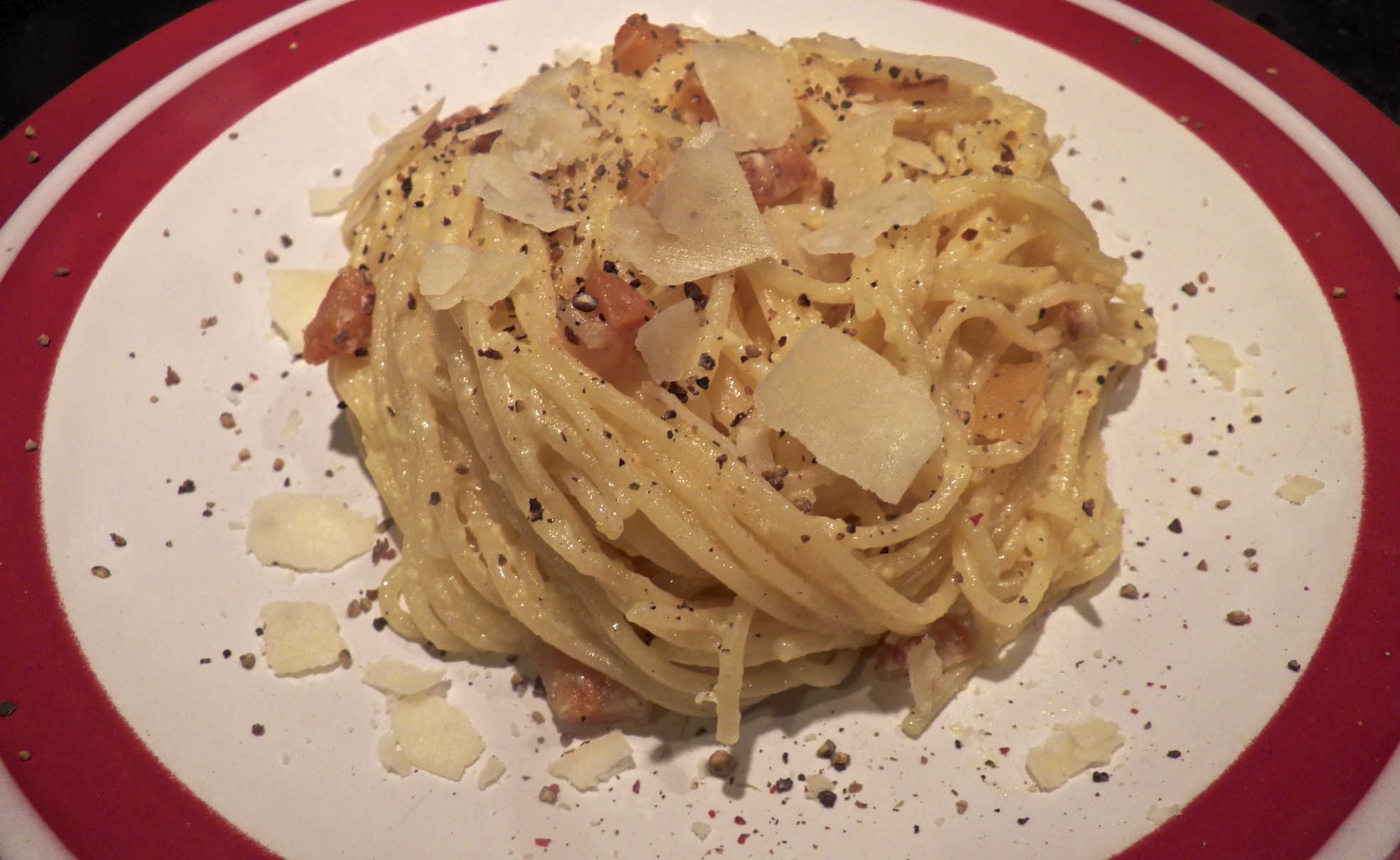
Not that much later, we were seated at the restaurant, our appetites still nowhere to be found. Now, one thing you should know about my Cara Zia is that she loves pasta every bit as much as I do. When we dined, we always enjoyed a primo piatto of pasta of some sort before ordering our secondi and contorni. So, absent an appetite, we did what came naturally: we ordered pasta.  Not so coincidentally, that pasta just happens to be today’s recipe, Spaghetti alla Carbonara.

*     *     *

Spaghetti alla Carbonara

*     *     *

Mom first prepared this dish for me when I was in my teens. She told me a legend that its name was derived from the coal miners that worked in the mines that surround Rome. As they ate their lunch, which often consisted of a plate of pasta, coal dust fell from their clothes and on to their plates. The dish’s ample use of black pepper is an homage, of sorts, to those miners and their lunches.

The version Mom served me usually contained bacon, although prosciutto was sometimes substituted, albeit rarely. Pancetta just wasn’t something that Mom and Zia used in their cooking. Remember, many of the Bartolini dishes began with a battuto of onion, garlic, parsley, and salt pork. There was no need for pancetta, too. As my experience as a cook grew, however, I began to use pancetta more frequently when I prepared this pasta.

Back in Rome, Zia and I noticed that this pasta was made with guanciale, something that was an unknown to me. Our waiter explained that guanciale comes from the pig’s jowls and, like pancetta, it’s cured but not smoked. Although now used throughout Italy, our waiter went on to explain that it is still most commonly used in Rome and its surrounding district of Lazio. Well, we needed no further urging. Zia and I ordered the Spaghetti alla Carbonara and so began my love affair with this cured meat. Unfortunately, it would take me 10 years to find a source for guanciale in my hometown but that’s a story for another day. Even so, in my mind, Spaghetti alla Carbonara will be forever linked to Zia and Pope John-Paul II.

OK. So far I’ve explained the connection between Zia and the Pope and how, on the day of their meeting, we dined on today’s pasta, Spaghetti alla Carbonara. Get ready, kids. Here comes Santa Claus!

*     *     *

No, that reindog isn’t Max.

*     *     *

In the years following that momentous day in St Peter’s Square, I’ve prepared Spaghetti alla Carbonara countless times. It is one of the few dishes I prepare using spaghetti because it’s just not my favorite form of pasta. You see, lacking the means to create this thin, round-shaped pasta, I had to rely on manufactured spaghetti. As you know, I prefer homemade pasta over pretty much all manufactured types. Still, when it came to this tasty dish, I gladly bought spaghetti and never thought twice about it. This all changed 3 years ago, almost to the day.

One afternoon, Martha Stewart was promoting a new attachment for a well-known stand mixer. This piece of equipment worked much like an extruder, forcing dough through interchangeable plates, creating macaroni, fusilli, rigatoni, bucatini, and, you guessed it, spaghetti. Later that day, I spoke with a good Friend (aka my Traveling Companion) and mentioned this pasta-making wonder of modern technology. A year later he would become a member in high standing of my blog’s tasting crew and, at this time, he had already been the beneficiary of many of my dishes and, well, experiments. He understood full-well the ramifications of this piece of equipment. Our conversation ended and that was the end of that, as far as I was concerned — or so I thought. About a week later, much to my surprise, UPS delivered the pasta maker. In its packaging was a card from Santa, wishing me a Merry Christmas. I called to thank my Friend but he denied having anything to do with it — a denial he maintains to this very day. Now, I’ve no reason to doubt my Friend or his word. If he maintains that Santa did, indeed, send me a gift, who am I to disagree? I would just like to point out, however, that he is the Elf holding the reindog in the picture above. Just sayin’…

There you have it. This is how my Zia, a Pope, and an Elf all helped to bring you today’s Spaghetti alla Carbonara. All that’s left to do, aside from presenting the recipe, is to say,

“Buon Compleanno, Cara Zia!”

*     *     *

*     *     *

Spaghetti alla Carbonara Recipe 

Ingredients

  • 1 lb spaghetti
  • 2 tbsp extra virgin olive oil
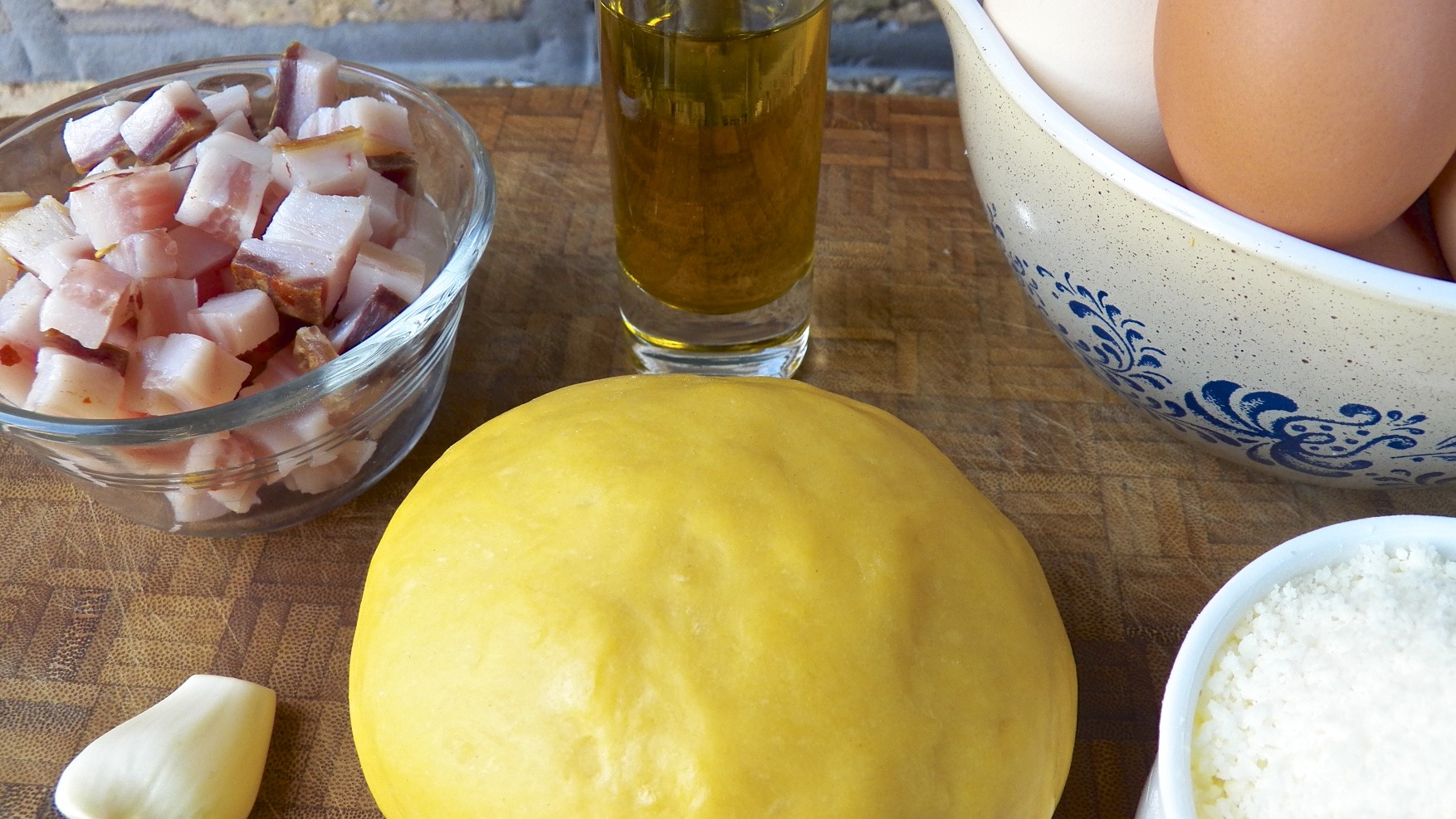
  • 4 oz. guanciale, ¼ inch dice (pancetta, prosciutto, bacon, or ham may be substituted)
  • 1 or 2 cloves of garlic, sliced
  • 3 eggs, beaten
  • 1 cup grated Pecorino Romano cheese – separated
  • ½ to 1 tsp freshly cracked black pepper
  • reserved pasta water
  • Parmesan or Romano cheese for garnish/serving

Directions

  1. Warm a large pasta serving bowl.
  2. Bring a large pot of heavily salted water to boil. Add the spaghetti and stir.
  3. Check the spaghetti package’s cooking instructions. You’ll want it to be 2 minutes shy of al dente when the rest of the ingredients are ready.
  4. Add half of the cheese to the 3 eggs and beat well to be rid of any lumps.
  5. In a large, deep frying pan, heat the oil over medium heat. Add the pancetta and brown, rendering all the fat. Do not over cook.
  6. Add the garlic and sauté for about a minute.
  7. While the garlic cooks, reserve a cup of pasta water, drain the pasta, and add the pasta to the frying pan.
  8. Continue cooking the pasta in the oil for 2 minutes, heating it thoroughly.
  9. Pour the frying pan’s contents into the warmed serving bowl. Add the egg and cheese mixture in a slow, steady stream, stirring constantly to prevent the eggs from scrambling. Once fully coated, add more cheese, the pepper, and as much pasta water as necessary to create a creamy sauce.
  10. Serve immediately with plenty of grated cheese and cracked black pepper available at the table.

*     *     *

Notes

For so few ingredients, this is a relative tricky dish to prepare. If not done properly, the pasta will not be hot enough to cook the eggs, raising the possibility of salmonella. To eliminate that risk, I only use pasteurized eggs when making this dish. On the other end of the spectrum, it is very easy to “scramble” the eggs rather than create a sauce. You can limit this risk by mixing the pasta and egg mixture off the heat, in a warmed bowl, and/or by adding a little of the hot pasta water to the egg mixture before it’s added to the pasta. This will, in effect, temper the eggs a bit. No matter how you do it, remember to keep the pasta hot and to work fast.

*     *     *

It’s déjà vu all over again …

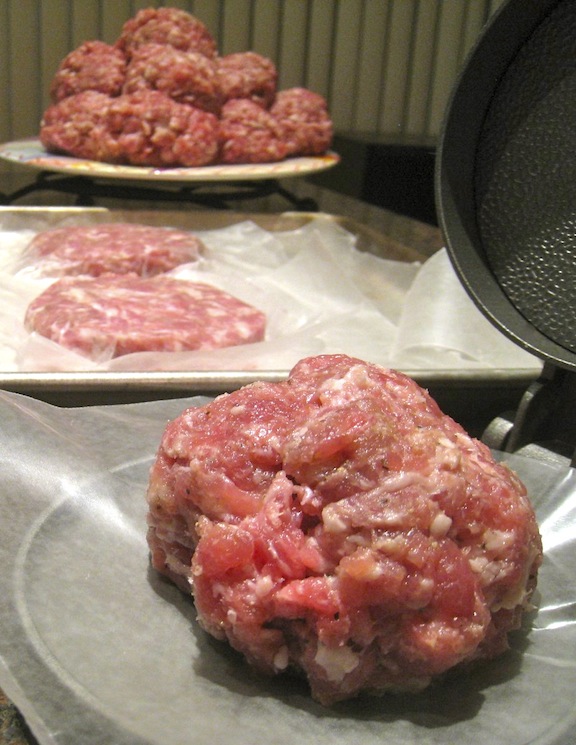
It was just about a year ago when I shared the Bartolini recipe for making sausage. Mild compared to most spicy sausages, ours depend upon garlic, white wine, and salt & pepper for flavoring. Consider them a platform on which to build your own sausage. Paprika, red pepper flakes and fennel seeds will change them up a bit, as will marjoram, mint, and oregano. Though these days we tend to form patties more often than sausages, the post is nonetheless chock full of sausage making information. Feel free to ask any questions that may arise. You can view the post by clicking HERE.

*     *     *

Coming soon to a monitor near you … 

Merluzz’ al Forno

*     *     *

A Pasta for the Open

I don’t know about you but when I hear that the US Open Tennis Championships are about to begin, I immediately think of pasta. I mean, how could I not? So, when the Open starts, I naturally prepare some form of pasta to mark the occasion, just as so many of you do, I’m sure. In the past, it didn’t really matter what pasta was selected for that meal, and my choices have ranged from Bucatini to Ziti, and several pastas in-between. This all changed, however, one day when I toured the newly discovered Italian market’s pasta aisles. That’s where I discovered Racchette, a racket-shaped pasta.

*     *     *

*     *     *

Although I’m certainly no expert, I think it safe to say that Racchette are a relatively new pasta and virtually all are manufactured by machines. I mean, I just cannot imagine Nonnas — be they from Today or the 19th Century — rolling out dough sheets and making these little rackets. I know my Nonnas certainly didn’t — but if yours did, please leave a comment and I’ll be more than happy to amend this paragraph. Moving beyond Racchette’s manufacture, I can say, in all honesty, that the first any of the Bartolini women heard of Racchette was when I mentioned the pasta to my Zia a couple of weeks ago during a conversation. It should come as no surprise to anyone, therefore, that there is no Bartolini family recipe for Racchette.

Without a family recipe to use, I did what most do in this situation:  I googled it. That search returned thousands of results but most were very similar. That base recipe is one that I will make but I’ll do it in Spring, when the ingredients are fresh and readily available. Onward I went, wading through more of the search results until I came upon a recipe that was presented by the company that made the pasta. I went into kitchen, grabbed the box, and, sure enough, the recipe was on the back of the box of Racchette. (Isn’t it always the last place you look?) That recipe, Racchette California Style, is the one I’ll share today.

The recipe, as written, calls for red, white, and Marsala wines. When I prepared it, I used what I had on-hand, Pinot Grigio, Merlot, and a sweet Marsala. You may have better wine selections in mind (Jed) and, if you do, I hope you’ll use the Comments section to make your suggestions — and that includes ideas beyond wine selection. I think you’ll find this to be a simple, easy to prepare recipe. All you need to do now is to find the Racchette.

*     *     *

*     *     *

Racchette “California Style” Recipe

Ingredients

  • 1 lb Racchette
  • 1 handful fresh basil
  • 2 tbsp pine nuts
  • 1 clove garlic, smashed
  • 1 tsp grated Parmesan cheese
  • 1 tsp grated Pecorino Romano cheese
  • ½ cup white wine (I used Pinot Grigio)
  • ½ cup red wine (I used Merlot)
  • ½ cup Marsala wine (I used a sweet variety)
  • 2 tbsp butter, softened

Directions

  1. Bring a large pot of salted water to boil and cook Racchette per package directions or to taste.
  2. Meanwhile, add the basil, pine nuts, garlic, and cheese to a food processor until blended.
  3. Add the wines and process until well-mixed.
  4. When cooked to you liking drain the pasta. Add the softened butter to the sauce, giving it a creamier texture.
  5. Add the sauce to the pasta, toss, garnish with additional grated cheese & cracked pepper (optional), and serve.

Inspired by the De Cecco company’s Racchette California Style recipe

*     *     *

Notes

I must admit to having been surprised by this pasta. Neither Zia nor myself have ever used wine in pasta without cooking it, even if only for a few minutes. Using a total of 1½ cups of “raw” wine to dress a pound of pasta is completely new and something I never would have considered doing on my own. And the verdict? I enjoyed it. I make simple pastas with garlic, mushrooms, lemon, basil, or cheese as the predominant flavor within the “sauce”. Why not wine? Of course, if you’re not a wine lover, this dish isn’t for you. On the other hand, if you do enjoy a glass of wine every now and again, you just might want to give this dish a try.

*     *     *

It’s déjà vu all over again …

Just as was done in the last 2 posts, today’s look back will take advantage of the season’s harvest. Illinois is a leading producer of corn in this country and, even though the state is suffering the effects of a severe drought, there’s still plenty of corn in the farmers markets — at least in this area. This recipe for Corn Relish comes from Zia’s kitchen and is one that she prepared and canned every year. You can make it as spicy as you like and it is a terrific way to add a little Summer to your meal in the dead of Winter. Just be sure to make a double batch. It’s the only way to ensure you’ll have a few jars when Winter comes. Click HERE to see the full recipe.

*     *     *

By any other name …

In morning light …

*     *     *

Later that day

Never one to show up on time, she’s finally bloomed. Meet the last of my girls and last of my roses, “Marilyn Monroe”. Officially said to be apricot-colored, some say that the blooms are flesh-toned and mirror the complexion of its namesake.

*     *     *

Friends, Bloggers, and Bartolini! Lend Me Your Orecchiette!

I don’t know about you but when I “finish” writing an entry, I will return to it, editing and re-editing, right up until the minute it’s posted. Even then, I often make changes to it once it’s been published. A few months ago, in an effort to curtail my madness, I started posting my entries at the same time every Wednesday just to give myself a deadline for these corrections. Why do I mention this?

Well, I’ll be writing this entry before I leave for my visit with Zia and family and it will be posted about the time I’m heading back to Chicago. That means I’ll have a week to look at it with little chance to make corrections because of the sorry state of that area’s internet coverage. (If Dante’s Inferno had included a Tenth Circle in Hell, surely this would have been it.) So, I’m going to keep this post relatively short, hopefully keeping my errors to a minimum and, therefore, saving myself much wailing and gnashing of teeth when I should be spending that time visiting with my Zia.

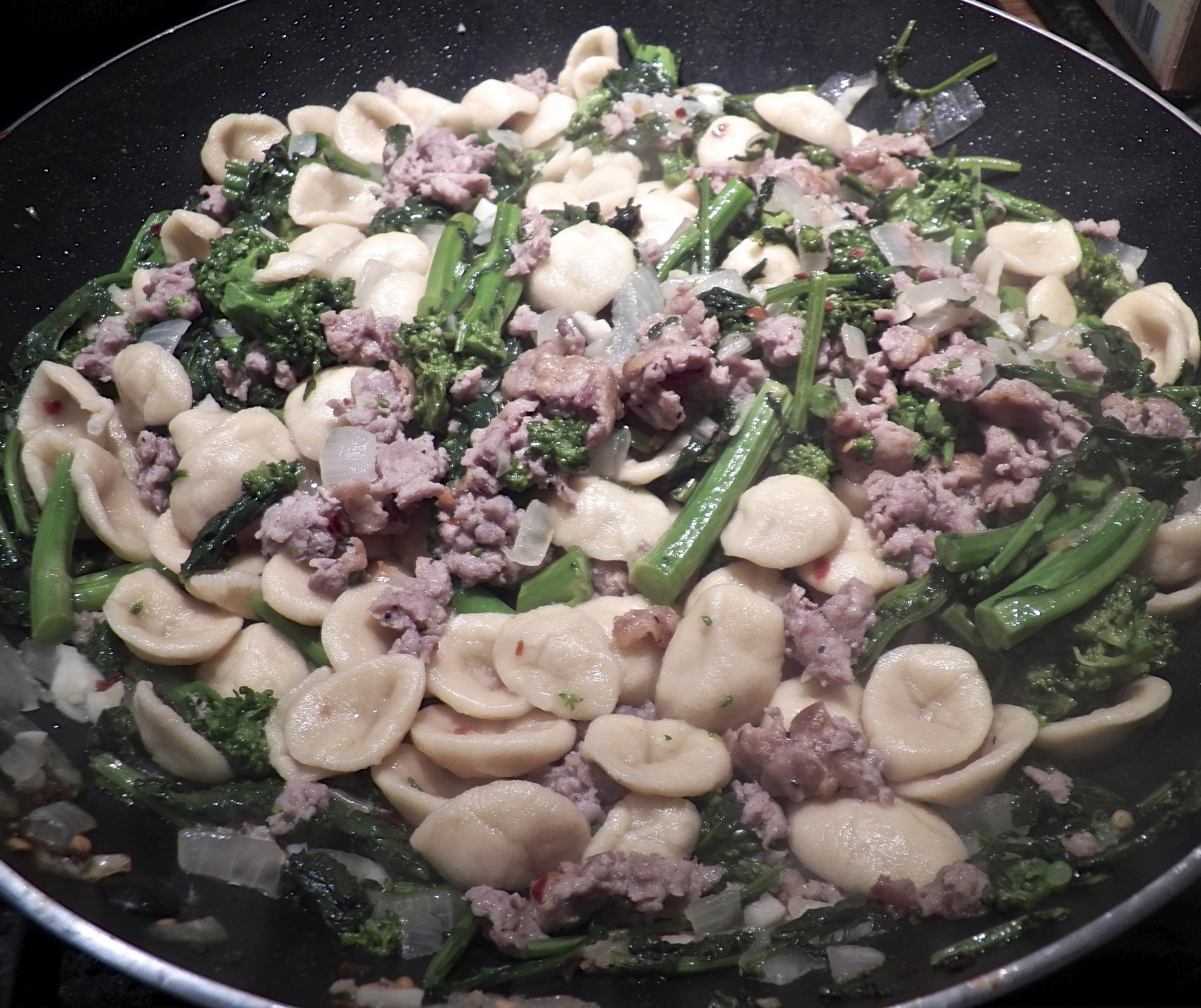
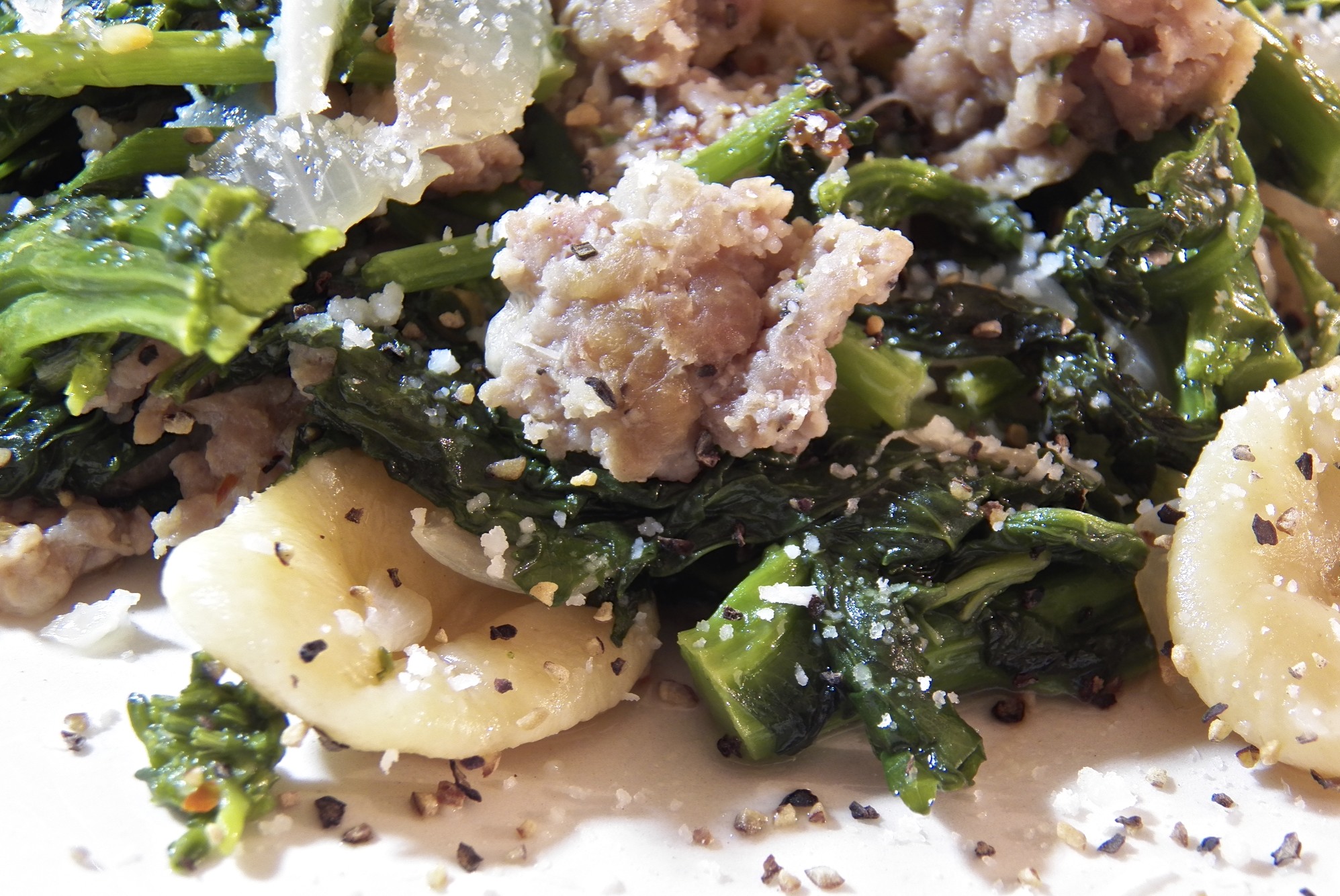
Last week I showed you how to make orecchiette, an ear-shaped pasta that comes to us from the Puglia (Apulia) region of Italy. At the time, I said I would share today’s recipe, a traditional pugliese dish featuring orecchiette, sausage, and broccoli rabe (rapini). This is another simple dish with the flavors of its 3 main ingredients in perfect balance. Although you can certainly alter the quantities to suit your own tastes, try to keep that balance in mind. The dish also offers a little heat because of the red pepper flakes. If you use a spicy sausage here, you may wish to reduce the amount of these flakes or eliminate them altogether. On the other hand, I use my family’s sausage recipe, which is quite mild, so I add a healthy amount of red pepper flakes to the dish. The rest of the recipe is easy enough to follow but be sure to check out the Variations below if, perish the thought, you don’t care for broccoli rabe.

 *     *     *

Orecchiette with Sausage and Broccoli Rabe

Ingredients

  • 1/2 lb orecchiette pasta
  • 3 tbsp olive oil
  • 6 oz Italian sausage
  • red pepper flakes, to taste
  • 1 medium onion, chopped
  • 2 garlic cloves, minced or grated
  • 10 oz broccoli rabe, trimmed and coarsely chopped
  • grated Pecorino Romano cheese
  • salt & pepper, to taste
  • 1 cup + a couple tbsp of pasta water

*     *     *

*     *     *

Directions

  1. Bring a large pot of salted water to the boil, to be used to cook the orecchiette. Time the pasta so that it is cooked about a minute shy of al dente, per package instructions, at about the same time that the rest of the ingredients are finished sautéing.
  2. Meanwhile, in a large deep frying pan, heat the olive oil over med-high heat. Add the sausage meat and use a wooden spoon to break the meat into smaller pieces as it sautés.
  3. Once the meat has browned, about 5 minutes, add the onion & pepper flakes and continue sautéing until the onion is translucent, about 5 minutes more.
  4. Add the garlic and cook another minute.
  5. Add the broccoli rabe to the pan with a little pasta water and continue sautéing until rabe is done to your liking.
  6. Drain the orecchiette and add it to the frying pan along with the cup of pasta water, using it to deglaze the pan. Finish cooking the orecchiette in the pan as the “sauce” reduces to the consistency you prefer.
  7. Remove to a serving platter, garnished with grated Pecorino Romano cheese and freshly cracked black pepper. Serve immediately.

Variations

For many, broccoli rabe is just a bit too bitter to be enjoyed as-is. If you find it that way, there are alternatives. In the first place, you might try blanching the vegetable in boiling water for a minute before plunging it into an ice bath. To prevent the oil from splattering, pat the rabe with paper towels before adding it to the frying pan in Step 5 above. If you like, you can save the blanching water, salt it, and use it to cook the orecchiette.

Broccoli, Broccolini, Broccoli Rabe

What if you just don’t like broccoli rabe and no amount of blanching is going to make it palatable for you? Well then, you might try substituting one of its relatives. Pictured above are broccoli on the left, broccoli rabe on the right, and the newest member of the family, broccolini, in the center. Although often called “baby broccoli”or “asparation”, broccolini is actually a cross between broccoli and a Chinese broccoli called kai-lan. Like broccoli, broccolini has no leaves and is not as bitter as rabe. Either cousin would make a great substitute for broccoli rabe in this dish.

*     *     *

By any other name …

“Midas Touch”

 *     *     *

Listen up! We’re making Orecchiette!

It’s been quite some time since we made pasta from scratch, so, I thought today would be a good day to make another. Today’s pasta comes to us from Puglia (Apulia), a District along Italy’s Southeast coast, including the “heel of the boot.” Meaning little ears, orecchiette is another pasta named for that which it resembles. And if you’re willing to accept that tortellini were modeled after the navel of Venus, you should have no problem accepting that orecchiette look like little ears.

Coming from Puglia, it’s a safe bet to say that the dough should be made with durum flour and water. And if you want to make authentic orecchiette, that’s what you should do. The fact is that Mom’s family, the Bartolini, came from Marche where eggs are used to make pasta. That’s how I learned to make pasta dough and that’s the recipe I shared here. Now, I’ve tried to make pasta using semolina but certainly not enough times to get a “feel” for the dough like I have with Mom’s pasta dough. So, I now have a container of semolina flour in my kitchen, along with containers for whole wheat,  spelt, bread, cake, and all-purpose flours. Given my poor track record with semolina, I just didn’t feel like buying a bag of durum to add to my flour collection. (FYI, semolina and durum are not the same flour, although both are made from durum wheat.) So, though this pasta shape is pugliese, from Puglia, the pasta dough is marchigiani, from Le Marche.

Now that’s settled, let’s get on with the show. You’ll find that orecchiette are really quite simple to make, albeit repetitive. There are no shortcuts and it is just complicated enough to require your attention throughout. In short, you can watch television or make orecchiette — but you cannot do both at the same time. The process involves taking a golf ball-sized piece of dough and rolling it into a long thin rope. The pasta is then cut, molded using your thumb, and set aside. Easy peasy! Now form another 350 or so “ears” and you’ll have a pound of pasta.

*     *     *

Take a piece of dough and roll it into a ball about the size of a golf ball. Be sure to cover the remaining dough to prevent its drying out.

*     *     *

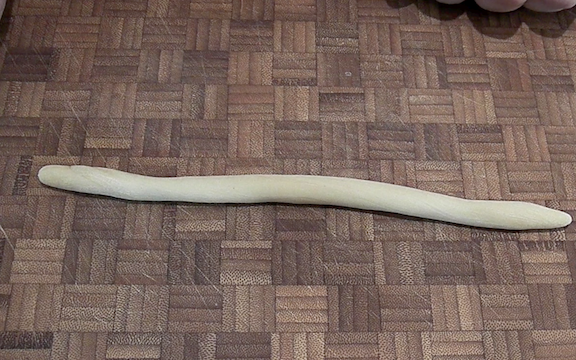
Remember Play-Doh? Roll out a snake.

*     *     *

My snakes were about 1/3 to 1/2 inch wide. (See Notes below.)

*     *     *

Cut the dough into equally sized segments of about 1/2 inch in length.

*     *     *

Using the tip of a blunt knife, smash the dough segment and draw it towards you. This will flatten the segment and cause it to curl over the knife. Keep a supply of flour nearby to occasionally coat the tip of the knife, as well as for your thumb in the next step.

*     *     *

Invert the curled segment, pulling it over your thumb in the process.

*     *     *

Remove it from you thumb to reveal a perfectly formed orecchietta.

*     *     *

A look at the flip side. I found it best to store them cup-side down until dried otherwise the pasta’s “walls” tended to collapse, leaving a flat disk instead of a concave ear.

*     *     *

Notes

You must take into account the size of your thumb when rolling the dough and cutting it into segments. Although I prefer my orecchiette small, my thumbs are too large to accomplish that and attempts to use another finger tip didn’t work out. As a result, I needed to make my dough roll a little on the thick side. I’m sure that if I made orecchiette more often, I’d eventually learn to make smaller ones. Even so, freshly made “large” orecchiette are still better than those in a box.

Being homemade, part of this pasta’s charm is its lack of uniformity. Don’t obsess and try to get all of the “little ears” to be the same shape and size. You’ll find that those created near the end of your dough supply are far more alike than the ones you made at the start — and that’s just fine. I prefer to think of my orecchiette as being rustic. You should, too.

*     *     *

Coming next week …

Next week I’ll post the pugliese recipe for orecchiette with sausage and broccoli rabe, pictured above.

By the time many of you read this post, I’ll be well on my way to Michigan. Please understand that while there, I can read your posts and comments but making my own comment or reply is unbelievably slow.  Most may have to wait until I return home.

*     *     *

By any other name …

“Honor”

*     *     *

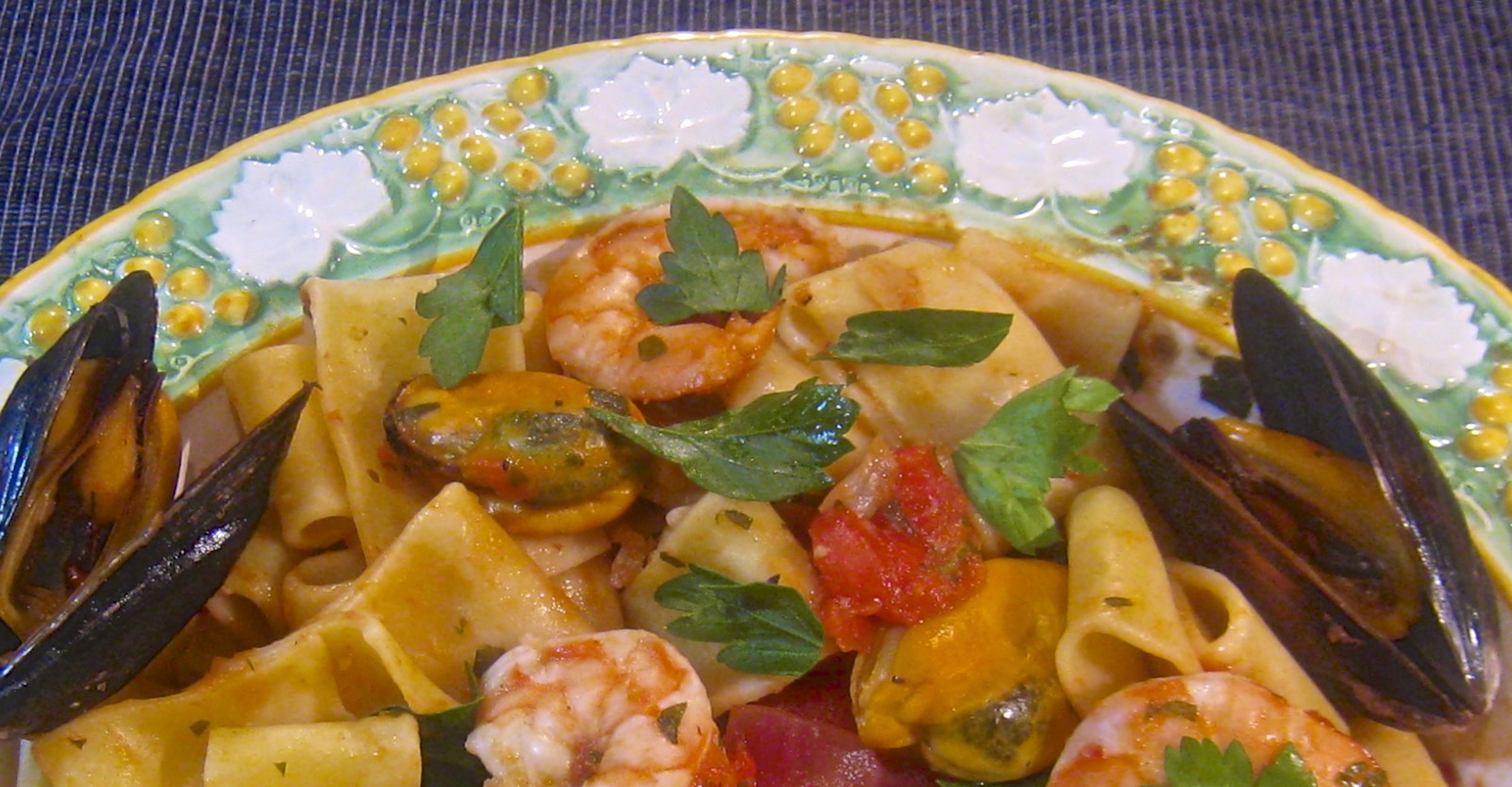
Calamarata with Shrimp and Mussels

It’s getting to be routine. I go to “my” Italian market with a list of items to buy. Once I’ve finished the vegetable portion of my romp, I take a casual stroll toward the fish monger. I just cannot pass that display case without stopping to check out the day’s catch. And that’s when it happens.

No matter who is behind that counter, I’m greeted with a friendly, “Hello. Are you looking for anything in particular?” or something to that effect. I explain that I’m just looking and, to be polite, I ask about an item on display. “You’ve got branzini (Mediterranean sea bass)?” “Where do you get your vongole (clams)?” “Are these cozze (mussels) Mediterranean?” “Do you have anguille (eels) at Christmas?” You know. Just being polite. Maybe it’s the way I pronounce “vongole” or something but once my question’s been answered, the conversation turns to shell-fish. A few weeks ago, it was the vongole, the “freshest in town.” And I bought some. The following week it was vongole again and I would have left with another bag of the little darlings had it not been well over 90˚. With a few more stops to make, I wasn’t sure if I’d make it home without melting; those clams didn’t stand a chance. The Friday before last, as I approached the counter, I noticed I was alone. The fish mongers were nowhere to be seen. Great! I could ogle the octopi, peruse the perch, savor the salmon, and scan the squid, all at my leisure and with no fear of leaving with a bag of seafood. Soon I spied a sign announcing a sale on mussels and I turned a bit to get a better view of the black beauties. That’s when he appeared, seemingly out of nowhere. “Those mussels are good, real good … but … these here are much better. They’re larger and-”  Resigned, I stopped him in mid-sentence and told him to just get me a pound. Why fight the inevitable?

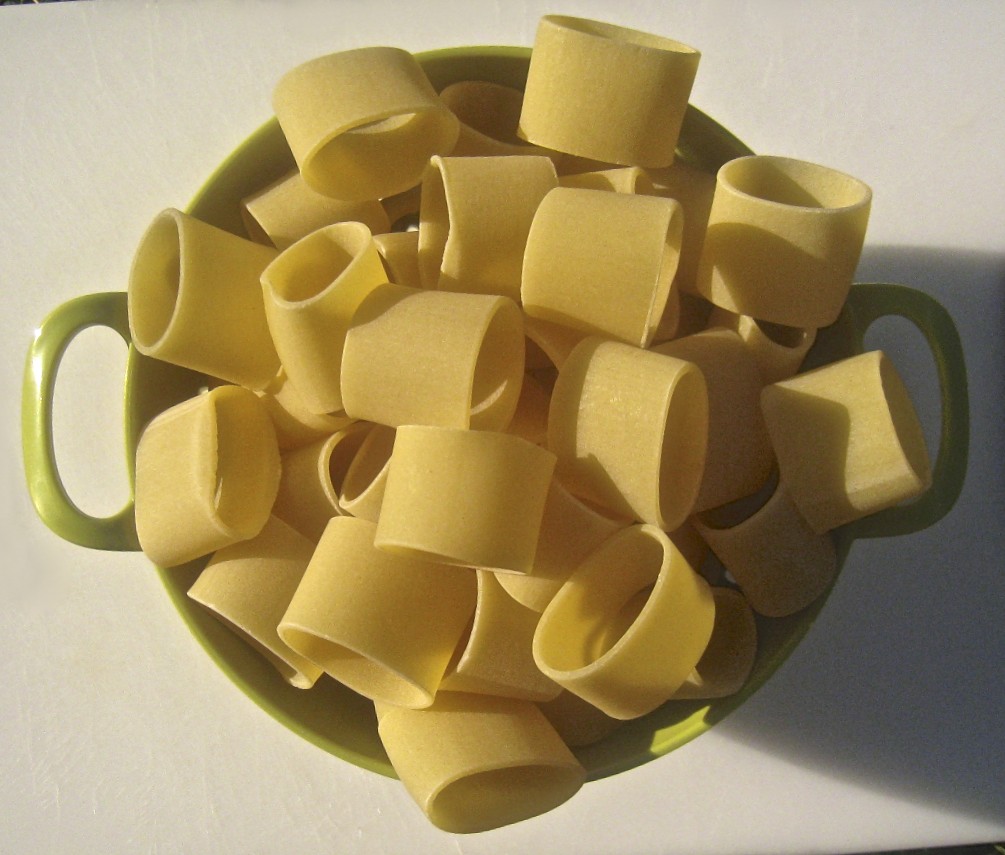
While he bagged my mollusks, my mind raced. How would I prepare them and with what, if anything? Since mussels have such a strong flavor, I reasoned, they could easily stand up to a red sauce. Shrimp are, also, strong-tasting, I thought, and I bought a pound of them, too. Vongole, though, would never be able to compete in this mix, so, I bid “Ciao!” to the fish monger. I quickly decided to make a “fresh” sauce and by that I mean one that simmers only a brief amount of time. I want to taste fresh tomato and I headed back into the produce area to buy 9 large plum tomatoes. Now to find the dish’s most important component: the pasta. I headed over to the pasta aisle (actually, it’s a pasta aisle and a half!) and the choice was easy. Since the mussels and shrimp were large, I wanted my pasta to be, too. I selected calamarata, so named because they resembles large calamari (squid) rings.  It certainly didn’t hurt that they’d be used in a seafood dish. Leaving the pasta aisle, I mentally inventoried my fridge and knew I was set to go. I finished my shopping and headed home, munching on my reward, a cannoli.

*     *     *

Calamarata

 *     *     *

When preparing today’s dish, remember to “Think Big!” Calamarata are a large pasta and everything included with it needs to be large, as well. So, the onions aren’t diced but chopped and rather large, at that. Once peeled, divide the tomatoes into 2 groups. The larger group, about ⅔ of the total, are seeded and chopped into chunks. These will add texture. The remaining ⅓, once seeded, is puréed in a food processor. These will be the basis for the sauce. The only things diced are the parsley, basil, and garlic. Even so, when garnishing the dish before serving, sprinkle a few hand-torn basil and parsley leaves. Most importantly, if you, too, want that fresh tomato taste, do not let the sauce simmer for longer than 30 minutes. The “simmer clock” starts the minute the tomatoes hit the pan. Cheese, by the way, would not be used with this dish.

And if you do like that fresh tomato taste, check out this recipe for Pesto Trapanese. It will take you longer to cook the pasta than it will to make this pesto and the taste is incredible.

*     *     *

Calamarata with Shrimp and Mussels Recipe

(Calamarata con Gamberetto e Cozze)

Ingredients

  • 1 lb calamarata pasta
  • 1 lb fresh mussels, beards removed and scrubbed
  • 1 lb large  (21-25 count) shrimp, peeled and de-veined
  • 9 or 10 large plum tomatoes – divided
  • 3 tbsp olive oil
  • ½ tsp red pepper flakes, more of less to taste
  • 1 medium onion, roughly chopped
  • 2 cloves garlic, diced
  • splash of white wine
  • 3 tbsp fresh parsley, chopped, more for garnish
  • 1 tbsp fresh basil, chopped, more for garnish
  • ½ tbsp marjoram
  • 2 tbsp capers
*     *     *

*     *     *

Directions

  1. Bring a large pot of water to boil. While waiting, use a paring knife to cut a small “X” into the bottom of each tomato. Once the water boils, place the scored tomatoes into the water and blanch for 1 to 2 minutes. Remove the tomatoes and place in a bowl of ice water. Once cooled to touch, peel each, beginning at its “X”, before quartering and seeding it. Place aside.
  2. Take about ⅔ of the tomatoes and coarsely chop into chunks. Puree the rest of the tomatoes using a food processor, blender, or stick blender.
  3. Heat the olive oil in a large, deep frying pan over med-high heat. Add the pepper flakes and, after a minute, add the onions. Sauté until translucent.
  4. Add the garlic and continue sautéing for about a minute more. Add a splash of white wine and reduce for a minute or two.
  5. Add all the tomatoes, season with salt & pepper, and maintain a medium simmer.
  6. Begin heating the water for your pasta. The calamarata pasta that I prepared needed 16 minutes to cook. Check your package’s instructions.
  7. When there are 5 minutes to go, add the parsley, basil, & marjoram to the frying pan, stir, and then add the mussels to the sauce and place a cover on the pan.
  8. 3 minutes later, add the shrimp and replace the cover.
  9. If you prefer to serve the mussels shelled, see Notes below.
  10. At the 5 minute mark, reserve some pasta water, drain the pasta and add it to the sauce pan. Add the capers and mix to evenly coat the pasta.
  11. Pour the calamarata into a serving bowl, garnish with torn basil & parsley leaves, and serve.

Variations

This is really a basic tomato sauce with seafood added. As I mentioned early on, I wanted a fresh sauce so I didn’t let the tomatoes simmer for long. You certainly may allow your tomatoes to simmer longer, if that’s your preference. Just remember that there’s no turning back once you put the pasta into the boiling water, and that’s regardless of the pasta you’ve chosen to cook. And once the mussels are put into the sauce, you have about 5 minutes to go. The cooking instructions on the pasta’s package are your friends.

Notes

As always, be sure to reserve some pasta water in case your sauce needs it. Be aware, though, that the mussels will give off some flavorful liquid during the cooking process. You may not need as much pasta water as you think.

Once the shrimp have been in the sauce for about a minute, I remove the pan’s cover and begin removing the mussels from their shells. I usually leave a few in the shell just for presentation in the final dish. Once all are removed, it is far easier to stir the sauce to insure the shrimp are evenly cooked on both sides.

I usually drain and add the pasta to the sauce when the shrimp are just shy of being fully cooked. They will finish cooking when mixed with the hot pasta and this will insure that neither shrimp nor mussels are over-cooked and chewy when served.

*     *     *

By any other name …

There are two more of “my girls” but neither is doing well enough to make a public appearance. If they return from Betty Ford respond to treatment in time for Fall, I’ll be sure to share a photo or two. Before moving on to the rest of the roses, there are these, located at the foot of the bed, right next to Judy. Where else?

*     *     *

Lady’s Slipper Orchids

*     *     *

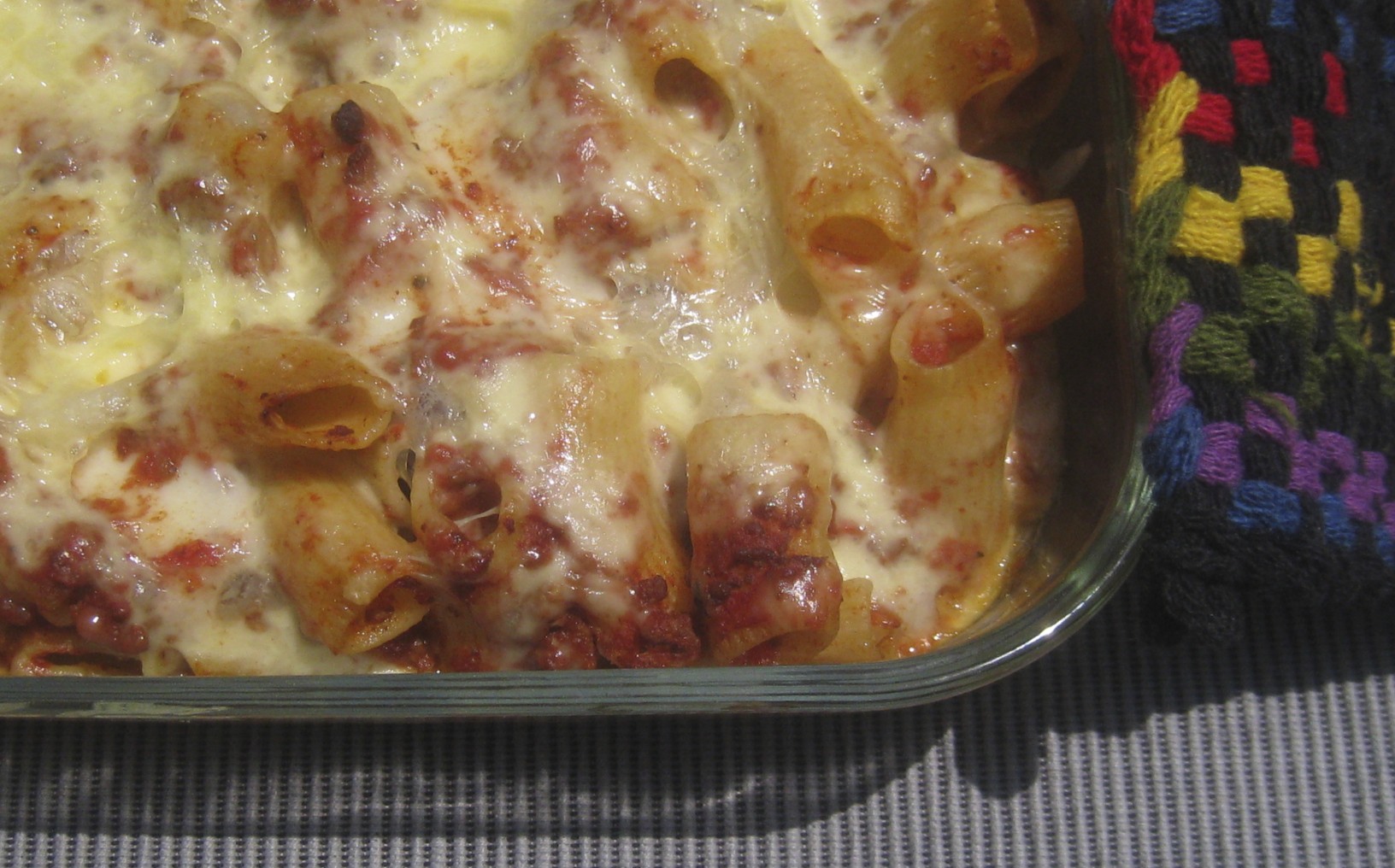
Baked Rigatoni

Rigatoni al Forno

Yes, I realize for many of us in the Northern Hemisphere, Summer is in full swing, with temps soaring well into the 90’s and, incredibly for some, beyond. I, also, know that for many, firing up the oven isn’t necessarily something we’re prone to do when our homes are already sizzling. So, why am I featuring a baked pasta dish today? The answer is simple. Mozzarella. I had plenty of mozzarella in my fridge, left over from the first round of mozzarella making and I needed to do something with it. And lest there be any doubt, when I have a surplus of something, anything, my go-to dish is pasta of some sort. So, considering that mozzarella “performs” so well when baked, I decided to make an “al Forno” recipe.

Growing up, rigatoni was a frequent “guest” at our dinner table, although we kids called them “flat tires.”  I don’t recall Mom ever baking rigatoni, though. It wasn’t until I was on my own that I started experimenting with baking penne and rigatoni. Generally, these dishes are easy to assemble, with left-overs that keep well and are easily re-heated. Perfect for my one person household. So, when presented with a bounty of mozzarella, I chose flat tires to help me out.

Normally, when I prepare a baked pasta, I coat the cooked pasta with sauce and cheese of some sort before topping it off with shredded mozzarella. With this dish, however, I reverse things a bit. Butter and Pecorino Romano cheese are used to coat the partially cooked rigatoni but, as you’ll soon see, the mozzarella is chopped into cubes and stirred into the pasta. Once mixed, Asiago cheese is used to top off the dish before baking. Doing so gives one both contrasting flavors and textures. The strong-tasting Asiago, melted until golden, hides not just the sharp Pecorino Romano but the gooey milder tasting mozzarella cubes spread throughout the pasta, as well. It’s a three cheese combination that I enjoy well enough that I don’t really mind turning on the oven in a heat wave.

*     *     *

*     *     *

Rigatoni al Forno Recipe

Ingredients

  • 1 lb rigatoni
  • 1 quart tomato sauce (vegetarians use marinara)
  • 8 oz Mozzarella
  • 8 oz Asiago cheese
  • 4 tbsp butter, cut into chunks + a little more to grease the baking dish (optional)
  • ¾ cup Pecorino Romano cheese, grated
  • fresh parsley, chopped, for garnish (optional)

Directions

  1. Pre-heat oven to 350˚F.
  2. Lightly grease a 9 X 13″ baking dish with cooking spray or butter.
  3. Add rigatoni to a large pot of heavily salted, boiling water. Cook the pasta for half of the time suggested on the package for al dente pasta. Drain and hold until needed.
  4. Warm sauce and maintain a low simmer.
  5. Slice and cut the mozzarella cheese into ½ inch cubes. Set aside.
  6. Use a box grater to shred the Asiago cheese. Set aside.
  7. Once the pasta has been semi-cooked and drained, return the rigatoni to the now empty pot.
  8. Add the butter and then the Pecorino Romano to the hot rigatoni, stirring after each until the pasta is well-coated.
  9. Add the tomato sauce to the pot and stir.
  10. Add the mozzarella to the pot and gently stir until evenly distributed.
  11. Place the pasta in a greased 9 x 13″ baking dish. Evenly sprinkle the shredded Asiago cheese on top.
  12. Bake in pre-heated 350˚F oven for 20 to 25 minutes or until the Asiago cheese is melted to your liking.
  13. Allow to rest 5 minutes before serving, garnished with parsley, if desired.

*     *     *

Someone forgot the parsley.

*     *     *

Variations

For whatever reason, some may find Asiago cheese unappealing. If that’s true for you, there are other cheeses that can be used to top off your dish. Fontina is a good alternative, as is ricotta salata. The choice is really yours, just try to find a cheese that offers a contrasting flavor to the mozzarella. You won’t be disappointed.

Although I used rigatoni for this dish, you can certainly use any of the tube-shaped pastas. Just avoid the ribbon-like pastas. They are not well suited to baked dishes of this type.

*     *     *

By any other name … 

“Queen Elizabeth”

(Because there is no King George III rose.)

Happy 4th of July!

*     *     *

Straw and Hay Pasta

Paglia e FienoToday’s recipe is another in a series celebrating the Spring harvest. Thus far, we’ve prepared dishes that included artichokes, asparagus, and ramps. Today, I’m going to share a recipe that comes from Lazio, Rome’s district, and that features freshly shelled peas and prosciutto in a cheese-flavored cream sauce. And if that hasn’t grabbed your attention, the pasta’s two colors surely will. This dish, you see, is named after the pasta used to make it, but calling it “Giallo e Verde”, “Yellow & Green”, would be so not Italian. As I’ve mentioned in the past, when it comes to naming pasta, the Italians have always let their imaginations run wild — and this pasta is no different. Here, it’s not yellow pasta but straw, paglia, while the green pasta is hay, fieno. Ready in minutes, Paglia e Fieno is another great tasting pasta to add to your arsenal, whether served as a primo piatto or main course.

This was a favorite of both families in the old two-flat every Spring. Unlike today, frozen foods were just beginning to appear in stores, so, making this dish meant shelling peas. I can remember helping Mom shell them —  until I grew up a little and the novelty wore off. After that, I made myself scarce when the metal colander and bag of peas appeared. Still, even once Bird’s Eye became a household name, fresh peas continued to be used to make this dish each Spring. As good as frozen peas may be, you just cannot beat the taste of fresh and if there’s one thing to be said about the best of Italian cooking, it’s that it relies upon the freshest of ingredients. To that end, my Zia and I continue to enjoy this dish every Spring and it wouldn’t be Easter at her youngest Son’s home if Paglia e Fieno isn’t served.

As mentioned earlier, this dish’s name comes from the coloring of the pasta. Green-colored noodles can be found in many groceries, some even packaged with yellow and bearing the name of  Straw & Hay. You certainly needn’t buy it if you don’t want to. Just using Mom’s pasta dough recipe as-is, or a fraction thereof, will give you the straw. To make hay — whether or not the Sun shines — add a couple of tablespoons of cooked, chopped spinach to the eggs before adding them to the flour when you make the dough. (Mom & Zia used spinach baby food to make pasta verde but spinach baby food is now only sold when combined with peas or beans. The color, as a result, isn’t as deep.) Moving away from the pasta, the thickness of the prosciutto to be used is totally up to you. For the dish pictured, I was lucky enough to be at my Greek market just as the deli was putting out a package of prosciutto end slices. At about ⅛ inch thick, these were easily chopped and, for my taste, stood up to the cream sauce very well. You can ask your deli to cut the prosciutto thicker or, if you prefer to use it thinly sliced, shred it before adding it to the pan.  Lastly, be sure to set aside some pasta water. The cream sauce can “seize up”, meaning get too dry, particularly if you’re timing is off and it is left waiting for the pasta to finish cooking. Adding a splash of pasta water can revive it, as well as later, should it seize up again once the cheese is added.

*     *     *

Paglia e Fieno

*     *     *

Paglia e Fieno Recipe

Ingredients

  • ½ lb (225g) yellow fettuccine (linguine, tagliatelle, or pappardelle may be substituted)
  • ½ lb (225g) green-colored pasta of the same type as the yellow pasta
  • 3 tbsp (45ml) butter
  • 1 tbsp (15ml) olive oil
  • 1 small onion, chopped fine
  • 3 cloves garlic, minced
  • 1 cup (236ml) heavy cream
  • 1 cup (140g) fresh peas
  • 4 to 6 oz (110 to 170g) prosciutto
  • ½ cup (60g) Pecorino Romano cheese, grated — more for serving
  • salt and pepper, to taste
  • fresh parsley, chopped — for garnish

Directions

  1. Bring a large pot of water to the boil for cooking the fettuccine. Time it so that the pasta is just shy of al dente about the time that the peas are cooked to your liking. Reserve 1 cup of the pasta water.
  2. Heat oil and butter in a large, deep frying pan over med-high heat. Add onion and sauté until translucent, about 5 to 8 minutes. Add garlic and continue to cook for another minute.
  3. Add heavy cream and simmer a few minutes until slightly reduced.
  4. Add the prosciutto and peas, stirring till well-combined.  If sauce becomes too thick, add a little pasta water to thin it.
  5. When pasta is just shy of al dente and peas are sufficiently cooked, taste to check seasoning and add the cooked pasta to the frying pan. Stir well. If necessary, add some pasta water to thin the sauce.
  6. Remove from heat, add grated cheese, mix thoroughly, and move to serving platter.
  7. Serve immediately, garnished with grated cheese, parsley, and cracked pepper.
*     *     *

Variations

This dish is just as good when prepared with pancetta, bacon, or ham in place of the prosciutto. Because they’re raw, though, be sure to saute the pancetta or bacon with the onions before adding the cream and peas. And if someone at your table doesn’t like peas, other vegetables can be substituted. Asparagus is commonly used, as are sliced crimini mushrooms. No matter what you choose to add, be sure it’s fresh and you cannot go wrong.

*     *     *

Fold, Cut, Unfurl Fettuccine Verde

*     *     *

Notes

You probably noticed that salt wasn’t added to the recipe until the end. That’s because some of the ingredients can be pretty salty in their own right. The salt content of the prosciutto — or it’s substitutes of pancetta, bacon, and ham — can vary greatly. The cheese and amount of pasta water you use can, also, add a fair amount of salt to the final dish. So, although I’ll season the dish liberally with pepper throughout its cooking, I’ll only use salt minimally, if at all, until I’ve tasted the dish at the very end. Even then, I may not add any. Again, let your own palate be your guide.

Spinach is not the only ingredient used to color pasta. I’ve used tomato paste to make pasta rosso (red), and I’m aware that beet juice can be used to make it purple, pasta viola, while squash is used to give pasta an orange hue, pasta arancione. And no discussion of pasta coloring would be complete without mentioning pasta nera which gets its black color from the ink of squid (calamari) or cuttlefish (seppia). If you find that a different color palette tickles your palate, you may wish to check out my recipe for Tricolor Risotto, which uses pesto and tomato paste to create a risotto platter that bears the colors of the Italian flag.

*     *     *

By any other name …

“Opening Night”

*     *     *