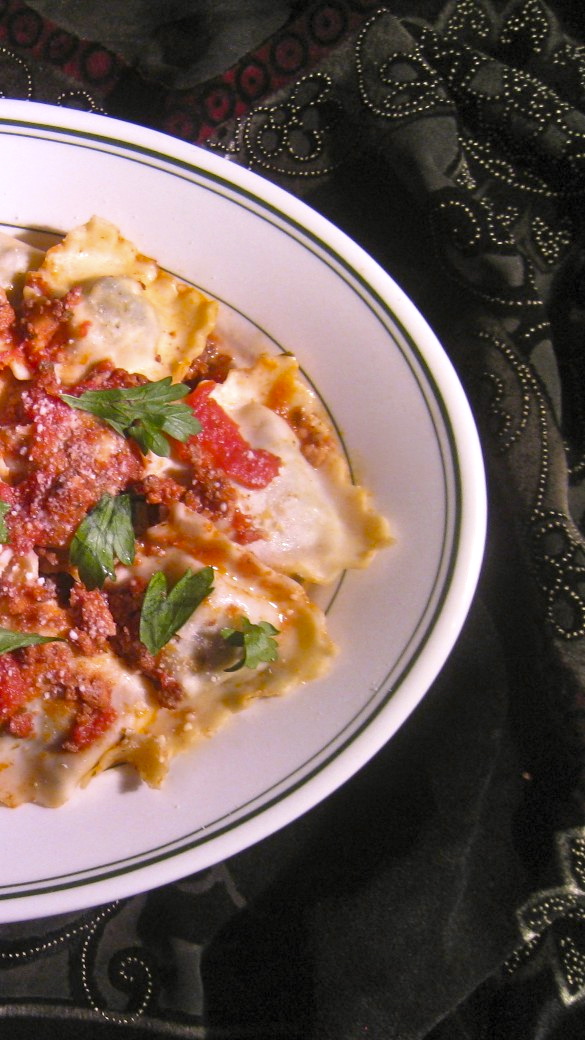
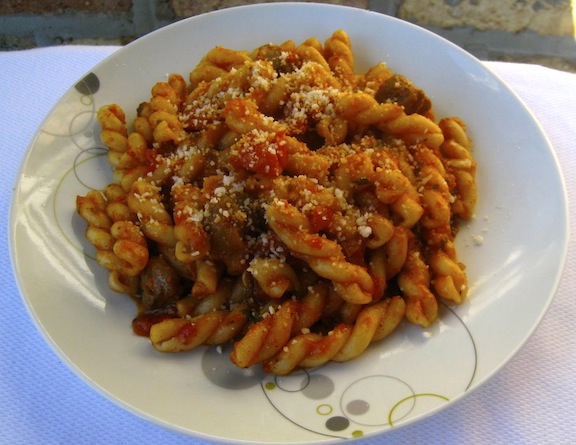
The Bartolini Have Left The Building!

Yes, it’s true. The Bartolini kitchens have moved — for today only.

Recently, a blogger buddy, Jed, asked if I wouldn’t mind stopping by his place, sports-glutton.com, while he was away covering the AT&T Pro Am at Pebble Beach. Well, if there’s one thing you should know about this Bartolini, besides his undying love for pasta and intense hatred for spiders, is his fondness for travel. So, when Jed asked me to come for a visit, I couldn’t say “Yes!” fast enough. And I must say I love being here.

First and foremost, Jed’s is a blog about sports and sporting events. If something is happening within the World of Sports, Jed will take us there, not only reporting the event but explaining its significance in “the big picture.” This would be more than enough to keep most sports bloggers busy but not our Jed. In addition to these reports, Jed shares delicious recipes guaranteed to appeal to the glutton in all of us. Now, Jed understands that there’s more to life besides sports and eating.  So, he offers his critiques and ratings of select beers and wines in his Thirsty Thursday series of posts. And, finally, to help us all start our week off on the right foot, Jed serves up a little Monday Morning Humor each and every week.

Sporting news, tasty recipes, expert advice on beverage selection, and a bit of humor, sports-glutton.com has it all. So, please take this link to see my Pastistio Recipe and then take some time to look around and check out sports-glutton.com. You will not be disappointed.

Thanks, Jed, for giving me this opportunity to fill-in for you, even if only for a day. Oh! I almost forgot. It looks like someone broke into your wine cellar last night and stole a few bottles. They must have been real professionals because Max didn’t move all night long. Gotta run.

*     *     *

Strozzapreti Pasta

Throughout much of modern history, the Italian language has had fewer words in its lexicon than most other languages, and that includes its cousins, the Romance languages. Granted, the gap has lessened over the last century but the fact that it existed at all is because Italian, being an ancient language, was so closely descended from Latin, an even more ancient language of even fewer words. So, when it came to identifying their pasta, Italians didn’t create new words but named each after the familiar object it resembled, both real and imagined. We Americans know some of their names but that’s just the tip of the meatball. There are pastas named after just about anything, from little tongues (linguine) to little ears (orecchiette) to the hair of an angel (capelli d’angelo). Some look like shoelaces (stringozzi), others like twine (spaghetti), and still others like ribbons (fettuccine). And then there are the shells, be they from the sea (conchiglie) or the land (lumache). There are the twins (gemelli), flowers (fiori), little bells (campanelle), and little radiators (radiatori). And we mustn’t overlook tortellini, which are said to resemble the navel of Venus. The list goes on and on, far too long to fully explore here. Instead, every now and again I’ll share one that I find interesting and, most importantly, easy to make by hand. To that end, I shared a recipe last May for one obscure pasta called fazzoletti, little handkerchiefs and, in December, Mom’s quadretti, little squares. Today, I thought that I’d share another, the name of which is sure to give you pause. It is strozzapreti, priest choker pasta.

I first learned of strozzapreti when Zia and I were in Florence in 2002. We had a good laugh when the waiter told us the legend behind the pasta’s name, although at the time, I mistakenly thought that he was merely giving us a sales pitch. According to the waiter, strozzapreti is so good that when it was invented and first served to priests, they devoured it so quickly that they choked. You must admit, if you’re trying to sell pasta, that’s a pretty good story to have up your sleeve. Move forward a few years. I’d forgotten all about the pasta until I heard some chef on television mention priests choking. After some web searching, I saw how the pasta was made and strozzapreti became a part of my pasta arsenal. There are, by the way, other legends involving the naming of this pasta but I’m sticking with the one I first learned. (Ya leave the dance with the one that brung ya.)

Strozzapreti are a twisted pasta, about 3 inches in length, vaguely reminiscent of cavatelli. Of course, cavatelli, being machine-made, are consistent in shape and length, while home-made strozzapreti are anything but — and therein lies its charm. Few would ever mistake a dish of home-made strozzapreti for a mass-produced pasta and no mass-produced pasta will ever taste nearly as good as home-made strozzapreti. The latter part of that statement is as good a reason as any for taking the time to make this pasta.

*     *     *

How to Make Strozzapreti

To start, you’re going to need some dough. I’ve always used Mom’s Pasta Dough here and am perfectly happy with the results. Once you’ve made your dough and rolled it out, the rest is pretty easy, albeit repetitive. Take a dough sheet of about 12 inches long, fold in half, and in half again, until it is no more than 3 inches wide. With a sharp knife, cut tagliatelle-sized noodles and unfold each noodle, as needed. Once unfolded, start at one end and roll the noodle between your palms to create a twisted piece of pasta. Tear off a 3 inch piece and roll the remaining noodle, again and again, tearing off pieces as you go. You’ll find that your pasta will have a tighter spiral if you only roll them in one direction. Going back-and-forth will only wind and unwind the coil. Once you get the hang of it, you’ll manage to make each piece with a single pass between your palms.

One last thing worth mentioning involves the pasta dough. Usually, when you cut pasta, whether by hand or machine, the dough should be dry-ish to prevent the strands from sticking together while being cut. That’s not the case here. If the dough is too dry, the lower, dangling, part will break as you try to roll the upper part to form the strozzapreti. Not only that, you may find it nearly impossible to get enough traction between your palms and the noodle to get it to twist. If you find that you cannot roll the pasta between your palms, try moistening your hands just a bit. Bear in mind, however, that too much water will ruin the pasta. A scant drop of water spread between your palms should do the trick.

*     *     *

Cut the dough into a strip about 12 inches long.

 *     *     *

Fold the strip in half

*     *     *

Repeat at least one more time to create a sfoglia

*     *     *

Cut the sfoglia into tagliatelle-sized pasta

*     *     *

Unfold 1 noodle

*     *     *

Place tip at the base of one palm and with other hand's fingertips ...

*     *     *

... Begin to roll the noodle between your palms

*     *     *

Tear off a 3 inch piece of the twisted pasta

*     *     *

Repeat until the entire noodle has been twisted and cut into pieces

*     *     *

Unfold another noodle and repeat the process until finished

*     *     *

Tutto fatto!

*     *     *

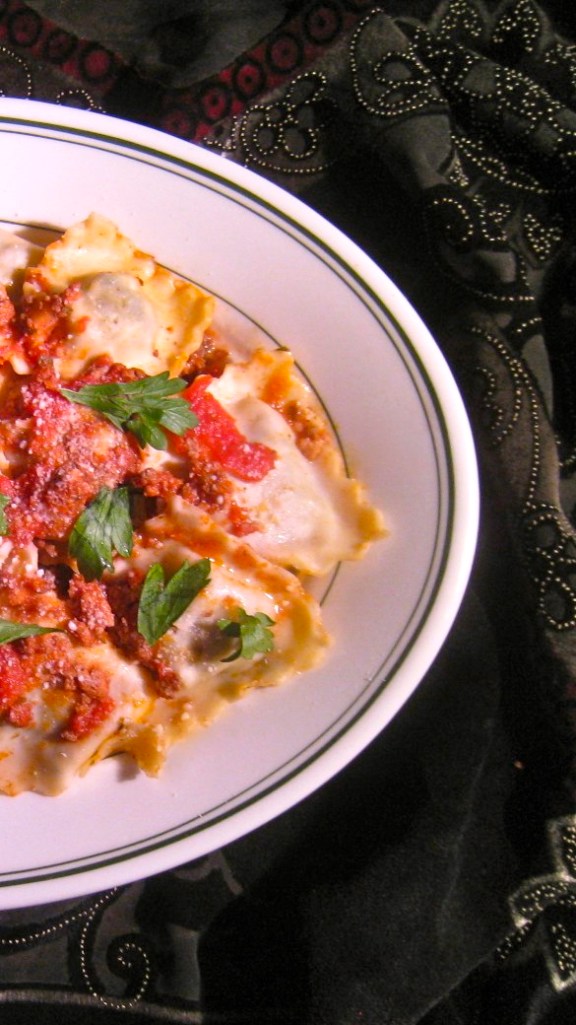
Cooked fresh in salted water, strozzapreti will be ready in minutes. If dried or frozen it will take a few minutes more. The pasta’s shape, in my opinion, lends itself to being served with pesto or a tomato sauce, with or without meat. Serve it garnished with grated cheese, while you tell the tale of choking priests, and you’re sure to have satisfied, as well as entertained, dinner companions.

Variations

Although I formed the strozzapreti by rolling the dough between my palms, you can make them using a slender rod or barbecue skewer. Once you’ve unfolded the tagliatelle-like noodle, cut it into 3 inch pieces. Place the rod atop each individual dough piece and roll the two, creating a spiral pasta. Remove the rod and repeat the process with another piece of dough.

Lidia Bastianich makes a version of strozzapreti that is a gnocchi-like dish. I have no doubt that her dish is called strozzapreti, just as I’ve no doubt that we were served the pasta that I’ve described above and it, too, was called strozzapreti. How can this be? Well, obviously, there’s more than one way to choke a priest.

*     *     *

Quadretti Pasta

Most of us have warm and fuzzy memories of being nursed back to health by a loving caregiver, usually Mom, who served us a cup or bowl of soup. And you parents reading this are sure to have equally warm memories — some pretty recent — but from the other side of the covers. I’d be willing to bet that most of us were served soup made with a chicken-based stock or broth. What went into that broth, however, varied widely from house to house. In ours, Mom used either of 2 pastas, one of which is today’s recipe, quadretti.

Generally speaking, Mom relied upon 3 dishes to get me up-and-about. Breakfast would be a 3-minute egg, with or without buttered toast depending upon my stomach’s attitude.  My meals would be pasta in bianco. Aside from it being a traditional cure served to bambini with stomach ailments, Mom knew that I could’ve been at Death’s door and I would have agreed to at least try a little pasta in bianco. Between meals, though, there was a constant supply of broth which, as the recovery progressed, contained more and more pastina. Ask my Sister what Mom served her when ill and she’ll mention, without hesitation, Acini de Pepe, a tiny bead-like pasta. As for my Brother and me, it was quadretti all the way.

“Feeling better?”

Quadretti are square-shaped pastina that, as you’ll soon see, are quite easy to make. Whenever Mom made pasta of any kind, she would roll out the left-over dough and use it to make quadretti. (In true Italian tradition, absolutely nothing was wasted.) This she stored in a container, adding to it with each new batch of home-made pasta. Because she was always adding to her stash, she rarely had to devote a batch of pasta dough to making quadretti. When combined with the quart or 2 of chicken stock she was sure to have on-hand for risotto,  Mom was always prepared when one of us was feeling under the weather.

One more thing before getting to the directions and this is for soup novices. You will get better results if you only make enough soup with quadretti for as many bowls as will be served in 1 meal. If you make a large batch of soup with quadretti and store it in the fridge, when you bring it out of the fridge, you may be surprised to find that the noodles have absorbed a great deal of the broth. Not only that but, depending upon how much quadretti you put into the soup, you my have very little broth left at all. So, before you add the quadretti to your soup, take into consideration that the noodles will swell a bit during cooking and later in storage. Better to make just enough soup for one meal and store the raw quadretti separately from the broth/stock.

Don’t let any of this deter you from making this pasta. Just as you cannot compare a dish of home-made linguine with store-bought, you will not find a mass-produced pasta that comes close to the taste of home-made quadretti. It just ain’t gonna happen!

*     *     *

How To Make Quadretti

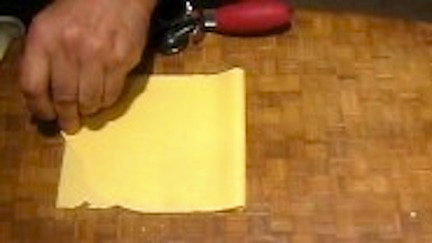
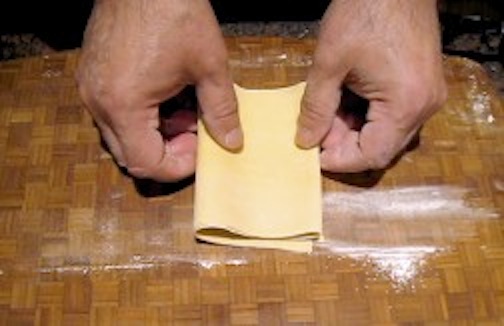
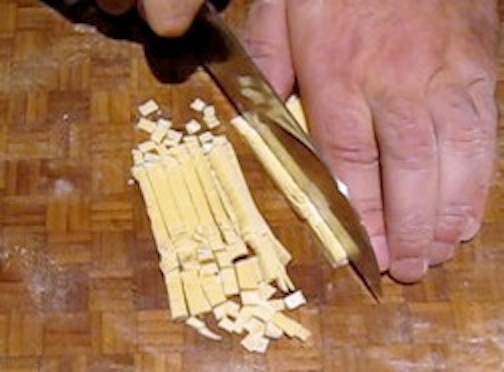
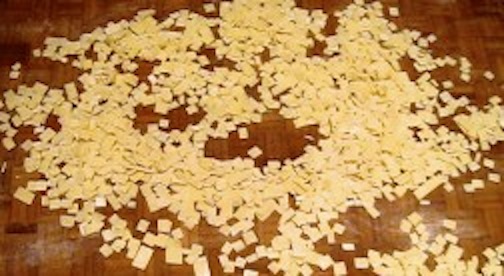
A half batch of Mom’s Pasta Dough will give you about 2/3 to 3/4 lb of fresh pasta dough. That should be more than enough for most soup recipes. Once the dough has rested, you must roll it out, either manually or by machine. If doing it by hand, roll it until it is as thin as you would when making ravioli. If using a machine that, like mine is at its widest when the setting is number “1,” then pass the dough through the rollers, repeatedly, advancing the setting with each pass, up-to-and-including the number “6” setting. If your rollers, like Zia’s, work the opposite of mine and their widest setting is number “10,” then pass the dough repeatedly through the rollers, decreasing the setting with each pass, down-to-and-including the number “5” setting. Once you’ve attained the proper thickness, cut the dough strip into sheets 2 to 3 feet long, and follow the steps outlined in the images below. Be sure to allow the dough sheets to dry sufficiently. If the sheets are too moist, the quadretti will stick together when you cut them. If too dry, the dough sheet will crack and break as you try to fold it to create the sfoglia.

*     *     *

Fold dough sheet in half,

*     *     *

Continue to fold in half repeatedly until a sfoglia of about 2 to 4 inches wide is created.

*     *     *

Starting at one end, begin cutting sfoglia into strips, no thicker than the width of linguine.

*     *     *

Carefully turn a number of the noodles 90* and begin cutting, again as if cutting linguine.

*     *     *

Gently separate the freshly cut quadretti.

*     *     *

Spread out to dry before freezing or refrigerating in an airtight container until use.

*     *     *

See? A pasta cannot be easier to make by hand and, if you’ve never enjoyed home-made pasta in your broth, you’re in for a real treat. Keep a container of quadretti in the back of your freezer and if, heaven forbid, you’re feeling under the weather, a mug of your home-made broth with a sprinkling of quadretti is just what my “Doctor Mom” would have ordered.

*     *     *

Filling for Ravioli dei Bartolini

The Bartolini Girls made 2 versions of filling for their pasta. One, used in cappelletti, was served in soup while the other was for ravioli and dressed in sauce. A couple of years ago, I decided to try my hand at making sausage ravioli, using our family sausage recipe. The results were good enough to serve Zia, gain her approval, and now the Bartolini Clan has 3 ravioli fillings made with meat. Today I’m going to share the “saucy” filling; we’ll get to the “soupy” and sausage fillings in later posts.

I have 2 versions of Mom’s recipe. The original, which is little more than a few notes, and the one that’s part of a recipe book she gave to me after I moved to Chicago. Both are pictured below and, for obvious reasons, I follow the more complete version of the two. This is the same recipe that Zia follows when we have Ravioli Day. Similar to Sausage Day, once or twice a year we’ll devote a day to making ravioli so that she’ll have plenty for her family when they visit. We work well together as a team and that night’s dinner is always a good one. Never one to wait for dinner, however, Max has been known to steal a few errant ravioli that may have wandered too close to the pasta board’s edge. On one memorable Ravioli Day, he managed to inhale 35 of the pasta pillows. That was about 10% of that afternoon’s production and, not so coincidentally, the last ravioli that Max has enjoyed, to date.

*     *     *

*     *     *

When you look at the recipe, you’ll note that in the original version, Mom used nutmeg but cloves is used in the version she gave me. I’ve no idea why or when she modified the recipe, only that she gave me the book in the early ’80’s.  As is the case with any of our ravioli fillings, the meat is cooked before being ground in a meat grinder. I once tried using a food processor but did not like the results at all. The filling became a thick purée without any real texture, and I definitely prefer some texture. The recipe, also, calls for ground pork and veal but if Mom couldn’t find veal, she often substituted chicken or turkey. Living here, I’ve no problem finding any of the ingredients but it’s good to know that there are alternatives should you run into problems or be averse to using veal. The rest of the recipe is easy enough. The “fun” part will come when we make the ravioli and you can see how we do that HERE.

*     *     *

Filling Recipe for Ravioli dei Bartolini

Yield: Enough filling to be used with 8 eggs of pasta dough. Recipe found here.

Ingredients

  • 1 1/2 lbs. ground pork
  • 1 1/2 lbs. ground veal (chicken or turkey may be substituted)
  • 2 – 3 tbsp butter
  • 1 pkg (10 oz) chopped spinach (cooked and well-drained)
  • 1 pkg (8 oz) cream cheese
  • 1 cup grated romano or parmesan cheese – your choice
  • 2 or 3 eggs slightly beaten
  • dash of cloves (optional)

Directions

  1. Sauté meat in butter. Season lightly with salt.
  2. Use meat grinder to process the meats. Add all the ingredients into a mixing bowl and mix until well-combined.
  3. Cover the filling and refrigerate for a few hours or overnight.
  4. Once the filling has rested, you can begin making your ravioli.

*     *     *

*     *     *

Notes

Pictured above  is ravioli filling pre-formed into “balls.” Sometimes, while the pasta dough rests, Zia & I will use the time to create some, giving us a jump on the day’s production.

Mom and Zia used this filling exclusively for ravioli. I’ve used it in a few other dishes – i.e., stuffed shells, cannelloni, and, on occasion, a rotello. We’ll get to these recipes, too.

*     *     *

Ravioli dei Bartolini

Happy Columbus Day everyone! And what better way to celebrate the Holiday than to share one of the Bartolini Clan’s favorite holiday recipes. Say the word “ravioli” to any of the old 2-flat’s former residents and you’re sure to conjure up memories of holidays past, specifically Christmas, New Year’s, and Easter. No matter which of the 2 dinner tables you visited on those evenings, there would be a large platter of ravioli taking center stage. (It was present on Thanksgiving, too, but The Bird was the star of that show.) As a kid, my attention was pretty much focused on that platter of pasta pillows — and dessert, of course — and I think the same would have been said by everyone at the tables, save Mom and Zia. Their perspectives would have been entirely different.

One must remember that in those days, the only freezer available to most households was a small compartment above the fridge. Consequently, if you wanted to serve your family ravioli, you made it the same day it was served. Well, there was absolutely no way that Mom and Zia were going to start making ravioli on a holiday afternoon. That meant that most holiday mornings, they were up at 5:00 am making ravioli for that evening’s holiday dinner. And then there was Christmas. We were allowed to get up during the night to discover what Santa had brought us and to play with our toys. It wasn’t until years later that we learned how our parents no sooner got the gifts wrapped and under the tree when we came charging out of our bedrooms. Mom and Zia were lucky to get a couple of hours of sleep before they started making ravioli. And they weren’t making just a few ravioli. They made enough for everyone at each of the two holiday tables, which often included guests as well as each family. For Mom, that meant ravioli for as many as 12 people. To this day, I don’t know how they did it.

It really is a shame that there are no pictures of these women making pasta and ravioli, for it really was something to see. Mom would make the filling the night before and store it in the fridge. (Woe be the child caught snatching filling from the fridge!) The next day, she would make 8 eggs worth of pasta dough using the “mound” method. (Mound the flour on a large pasta board, make a crater in the center, pour the eggs into the center, and use a fork to slowly bring the flour into the egg mass, being careful not to break the flour wall and allow the eggs to spill out.) Once the dough was made, kneaded, and rested, Mom used her 3+ foot long “rolling-pin” to create thin, circular pasta sheets, 3 – 4 feet in diameter. They were laid to dry by hanging them off the edge of the dining room table, the backs of chairs, even on sheets covering a bed, if one was “open.” Once dry enough, the sheet would be hung off the pasta board’s edge, half on the board and half off. The filling balls were then laid out on the pasta half-sheet in a grid, each equidistant from its neighbors. When they were all positioned, maximizing the surface area, the bottom half of the sheet was  brought up and over, enclosing the filling-covered top half. The long handle of a spoon or spatula was used to seal the pillows. The ravioli were then cut using a pastry cutter, moved to trays, and the next pasta wheel was moved into place. This continued until all the filling was used. The remaining dough, if any, would be hand-cut to form linguine or quadretti. (More about the latter in another post.) Just about the time she was finished cutting the last of the pasta, we kids would come bounding into the kitchen. “Merry Christmas, Mom! What’s for breakfast?”
The purchase of a pasta machine changed all that. Unable to make the large pasta wheels, Mom turned to ravioli dies to make her ravioli. Pictured just below is my collection.  The 2 dies on top are used for ravioli. The one on the top-left makes ravioli that are 2 inches square. That’s just about the size The Sisters were taught to make by hand. The ravioli form on the top-right makes ravioli that are 1.25 inches square. That’s about the size The Sisters made by hand once we kids came into the picture. (Kid-friendly ravioli. Who knew?)  The remaining 3 are used for soup ravioli, which Mom called cappelletti, “little hats.” Though normally rounded, some look similar to tortellini,  the die Mom used (lower left) was .75 inches square. As a result, the word “cappelletti” in our house wasn’t used to describe the pasta’s shape but its use — and that was in soup. Mom gave me her cappelletti die years ago but it’s too small for me to use in any way. (I’ve tried several times but, being ham-fisted, I cannot make the filling “balls” small enough to fit the die.) So, I bought the die on the lower-right. It makes raviolini that are 1 inch square and I use it to make my cappelletti. In the center is a press that makes traditional-looking cappelletti, each 1.25 inches in diameter. I, also, have 2 more ravioli makers, both not shown, but they don’t work very well. One attaches to my pasta machine and the other to my stand mixer. In both cases, they require that the dough sheets be about twice as thick as I am accustomed to using. The result is ravioli that is a bit more chewy than I prefer. What can I say? Mom spoiled us. 

*     *     *

Tools of the Trade

*     *     *

When it come to the pasta dough’s final thickness, let your own palate lead the way. Our pasta machines are calibrated from 1 through 10, with 1 being the thickest setting. Zia prefers to roll her dough up to and including the number 6 setting. I will use the same setting for large ravioli but for the smaller ravioli and cappelletti, I’ll roll the dough one more time, using the number 7 setting.

Once you’ve made the filling and pasta dough, creating the ravioli is easy enough, though time-consuming. Here’s Mom’s Pasta Dough recipe and, on Wednesday, I’ll share the recipe for their ravioli filling. (Future posts will share the filling recipes for sausage ravioli and cappelletti, as well as a few others we’ve tried along the way.) The pictures that follow will guide you through the ravioli making process far better than I ever could describe. Of course, it helps that they feature that world-renowned still photo model, “Zia,” in a sequence of never seen before shots taken where she lives, along the fabulous Michigan Riviera.  Ah, the life of the octogenarian super-model!

*     *     *

How to Make Ravioli
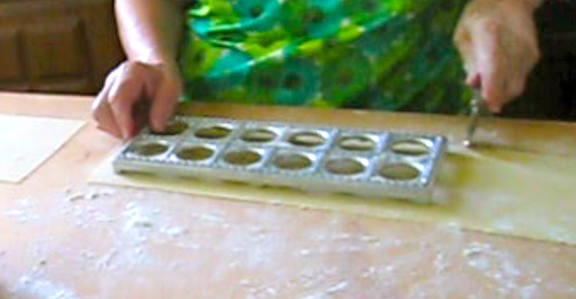
Step One: Cut dough strips into die-sized sheets

*     *     *

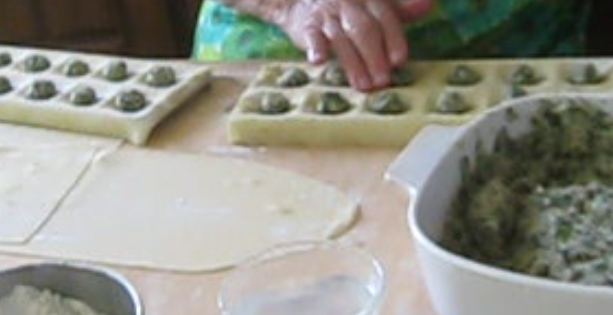
Step Two: Cover the die with a dough sheet

*     *     *
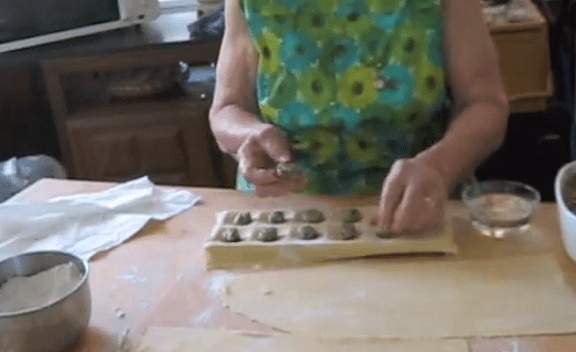
Step Three: Place filling across the die

*     *     *

Step Four: Use dampened fingers to moisten ravioli “walls.”

*     *     *

Step Five: Cover filled die with another dough sheet

*     *     *
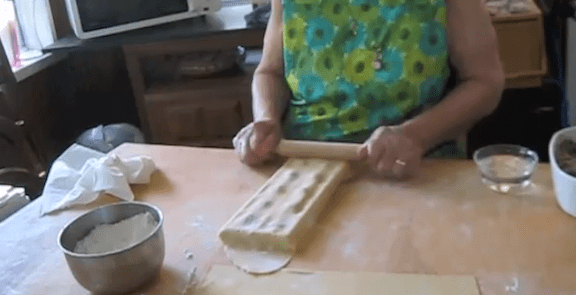
Step Six: Use a rolling-pin to seal the ravioli

*     *     *

Step Seven: Trim the excess dough

*     *     *

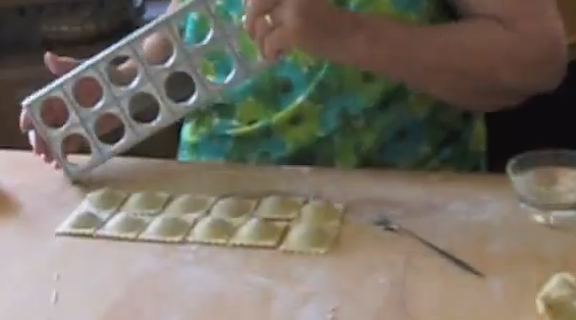
Step Eight: Flip the filled die

*     *     *

Step Nine: Unmold the ravioli

*     *     *

Step Ten: Lightly puncture the ravioli, meat-filled only

*     *     *

To Cook

  1. Bring a large pot of salted water to a rolling boil.
  2. Add the ravioli, return to boil, then reduce and simmer gently. (If boiled too hard, the ravioli may burst.)
  3. Ravioli normally take 5 – 8 minutes to cook, a couple of minutes more if frozen. Cooking times may vary depending upon the thickness of your dough, the filling, the size of the pot, etc. Taste one to insure they are done to your liking.
  4. Once the ravioli are cooked, carefully drain using a colander or sieve. You can use a Bolognese-style sauce or go meatless.

*     *     *

Variations

The method I’ve described is by no means the only way to make ravioli at home. Check out the Rufus’ Food and Spirit Guide to see Greg make ravioli completely by hand, similar to the method Mom employed but on a smaller scale. You can also see a slightly more modern approach by going to Sweet Caroline’s Cooking. With Thanksgiving just around the corner, her recipe for butternut squash ravioli couldn’t be better timed. Lastly, in an upcoming post, I’ll show you yet another method for making stuffed pasta.

Notes

You’ll note that Step Ten instructs that only meat-filled ravioli should be lightly punctured. This should be done if you intend to freeze the pasta. Doing so will allow any air sealed within each raviolo to escape during the cooking process. Too much trapped air will cause the raviolo to, in effect, balloon and it may burst before the filling can thaw and cook. We use the tines of a cocktail fork to do this but we don’t puncture cheese-filled ravioli. The cheese filling will often leak through the puncture holes. Try to fill each pillow with as much cheese filling, and as little air, as possible. This “balloon effect” should not be a problem if the ravioli are fresh (not frozen) when cooked.

Although not especially difficult, this is a time-consuming process. I’d recommend that you make enough for a couple of dinners and that you freeze what you won’t be using immediately that day. It’s easy enough. Place your freshly made ravioli in a single layer on lined baking sheets and into your freezer. 2 to 3 hours later, place the now frozen ravioli into bags or containers and return to the freezer. When needed, do not thaw before placing into boiling water, reduce to soft simmer, and cook till done to your liking, normally a few minutes longer than if freshly made.

And for heaven’s sake, keep an eye on Max at all times!

*     *     *

Spaghetti Aglio e Olio

Of all the pasta dishes one might make, spaghetti aglio e olio (spaghetti with garlic & oil) is, by far, the easiest to prepare. Ready in minutes, at its most basic, there are but 3 ingredients to this dish: pasta, garlic, and olive oil. That’s it. Now, understandably, there are many variations to the dish, the most common involve adding grated cheese (romano or parmesan)  and/or chopped red pepperoncini or pepper flakes. I am firmly planted on the side of those who love their pasta aglio e olio served with a few red pepper flakes and a good dusting of grated cheese. Still, even after adding these 2 ingredients, you can see that this is a most uncomplicated dish.

As a young adult still living at the old two-flat, I’d come home after a night out with the boys and, while they were in a drive-thru waiting for their sack o’ sliders, I was already fixing myself a plate of aglio e olio. One of those nights, as I was eating, Zia’s husband, “Uncle,” came down the back stairs to see what I was cooking. After a brief chat, he went back upstairs. A week or two later, the same thing happened but, this time, he mentioned how quickly I had prepared the dish. Realizing the implication, I was ready for him the next time. A couple of weeks later, after a night spent carousing with friends, I set about to make my late night dinner, only this time I slowed things down a bit. Sure enough, Uncle appeared but this time I was just about to add the pasta to the boiling water (butta giù in our house’s parlance). I added enough spaghetti for two and within minutes we were enjoying a late night snack together. We “dined together” several times after that and I always knew that if he didn’t appear by the time I was ready to butta giù, I would be dining alone. To this day, I cannot have a dish of pasta aglio e olio without thinking of those late night dinners together.

Throughout the years, this simple dish has continued to serve me well. After a 10 hour day at the office, I would arrive home and prepare a plate of aglio e olio within minutes. On those days/nights that I tended bar, a dish of this pasta officially marked the end of my day. Even now, if I don’t feel like cooking, I can whip up a batch of spaghetti aglio e olio in a fraction of the time it would take to have a dinner delivered. And I still find it every bit as satisfying as I did those many years ago, although, admittedly, Max is hardly the conversationalist that Uncle was.

*     *     *

Spaghetti Aglio e Olio Recipe 

Ingredients

  • 1 lb spaghetti (cappellini, spaghettini, linguine, or trenette may be used)
  • 1/2 cup extra virgin olive oil
  • 3 – 6 cloves of garlic, diced
  • 1/2 to 1 tsp red pepper flakes or 1 red peperoncino, diced (optional)
  • 1/2 cup grated cheese, separated – romano or parmesan may be used (optional)
  • reserved pasta water
  • chopped parsley, for garnish (optional)
  • grated cheese for serving (optional)

*     *     *

*     *     *

Directions

  1. Bring a large pot of heavily salted water to boil. Add the spaghetti and stir.
  2. Check the spaghetti package’s cooking instructions. About 3 minutes before the spaghetti is supposed to be cooked al dente, begin heating the oil in a deep frying pan. Add the pepper flakes (or peperoncino) & garlic and sauté until the edges of the garlic just begin to turn brown, no more than 2 minutes. Do not allow the garlic to brown completely or, worse yet, to burn. Your pasta should be ready about now.
  3. Reserve 1 cup of the pasta water, strain the pasta, add it to the frying pan, and stir to combine and to coat the pasta.
  4. Add a few ounces of the reserved pasta water to the pan with the pasta, more as needed. Allow the pasta to finish cooking, to your liking.
  5. Before serving, take the pan off of the heat, add all but 2 tbsp of the cheese,  and mix until well coated. Garnish with parsley & the remaining cheese. Serve immediately.

*     *     *

Variations

Since the recipe just presented already modified the original dish to include grated cheese and red pepper flakes, why stop there? About a year ago, I realized that I hadn’t any cheese — Gasp! — after I had already added my pasta to the pot of boiling water. Remembering what I’d seen on a number of cooking shows, I quickly tossed some bread crumbs into a frying pan, added the parsley that was to have been a garnish, and toasted the combination. When my pasta was ready to be served, I topped it off with the toasted bread crumbs — and I’ve done it many times since, sometimes with cheese, sometimes without. As it turns out, using bread crumbs in place of cheese is a Sicilian custom, as Ambrosiana recently verified. (Speaking of Ambrosiana, be sure to check out her blog, Tales of Ambrosia. Not only will you find great recipes & dishes, beautifully photographed, but you’ll be treated to scenes of an Italy that the tour books have yet to discover.)

*     *     *

A Zucchini for Your Penne

For the last 10 weeks, or so, my weekends have begun with an early Saturday morning trip to the Evanston Farmers Market. (Sunday mornings are reserved for the Skokie Market.) Granted, my purchases have changed now that Summer is ending but one vegetable I rarely go home without is fresh zucchini. Whether I serve it within Mom’s caponata, stuffed like Grandma’s eggplant, sautéed with onion in olive oil, or served with pasta, a week doesn’t go by without zucchini making at least one appearance at my dinner table. So, when I recently watched Jamie Oliver prep zucchini and yellow squash for a penne dish, I sat up and took notice.

Normally when I prepare these 2 vegetables for my pasta dish, I either cut them into quarter-inch disks or shred them with my food processor. Jamie took them and, with a few simple cuts, fashioned them into penne look-alikes, and then prepared them carbonara-style. You can see his recipe here. I, however, prefer my carbonara cooked the more traditional way, so, I’ve chosen to cook these aglio e olio, with garlic and oil. (Coming soon: the recipe for spaghetti aglio e olio.) You may have a favorite way of fixing zucchini with pasta and I see no reason for you to change now. This post isn’t so much about how to cook the zucchini as it is how to prepare it. Even so, I’ve included general guidelines that I followed when I cooked the dish.

To begin, I selected 2 zucchini and 2 summer squash, each about 6 inches long, to be cooked with 1/2 pound of penne. You can easily see how you can increase or decrease the ratio of vegetables to pasta according to you own preference. Once that was decided, I started preparing the veggies as pictured below. Briefly stated, cut them into quarters; trim away the seed-filled center; and cut, diagonally, into penne-sized strips.

Clever, no? Anyway, to cook, add penne pasta to a pot of salted, boiling water. The package instructions for the penne I used stated the penne would be ready in 13 minutes. As a result, I planned to drain the pasta after cooking for about 10 minutes. So, once the penne is in the water and it has returned to the boil, start the clock. At the 5 minute mark, add about 3 tbsp extra virgin olive oil into a deep frying pan over medium-high heat. Once hot, add 1 or 2 minced cloves of garlic and sauté for about 30 seconds. Add the zucchini and yellow squash, season with salt & pepper, and continue to sauté until the 10 minute mark. Reserve some of the pasta water, drain the pasta, and add the pasta to the pan with the vegetables. Continue to sauté until the pasta is cooked to your liking. Add some of the reserved pasta water, if needed. When cooked al dente, remove from heat and mix in 1/4 cup grated parmesan cheese. Serve immediately, garnished with more cheese and chopped fresh parsley.

As I’ve mentioned, the point here is the preparation of the zucchini and summer squash. If aglio e olio isn’t for you, this dish could just as easily be prepared with a cream or marinara sauce, instead. For the latter, I would sauté the zucchini and summer squash in a little butter, timing them so that they’d be cooked to my liking when the penne is cooked al dente.  Mix the vegetables with the cooked penne and dress both with the marinara. Garnish with a little grated cheese and some chopped parsley before serving immediately.

*     *     *

Chicken gizzards? No way!

Admittedly, dishes featuring chicken gizzards are a hard sell and some of you will go no further than the picture above (Just click HERE, Cynthia.) and that’s fine.  Believe me, the majority of my family will be going with you. Since this blog was conceived as a means of recording and sharing my family’s recipes, however, I’d be remiss if I failed to mention these two. Who knows? Some future Bartolini Clan member may wish to know how to cook chicken gizzards and they won’t need to look any further than right here.

Mom and Zia were little girls when the Great Depression struck and our family, like so many others, was hit hard. By all accounts, these were lean times and our Grandparents struggled to put food on the table and keep a roof over their heads. Both Bartolini Girls marvel(ed) at how Grandma could make a single chicken last a full week, feeding a family of four in the process. Well, that’s when she could get a chicken. Both of today’s recipes come from that time. Mom often served us the first, a side dish of peas with gizzards, when I was growing up. No need to explain why it wasn’t an especially popular dish with my siblings. The second is a pasta dish that I “created” on my own. I remember telling Mom about it and, somewhat surprised, she recalled that Grandma used to make the same dish. Zia has mentioned that, as well. Since neither had ever mentioned or served me this pasta, I think it’s a sign that Grandma wants this dish prepared and, by sharing it here, I’m just doing my part to see that her wish is carried out.

I can’t speak of packaging during the Depression but, in today’s markets, one can usually find chicken gizzards and hearts sold together in 1 pound containers. Once cleaned and trimmed, I’ll divide them, with a quarter being reserved for the peas dish and the rest for pasta. One of the 2 portions will be set aside, even frozen, for later use. Cooking these meats can be a little tricky. To brown them like one would, say, beef chunks for stew, will render them nearly inedible. That shouldn’t be a problem if you follow the steps outlined in the recipes that follow.

*     *     *

Peas alla Nonna Recipe (aka Chicken Gizzards with Peas)

Ingredients

  • 5 or 6 oz chicken gizzards & hearts, cleaned and trimmed
  • 1/2 small onion, divided in halves
  • water
  • 1 tbsp olive oil
  • 2 tbsp butter
  • 1 plum tomato, chopped
  • 2 cups frozen or fresh peas
  • pinch of cloves
  • salt and pepper, to taste

Directions

  1. Place gizzards, half of the onion, and enough lightly salted water to cover into a medium saucepan, Cover, bring to a boil over med-high heat, and reduce to a soft simmer. Cook for 1 hour, checking periodically to ensure enough water remains. At the end of an hour, pour the pan’s contents through a strainer, discarding the onion and stewing liquid.
  2. Slice the remaining onion portion and roughly chop the stewed meat.
  3. In the same pan, heat oil and butter over medium high heat. Return gizzards to the pan, along with the sliced onion, and sauté until the onion is soft and translucent.
  4. Add tomato and sauté for a minute before adding peas, cloves, and a few tbsp of water to the pan. Season with salt and pepper, cover, and cook about 5 minutes or until peas are done to you liking.
  5. Serve immediately.

*     *     *

Pasta with Chicken Gizzards Recipe

Ingredients

  • 12 – 16 oz chicken gizzards & hearts, cleaned & trimmed
  • 2 tbsp extra virgin olive oil
  • 1/2 onion, chopped
  • 3 cloves garlic, minced
  • 1/2 cup dry white wine
  • 2 to 3 tbsp tomato paste
  • 1 large (28 oz) can tomatoes, whole or diced
  • 3 tbsp fresh parsley, chopped
  • 1 lb pasta, cooked to not quite al dente
  • grated parmesan cheese
  • salt and pepper, to taste

Directions

  1. Heat oil in a deep skillet over medium heat. Add gizzards and cook for 5 minutes. Do not allow to burn.
  2. Add onion, season with salt and pepper, and cook until translucent.
  3. Add garlic and sauté for 1 minute before adding the wine. Cook until almost all the wine has evaporated.
  4. Add the tomato paste and sauté for 1 to 2 minutes. Add parsley and tomatoes. If using whole tomatoes, tear them apart before adding to the pan. Season with salt and pepper.
  5. Bring to a boil, cover partially, and reduce to a soft simmer.
  6. The sauce should cook for 45 minutes. Check the pasta’s package directions and time its cooking so that the pasta is about 2 minutes shy of being al dente when the sauce is ready.
  7. Reserve some of the pasta water before adding the pasta to the frying pan. Mix well and continue cooking until the pasta is done to your liking. Add some of the reserved pasta water to the pan if the pasta becomes dry during this last step of the cooking process.
  8. Serve immediately, garnished with the grated parmesan cheese.

*     *     *

Notes

And so ends our treatment of chicken gizzards and hearts. Oh, don’t you worry. We’ll be coming back to these ingredients when the Bartolini Family Risotto recipe is shared. That won’t be for a while, however, so, all you chickens out there can rest easy. Your giblets are safe — for now.

*     *     *

Pasta with Shrimp

Having just returned from a visit with Zia, I decided I had better jot down this recipe while it was still fresh in my mind. This is one of those dishes that I never really think about while I’m preparing it. It just kinda happens. Besides, this wasn’t even the dinner I had planned.

I had intended all along to make  Trenette al Salmone for Zia during my visit. I should have brought smoked salmon with me but I was sure that I could get some in her area’s stores. Well, guess again. I went to her local groceries — “local” meaning 15 and 25 miles away, respectively, in opposite directions — and neither had smoked salmon. One of the stores happened to be running a special on large shrimp (25 – 30-ct), so I bought some and, under her watchful eye, I prepared dinner for us that night.

Like the smoked salmon dish, this is an easy meal to prepare. I prefer to use large, raw shrimp that are peeled, cleaned, and with tails removed. I cut them in half because they are otherwise too large to be eaten with pasta in a single bite, not to mention the larger the shrimp, the fewer to clean and prep. Where this dish differs from that of the smoked salmon, however, is that shrimp have a strong enough flavor that they won’t be overpowered by diced onion and garlic in the sauce. But for the onion and garlic, the same basic cream sauce is used in both dishes and neither uses cheese, as well. Remember, Italian recipes rarely, if ever, use cheese when seafood is a primary ingredient.

*     *     *

Pasta with Shrimp Recipe

Ingredients

  • 1/4 cup (1/2 stick) butter
  • 1 medium onion, chopped fine
  • 2 cloves garlic, minced
  • 1 cup heavy cream
  • 1 lb large (25 – 30 ct) shrimp, cleaned, peeled, tails removed, cut in half
  • 1 lb cooked thin spaghetti
  • 3 tbsp fresh parsley, chopped, separated
  • salt & ground white pepper, to taste
  • reserved pasta water

*     *     *

*     *     *

Directions

  1. Melt butter in a large, deep frying pan over med-high heat.
  2. Add onion and sauté until soft, about 3 minutes.
  3. Add garlic and continue sautéing for another minute.
  4. Add shrimp and sautéing for about 2 minutes. Shrimp should not be thoroughly cooked at this point.
  5. Add the cream and allow shrimp to finish cooking as the cream reduces slightly, about 2 – 3 minutes.
  6. Season with 2 tbsp of the parsley before adding the cooked spaghetti to the pan. Mix until the pasta is well-coated. If necessary, add a little of the reserved pasta water. Taste the dish and season with salt & pepper.
  7. Garnish with remaining tbsp of parsley and serve immediately.

Variations

You will find that different pastas, be they fresh or dried, absorb sauces at different rates. Reserving some of the starchy pasta water will help you deal with a “thirsty” batch of noodles or a sauce that was simmered too strongly and is a little dry. Not only that but the water, being starchy, can be used as somewhat of a thickening agent. Just bear in mind that the water is heavily salted, so, go easy on the salt until after you’ve added the pasta water.

*     *     *

Brodetto

doubt there’s a European fishing community that doesn’t have its own version of fishermen’s stew. The Italians call it brodetto, the French bouillabaisse, and the Portuguese refer to it as caldeirada. Even in the this country, San Francisco is well-known for its cioppino — the real “San Fransisco treat,” in my book. Although some of the ingredients may vary by country and region within each country, the dish’s origins are often the same. The village fishermen would gather together at the end of a very long day and into a large pot they would add whatever fish that hadn’t been sold, a few vegetables, some spices, and a little wine. A short while later, with some crusty bread in hand, each would sit back and enjoy a feast among friends, no doubt filling the night air with tales of the ones that got away.

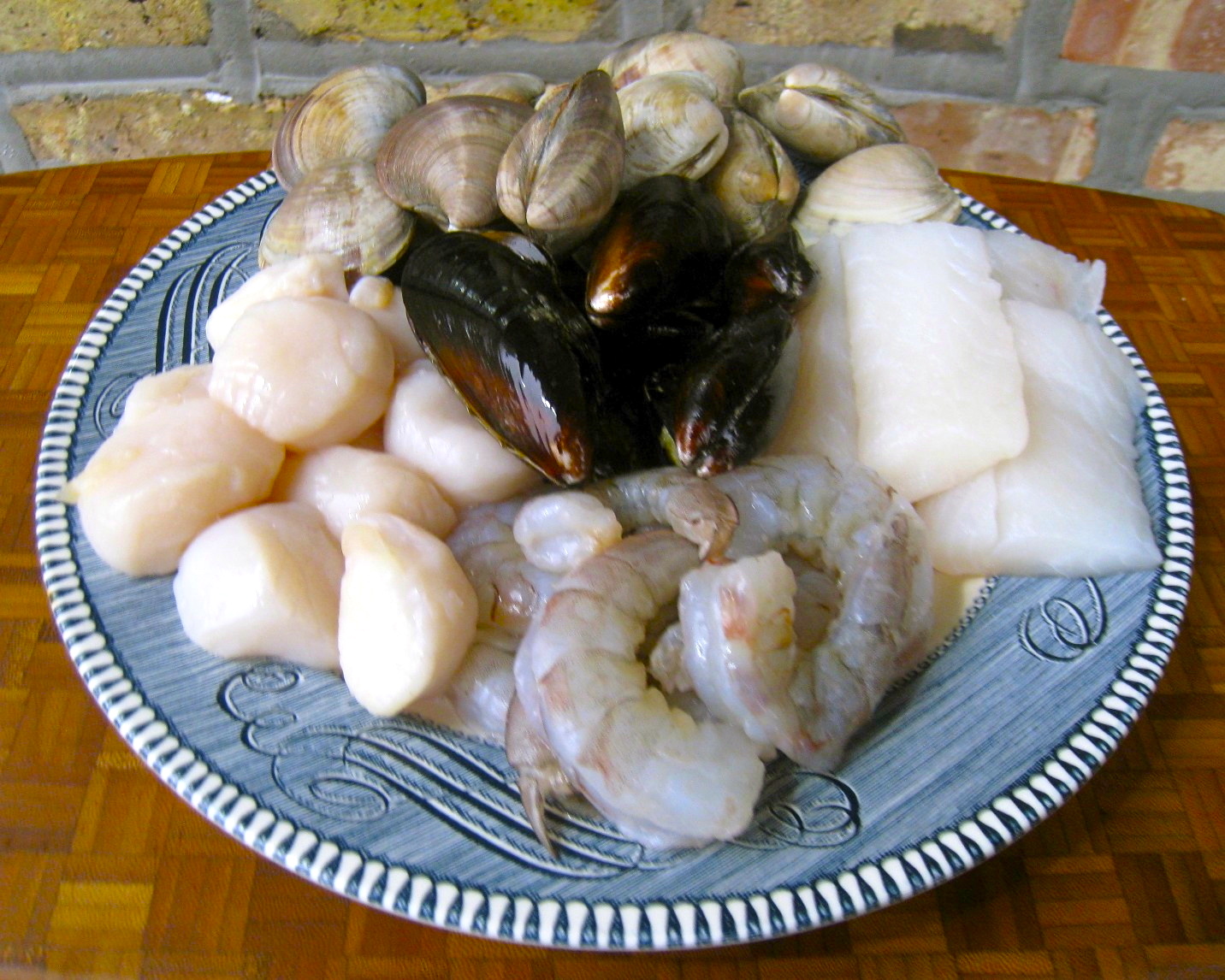
Living in Chicago, we have a wide assortment of seafood available, some of which is fresh while the rest has been flash frozen for shipment here. Although I prefer fresh, I will buy frozen and usually have shrimp and a variety of fish fillets in my freezer. If I see a sale somewhere for fresh mollusks, be they little neck or manila clams, mussels, or cockles, I’ll buy some, along with some scallops, and that night’s dinner will be brodetto. The recipe I’ll follow then is the one that I’m going to share with you now. And just like the stew the old fishermen threw together, the amount and types of seafood in my brodetto may vary but the basics remain the same. Fish, mollusks, and shrimp are added to a simple tomato broth flavored with a few herbs, garlic, and wine. Serve it in a bowl with some crusty bread, like ciabatta, and you’ll have a spectacular dinner, as well as a new-found respect for those fishermen of old.

*     *     *

Brodetto Recipe

Yield: 6 generous servings

Ingredients

  • 3 tbsp olive oil
  • 1/4 to 1/2 tsp red pepper flakes
  • 1 medium onion, chopped
  • 3 cloves garlic, minced
  • 3 tbsp fresh parsley, chopped
  • 1 cup stock (fish, clam, vegetable, or chicken)
  • 1 cup dry white wine
  • 1  large can (28 oz) whole or large dice tomatoes. (or 8 to 10 fresh plum tomatoes, peeled, seeded, and chopped into large pieces)
  • 3 or 4 stems of fresh thyme
  • 1/2 tsp Italian seasoning
  • 18 little neck or 24 manila clams or cockles
  • 1 doz mussels
  • 3/4 lb large shrimp
  • 1 doz scallops
  • 1 – 1 1/2 lbs fish fillets, cut into large, equal sized pieces (cod, haddock, halibut, striped bass, pollock, red snapper, or any combination may be used)
  • salt and pepper
  • 2 tbsp fresh basil, chopped, for garnish
  • extra virgin olive oil, for garnish

Directions

  1. At least an hour before you start cooking, scrub all the mollusks with a brush and soak the clams and cockles in cold water. Change the water at least once in the next hour. If using mussels, before scrubbing, grab hold of the “beard” and pull to remove. Keep cold until ready to cook.
  2. Once the mollusks have been sufficiently soaked and cleaned, heat olive oil in a large saucepan over med-high heat. Add red pepper flakes and cook for 1 minute.
  3. Add onion and sauté until translucent, about 5 minutes. Season lightly with salt and pepper.
  4. Add garlic and parsley and continue sautéing for another minute or so.
  5. Add stock and wine, using the liquids to deglaze the pan.
  6. Add the tomatoes. If using canned whole tomatoes, use your hands to tear the tomatoes before placing the chunks into the pan. This is a stew, not a sauce. Large chunks are preferable.
  7. Add thyme and Italian seasoning. Season lightly with salt & pepper.
  8. Bring pot to the boil, reduce heat to med-low, and simmer for 30 to 40 minutes. If stew becomes too dry, add water or stock.
  9. Increase heat to med-high, add clams and/or cockles and cover the pan.
  10. After about 3 minutes, add the mussels and cover.
  11. About 3 minutes later, place the shrimp atop the mollusks and return the cover to the pan.
  12. 2 minutes later, add the scallops and cover the pan.
  13. About a minute later, add the fish to the top of the stew, cover the pan, and cook until all is done, about 3 or 4 minutes.
  14. Serve immediately in large bowls, garnished with a sprinkling of good quality extra virgin olive oil and freshly chopped basil. Be sure to have plenty of good, crusty bread available.

Notes

The recipe I’ve just shared is by no means set in stone. I imagine that the fishermen of long ago weren’t too strict about their ingredients. I think their only concerns were that the seafood was fresh and the wine plentiful. The rest took care of itself. Today, recipes abound and it’s not just the seafood that varies from one recipe to the next. Oftentimes vegetables will be added to the stew, with bell peppers, fennel, and potatoes frequently mentioned. Some cooks will start the recipe by creating and sautéing a soffritto of chopped onion, celery, and carrot. What does all this mean for you? Well, do you have a preference for, say, crab claws? Then add them to the mix. Don’t like mussels? Don’t use them. Want more of a vegetable base for your stew? Then start with a soffritto and add whatever veggies you like. In short, indulge your palate and make the recipe your own.

*     *     *