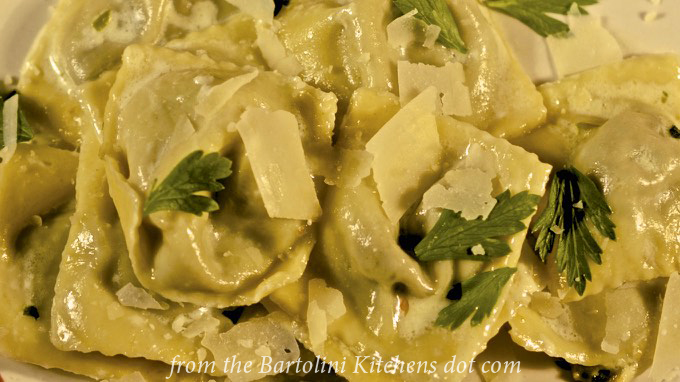
My Uncle’s Pasta (aka Cacio e Pepe … whatever!)

Being today is George Washington’s birthday, I’ve decided to come clean. Understand that there is no easy way for me to say this, so, I’m just going to blurt it out. I lied to you. Well-intentioned though I was, I nevertheless gave you false information. And, what’s worse, I did it not once but twice. Now, before you grab torches, gather en masse, and storm Chicago looking for me — by the way, if you do, be sure to take the Dan Ryan (hehehe) — let me explain …

*     *     *

  *     *     *

Back in October, 2010, my first real post was the recipe for Pasta in Bianco and, at the time, I said it was about the easiest pasta dish to make. And it is … sorta. Then, a year later, I shared the recipe for Spaghetti Aglio e Olio which I described as being “by far, the easiest (pasta dish) to prepare.” Well, it is … kinda. The truth is that there is a 3rd dish, an even easier dish to prepare, a dish that for decades I’ve prepared for myself and enjoyed as my own personal creation and that reminded me of Uncle. That is, until a few weeks ago when I found an authentic recipe that is identical to “my” recipe for Uncle’s Pasta. I could ignore it or, worse yet, try to convince everyone that my recipe is the original but, c’mon.  I’ve just confessed to 2 lies, committing a 3rd lie — especially one so obvious — would serve no purpose other than to further grease my path into Hades. So, I’ll take the high road and explain how I came upon this dish and, in an effort to make amends, I’ll throw in a little info on yet another obscure pasta, to boot.

Living in the old two-flat, there were many dinners where the families ate together and very often some form of pasta was served. My Uncle, like most, enjoyed grated cheese atop his pasta but, what set his plate apart from everyone else’s, was his love of black pepper. To my eye, he used more pepper than anyone seated at the table. Well, for this youngster, the aroma of grated Pecorino Romano mingling with the scent of freshly cracked pepper was intoxicating, made even more so because I was considered too young to have access to the pepper shaker. (As an unexpected benefit, however, when the nuns spoke of the Garden of Eden, I understood all too well Eve’s desire for the Forbidden Seasoning Fruit.) Well, I eventually grew up, as most young boys tend to do, and was finally able to add as much pepper to my pasta as I wanted — and I did. But wait, there’s more to this story because, up until now, I could have been talking about any pasta dish. I need to narrow the field a bit.

Once I moved away, I lived with a number of roommates until I could finally afford a place of my own. Back then, having a well-stocked pantry was not exactly high on my priority list. Let’s be honest, if not for “tissue”, coffee, and cat litter, I probably wouldn’t have seen the inside of a grocery for months at a time. Now, I’ve already blogged about my love for, and reliance upon, Spaghetti Aglio e Olio, pasta made with garlic and olive oil, but there were times when I didn’t have any olive oil. What to do? Well, I made my pasta without it, adding a bit more cheese, a couple more sprinkles of pepper, and some pasta water in its place. Moments later, I’d be seated at the dinner table where, with a single whiff, I was 6 years old again watching Uncle shower his pasta with pepper. So, for some 30 years, I’ve made this pasta, not just when out of olive oil but whenever I needed a pasta fix and the nostalgia bug hit me.  Over time, this pasta came to be called Uncle’s Pasta in my mind because its aroma reminded me of his plate during those family dinners of long ago.

*     *     *

I'll re-visit this picture when WordPress becomes scratch & sniff-enabled.

*     *     *

With that in mind, you can well imagine my surprise when, a few short weeks ago whilst I was looking at pasta cutters, I learned that the people of Rome, and its district of Lazio, make a pasta called Cacio e Pepe, Cheese and Pepper, that is exactly like my Uncle’s Pasta! Now, rather than become bitter, I’ve decided to rise to the occasion and to turn this into a teaching opportunity. You see, the night that I became aware that the Romans had plundered my childhood memories and stolen my pasta recipe,  I was looking at a pasta maker called the chitarra. Italian for “guitar”, a chitarra is shirt box-sized with many wires or cords stretched, lengthwise, from one end to the other. A freshly made pasta sheet is laid on top of the “strings” and a rolling-pin is used to forcefully push the dough sheet through them to create pasta noodles. Although the width between the strings may vary from chitarra to chitarra, when they are set close enough together so that the distance is the same as the width of the pasta sheet, the result is a square-shaped pasta called tonnarelli. Often as thick as spaghetti, tonnarelli, not so coincidentally, are often used to make Cacio e Pepe. Never seen ‘em? Guess again.  One very common “fresh” pasta’s cappellini is, in fact, tonnarelli. If you own a pasta machine, chances are it makes 2 types of pasta. The packaging will name the smaller of the 2 as being either cappellini or spaghetti. Um … no. One very popular stand mixer’s pasta cutter is advertised as making angel hair pasta. Again … no! These cutters are incapable of making a round pasta noodle and both cappellini and spaghetti are, in fact, round. If it’s a thin, square-shaped pasta, it’s tonnarelli. Now, if the pasta from your smallest cutter isn’t quite square, that’s probably because the pasta sheet wasn’t the same thickness as the cutter’s width. If you’re so inclined, vary the pasta sheet’s width and you’ll get your square tonnarelli.

My point isn’t to make sure everyone that sits at my dinner table, or that reads this, can identify the pasta set before them. No, not at all. It is to illustrate just how seriously the Italians take their pasta. For many, Emilia–Romagna is the home of Italy’s best pasta makers, with Bologna as its capital. True pasta aficionados from that region will claim that they can tell whether the pasta dough is rolled by hand or machine, with a wooden versus a steel rolling-pin, on a wooden board versus a stainless steel or marble counter top, etc., etc., etc. My father, when he saw Mom preparing to make pasta that day, would remind her to roll it out by hand as he left for work. Mom always assured him she would — and then got out the pasta machine before his car had made it to the end of the block. When dinner was served, could Dad tell the difference? Who knows but, like any loving husband, he knew when to keep quiet.

Wow! Such a long post for so simple a dish to prepare. I won’t be giving this recipe the full treatment because, frankly, it would be a waste of time. All you need is some pasta, freshly made is preferred but boxed spaghetti will do nicely; hot pasta water; some grated cheese, Pecorino Romano if possible; and freshly cracked/ground pepper.  I won’t be giving ingredient amounts because they will all depend upon the number of servings to be prepared and your own taste. You may not be as enamored with pepper as am I, after all.

While your pasta is cooking, warm the serving bowl. This can be done by pouring hot water from a tea kettle or via the tap. Once the pasta is cooked to your liking, reserve a  cup of the boiling pasta water before draining the pasta. No need to drain it fully. In fact, it’s better if you don’t. Work quickly now. Place the cooked pasta into the now-warmed serving bowl and season it very generously with the grated Pecorino Romano cheese. (Parmesan may be substituted.) Mix the pasta, adding more pasta water, a little at a time, so that it combines with the cheese to create a sauce-like dressing for the pasta. If it’s too dry, add more water; too wet, add more cheese. Once the pasta is evenly coated, add some pepper and stir. Remember, the dish is called Cacio e Pepe for a reason.

*     *     *

*     *     *

With your pasta now appropriately dressed, serve it on warmed dinnerware.  Garnish each serving with a generous sprinkling of grated Pecorino Romano and another dusting of pepper. Now, before you sample this testament to simplicity, take a moment to savor the fragrances of freshly grated cheese and newly cracked pepper wafting up from your plate. Nothing more need be said.

*     *     *

Posted in Family Recipes, Pasta/Rice/Soups (Primi Piatti), Vegetarian | Tagged , , , , , , | 86 Comments

Sis’s Soup with Little Meatballs (Minestra con Polpettine)

You might recall that last December, I demonstrated how to make quadretti, a small, square-shaped pasta. At some point, I mentioned Mom using this pasta in soup to nurse me back to health but that my Sister remembered differently. She recalled Mom serving broth filled with Acini di Pepe, “sick soup”, whenever she was ill. Well, since Monday was Sis’s birthday, why not share the recipe for her sick soup?

Soup made with Acini di Pepe is not a Bartolini tradition. Oh, sure, it was served plenty of times at the old two-flat but it wasn’t made from a recipe that had been handed down from one generation to the next. It came to us, oddly enough, from the Mother of my 5th grade teacher. Mr. D was from Upstate New York and my class was his first in Detroit. In fact, he arrived in my hometown barely 1 week before school started that September. Mr. D wanted to introduce himself to the parish and to our parents so, once classes started, he visited the home of each of his students. He chose the families alphabetically, making mine the second home he entered. And as was so often the case with newcomers who entered the two-flat, he hung around for a number of years — make that decades — afterwards. (There was a similar phenomenon in our backyard that involved Grandpa, our neighbors, and the Parish priests but I’ll save that for another post.) Eventually, Mr. D migrated upstairs, becoming good friends of Zia and Uncle.  At some point, and I do not recall how much time had transpired, his Mother and Aunt came to Detroit for a visit. It wasn’t long before they, too, became ensnared in the two-flat’s web of conviviality. Well, as luck would have it, both women were good cooks and during subsequent visits, recipes were traded. One of the very few recipes to survive is today’s minestra, Acini di Pepe with meatballs. (It took a while but I got us here.)

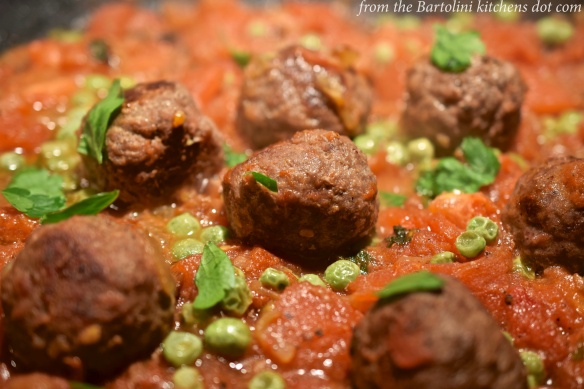
Acini di Pepe is a small, bead-like pasta that expands during the cooking process, much like couscous. Mom served it to Sis when her tummy was upset, just as she served me quadretti. As was her way, Doctor Mom started with broth only and gradually added increasing amounts of Acini di Pepe to the broth as Sis’s condition improved. The meatballs, polpettine, were never used for medicinal purposes. No, they were served when everyone was well and seated at the dinner table. And did we ever enjoy them. The lemon zest in the polpettine, when mixed with a hint of nutmeg, take this simple soup to an entirely different level. Now, if Acini di Pepe isn’t “your thing,” I strongly suggest you make the polpettine and use them with whatever pastina you prefer. Trust me. You won’t be disappointed.

Oh, yeah. Happy Birthday, Sis!

*     *     *

Acini di Pepe with Meatballs Recipe

Ingredients

For the polpettine

  • 1/2 lb ground veal
  • 1/4 cup grated cheese, pecorino romano preferred
  • 1/2 cup plain bread crumbs
  • 1 large egg, slightly beaten
  • 1/8 tsp nutmeg
  • zest from 1/2 lemon
  • 2 tbsp fresh parsley, chopped
  • salt & pepper, to taste

For the minestra

  • 2 quarts homemade chicken stock (low-sodium store-bought may be substituted)
  • 1 cup Acini di Pepe, uncooked
  • additional grated pecorino romano

*     *     *

*     *     *

Directions

To make polpettine

yield : approx. 100 polpettine, divided, half to be frozen for later use

  1. Place all the ingredients into a bowl and mix until combined. Do not over-work.
  2. Use a melon baller or small scoop to fashion small meatballs. (See Notes below.)
  3. Divide all the polpettine into 2 halves and place each on separate baking sheets.
  4. Place one baking sheet into the freezer and, once frozen, place the polpettine in a container, return to the freezer for use on a later date.
  5. Use the other half as indicated below.

To make the minestra

  1. Bring the stock to a rapid boil.
  2. Add the Acini di Pepe, stir, and then add the remaining half of the polpettine.
  3. When stock returns to the boil, reduce to a medium simmer and cook for about 10 minutes. Stir often but gently so that the polpettine remain intact.
  4. At the end of 10 minutes, taste the minestra to see if the pasta is cooked to your liking and to adjust seasoning, if necessary.
  5. Serve immediately. Have plenty of grated pecorino romano cheese available at the table.

*     *     *

Notes

Polpettine are meant to be relatively small. One polpettino should easily fit upon a soup spoon with plenty of room left for pasta and broth. Although this recipe yields about 100 meatballs, I prefer to use only about half that amount in a 2 quart pot of soup. Of course, you may use more or less depending upon your own preference.

*     *     *

And Now for the Awards Portion of  Today’s Presentation

Over the past few weeks, I’ve been lucky enough to have received a few awards from members within our blogging community. And lest anyone think that I do not appreciate these wonderful gifts, I wanted to make sure that each was acknowledged.

*     *     *

So, to Marie, of My Little Corner of Rhode Island, I say thank you for generously nominating me for the Kreative Blogger Award.

*

*

*     *     *
To Kathryn, of kiwsparks, and Eva, of Kitchen Inspirations, I say thanks for your thoughtfulness in granting me The (Red) Educational Shoe Award. (And to Greg: You’ll just have to wait before you get to see me in stilettos, be they red or some other color.)

*

*     *     *

Finally, to Roger, of Food, Photography, & France, mere words cannot express the depth of emotion that I experienced upon learning you had nominated me for the Sunshine Award.

*

*
*

*     *     *

OK, I know that I’m supposed to answer a variety of questions or volunteer some facts about myself and I must admit to enjoying reading others’ replies. The truth of the matter is, however, that I’m not all that interesting. I am no onion with many layers to be pulled back revealing inner truths. There is no art in this choke. What you see is what you get — and what you get is pretty boring, at that. Besides, what little there is to tell is fodder for my future posts. If I tell you everything about myself now, whatever will I write about next time or the time after that?  And so, to those who truly wish to learn more about me, I say “Stay tuned … “

The next part of any award acceptance is to pass the award along to deserving individuals. Well, there are 3 awards to pass along and I don’t even know how many bloggers, in total, I am to name. I do know, however, that no matter how many good people I nominate, I will surely forget one person and, in all probability, quite a few more. I have been treated kindly by everyone I’ve met here and encouraged in more ways than I could ever enumerate.  I’d sooner quit blogging than hurt or offend any of those who have treated me so graciously. So, rather than nominate many, I shall only nominate one.

A relative newcomer, this blogging friend has taught me a great deal. By her example, I’ve learned that less is more. That silence is truly golden. That to just be yourself and the World will be yours to conquer. And so it is that I nominate, for the Kreative Blogger, The (Red) Educational Shoe, and Sunshine awards, none other than …

*

*

*

*

*

*

*

*

*

*

*

*

*

*

FLAT RUTHIE !!!!!

As soon as word of the awards became known, her friends carried her off to an impromptu party at Chicago’s Fondue Stube. Pictured above, Flat Ruthie is seen with one of her dearest of friends, Thing, as they await the arrival of the fondue pots. Oh, what a night!

So, congratulations Flat Ruthie! I for one, cannot wait to read your acceptance speech. (No fair helping her, 3D Ruth.)

And to Marie, Kathryn, Eva, and Roger, all joking aside, I am both honored and grateful for the awards you’ve sent my way. Mille grazie!

*     *     *

Posted in Awards, Family Recipes, Pasta/Rice/Soups (Primi Piatti) | Tagged , , , , , , | 104 Comments

The Bartolini Have Left The Building!

Yes, it’s true. The Bartolini kitchens have moved — for today only.

Recently, a blogger buddy, Jed, asked if I wouldn’t mind stopping by his place, sports-glutton.com, while he was away covering the AT&T Pro Am at Pebble Beach. Well, if there’s one thing you should know about this Bartolini, besides his undying love for pasta and intense hatred for spiders, is his fondness for travel. So, when Jed asked me to come for a visit, I couldn’t say “Yes!” fast enough. And I must say I love being here.

First and foremost, Jed’s is a blog about sports and sporting events. If something is happening within the World of Sports, Jed will take us there, not only reporting the event but explaining its significance in “the big picture.” This would be more than enough to keep most sports bloggers busy but not our Jed. In addition to these reports, Jed shares delicious recipes guaranteed to appeal to the glutton in all of us. Now, Jed understands that there’s more to life besides sports and eating.  So, he offers his critiques and ratings of select beers and wines in his Thirsty Thursday series of posts. And, finally, to help us all start our week off on the right foot, Jed serves up a little Monday Morning Humor each and every week.

Sporting news, tasty recipes, expert advice on beverage selection, and a bit of humor, sports-glutton.com has it all. So, please take this link to see my Pastistio Recipe and then take some time to look around and check out sports-glutton.com. You will not be disappointed.

Thanks, Jed, for giving me this opportunity to fill-in for you, even if only for a day. Oh! I almost forgot. It looks like someone broke into your wine cellar last night and stole a few bottles. They must have been real professionals because Max didn’t move all night long. Gotta run.

*     *     *

Posted in Pasta/Rice/Soups (Primi Piatti), Personal | Tagged , | 54 Comments

You Milk The Goat, I Make The Cheese

I came to making my own cheeses by a rather indirect path. Almost 4 years ago, on some cooking show, I watched as labneh was made by straining plain yogurt using coffee filters. I tried it, liked the result and then, following their lead, seasoned it with some herbs. I was so pleased with the end-result that I served it that Thanksgiving and it was well-received. Shortly thereafter, on another sleepless night, I was searching the web looking for more things to do with labneh when I stumbled upon one of the many cheese making websites. Soon I was jumping from site to site, surprised to learn how relatively simple cheese is to create depending, of course, upon the type you’re making — and I’ve been making a few select cheeses ever since.

With the right equipment, supplies, and environment, you can make almost any cheese. Living in the city, however, I cannot get many of the dairy products needed to make some cheeses. Neither do I have, nor am I going to build, a temperature-controlled room to age the hard cheeses that require it. So, right off the bat, I’ve eliminated most types of cheese — and that’s just fine. I’m very satisfied making just goat cheese, cream cheese, ricotta, mascarpone, and mozzarella. Besides, no matter how good the home-made parmesan, I don’t use nearly enough to make it worth my while to make some. (The Bartolini kitchens prefer Pecorino Romano, anyway, but try to find lactating sheep in Chicago.)

*     *     *

Goat Cheese Prepared with Herbes des Provence

*     *     *

Recently, when I decided to share my cheese making experiences, I mapped out a game plan starting with the easiest cheese to make. In my opinion, ricotta is that cheese, especially since my recipe is non-traditional, meaning not made from the whey created when mozzarella is made.  (Having made ricotta both ways, I’ll stick with the recipe I posted for reasons of both taste and ease of preparation.) Somewhere along the way I had planned to talk about making butter at home but Celi did such a good job with it that I’ll just send you to her kitchen’s garden for a look-see. So, having already shared the ricotta recipe and with the butter instructions out-of-the-way, that brings us to the next cheese in the schedule: goat cheese.

To make goat cheese, you begin by adding a little rennet to a combination of goat’s milk and cultured buttermilk. That mixture is gently warmed and then set aside to allow the formation of curds. Once formed, the curds are separated from the whey and the resulting goat cheese is ready for use in your favorite recipe, or, once salted and possibly herbed, can be used as a tasty spread. It really is that easy, as you’ll soon see.

If you are new to cheese making, before attempting to make this cheese, please refer to my Cheesy Stuff page. Chock full of cheesy details, it provides information about ingredients, cleaning/sterilizing equipment, spices & seasonings, a few tips, and sources for supplies and information.

*     *     *

Home-Made Goat Cheese Recipe

yield: about 20 oz. of cheese

Ingredients

  • 1/2 gallon goat’s milk (never ultra-pasteurized)
  • 1 pint (2 cups) cultured buttermilk (no substitutions)
  • 1/2 tablet rennet, dissolved in 1/4 cup distilled water
  • salt (optional, though strongly recommended)
  • herbs (optional)
  • olive oil (optional)

Directions

  1. Place the goat’s milk, buttermilk, and rennet into a large, non-reactive pot. Over med-low heat, slowly raise the mixture’s temperature to 180*, stirring occasionally to prevent its scorching on the pot’s bottom.
  2. Once it has reached 180*, remove the mixture from the heat, pour it into a large glass bowl, cover it, and set it aside, undisturbed, for about 12 hours. If the curds have not yet formed, leave it undisturbed until they do. It could take as long as another 12 hours (although it has never taken that long for me).
  3. Take some sterilized cheesecloth or a handkerchief and use it to cover the inside of a strainer. Slowly pour the mixture into the cloth-lined strainer. Once most, if not all the liquid (whey) has passed through the strainer, gather the corners of the cloth and tie them together, forming a sack, of sorts, with the curds inside. Hang this sack over a bowl and refrigerate at least overnight.
  4. Remove the goat cheese from the cloth and season with salt, to taste, and whatever herbs and olive oil you prefer.

*     *     *

Goat Cheese Stuffed Shells

*     *     *

Variations

You can do many things with goat cheese and much depends upon how well it is drained. If you intend to use it as a spread, do not drain it fully and leave it a little on the moist side or, if you like, add a little olive oil. Season it with your favorite herbs and spices and you’ll have a delicious spread for crostini and crudités, or you may crumble it and use it in salads. Drain it more thoroughly and although you can still season it and use it as was already mentioned, you’ll find that you can, also, use it as you would ricotta in lasagna, cheesecake, or stuffed shells, or on top of pizza or bruschette.

Notes

There are any number of places where you can purchase molds used to press various cheeses into recognizable shapes. If I were to make more kinds of cheese, I would probably buy a few of them. Since I really don’t make enough cheese to warrant purchasing molds, I made do. Using a large can that had been used for pineapple rings, I removed the can’s top & bottom, saving one of the lids, and filled it with goat cheese. I placed a cooling rack on top of a baking sheet and covered it with a piece of waxed paper in which I’d punctured some holes in an area a little larger than the size of the can. I placed the cheese-filled can over the holes, replaced the lid, and placed a heavy can on top of the lid, thus applying pressure to force more whey out of the cheese. Everything was refrigerated overnight and the cheese was used later that day to make the stuffed shells pictured above.

*     *     *

Coming Soon

In the weeks ahead, look for my posts detailing the making of cream cheese, mascarpone, and mozzarella. Speaking of mozzarella, please let me know if you are aware of a nearby water buffalo herd.

*     *     *

Inspired by Fankhauser’s How to Make Farmer’s Cheese web page.

*     *     *

Here’s Flat Ruthie Now …

Flat Ruthie visited Chicago and stayed long enough to take part in my 2 day birthday celebration. Click on Day One to join us as we get the party started and to learn the story behind the picture below. The celebration continues on Day Two with a mini-tour of Chi-town and concludes that evening with my birthday dinner.

*     *     *

Posted in Home-Made Ingredients, Vegetarian | Tagged , , , | 89 Comments

Trippa alla Stefanina

There’s no way around it. Today’s recipe is tripe, another within the series of posts which many will find less than appealing, to put it mildly. And, once again, the overwhelming majority of my generation of the Bartolini Clan would agree.  I, myself, being the only exception. Yet, tripe is an ingredient found in most of the World’s cuisines and, when cooked properly, is really quite tasty. Still, many of you may be looking for the nearest exit and, if that’s the case, you may depart HERE. All right then …

Nonna

Trippa wasn’t something Mom ever prepared while I was growing up but it was a dish that the “People Upstairs” made and one that I absolutely loved. Even then, since Zia’s boys would have nothing to do with it, I believe it was usually Grandpa who requested trippa be on that day’s menu. Being that Zia had her own family’s dinner to prepare, the trippa was often made by her Mother-in-law, a woman we kids all called “Nonna”  and whose name was Stefanina. She was a sweet woman and, for my siblings and I, the only Nonna we would ever really know. Since tomorrow would have been her birthday, and yesterday was mine, what better way to celebrate both than by sharing this special recipe? And it is special, as you’ll soon see.

Now, before going further, we need to revisit the 2 flat’s floor plans. You may recall that a stairwell separated my bedroom from our kitchen and the rest of our home. Directly above my room, was my cousins’ bedroom and the stairwell, also, separated their room from Zia’s kitchen and the rest of their home. So, forgetting the stairwell for a moment, my bed was about a 10 feet, in a straight line, from Mom’s stovetop and certainly less than 20 feet away from Zia’s. (Remind me again. Why did I move away from home?)

On those occasions when Grandpa prevailed upon Nonna to make a batch of trippa, the aroma of some as yet unknown delicacy, wafting down the stairs, was my siren call. A quick run up the stairs and a stealth bomber-like cruise through their kitchen was all I needed to check things out. Trippa was on the menu! I returned home via the “front stairs” and the wait began in my room. After what seemed like an eternity, I would hear Nonna’s voice calling, “Johnny! Johnny, are you there? I’ve got surprise for you.” My feet couldn’t get me up those stairs fast enough. When I burst into the kitchen, she’d be standing there, smiling broadly, holding a dinner plate. “Would you like some polenta?” Trying not to appear too eager, I’d reply with something like, “Sure.” And so the lesson began. “This is how you make polenta, Johnny.” Holding the plate in one hand, she would use the other hand’s fingers to dot the plate’s surface with dabs of butter. Then she would sprinkle the plate with freshly ground Pecorino Romano cheese. Next, using a large spoon, Nonna would slowly and carefully cover the plate with a nice layer of freshly made polenta. By now, I was about ready to drool. “Pazienza, Johnny,” and she would dot the surface of the polenta with more butter, to be followed with another sprinkle of grated cheese. And then came the trippa. Da Vinci didn’t take such care painting the Mona Lisa as did this dear woman when she layered the trippa upon that polenta. Then came another sprinkle of cheese. And every time, when she was done, with a twinkle in her eye, she would hand me the plate and say, “This is how you make polenta with trippa.”

Many years later, I cooked a polenta dinner for Mom and Zia. They were dumbstruck when I prepared their plates just as Nonna had showed me all those years before. Although both were fully aware that she often made me a plate when she cooked trippa for Grandpa, they’d no idea how that plate was created. And today, some 40+ years after my last serving of Nonna’s cooking, I cannot prepare a dish of polenta with trippa without hearing her say, “Pazienza,” and, minutes later, when my plate is ready to eat, I just have to echo, ”This is how you make polenta with trippa.”

The preparation and serving of trippa that I am about to present is in the style of Le Marche (alla Marchigiani). (For tripe prepared with a distinctly Spanish flair, check out Tanya’s fantastic Chica Andaluza blog.) Today’s recipe is pretty much the same as Nonna prepared, save 2 exceptions. The first, and easiest to explain, is that I use instant polenta and I don’t know if the product was even available when Nonna was fixing me a plate. I first brought instant polenta to Mom and Zia some 20 years ago and they never served me “regular” polenta again. In fact, during his last visit to Italy in the early ’60s, Grandpa brought back a copper “polenta pot.” Each time Nonna prepared my plate, she served me polenta that she had spent 45 minutes stirring in that very pot. With the arrival of instant polenta, there was no real need for it any longer and I was given the pot several years ago. And, as “payment,” when I return home for a visit, I always bring a container or 2 of instant polenta.

*     *     *

*     *     *

The second exception has to deal with a basic of Italian cooking. Most, if not all, of the Mediterranean countries begin many of their sauces, stews, and, well, just about anything, with a mixture of diced green pepper, celery, and onion. In Italy, this is called a soffrito and it is sautéed in olive oil at the very start of many dishes, just as is done in France (mirepoix) or in Spain, Latin America, and the Caribbean (sofrito) where the ingredients may vary a bit. Even New Orléans has its “holy trinity” of onion, carrot, and green bell pepper. My family often began dishes with a different kind of soffrito called “battuto.” To make a good “battut,” you need fine quality salt pork, onion, garlic, and parsley. Exact quantities are nearly impossible to gauge. This is something that must be learned by doing. I can say that the onion makes up the majority of a battuto and a small to medium size onion will do. You will, also, need 2 to 3 oz of salt pork sliced about 1/4 inch thick, 2 to 3 garlic cloves, and about 4 tbsp of fresh parsley. That should give you about 1 to 1 1/4 cups of battut, just perfect for today’s recipe. Begin by heating your knife’s blade over a stove’s burner. Once hot, use it to roughly chop the salt pork. Next, in no specific order, roughly chop the garlic, parsley, and onion. Combine the 3 ingredients on top of the salt pork and continue to chop them all. Do not create a paste but continue chopping until the ingredients are of uniform size and well-blended. Once chopped, sauté the battut in a sauce pan with olive oil over medium heat until it develops a little color. Do not rush it nor let it burn. Once done to your satisfaction, go ahead with your recipe. For today’s recipe, if you’d started with a battut, there would be no need for the pancetta, onion,  nor garlic, and the only parsley required would be added at the very end of cooking. You’ll be amazed at the flavor this simple mixture brings to a dish and your kitchen will be filled with an aroma that is just too good to be true.

My family used battuto as the base for sauces, braises, risotto, some soups, and even some vegetables. During the worst of the Great Depression, dinner often consisted of a large amount of polenta served on a large “polenta board” that had been placed in the middle of the dining table. At its very center, Grandma placed a little battuto and you had to eat your way through the polenta to get to it. Grandma, also, used battuto to dress pasta, her own version of aglio e olio. Mom and Zia stopped making battuto a number of years ago, about the time they stopped making sausage. They just couldn’t find good quality salt pork anymore. In its place, like in today’s recipe, they made a soffrito, of sorts. Not willing to give up, I keep searching for salt pork that will pass Zia’s inspection. To that end, I’ve recently learned of a Polish butcher on the West Side that reportedly has the best salt pork in town. We’ll see soon enough.

*     *     *

Trippa alla Stefanina Recipe 

Ingredients

  • 5 lbs honeycomb tripe
  • 3 tbsp extra virgin olive oil
  • 1/4 lb pancetta, chopped
  • 1 large onion, chopped
  • 4 tbsp fresh parsley, chopped, separated
  • 4 garlic cloves, diced
  • 1/2 cup dry white wine
  • 3 tbsp tomato paste
  • 1 large can (28 oz) crushed tomatoes
  • 1 large can (28 oz) diced tomatoes
  • 1 small onion, whole & studded with 5 – 6 whole cloves
  • 1 tbsp marjoram
  • salt & pepper, to taste
  • grated Pecorino Romano cheese for serving

*     *     *

*     *     *

Directions

  1. Rinse trippa under cold water and trim off unusable parts. Place in a large pot, cover with water, and bring to a boil. Reduce heat and simmer, uncovered, for 1 hour.
  2. Remove trippa from water and, when cool enough to handle, cut into strips 1 to 2 inches in length and 1/4 to 1/3 inch wide.
  3. While the trippa cools, heat olive oil in medium-sized sauce pan over med-high heat. Add pancetta and sauté until cooked but not crisp, about 8 minutes.
  4. Add the chopped onion, half of the parsley, and sauté until onion is translucent, about 5 minutes.  Season lightly with salt & pepper.
  5. Add garlic and sauté for another minute before adding the wine. Continue cooking until the wine is reduced and almost gone.
  6. Add the tomato paste and continue to sauté for 2 minutes before adding the tomatoes, marjoram, and trippa. Season with salt & pepper, stir well, and then add the clove-studded onion.
  7. Bring to a boil, reduce to a soft simmer, and continue cooking for at least 2 hours. Sauce should be dark and thick; the trippa should be quite tender.
  8. Remove studded onion and discard. Add most of the remaining parsley to the pot, taste to see if additional salt or pepper is needed, and stir well.
  9. Serve immediately, garnished with the remaining parsley and a sprinkling of cheese. Be sure to have grated cheese available at the table.

*     *     *

Serving Suggestions

Traditionally, trippa is served in deep soup bowls with a healthy chunk of crusty bread on the side. As mentioned above, our family usually served it atop polenta. Pasta fanatic that I am, I’ve even used it to dress pastas like farfalle or rotini.

Notes

Making instant polenta is quite an easy process. So much so that there’s little need to devote an entire post to it, especially since my family’s recipe is so simple. Following package directions (most require, per serving, 4 tbsp of polenta for each cup of water), bring the water to boil, add a pinch of salt, and pour the polenta into the water, whisking all the while until fully blended. Over a medium to med-low heat, stirring frequently, cook the polenta for 5 minutes. At the end, add a tablespoon of butter and grated cheese to taste. (The latter would depend upon the dish(es) that will accompany the polenta.) Mix well and serve. It couldn’t be more simple. Of course, if you want to serve polenta like Nonna, dabs of butter and all, then go for it. You won’t be disappointed.

*     *     *

About the Matter of Provenance

I’ve been asked, more than once, if these are really my family’s recipes. Certainly, not all of them are but, I can assure you, those that I say came from Mom, Zia, Nonna, etc., are, in fact, theirs. As further proof, below is an image of the Zia’s “polanta” recipe that can be found in the recipe book that she gave me.

*     *     *

*     *     *

Where’s Flat Ruthie Now?

Any guesses?  Stay tuned …

*     *     *

Posted in Family Recipes, Main Course (Secondi), Sauce/Gravy (Ragù/Sugo) | Tagged , , , , , | 89 Comments

A Slightly Wilted, Very Tasty, Surprisingly Filling, Spinach Salad

I hadn’t intended to share this recipe yet but, over the weekend, my vegetarian friend and fellow Wrigley Field denizen, Cynthia, convinced me to write it up and post it now. So, my dear Cubs Fan, this one’s for you …

*     *     *

*     *     *

I first saw this salad prepared a few weeks ago, just prior to Christmas, but my mind was too occupied with thoughts of the holiday dinners-to-come to give it any real consideration. I’ve always enjoyed a spinach salad, a trait Mom & I shared, but the thought of having a salad as a meal around the holidays is so not me. And then came the New Year’s Day porchetta (roasted pork).

Now, I thoroughly enjoyed that roast. It was everything I had hoped it would be and certainly lived up to my recollections of the porchette of my childhood. I, also, enjoyed the pork sandwiches and panini that followed but there came a point, much to my surprise, where the idea of another sandwich, porchetta or otherwise, was not the least bit enticing. Worse yet, and most unbelievably, I’d had my fill of pasta, too! One afternoon, I found myself walking around a grocery and nothing was the least bit appealing. You hear about this  happening to others but never in a million years do you think it will happen to you.

Dazed and confused, I pushed my cart passed the meat counter, beyond the seafood, through the dairy aisle, and into the produce section. What to do, what to do? That’s where it hit me. Spinach salad! As my anxiety waned, I began to remember the ingredients required. Luckily, I already had everything I needed at home, save the spinach. Moments later, with renewed vigor and a bag of baby spinach, I was out the door and on my way home. That evening, I dined on a spinach salad so good that I’ve prepared it twice again since that first meal. That’s right. Me. Eating salads for dinner! (Just how many Signs of the Apocalypse are there?)

*     *     *

A Slightly Wilted, Very Tasty, Surprisingly Filling, Spinach Salad Recipe

serves 4

Ingredients

  • 2 tbsp extra virgin olive oil, separated
  • 1/2 lb bacon cut into 1/2 inch strips (lardons)
  • 1 shallot, sliced
  • 1/2 lb crimini mushrooms, sliced or quartered
  • 1/2 cup chicken stock (water may be substituted)
  • 4 whole eggs
  • 1 bag (8 oz) pre-washed baby spinach
  • 6 tbsp balsamic vinegar, more or less to taste
  • salt & pepper, to taste

Directions

  1. Add 1 tbsp of olive oil to a sauté pan over med-high heat. Add bacon and sauté until cooked and crispy along the edges.
  2. Add the shallots and continue sautéing until translucent. Add the mushrooms and cook for a couple of minutes until soft.
  3. Use the chicken stock to deglaze the pan, then bring to a boil, reduce heat, and simmer until the liquid is reduced by half.
  4. Add all but 1 tbsp of the balsamic vinegar and stir. Taste the dressing and adjust, using more balsamic or olive oil, depending upon your preference. Remove from heat.
  5. In another, non-stick, skillet, heat 1 tbsp of olive oil over med-low heat.
  6. Gently add each of the 4 eggs to the pan, being careful to keep the yolks whole. Season with salt & pepper.
  7. Fry the eggs until the whites are thoroughly cooked but the yolks remain soft.
  8. Dress the spinach with the warm dressing in a large bowl. Mix well to allow the spinach to wilt evenly.
  9. Apportion the salad across 4 plates. Place a fried egg atop each salad and serve.

*     *     *

Notes

The ingredients can be easily adjusted to suit your tastes and/or the number of servings required. If you prefer your salad heavily wilted, dress the spinach with the warm dressing while the eggs are frying. If you prefer your spinach more firm, dress the spinach just prior to placing the eggs on top.

For you, Cynthia, and your fellow vegetarians: just skip the bacon, increase the olive oil to make up for the lack of bacon fat, and use water in place of the chicken stock. And, as always, Go Cubs!

*     *     *

Inspired by Michael Symon

*     *     *

Posted in Salads (Insalati), Vegetarian | Tagged , , , , , | 83 Comments

Strozzapreti Pasta

Throughout much of modern history, the Italian language has had fewer words in its lexicon than most other languages, and that includes its cousins, the Romance languages. Granted, the gap has lessened over the last century but the fact that it existed at all is because Italian, being an ancient language, was so closely descended from Latin, an even more ancient language of even fewer words. So, when it came to identifying their pasta, Italians didn’t create new words but named each after the familiar object it resembled, both real and imagined. We Americans know some of their names but that’s just the tip of the meatball. There are pastas named after just about anything, from little tongues (linguine) to little ears (orecchiette) to the hair of an angel (capelli d’angelo). Some look like shoelaces (stringozzi), others like twine (spaghetti), and still others like ribbons (fettuccine). And then there are the shells, be they from the sea (conchiglie) or the land (lumache). There are the twins (gemelli), flowers (fiori), little bells (campanelle), and little radiators (radiatori). And we mustn’t overlook tortellini, which are said to resemble the navel of Venus. The list goes on and on, far too long to fully explore here. Instead, every now and again I’ll share one that I find interesting and, most importantly, easy to make by hand. To that end, I shared a recipe last May for one obscure pasta called fazzoletti, little handkerchiefs and, in December, Mom’s quadretti, little squares. Today, I thought that I’d share another, the name of which is sure to give you pause. It is strozzapreti, priest choker pasta.

I first learned of strozzapreti when Zia and I were in Florence in 2002. We had a good laugh when the waiter told us the legend behind the pasta’s name, although at the time, I mistakenly thought that he was merely giving us a sales pitch. According to the waiter, strozzapreti is so good that when it was invented and first served to priests, they devoured it so quickly that they choked. You must admit, if you’re trying to sell pasta, that’s a pretty good story to have up your sleeve. Move forward a few years. I’d forgotten all about the pasta until I heard some chef on television mention priests choking. After some web searching, I saw how the pasta was made and strozzapreti became a part of my pasta arsenal. There are, by the way, other legends involving the naming of this pasta but I’m sticking with the one I first learned. (Ya leave the dance with the one that brung ya.)

Strozzapreti are a twisted pasta, about 3 inches in length, vaguely reminiscent of cavatelli. Of course, cavatelli, being machine-made, are consistent in shape and length, while home-made strozzapreti are anything but — and therein lies its charm. Few would ever mistake a dish of home-made strozzapreti for a mass-produced pasta and no mass-produced pasta will ever taste nearly as good as home-made strozzapreti. The latter part of that statement is as good a reason as any for taking the time to make this pasta.

*     *     *

How to Make Strozzapreti

To start, you’re going to need some dough. I’ve always used Mom’s Pasta Dough here and am perfectly happy with the results. Once you’ve made your dough and rolled it out, the rest is pretty easy, albeit repetitive. Take a dough sheet of about 12 inches long, fold in half, and in half again, until it is no more than 3 inches wide. With a sharp knife, cut tagliatelle-sized noodles and unfold each noodle, as needed. Once unfolded, start at one end and roll the noodle between your palms to create a twisted piece of pasta. Tear off a 3 inch piece and roll the remaining noodle, again and again, tearing off pieces as you go. You’ll find that your pasta will have a tighter spiral if you only roll them in one direction. Going back-and-forth will only wind and unwind the coil. Once you get the hang of it, you’ll manage to make each piece with a single pass between your palms.

One last thing worth mentioning involves the pasta dough. Usually, when you cut pasta, whether by hand or machine, the dough should be dry-ish to prevent the strands from sticking together while being cut. That’s not the case here. If the dough is too dry, the lower, dangling, part will break as you try to roll the upper part to form the strozzapreti. Not only that, you may find it nearly impossible to get enough traction between your palms and the noodle to get it to twist. If you find that you cannot roll the pasta between your palms, try moistening your hands just a bit. Bear in mind, however, that too much water will ruin the pasta. A scant drop of water spread between your palms should do the trick.

*     *     *

Cut the dough into a strip about 12 inches long.

 *     *     *

Fold the strip in half

*     *     *

Repeat at least one more time to create a sfoglia

*     *     *

Cut the sfoglia into tagliatelle-sized pasta

*     *     *

Unfold 1 noodle

*     *     *

Place tip at the base of one palm and with other hand's fingertips ...

*     *     *

... Begin to roll the noodle between your palms

*     *     *

Tear off a 3 inch piece of the twisted pasta

*     *     *

Repeat until the entire noodle has been twisted and cut into pieces

*     *     *

Unfold another noodle and repeat the process until finished

*     *     *

Tutto fatto!

*     *     *

Cooked fresh in salted water, strozzapreti will be ready in minutes. If dried or frozen it will take a few minutes more. The pasta’s shape, in my opinion, lends itself to being served with pesto or a tomato sauce, with or without meat. Serve it garnished with grated cheese, while you tell the tale of choking priests, and you’re sure to have satisfied, as well as entertained, dinner companions.

Variations

Although I formed the strozzapreti by rolling the dough between my palms, you can make them using a slender rod or barbecue skewer. Once you’ve unfolded the tagliatelle-like noodle, cut it into 3 inch pieces. Place the rod atop each individual dough piece and roll the two, creating a spiral pasta. Remove the rod and repeat the process with another piece of dough.

Lidia Bastianich makes a version of strozzapreti that is a gnocchi-like dish. I have no doubt that her dish is called strozzapreti, just as I’ve no doubt that we were served the pasta that I’ve described above and it, too, was called strozzapreti. How can this be? Well, obviously, there’s more than one way to choke a priest.

*     *     *

Posted in Home-Made Ingredients, Pasta/Rice/Soups (Primi Piatti), Vegetarian | Tagged , , , , | 72 Comments