Pieda

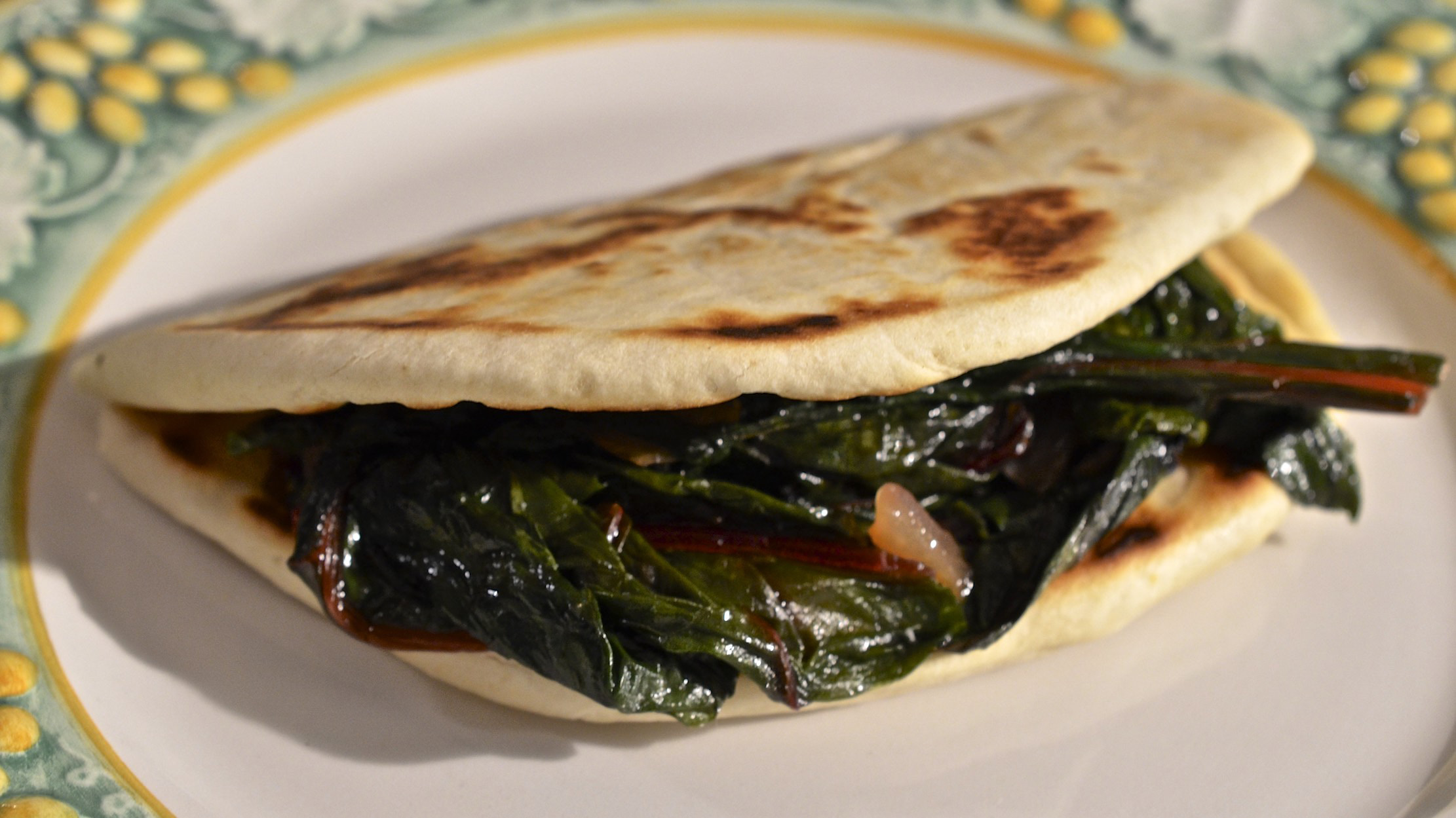
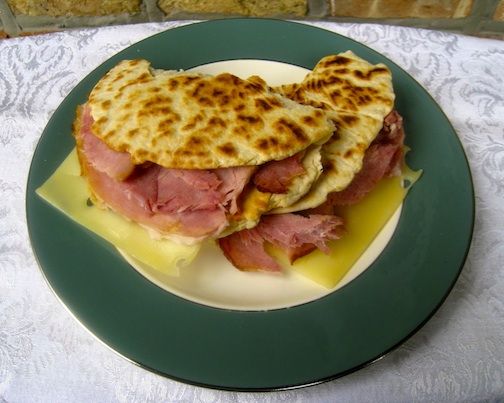
Located in the north of Italy, Emilia-Romagna is a collection of provinces, the southern border of which is shared with San Marino and Le Marche. Dad emigrated from San New Pieda 300Marino, Mom’s family from Le Marche. Pieda, today’s recipe, originated in Romagna but it came to our dinner table via San Marino.  It is a simple flatbread, similar to pita or tortillas, and, when folded in half, can be filled with lunch meat, cheese, or a variety of greens.  My family’s favorite was Swiss chard that had been blanched before being sautéed with a little sliced onion in garlic-flavored extra virgin olive oil . (See Mom’s way of cooking Vegetables.) No matter how you choose to fill them, pieda are best when served immediately after cooking.
*     *     *

Pieda Recipe

makes 6 – 8 pieces

total time: approx.  50 minutes (includes 30 minutes rest)

Ingredients

  • 3 cup flour
  • 1/3 cup Crisco (vegetable shortening)
  • 1 tsp baking powder
  • 1 cup milk

Directions

  1. Place all ingredients in food processor and mix until a ball of dough forms. Cover with plastic wrap and refrigerate for 30 minutes.
  2. Remove a small amount of dough and, using a rolling-pin, roll it out until it is about 6 inches in diameter and no less than 1/8 inch thick.
  3. Cook in a hot, non-stick frying pan over medium-high heat. It should only take a few minutes per side. Use a fork to prick any bubbles that may form during cooking. A side is done when it is mottled with brown spots of varying sizes.
  4. Place cooked pieda on a warmed dish in a warm oven until all are finished. Serve immediately.
*     *     *

Pasta in Bianco (Plain/White Pasta)

That’s me, with my trusty steed at the ready.

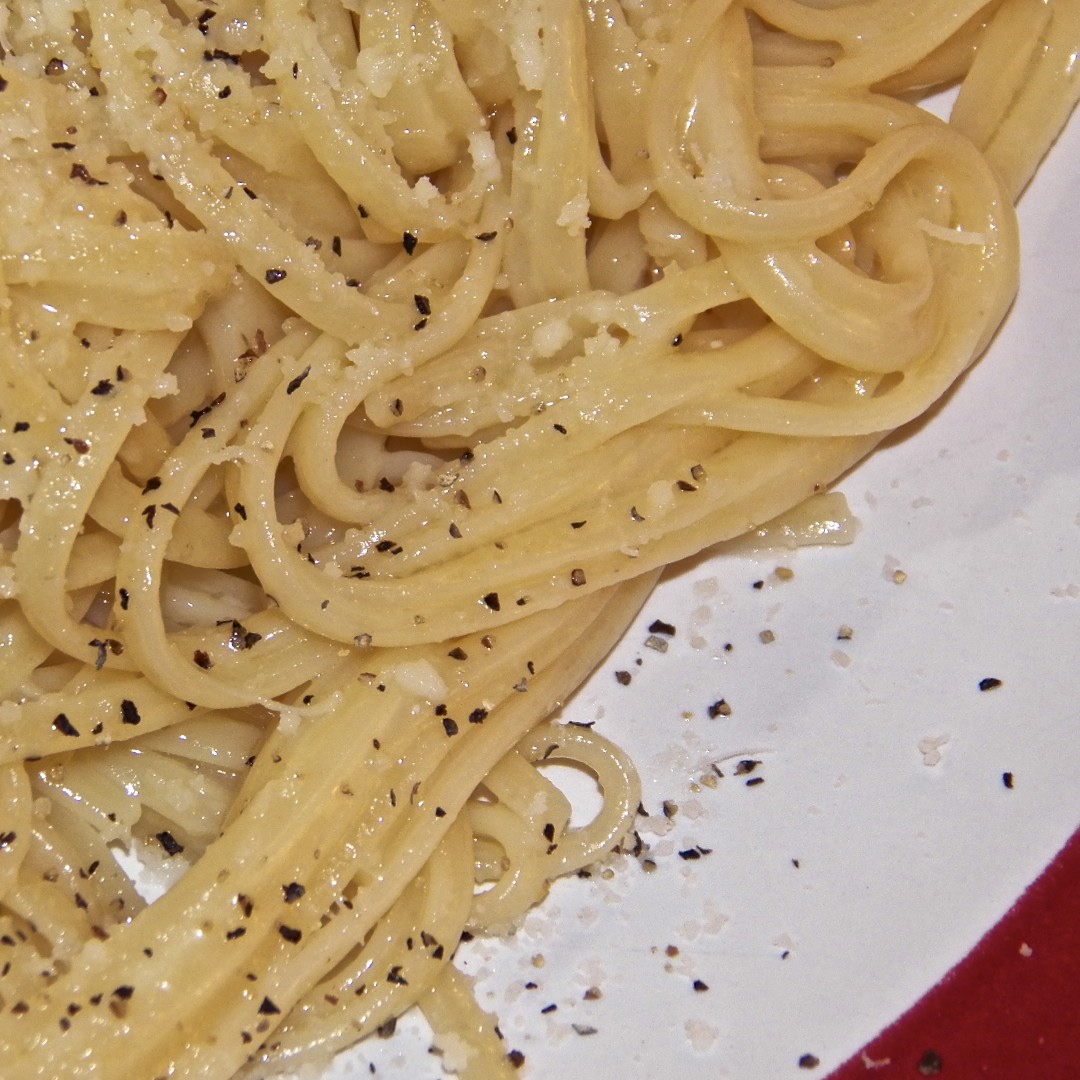
Pasta in bianco, also called pasta bianco, is about as simple a pasta dish as one can make. When I was a boy, Mom would serve this to me whenever I was recuperating from some sort of stomach ailment. I always thought that this “cure” was something peculiar to our house and it wasn’t until many years later that I learned that many Italian households do the same. Luckily, one doesn’t need to be ill to enjoy this simple, yet surprisingly flavorful, dish. And, requiring so few ingredients, this can easily be your “go to” dinner if you want something to eat but don’t have the time nor desire to cook a “normal” meal.

Pasta in Bianco

There’s no need to treat the ingredient amounts as set in stone. You can add more butter and less extra virgin olive oil, for example, if that’s your preference. In fact, true pasta in bianco is made with only butter and that’s how Mom served it to me when I was a boy. Now that I’m older — OK, much older — I’ve replaced some of the butter with the much healthier extra virgin olive oil. Whatever combined amount of butter and oil that you use, the result should be pasta that is well-coated, but not so much that it is dripping. The same holds true for the Pecorino Romano cheese. Some people enjoy a light dusting of cheese; others prefer a blizzard. Me? I’m a blizzard kinda guy — complete with drifts.

*     *     *

Pasta in Bianco Recipe

serves 2

cook time: approx.  20 minutes

Ingredients

  • 1/2 lb angel hair/capellini or spaghetti or linguine
  • 2 – 4 tbsp butter
  • 4 – 6 tbsp extra virgin olive oil
  • 1/4 cup Pecorino Romano cheese
  • 1 tbsp salt
  • pepper, to taste

Directions

  1. Fill a large, 6 to 8 quart, pot with water and bring to a rolling boil. Add the salt, then the pasta, and stir to help prevent the pasta from sticking.
  2. Follow package directions and cook the pasta, stirring occasionally, until al dente. Use a strainer to drain the pasta completely. Do NOT rinse with cold water.
  3. Return pasta to pot, add oil and butter, and mix to coat evenly. Add cheese and mix well.
  4. Serve immediately. Have additional cheese handy for us “blizzard” folks, as well as freshly ground pepper for those so inclined — like me.

Variations

The only variations listed involve the type of cheese to be used.  That’s the only ingredient that can be changed realistically without altering the recipe and, therefore, losing its simplicity.

  • In place of the Pecorino Romano, try using Parmesan, fontinella, ricotta salata, or asiago cheeses. Each can be grated and will impart its own distinctive flavor to the dish.

*     *     *

Gee, that wasn’t so bad for my first attempt. Onward and upward!

*     *     *