
Zia’s Corn Relish

Zia's Relish

Growing up, this would have been the time of year when Mom and Zia canned tomatoes. I vaguely remember the canning process itself but I do remember, vividly, being sent down to the cantina, “cellar”, to retrieve a quart or 2 of tomatoes when Mom was making sauce. Being arachnophobic, it took me forever to select jars with the least chance of having a spider lurking behind them. I never did come across a spider but, if I had, Mom surely would have heard the crash of jars smashing on the basement floor. Anyway, as their nests emptied — Mom & Zia’s nests, not the spiders’ — the need for tomatoes shrunk accordingly and eventually they stopped canning them altogether. But they didn’t stop canning. One of the things Zia canned was corn relish. Another condiment, this relish may be used to top any sandwich, sausage, or hamburger. Although not really a side dish, its acidity makes a spoonful or two a good accompaniment for meat or fish and, as was the case with the giardiniera recipe, I’m sure others will be offering serving suggestions as time goes by.

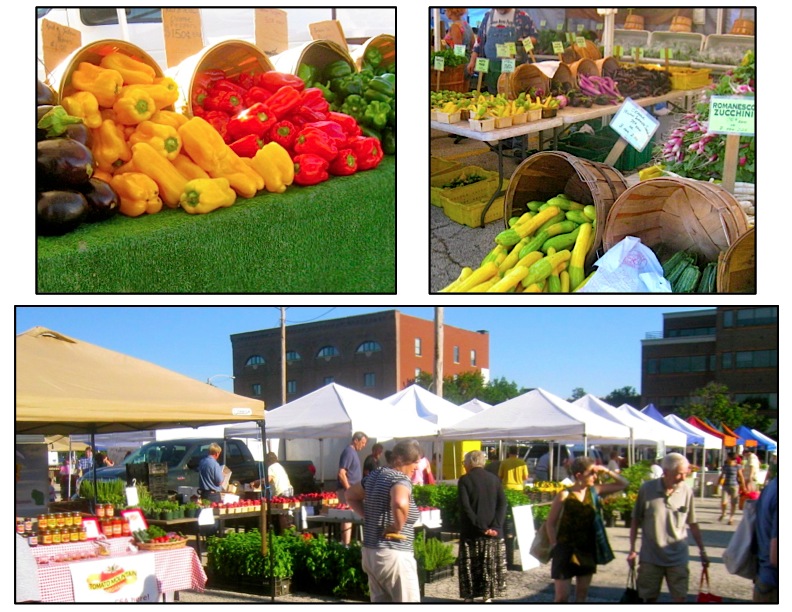
I didn’t set out to make corn relish this Summer and certainly didn’t plan on canning it. Speaking with Zia, I was surprised to learn that she hadn’t made the relish since 2006! Here I thought it had been about 2 years. After our call ended, I searched the web for recipes and none looked all that complicated. I spoke with her again late Friday, knowing that I would be going to the farmers’ market early Saturday morning. After a discussion, I decided to try my hand at it, she gave me the recipe, and I bought all the fresh ingredients at the market the following morning. By noon Saturday, I was canning corn relish and soon there were 4 pints cooling on towels.

*     *     *

*     *     *

The recipe I’m sharing is Zia’s recipe, with the exception of the optional jalapeño. It makes about 7 pints of corn relish and that is too much for me. So, I halved the recipe, using a little more than 5 cups of corn instead of the 10 cups required for her relish. Zia’s recipe calls for 2 cups of white vinegar. I found that most recipes on the web used at least twice that amount and used either white or apple cider vinegar. I happen to love vinegar’s acidity so I used 2 cups of vinegar in my relish, 1 cup of which was white and the other cup cider. Lastly, I prefer a little spice so I added a whole jalapeño, diced, to the mix. The resulting heat was just enough for my palate without being the least bit unbearable.

*     *     *

Zia’s Corn Relish Recipe

Ingredients

  • 10 cups corn kernels (about 16 – 20 ears)
  • 4 cups celery
  • 2 cups green bell pepper, diced
  • 2 cups red bell pepper, diced
  • 1 cup onion, diced
  • 1 whole jalapeño, diced (optional)
  • 1 3/4 cups sugar
  • 2 cups vinegar
  • 2 1/2 tbsp canning or pickling salt
  • 2 tsp celery seed
  • 1/4 cup AP flour mixed with a couple tbsp water
  • 2 tbsp dry mustard
  • 1 tsp turmeric

Directions

  • To prepare the relish
    1. This recipe requires that fresh corn be blanched for 5 minutes before being removed from the cob. Simply place the ears in boiling water for 5 minutes and remove to an ice bath. Once cooled, use a sharp knife to remove the kernels.
    2. In a large, heavy bottomed pot over med-high heat, combine the celery, bell peppers, onion, sugar, vinegar, salt, celery seed, and jalapeño, if using. Bring to a boil, stir occasionally, reduce and simmer for 5 minutes.
    3. Add the turmeric, mustard, corn, and the flour with water to the relish. Simmer for an additional 5 minutes and begin canning process.
  • To can the relish
    • The only canning instructions I received from Zia was to process the jars for 15 minutes in a boiling water bath. Now, that would have meant absolutely nothing to me but a few short weeks ago. Instead, today, I knew exactly what she meant. Nevertheless, I wanted — OK, needed — some sort of official validation that I was going to can this relish correctly, Once again, I turned to the Pick Your Own website where, lo and behold, there was a section about making and canning homemade corn relish. Their recipe is very similar to Zia’s and their canning instructions are laid out, step-by-step.

*     *     *

And so ends — and, believe me, I do mean “ends” — my brief and thoroughly unexpected visit to Cannery Row for 2011.

*     *     *
Giardiniera – the Chicago Way

With farmers’ markets fully stocked and bustling, this is the time to start preserving fruits and vegetables. One such method is canning and that’s about all I have to say about it. There’s freezing and, within the next few weeks, my basement freezer will be packed with quarts of diced, peeled plum tomatoes. And then there’s pickling, a common preservation method that I’m using more and more. In Italy, pickling is sometimes called sotto acetti, under vinegar, and pickled vegetables often take the form of giardiniera. Mild by Chicago standards, theirs usually gets its heat, if at all, from the peppers and pepper flakes for which CalabriaBasilicata are well-known. The Italians will often serve giardiniera as one of many antipasti or among the insalati. The recipe is pretty much the same in the States, except we tend to use “local” chilis to bring heat to the mix. A few jalapeños or serranos will often do the trick. Here in Chicago, we up the ante, adding more chilis and skipping a few of the ingredients. The result is more condiment than antipasto and it’s a staple of most “reputable” sandwich shops. In fact, in some circles, it’s almost sacrilege to order an Italian beef sandwich without a healthy scoop of giardiniera to top it off — but that’s not all. Good giardiniera makes a great topping for any sandwich, as well as for burgers, hot dogs, and brats, while a healthy sprinkling of it can elevate even the most lackluster of pizzas.

Today’s recipe is based upon one that I found in an area newspaper some years ago. Unfortunately, I destroyed the clipping, along with many others, when I transferred my recipes to a Mac-based recipe file three years ago. (Writing a blog wasn’t even a remote possibility at the time.) Nevertheless, it’s a great recipe that anyone, Chicagoan or not, will enjoy. There’s a freshness about it that you just won’t find bottled on a supermarket shelf. The recipe itself is pretty straight-forward and, if you’ve ever pickled anything, you probably already have all of the spices required and, this time of the year, you can get the rest of the ingredients with one trip to a farmers’ market. I’ve seen versions that include mushrooms, broccoli, olives, etc., but they are more salad-like than condiment, in this Chicagoan’s opinion.  Many recipes, too, rely solely upon olive oil and white vinegar for the pickling. I prefer to lighten the solution by replacing half of the olive oil with vegetable oil and to sweeten it by replacing half of the white vinegar with apple cider vinegar. As always, the choice is yours.

*     *     *

*     *     *

In reality, the hardest part of this recipe is to determine an acceptable level of heat. After all, one person’s idea of mildly spicy is another’s 5 alarm fire. The original recipe, like I’ve posted below, calls for 8 whole jalapeños. That’s the Chicago Way and it’s too hot for me. I’ve learned through experimentation that 4 whole jalapeños, along with 4 that have been seeded and “de-ribbed,” deliver just the right amount of heat for my palate. You, however, may prefer it hotter, so, follow the recipe and use 8 whole jalapeños. If that still doesn’t do it for you, switch out some or all of the jalapeños for serranos. On the other side of the coin, some may want their giardiniera mild, with very little heat, if any. By removing the jalapeños’ ribs and seeds, you’ll get a mild giardiniera that includes the flavor of jalapeños but none of the heat. And if that’s not mild enough, drop the red pepper flakes. The point is, you can make the giardiniera as hot, or mild, as you like. With a little experimentation, I’m sure you’ll find the right combination of chilis and pepper flakes to create the perfect giardiniera.

*     *     *

Chicago Giardiniera Recipe

Ingredients

  • 8 jalapeños, chopped (for more heat, serranos may be substituted)
  • 1/2 large cauliflower, cut into florets
  • 2 carrots, diced
  • 2 celery stalks, diced
  • 1 green bell pepper, diced
  • 1 red bell pepper, diced
  • 2 sweet banana peppers, diced
  • 1 sweet onion, diced
  • 1/2 cup kosher salt
  • 3 cloves garlic, minced
  • 2 1/2 tsp dried oregano
  • 1 tsp red pepper flakes
  • 1/2 tsp celery seeds
  • black pepper, to taste
  • 1/2 cup cider vinegar
  • 1/2 cup white vinegar
  • 1/2 cup extra virgin olive oil
  • 1/2 cup vegetable/canola oil

Directions

  1. Combine vegetables and salt. Add enough water to cover, stir, cover, and refrigerate for at least 12 hours.
  2. Strain vegetables from brine, rinse well, and set aside.
  3. In a large glass bowl, add garlic and remaining seasonings.
  4. To that bowl, add the vinegars and stir until well-mixed. Whisk the solution while adding the oils.
  5. Add the reserved, brined vegetables into the bowl and gently mix until well-coated.
  6. At this point, the giardiniera may be left, covered, in the bowl or transferred to clean jars. Either way, it must be refrigerated for 48 hours before serving.
  7. Because this giardiniera isn’t canned, it must be stored in the refrigerator, where it will keep for a few weeks.

*     *     *

Giardiniera-topped Mount Burger

*     *     *

Variations

I’ve already listed a number of variations and I’m sure you can dream up more. I’ve found that some vegetables, however, do not respond particularly well to the brining and pickling processes. Broccoli is one such under-performer, in my opinion.

Notes

Be aware that there is a range of heat for each kind of chili. A very hot jalapeño, for example, can equal a weak serrano. There is no way to insure that the heat of the batch of giardiniera you make today will equal the one you made 3 weeks ago. You can limit your risk, however, by always purchasing your peppers from the same grocer, vegetable stand, or farmers’ market vendor. Hopefully, that will offer some consistency. Still, as I learned this morning, peppers can be mislabeled. Those “sweet banana peppers” may turn out to be hot Hungarian yellow wax peppers. Two completely different peppers – and I’ve a burning eye to prove it.

Not everyone lives here in Chicago nor can they buy airfare every time they want an Italian beef sandwich. Well, you shouldn’t have to go without just because of distance. Thanks to a great food & sports blog, sports-glutton.com, you can make your own Italian beef to go along with this giardiniera. It’s a little bit o’ Chi-town wherever you happen to be.

Speaking of pickling, be sure to check out my recipe for Refrigerator Bread and Butter Pickles.

*     *     *