
Pesce Spada alla Griglia con Salsa Verde
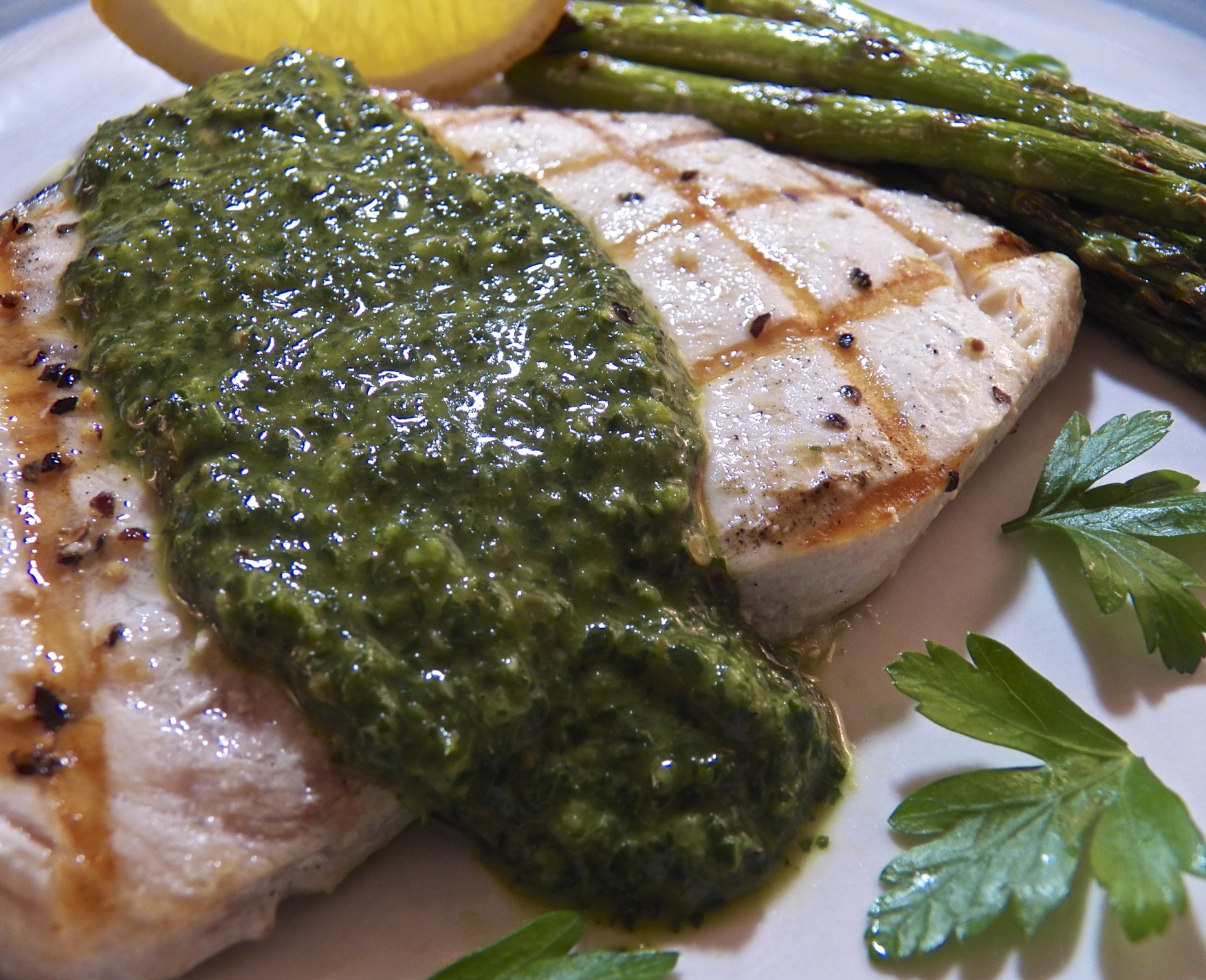
As Lent continues, so does our fishing trip. Today’s catch is swordfish, a large fish that can be found primarily in the coastal waters of the Atlantic and Pacific oceans. A favorite of cooks everywhere, its firm, relatively oily flesh is most often cut into steaks and is considered perfect for grilling. Well, considering my recent (highly unusual) successes on the grill, I’d little choice but to put away the broiler pan and return to the barbecue one more time.
Now, though I may continue to grill throughout the Winter, there’s nothing complicated in what I do, for it’s too cold for fancy schmancy. Instead, it’s Grilling 101. Heat the grates. Go back in the house. Clean the grates. Go back in the house. Oil the grates. Put the fish on the grates. Go back in the house. Flip the fish after a specified amount of time. Go back in the house. Remove, rest, and serve – in the house. The only prep work for the fish involves seasoning the fillets with salt and pepper and lightly brushing them with oil. No, it doesn’t get much easier than this. And, to be honest, preparing the salsa verde, green sauce, isn’t much more difficult, as you’ll soon see.
* * *

* * *
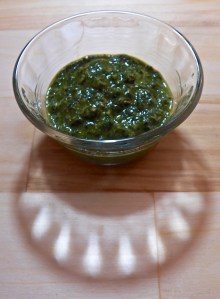
Green sauce, in one form or another, is common to countries in Europe and the Americas. Easy to prepare, with ingredients common to each area, this sauce can be used as a dip, condiment, and/or accompaniment for meat and fish dishes. Even so, the green sauce you find in Frankfurt, Grüne Soße, is quite different from that which you’d be served in Mexico, salsa verde. In Italy, there is no one salsa verde recipe. It varies from district to district, town to town, and probably house to house. So, when you look at my salsa verde recipe, use it as a guide. If you don’t like anchovies, drop them but be sure to add a bit of salt to make up for the change. Want a little mint? Swap some of the parsley for it. Just keep in mind that Italian salsa verde is meant to be a relatively simple sauce. Try not to get too exotic with the ingredient list. And no matter what recipe you follow, be sure to let your salsa rest at least an hour — hopefully 2 — before serving, giving the flavors a chance to blend and mellow.
* * *
Grilled Swordfish with Salsa Verde Recipes
Ingredients
 swordfish steaks
- salt & pepper
- extra virgin olive oil
- lemon wedges

Salsa Verde
- 2 cups fresh parsley, chopped fine
- 1 tbsp capers, rinsed
- 2 – 3 anchovy fillets, chopped
- 1 shallot, chopped
- 1/3 cup lemon juice
- zest of 1/2 lemon, more or less to taste
- 1/2 cup extra virgin olive oil
- pepper, to taste
Directions
for the salsa verde
- Place parsley, capers, anchovies, shallot, and lemon juice (or vinegar) into a food processor and run, forming a paste.
- Scrape the bowl’s sides and resume processing for a couple more minutes.
- While the processor is running, pour the olive oil in a slow stream into the bowl. Continue until well-mixed.
- Taste before seasoning with pepper.
- Cover and set aside. Refrigerate if not needed for hours, though, best when served at room temperature.
for the swordfish
- Start grill. Will require a med-high heat.
- When grill is ready, thoroughly clean the grilling surface before using a towel soaked in vegetable oil to coat the grill plates.
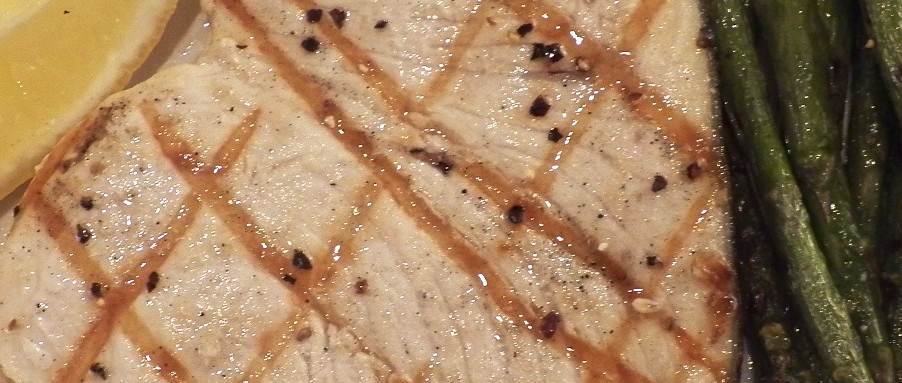
- Lightly coat fish with vegetable oil, season with salt & pepper, and place on grilling surface. Do not move or disturb once placed on the grill.
- Grill for 3 to 4 minutes per side. Remove from heat, cover, and let rest for a few minutes.
- Place swordfish filets on a serving platter and serve with salsa verde accompaniment
* * *
* * *
Notes
Please note that the recipe for salsa verde requires 2 cups of chopped parsley and not 2 cups of parsley that you chop. Make that mistake and you’ll have one runny batch of salsa. Now, should your salsa be too thin for your tastes, there’s no reason to panic. You can always add more chopped parsley to the food processor and try to correct the problem. In Italy, some recipes call for a slice or 2 of bread to thicken the salsa. Having tried both over the years, I’ve come up with Option 3. Pour the salsa through a fine-mesh sieve, draining as much liquid as you wish. Once the salsa has been allowed to rest, taste it and correct the seasoning as required. Believe me, that’s the easiest way around the problem and doesn’t involve a run to the grocery to buy more parsley.
Variations
This salsa verde is the one that I use when serving fish. When seafood isn’t on the menu, I’ll make a few changes, resulting in a salsa that’s a better fit for the protein being served. Instead of the lemon juice and zest, I’ll add 1/2 cup of red wine vinegar. I’ll, also, chop 2 cloves of garlic in place of the shallot. Whether you follow my suggestions, with just a few substitutions you can create a salsa verde to go with any dish.
So, maybe you’re thinking that as much as you like swordfish, this salsa verde thing just isn’t for you. Not to worry. The Bartolini kitchens aim to please. Perhaps you’d be happier with a different cuisine. Might I suggest taking a trip to a kitchen located on the other side of the World? This Hong Kong kitchen is run by a blogging buddy, BAM, who recently shared a GF recipe for swordfish cooked in the Thai style. Believe me, this is one recipe and post you don’t want to miss.
* * *
It’s déjà vu all over again …

Pasta alla Norma
A couple of weeks ago, I sent you to Naples for a peek at my Pasta Puttanesca recipe. This week, we’ll head to Sicily for a look at my recipe for Pasta alla Norma, another of Southern Italy’s great dishes. This meatless pasta features chopped eggplant and is garnished with ricotta salata, a firmer, saltier version of the creamy ricotta that we all know and love. If you’re interested, you can see the recipe by clicking HERE.
* * *
Coming soon to a monitor near you …

Bartolini Cannelloni
Your eyes aren’t deceiving you. Next week we’ll be taking a break from our fishing trip in honor of the pending St. Joseph’s Feast Day.
* * *


 from the Bartolini kitchens